
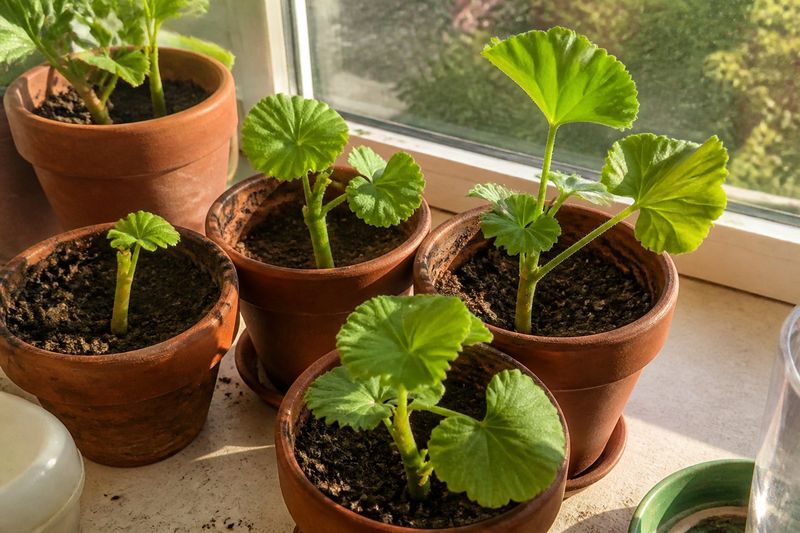
Picture a geranium cutting that looked fine last week, now dark and mushy right at the base. Many gardeners who took Pelargonium cuttings this fall are seeing exactly that on their windowsills.
The cause is not always clear, but how wet the rooting medium stays plays a big part in the risk. Here is how to sort out what you are seeing and set up the rest of your cuttings with a better chance.
Blackening at the base signals trouble, not a specific pathogen
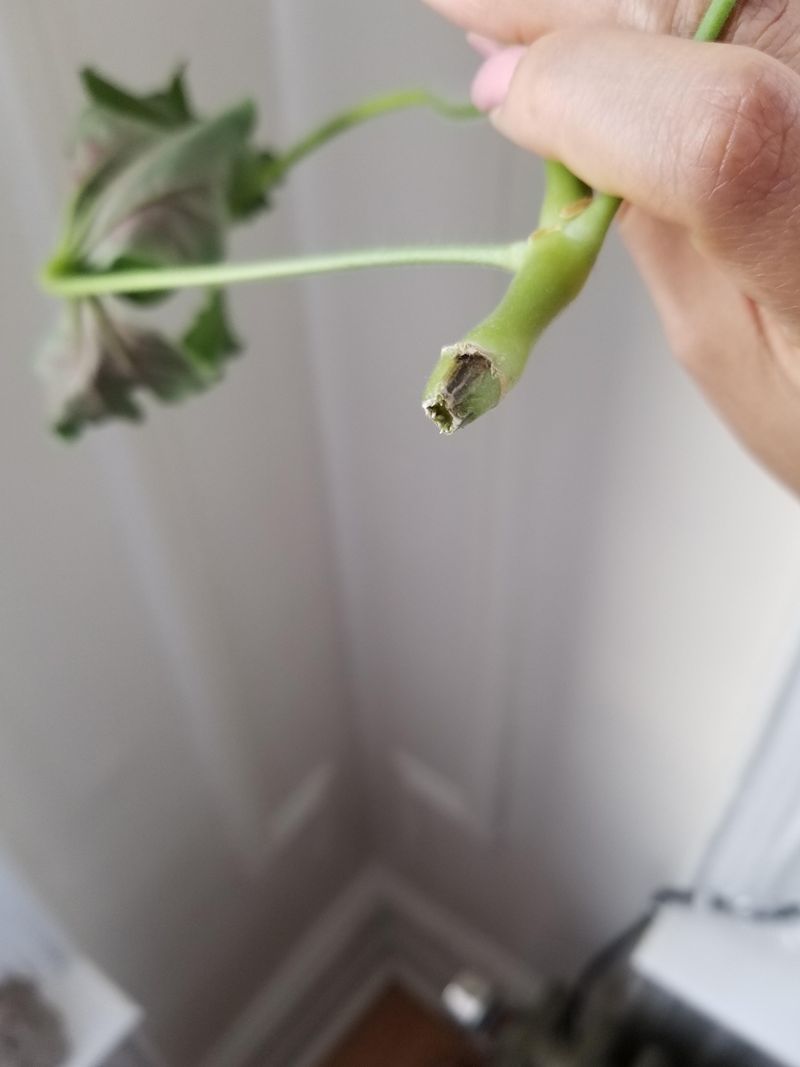
A soft, water-soaked, or black patch at the bottom of a cutting is consistent with cutting rot. That is as far as the stem can tell you.
The color alone does not show what is causing it.
Several different organisms can produce nearly the same look. Oregon State’s plant disease handbook lists Botrytis, Pythium, Fusarium, and Rhizoctonia among the fungi found in geranium cutting rots.
Texas A&M’s disease handbook also includes bacterial causes.
Without a lab test, a home gardener cannot name the culprit by looking. Fortunately, you do not need to.
The same basic habits help across the board: remove affected cuttings, keep things clean, and manage moisture carefully. The next sections walk through each step.
Cool conditions matter most when the medium stays wet
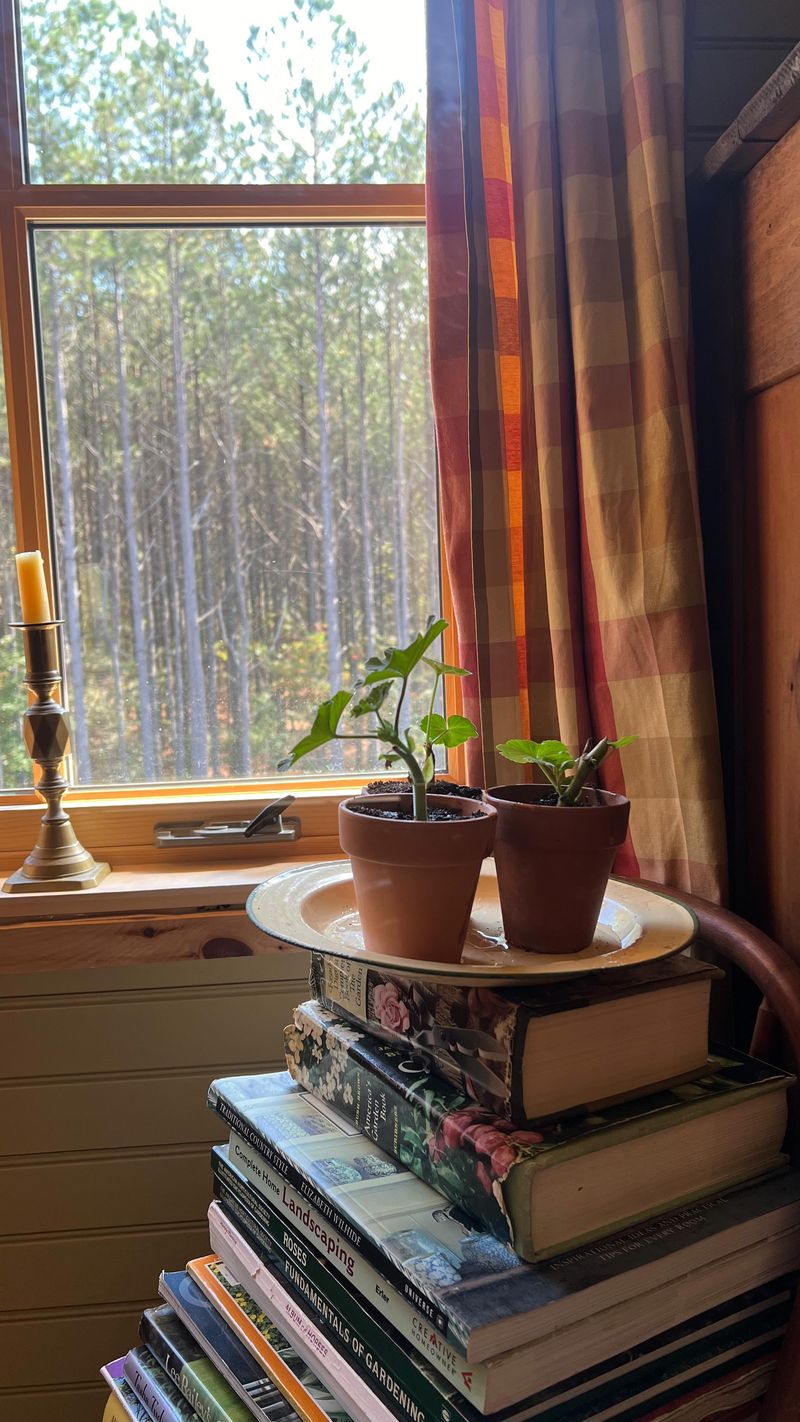
Cool air on its own does not prove why a cutting is rotting. The risk climbs when chilly conditions are paired with rooting medium that stays soggy for days.
Under those conditions, several rot organisms have an easier time taking hold, as described in Oregon State’s cutting rot guidance.
So a cold windowsill is worth a second look, but it is only one possible piece of the puzzle. Check the pot first.
If the mix feels wet every time you touch it, that is a clue worth acting on.
Problems can also arrive with the cutting itself, or through used trays, tools, and old potting mix, according to Texas A&M’s disease handbook. You cannot tell which of these applies to your cuttings just by looking.
Keeping them away from cold drafts, as Clemson Extension suggests for indoor geraniums, is a sensible precaution.
Discard cuttings with soft or blackening bases
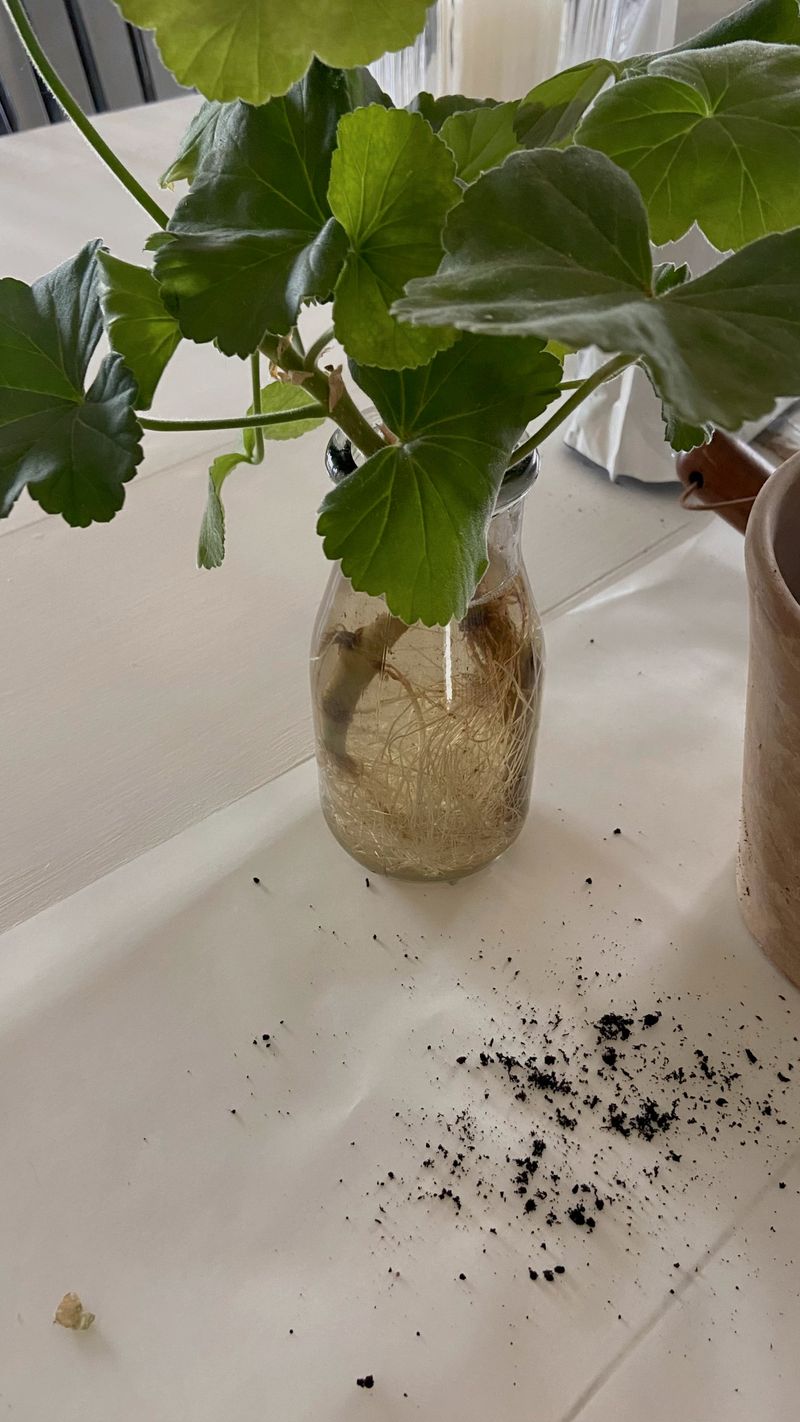
Here is the hard part: a cutting whose base is soft, water-soaked, or turning black should go in the trash. Extension disease guidance, including Oregon State’s handbook, recommends removing diseased cuttings.
Dry them out and hope for recovery is not the advice.
Pull each one out gently and throw it away rather than composting it near your plants. Wash your hands and tools afterward.
Rot symptoms like these are common in geranium cuttings, as Texas A&M’s guide notes, and leaving sick cuttings in the tray gives problems a chance to spread.
Easing off on water may lower the risk for the cuttings that remain. It will not repair tissue that has already broken down, and it cannot guarantee that the others will root.
Build a clean, well-drained propagation setup
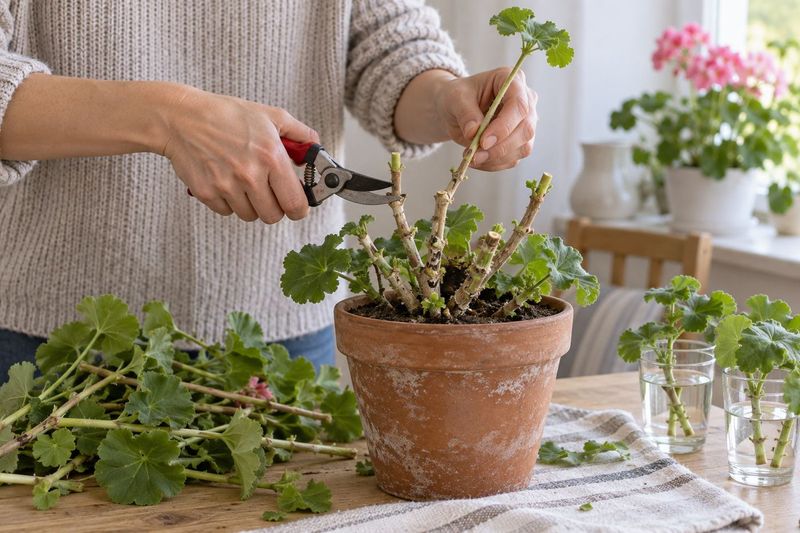
Fresh starts begin with healthy parent material. Choose cuttings from plants with no spots, soft areas, or dark stems.
Wash tools and containers, and use fresh or clean rooting medium, because pathogens tied to cutting rot can linger in reused media and trays, according to Oregon State.
Pick a porous medium such as perlite, vermiculite, or a perlite-based rooting mix. Iowa State Extension describes using these kinds of materials for geranium cuttings.
Use a pot with drainage holes so extra water can escape instead of pooling around the stem.
Some guides suggest letting cut ends air-dry and heal for a short time before planting. University of Illinois Extension recommends this for Pelargonium, while other guides move straight to a moist medium.
Think of callusing as one supported precaution you can choose, not a rule every gardener must follow.
Keep the medium moist, not saturated or bone-dry
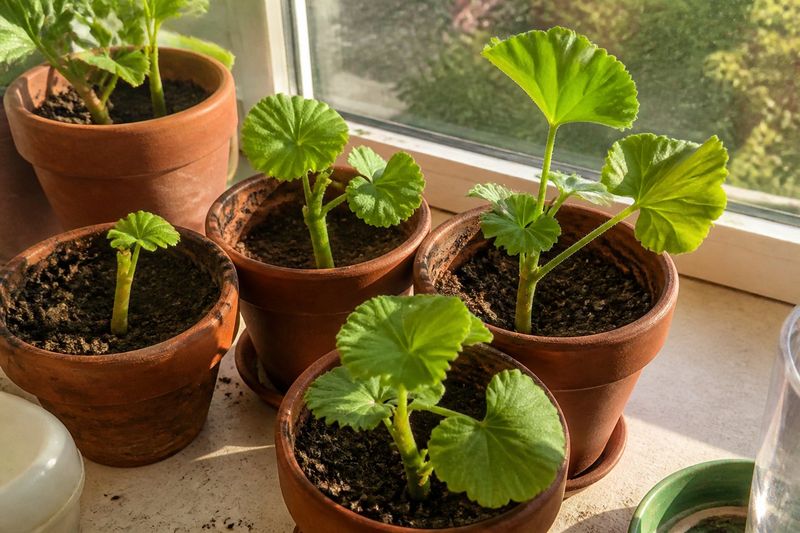
Moisture is a balancing act. Water the medium thoroughly when you set up the cuttings, then let the extra drain out the bottom.
After that, aim for lightly moist, never soggy. Iowa State Extension gives this same water-then-drain approach.
Once a cutting has formed callus, Oregon State’s guidance is to let the medium dry down somewhat. After roots form, it can dry a little more.
The limit is wilting, because an unrooted cutting still needs enough water to stay firm.
That is why bone-dry soil is the wrong target. University of Minnesota Extension advises keeping cutting medium moist.
A practical check: touch the surface, and if it feels barely damp and the leaves are still perky, hold off on watering.
This approach may reduce risk. It cannot promise to rescue cuttings that are already affected.
Support cuttings with light and monitored humidity
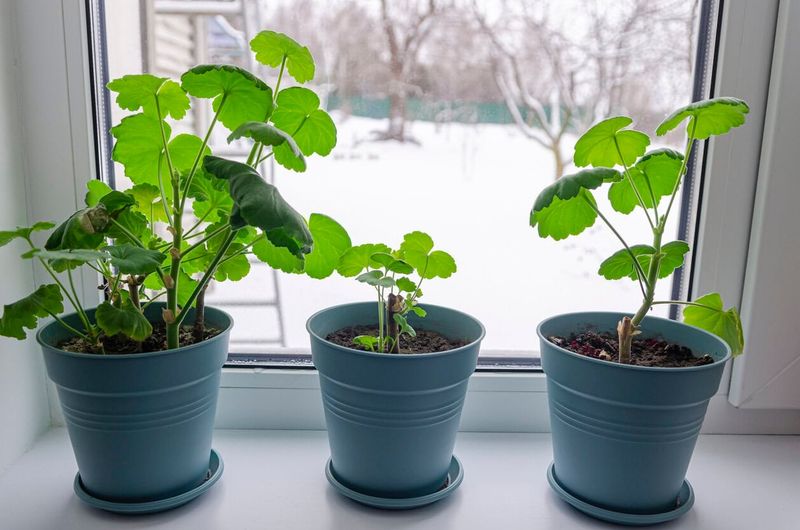
Bright, indirect light suits rooting cuttings best. Keep them away from cold glass and drafty spots, and avoid setups that stay chilly and wet at the same time.
Clemson Extension offers helpful tips for growing geraniums indoors. None of this is a cure, but it removes some stress.
A clear cover can reduce wilting by holding in humidity. Iowa State mentions covering cuttings after watering.
Check under it often, though. University of Minnesota Extension warns that a plastic cover may encourage mildew.
Prop the cover open or lift it for part of the day if you see condensation dripping or fuzzy growth. The goal is a moist, well-drained medium with fresh air around it.
A dry pot is not the answer, and a swamp isn’t either.