
A flower bed should not need a daily rescue with the hose. If your annuals keep wilting in Florida’s sandy soil, these native swaps can bring longer-lasting color with less watering once their roots settle in.
Some annuals already handle dry weather well, so focus on replacing plants that struggle in your yard. The strongest dry-season bloom comes in frost-free South Florida; farther north, cold snaps can pause flowers even on tough natives.
1. Dune Sunflower
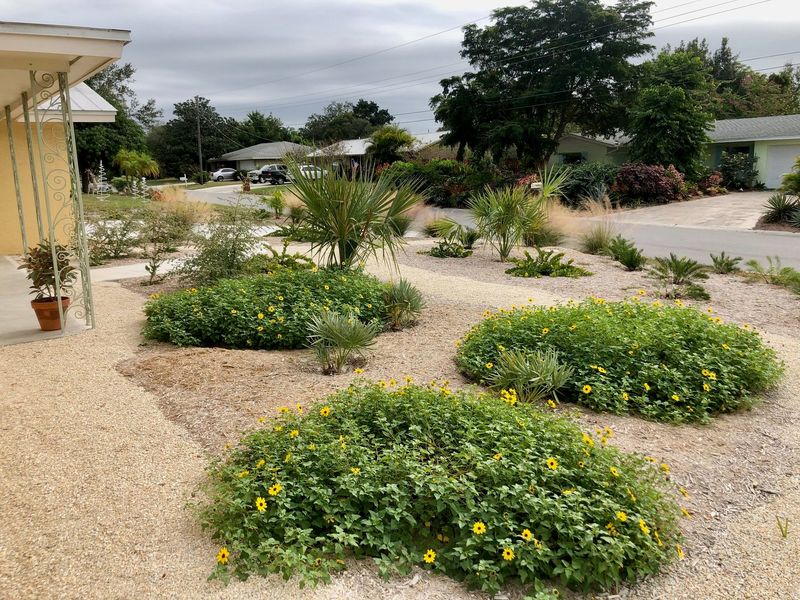
That sunny strip beside the driveway does not need another tray of petunias. Where those plants demand frequent watering, dune sunflower offers a loose carpet of yellow flowers and room for visiting bees.
Helianthus debilis thrives in full sun and well-drained sand. It usually reaches about 1 to 3 feet tall and spreads several feet wide, making it better for an open border than a narrow, tidy edging.
Flowers can appear year-round in frost-free areas, including during the dry season. North Florida freezes may damage the tops or end the display, so do not count on winter flowers statewide.
Choose a locally appropriate form from a Florida native nursery, since regional forms differ. Set plants roughly 3 feet apart, keep mulch away from their crowns, and water the root balls while they establish.
After that, let soil conditions guide watering rather than running sprinklers every day. Trim wandering stems when needed, but leave some seed heads for birds and natural reseeding.
2. Beach Verbena
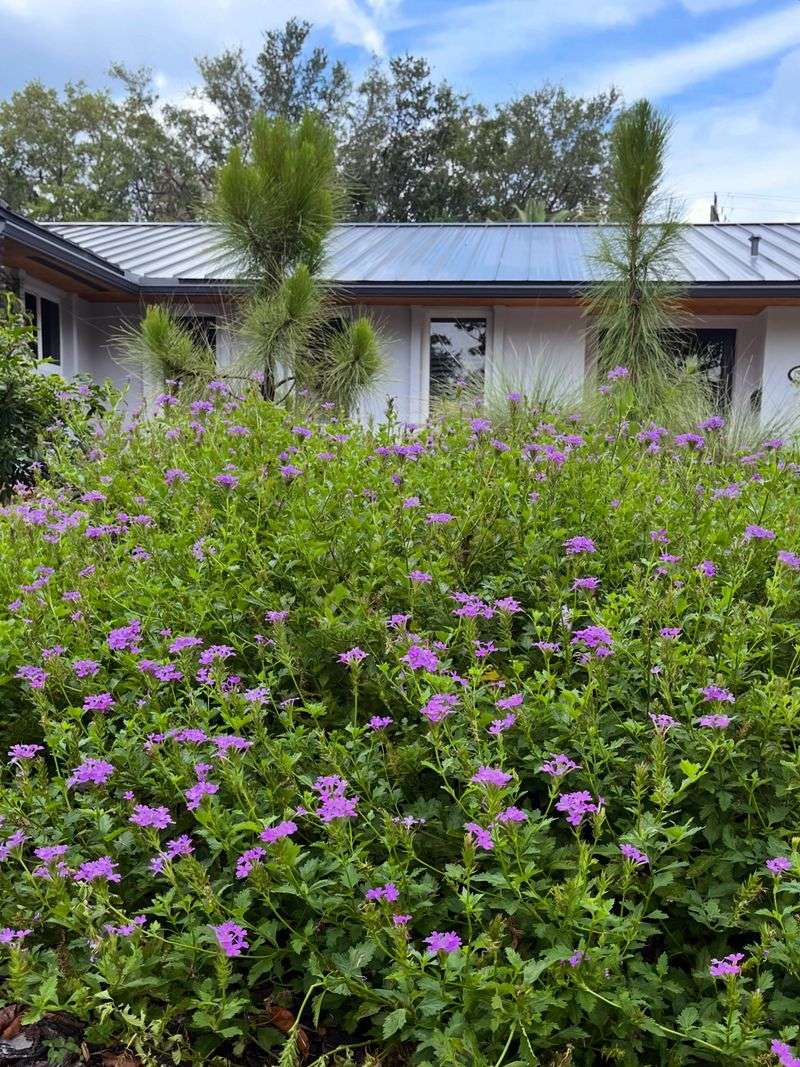
Purple flowers can soften a hot walkway without turning its edge into a watering project. Beach verbena fills that role where annual lobelia struggles in a bright, dry location.
Look for Glandularia maritima, not an unnamed garden verbena hybrid. This Florida native forms a low, spreading patch with lavender flower clusters that draw butterflies.
Give it full sun and excellent drainage, with space to spread roughly 2 to 3 feet. A raised sandy border works better than the low corner where roof runoff collects after a storm.
Bloom can continue through much of the year in warm coastal locations, though cold weather and harsh drought may interrupt it. Its strongest fit is within its natural coastal range, so ask a native nursery whether it suits your county.
Water new plants deeply enough to wet the root ball, then reduce watering as roots spread. Light trimming after a heavy flowering flush can keep the patch compact, but avoid shearing every stem at once and removing all the buds.
3. Tropical Sage
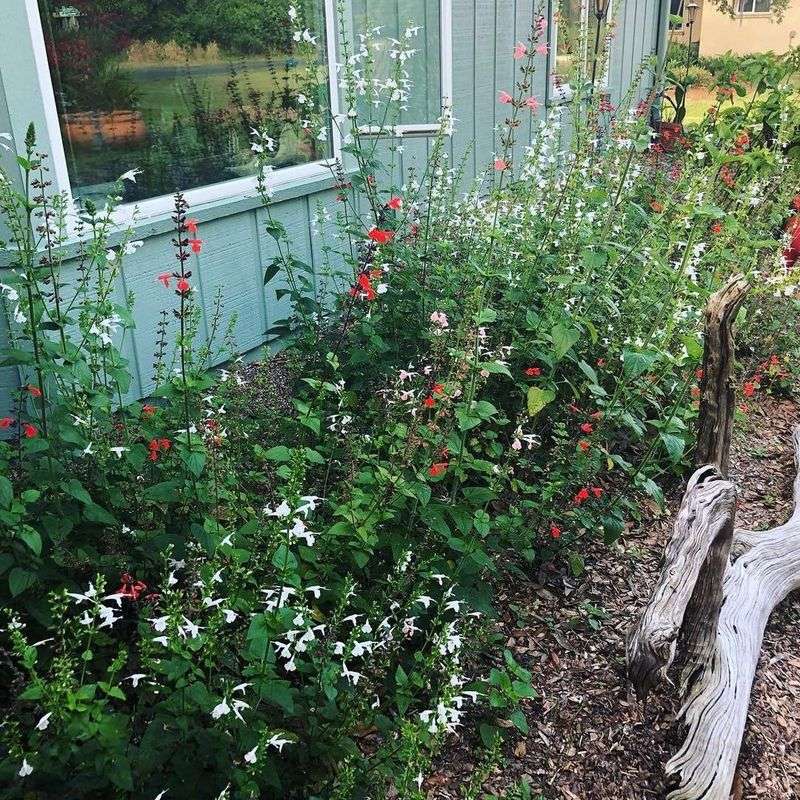
A flash of red near the porch can come with hummingbird visits instead of another thirsty pot of wax begonias. Tropical sage brings that bright color in a taller, airier shape.
Salvia coccinea commonly grows about 2 to 4 feet tall. Its red tubular flowers suit a relaxed border, especially where morning sun gives way to light afternoon shade.
Established plants handle dry spells, but they often bloom more steadily with occasional deep watering during long rainless stretches. Think lower-water replacement, not a flower that performs without any care.
In frost-free South Florida, flowering can continue through the dry season. Farther north, frost may stop growth, though plants often return from seed when warmth comes back.
Use several plants behind a low groundcover rather than expecting a tight bedding-plant mound. Snip back long stems to encourage branching, and leave a few flower stalks to set seed.
Seedlings are usually easy to move or remove. That makes this a useful choice for gardeners who enjoy a border that gently shifts from year to year.
4. Native Blue Porterweed
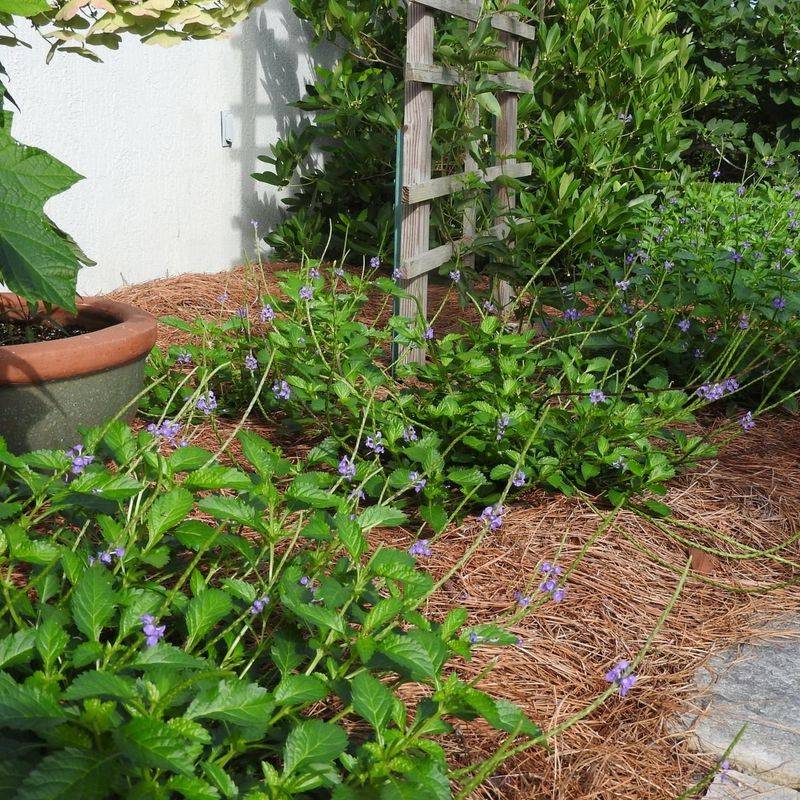
Butterflies do not need a solid wall of petals to find lunch. Native blue porterweed opens only a few small blue flowers along each slender spike at a time, creating a quieter display with plenty of activity.
Try it in place of annual geraniums in a sunny, frost-free border where regular pot watering has become a chore. Stachytarpheta jamaicensis has a low, sprawling form, generally around 1 to 3 feet tall and wider than it is tall.
Check the scientific name before buying. Larger, upright nonnative porterweeds and hybrids are also sold, and they are not interchangeable with Florida’s native species.
Full sun, sandy soil, and good drainage give it a strong start. Established plants tolerate drought, though a severe dry spell can reduce flowering.
South Florida offers the best chance of flowers through winter and spring. Freezes can damage or kill plants farther north.
Place it where its loose stems can spread beside a path without blocking it. Trim selectively rather than clipping it into a square, which removes the flower spikes butterflies use.
5. Buttonsage
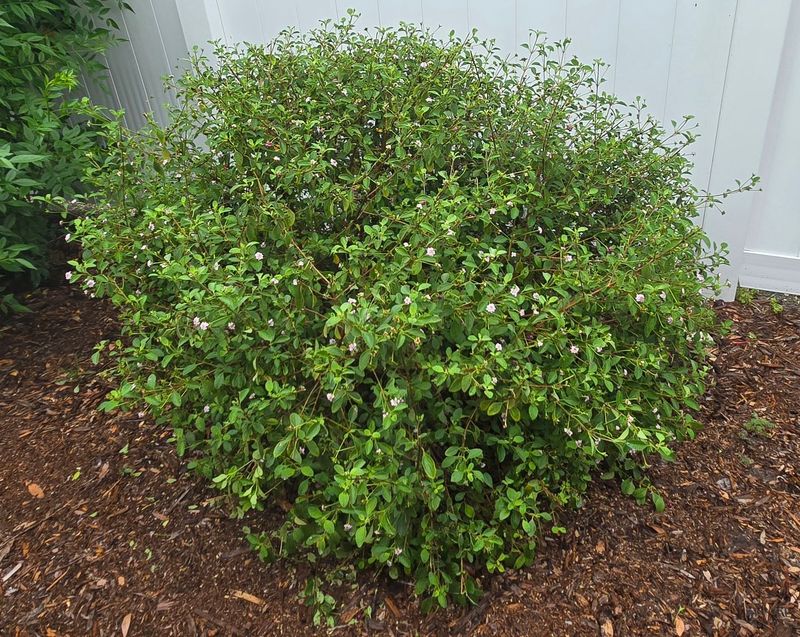
Sometimes the smartest annual swap is a small shrub that stays put for years. Buttonsage can replace a repeatedly replanted bed of snapdragons where a permanent, waist-high planting would work better.
Lantana involucrata carries small white to pale lavender flower clusters, followed by purple fruit. Butterflies visit the blooms, and birds may feed on the fruit, giving the space a second job beyond curb appeal.
Allow roughly 3 to 6 feet of height and spread, depending on conditions and pruning. This is not a miniature bedding plant, so keep it back from narrow walks and low windows.
Its best fit is warm South Florida, including coastal gardens with well-drained sandy or limestone-based soil. Flowers may appear throughout the year there, while frost and severe drought can interrupt the show.
Buy by scientific name to avoid confusing it with invasive lantana types. Water during establishment, then reduce irrigation as the shrub roots into surrounding soil.
Use light pruning to guide its shape. Frequent hard shearing removes flowers and fruit, trading much of its wildlife value for a formal outline.
6. Scorpiontail
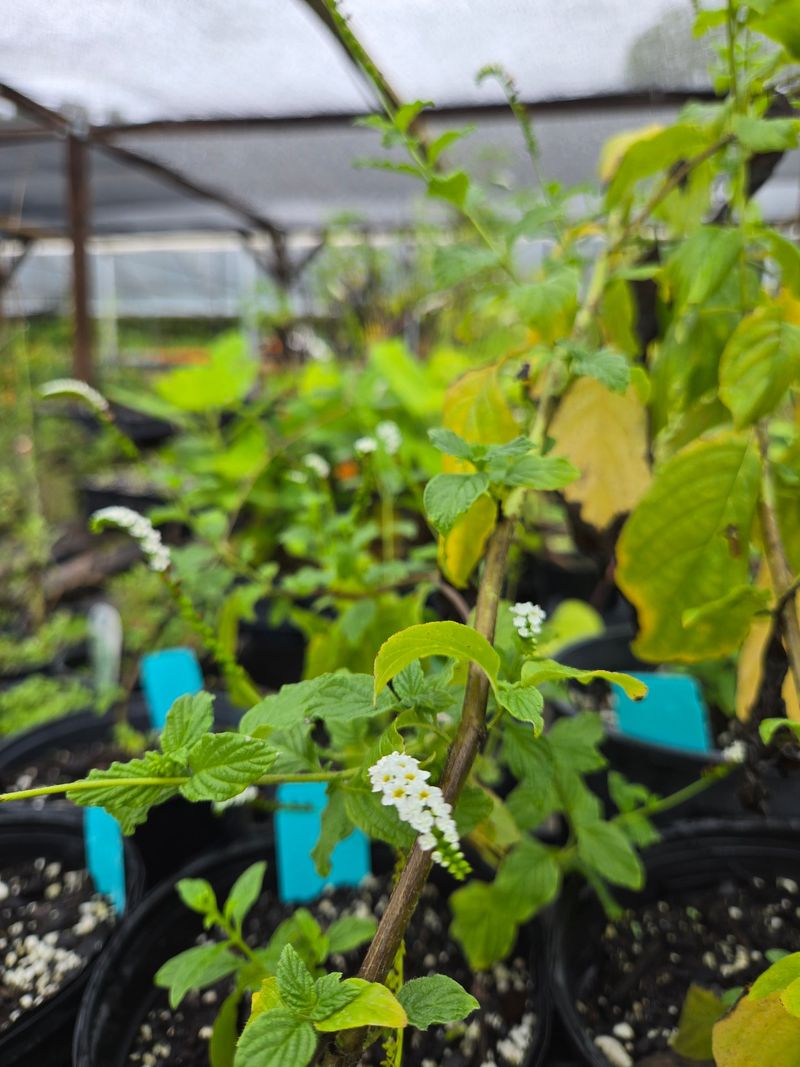
Look closely at those curled flower stalks and the name makes sense. Scorpiontail brings tiny white blooms on curved stems, adding an unusual detail where a row of impatiens once needed constant attention.
Heliotropium angiospermum works best as an informal small shrub, often about 2 to 3 feet tall. It is especially useful in a bright border with some afternoon shade, rather than a deeply shaded foundation bed.
The flowers are small, so place it near a sitting area or walkway where you can enjoy the visiting bees and butterflies. Pairing several plants creates a clearer display than hiding one behind larger shrubs.
Warm parts of Florida can see flowers through much of the year, including the dry season. Cold snaps farther north may damage growth and halt bloom.
Provide well-drained soil and steady moisture while roots establish. Mature plants tolerate dry periods, although occasional deep watering during prolonged drought helps keep them looking fuller.
Prune lightly if the stems become lanky, and remove unwanted seedlings. Its relaxed shape suits a wildlife-friendly side yard better than a rigidly clipped entry bed.
7. Beach Creeper
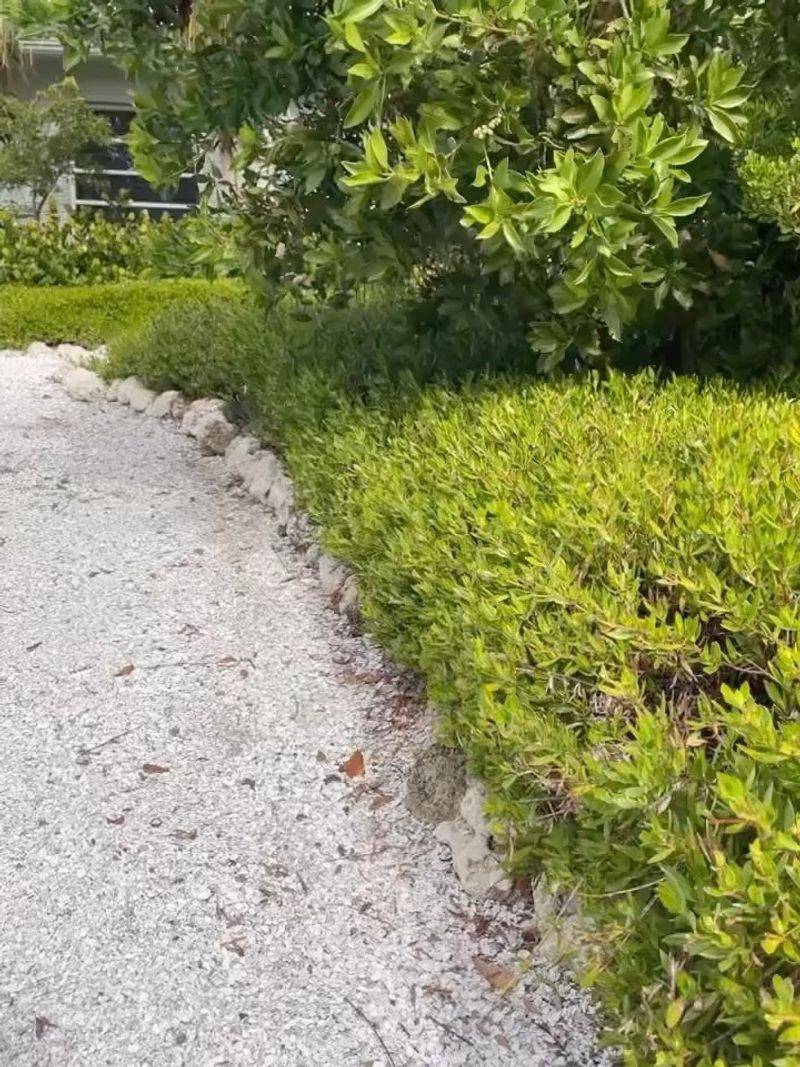
For the hottest, sandiest edge of a South Florida yard, think smaller flowers and stronger staying power. Beach creeper can take the place of sweet alyssum where the goal is a low border without frequent replanting.
Ernodea littoralis forms a spreading evergreen groundcover or low shrub, often around 1 to 3 feet tall. Its tiny pinkish-white flowers are subtle, while golden fruit adds another layer of interest.
Do not expect the dense white blanket that annual alyssum creates. The payoff is a durable coastal planting with flowers that can appear year-round in frost-free conditions, plus fruit used by wildlife.
Choose full sun and sharply drained sand or rocky soil. Salt exposure and dry conditions suit it far better than a wet bed receiving daily lawn irrigation.
This is a regional choice for South Florida, not a reliable winter bloomer for the Panhandle. Confirm local suitability before buying, especially away from coastal conditions.
Give new plants water until their roots spread, then taper off. Leave space for stems to wander, and trim the edges only when they reach paths or neighboring plants.