
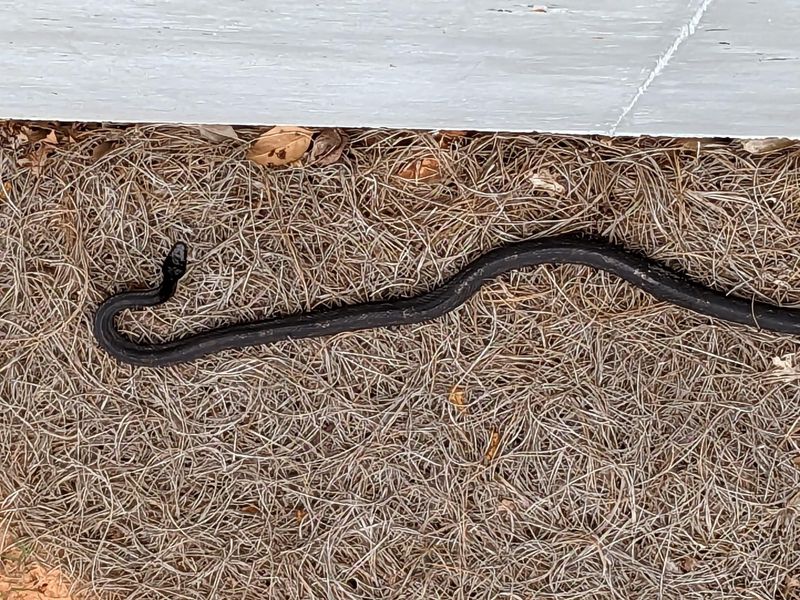
A big snake curled up behind your shed can stop you in your tracks. Florida’s ratsnakes are common around yards and outbuildings, and the sighting often leaves people wondering what it means.
The answer is more measured than a quick guess, and it points to some easy yard habits. Here is how to read the encounter, stay safe, and make your shed less appealing to rodents.
A shed visit is a clue, not a diagnosis
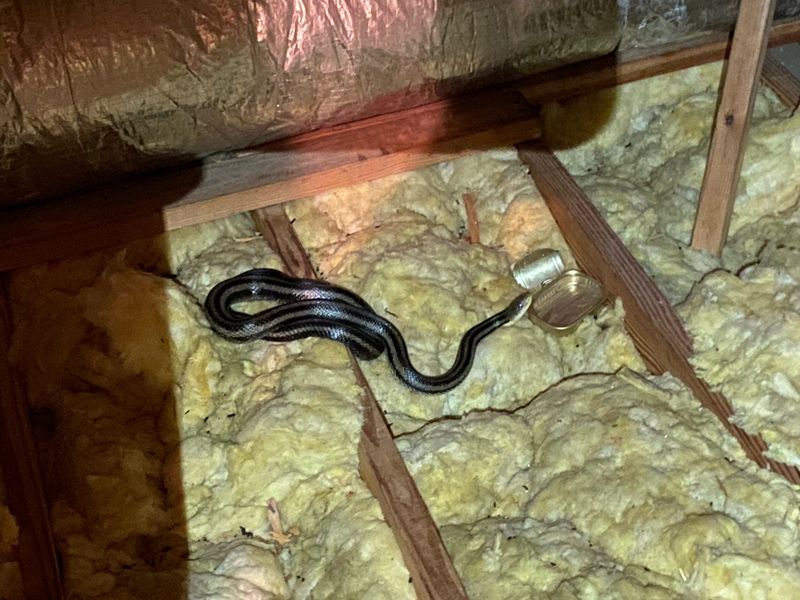
Seeing a ratsnake near your shed is a clue worth noticing, but it is not proof of anything yet. The most useful way to think about it is that the snake may be taking advantage of rodents nearby.
It might also be using the spot for cover, or simply passing through on its way somewhere else.
Here is why the rodent idea comes up at all. UF/IFAS Extension says ratsnakes are often found in sheds, garages, and attics when rodents are present, which you can read in its guidance on preventing snake encounters.
Sheds offer shade, clutter, and tight gaps, and those same features appeal to mice and rats.
The Florida Fish and Wildlife Conservation Commission adds a helpful note of caution. FWC’s snake guidance says repeated sightings near buildings may indicate rodents.
That is an indication, not a diagnosis, and a single sighting says even less.
So what do you do with a clue like this? Treat it as a nudge to look around.
Check the shed for droppings, gnawed boxes, shredded nesting material, or small holes along the base. If you find those signs, you have real evidence of rodents.
If you find nothing, the snake may simply have picked a shady, sheltered corner.
Either way, the snake is not a problem you need to solve in the moment. Leave it alone, watch from a distance, and use the visit as a reason to give your shed a quick inspection.
That approach keeps you calm, keeps the snake undisturbed, and gets you useful information about your yard.
Ratsnakes eat more than rodents
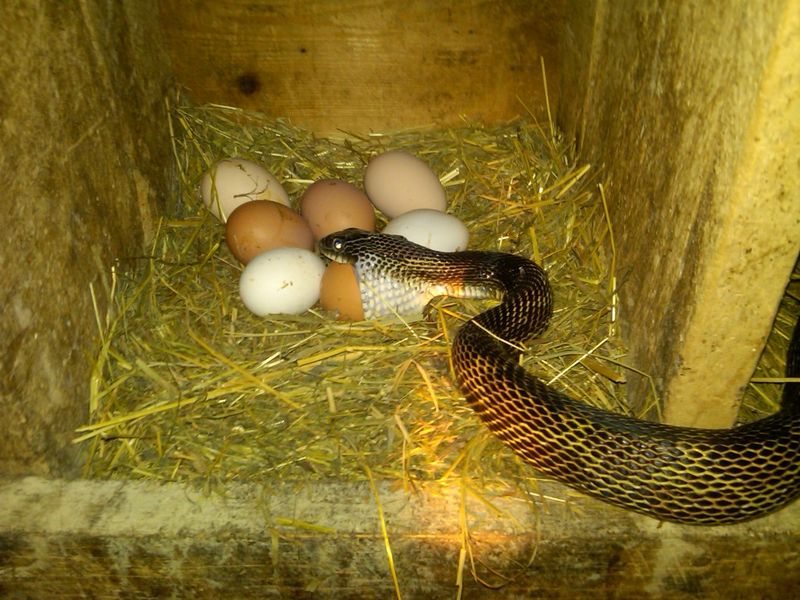
Ratsnakes earned their name for a reason, but rodents are only part of the menu. According to the Florida Museum’s Eastern ratsnake profile, the Eastern ratsnake eats rodents, lizards, frogs, birds, and bird eggs.
That is a wide range of prey, and it explains why these snakes turn up in so many kinds of places.
For a homeowner, this variety matters. A ratsnake in your yard might be interested in mice around the shed.
It might just as easily be interested in anoles on the fence, frogs near the hose bib, or eggs in a nest box. The sighting alone does not tell you which.
That is also why you should not count on one snake to handle a pest problem. A ratsnake does not work like a pest control service, and it will not limit itself to the animals you wish it would eat.
If you enjoy backyard birds, for example, remember that nests and eggs can be on its list too.
None of this makes the snake a villain. It is a native predator doing what native predators do, and it is part of the web of wildlife that shares Florida yards with us.
The practical takeaway is simple: appreciate it as a possible sign that your yard offers food, but do not assume it will clear out rodents or benefit every corner of your property.
If rodents are your real worry, the dependable fix is to make food and shelter harder for them to find. We will get to those steps in the last section.
What does the coil tell you?
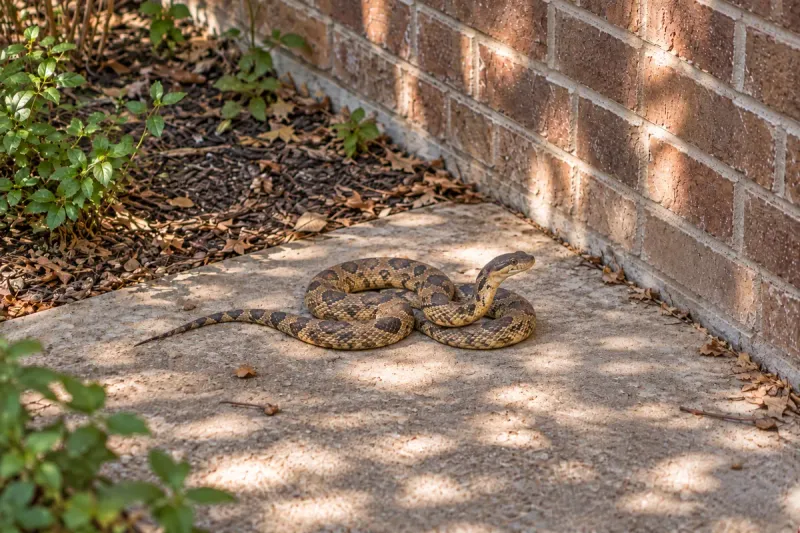
A coiled snake looks tense, so it is easy to imagine the worst. Many people assume it is waiting to strike or has just swallowed a rat.
Neither idea can be confirmed from a coil alone.
The Florida Museum notes that ratsnakes may be found coiled in places like tree cavities, under bark, and among palm fronds, as described in its Eastern ratsnake profile. In other words, coiling is something these snakes do while sheltering.
A snake tucked behind a shed may be doing exactly that.
It helps to separate what you can see from what you are guessing. You can see that the snake is coiled, where it is, and roughly how big it looks.
You cannot see whether it is resting, waiting, digesting, or simply warming up. Any of those stories is speculation.
A few observations are fair to make from a distance. Is the snake staying still or moving away?
Does it seem to be tucked in a gap or out in the open? Does it have a visible bulge in its body?
Those details are more informative than the coil itself, though they still do not prove what it has eaten or what it plans to do.
The safest response is to watch quietly from well back, keep kids and pets inside or away, and let the snake make its own choices. Treat the coil as a reason for distance, not as a sign of a meal or an attack.
Florida has more than one kind of ratsnake
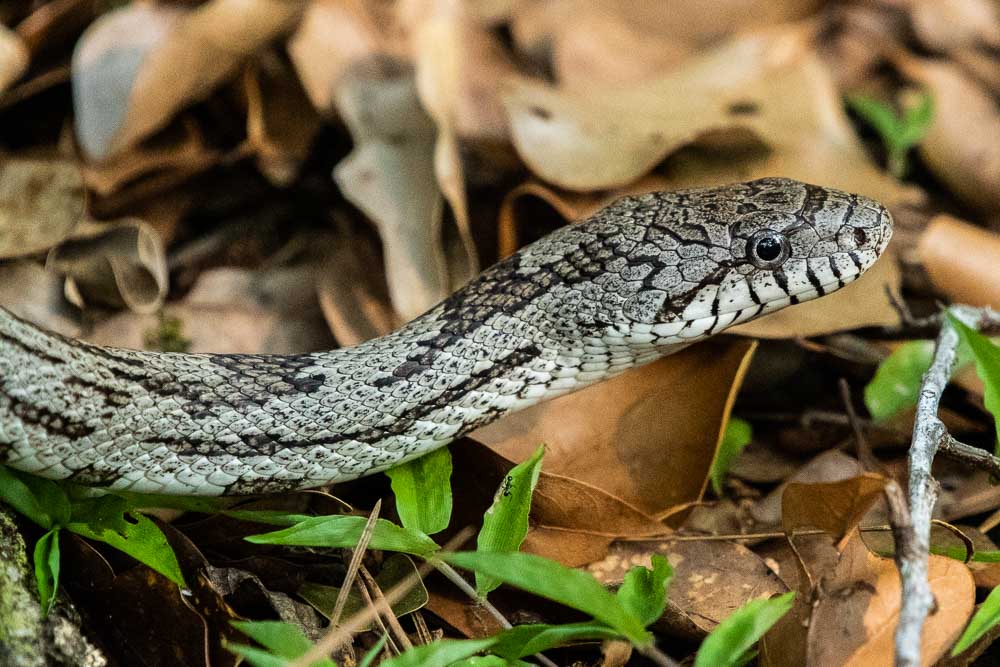
The name rat snake sounds like a single animal, but Florida has several ratsnake types. A common name, a large body, or a quick glance at color is not enough to say which snake you are looking at.
Even a confident guess can be wrong.
Location gives a helpful starting point. The Florida Museum’s Eastern ratsnake page places this species across the peninsula.
The gray ratsnake, covered on its own Florida Museum page, occurs in the Panhandle west of the Apalachicola River. So where your shed sits on the map matters.
Color adds another wrinkle. Eastern ratsnakes vary, and they can be yellow, orange, tan, or gray.
That means you cannot rule one in or out by shade alone, and a snake that looks unfamiliar may still be a ratsnake.
Because looks can mislead, resist the urge to step closer for a better view. A zoom lens or a phone camera held at arm’s length of safe distance is far better than leaning in.
Take a few clear photos of the whole body and the head area if you can do so without approaching.
Those photos can help a qualified professional or local extension office sort out what you have. Until then, treat the snake as unidentified and give it room.
Give the snake space
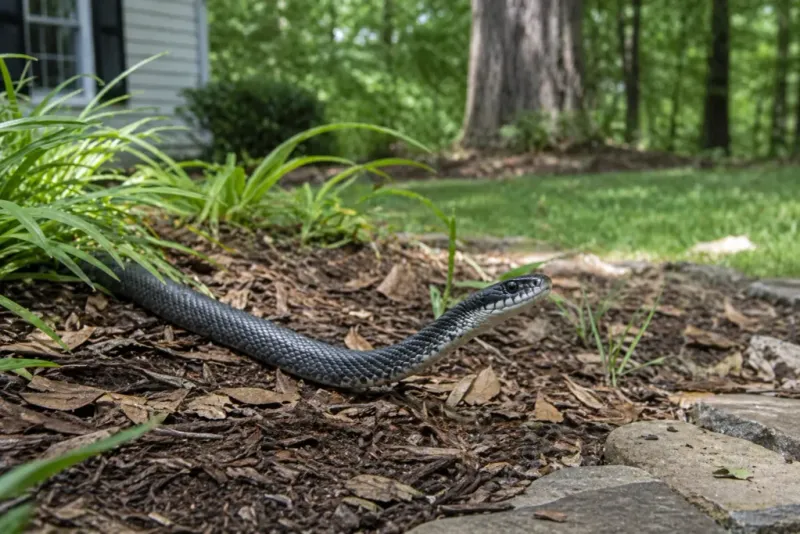
When you spot a big snake, your first move should be the calmest one: stop and back away. Do not grab it, corner it, or try to kill it.
Handling and killing attempts are how most bites happen, and UF/IFAS guidance on living with snakes warns that they raise the risk of being bitten.
Eastern ratsnakes are nonvenomous, but that does not mean they never bite. The Florida Museum says they may bite defensively if grabbed or pinned.
A nonvenomous bite can still hurt and cause an infection.
Next, handle the people and pets. Call children inside or well away from the shed, and leash or bring in dogs and cats.
Curious pets are often the ones that end up too close.
If you want help with identification, photograph the snake only from a safe distance. Zoom in rather than step in.
Then share the photos with a qualified professional such as a wildlife expert or your county extension office.
You should reach out for professional help whenever you cannot confidently identify the snake. Never assume an unidentified snake is harmless or safe to pick up, even if it resembles a ratsnake.
Staying back costs you nothing, and it protects you, your family, and the animal.
Let a yard snake move on without handling it
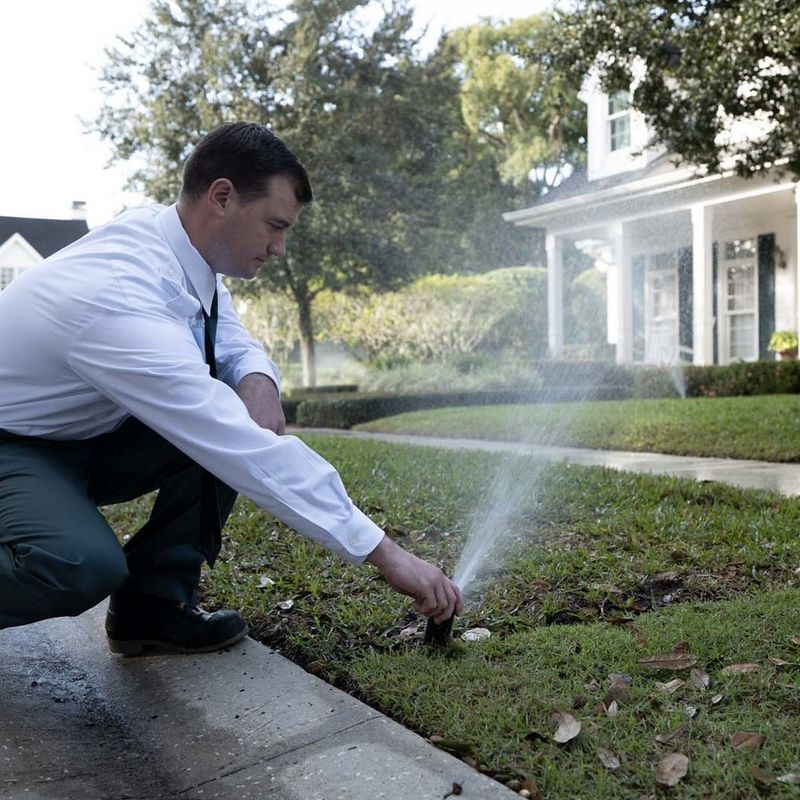
Sometimes a snake lingers in a spot where you would rather it not be, like beside the shed door or near the garden. UF/IFAS describes a simple, low-risk option in its guide to living with snakes: a gentle spray from a garden hose, used from a safe distance, may coax it along.
Think of it as a nudge, not a chase. Keep the water soft and aim it near the snake rather than hard at its body.
Stay well back, keep your feet clear of the area, and give it an open path to leave.
What you should not do is try to capture it. No bucket, no tongs, no towel.
Capture attempts put your hands close to a frightened animal, and that is exactly when bites happen.
Know when the hose is the wrong tool. If the snake may be venomous, or if it is inside your home, garage, or shed, call a professional instead.
UF/IFAS preventing encounters guidance supports using a trained person in those situations.
If the snake simply slides off into the brush, count that as a success. Keep pets in until you are sure it has moved on, and then turn your attention to the shed itself.
Make the shed less inviting to rodents
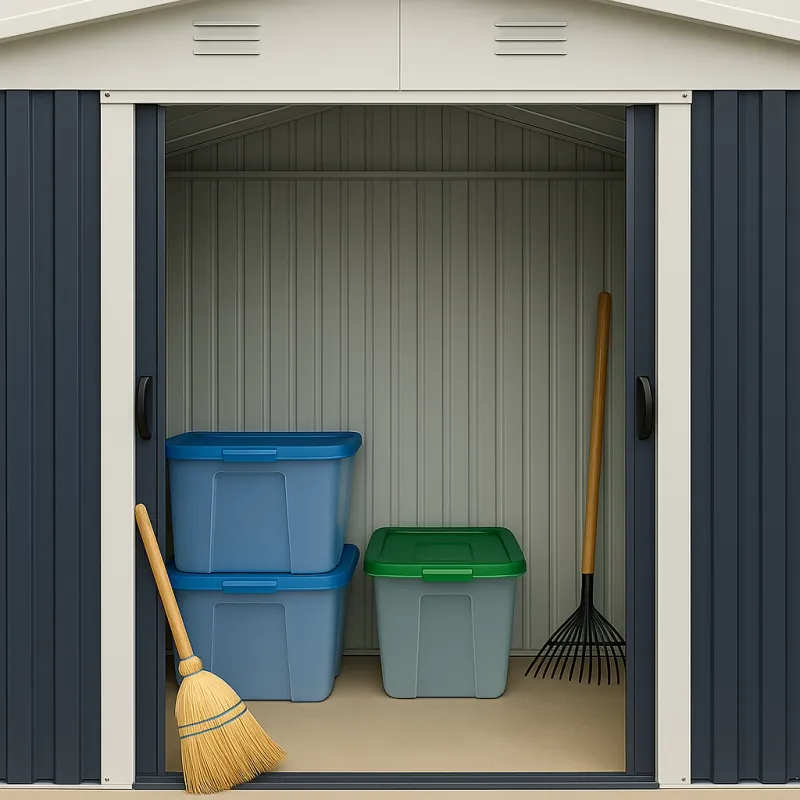
Whether or not this snake is hunting, you can take away what rodents want: food, water access, and hiding places. These steps help in any Florida yard, and they work on possible attractants rather than on a proven cause of your sighting.
Start with food. Store pet food, birdseed, and garbage in sturdy, tightly lidded containers, and clean up food scraps.
UF/IFAS guidance on preventing snake encounters points to these basics as ways to reduce rodents near homes. Keep compost in a bin that rodents cannot get into.
Next, take away shelter inside and around the shed. Clear out cardboard boxes and loose clutter, since they make ready-made nests.
Raise stored items off the floor when you can, and trim back thick vegetation that touches the walls.
Then seal the gaps. Look along the base, around doors, and near utility openings for holes and cracks, and close them with sturdy materials.
This also helps with the kind of snake access FWC’s snake guidance discusses around buildings.
Be careful with rodenticides. UF/IFAS warns that poisons can also harm pets or wildlife that eat poisoned rodents, so they are not a simple fix.
No single step guarantees results, and one snake will not guarantee pest control either. A cleaner, tighter shed simply gives rodents fewer reasons to move in, and that is a win whatever the snake decides to do next.