
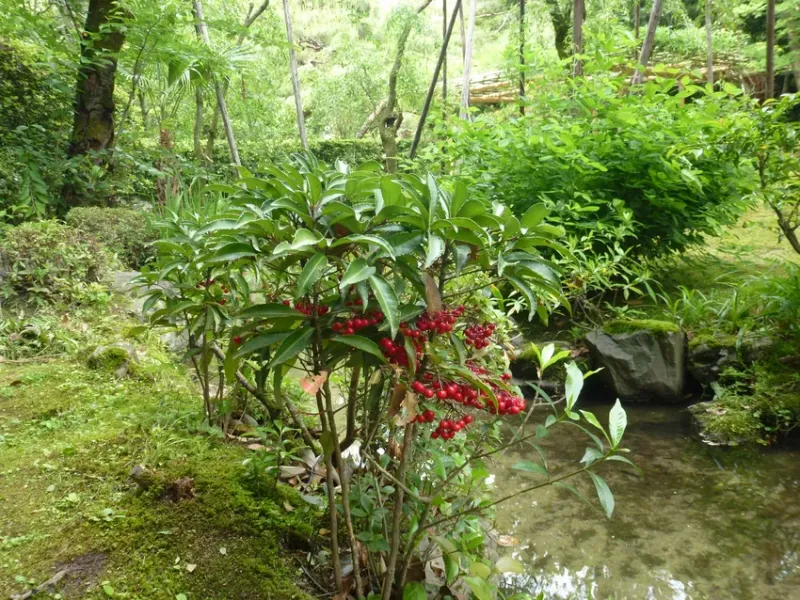
That glossy shrub with bright red berries tucked into a shady bed looks like a holiday decoration. In Florida, though, coral ardisia is an invasive plant that birds help spread into nearby woods and gardens.
Knowing how to spot it and take it out can protect your beds and the native plants around them. Here is how to confirm what you have, remove it the right way, and keep it from coming back.
Confirm the shrub before removing it
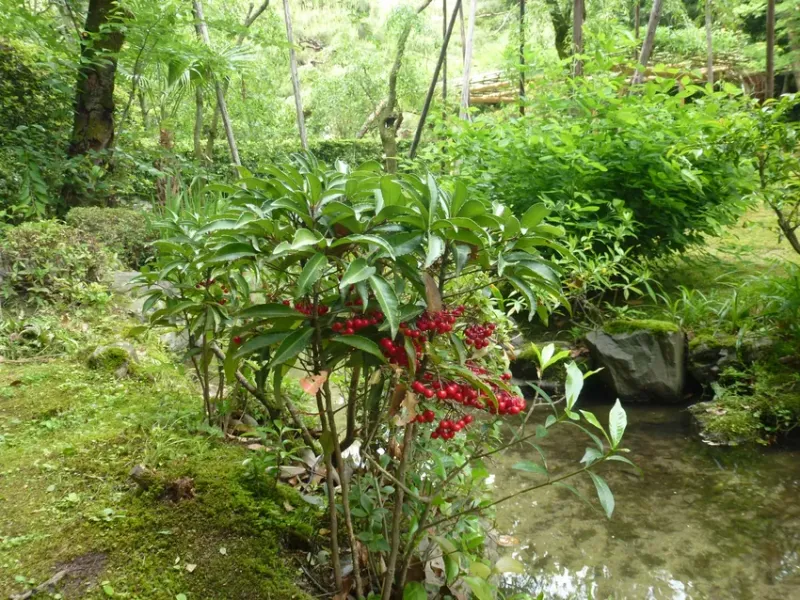
Start with a close look at the leaves. Coral ardisia has glossy, dark-green leaves with scalloped, wavy edges, and the shrub usually stays a few feet tall.
Bright red berries hang in drooping clusters, and each berry holds a single seed, according to the UF/IFAS plant directory.
Do not assume every red-berried shrub is the same plant. Other Ardisia species grow in Florida, and some are not the problem plant you are after.
If the shrub is unfamiliar, compare it with photos from a trusted source or ask your county extension office before you pull anything.
Habitat can help with the clues. Coral ardisia grows in wooded, often moist areas and tolerates deep shade, so it turns up under trees, along fence lines, and in shaded corners of landscaped beds.
Oaks are one common setting, but the plant does not need them. A shady yard with no oak in sight can still host it.
The Florida Department of Agriculture and Consumer Services lists it as a Florida noxious weed, which is a useful second reference for the leaf and fruit description. Once the leaves, scalloped edges, and berry clusters all match, you can move on to removal with confidence.
Birds spread the seeds beyond the bed
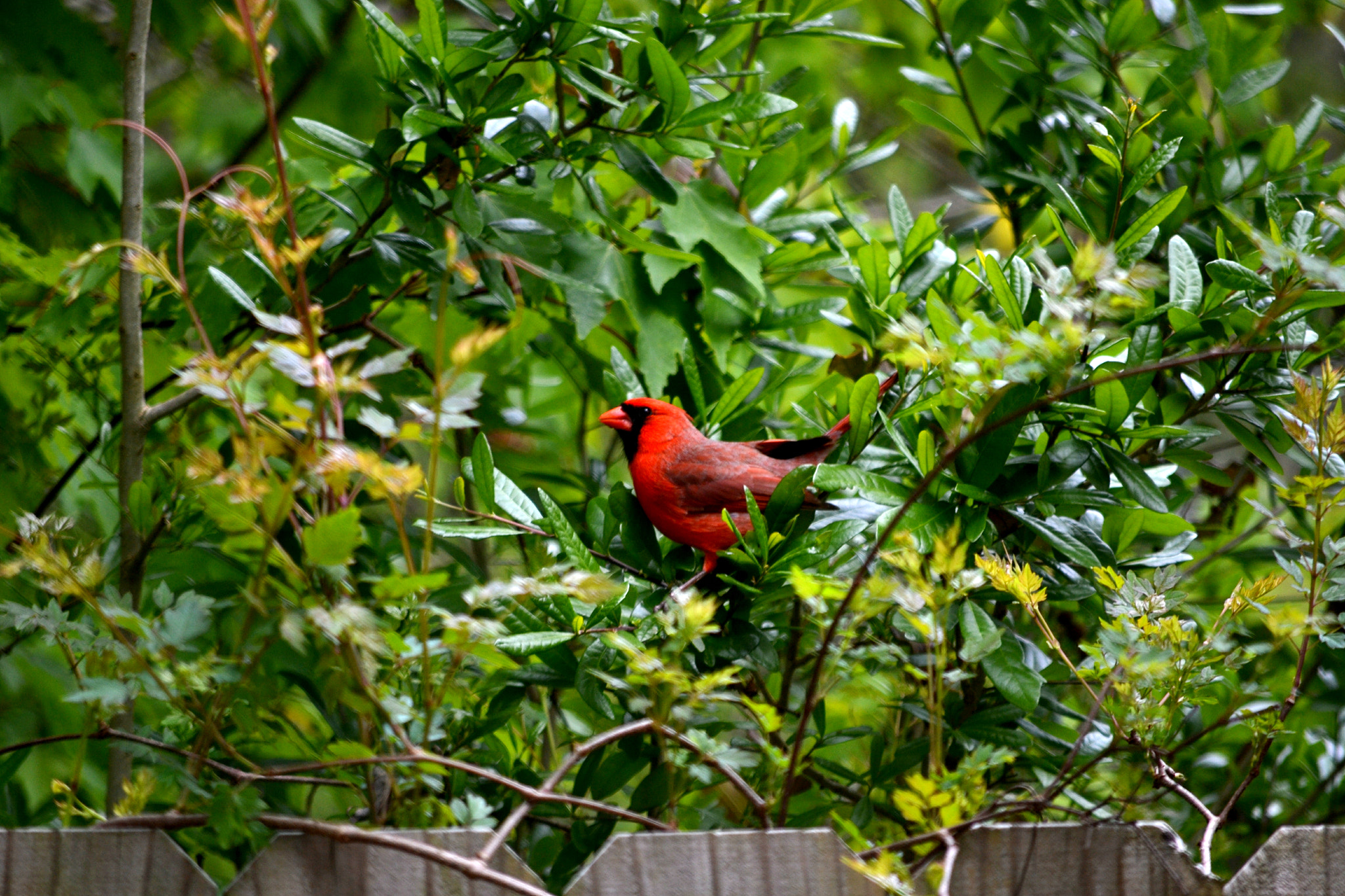
Birds are the reason a single shrub can turn into a problem well beyond your fence. They eat the bright red fruit and carry the seeds elsewhere, a spread method described by the Florida Department of Agriculture and Consumer Services.
A seed dropped in a neighbor’s hedge or a nearby woodlot can sprout just as easily as one under the parent plant.
Berries that fall under the shrub can also sprout, so you may see a ring of seedlings around an older plant. Still, bird travel is the better-supported way this species moves across a neighborhood, which is why one yard can affect many others.
Coral ardisia is considered invasive in Florida because it does not stay put. Dense stands can crowd out native understory plants, the low wildflowers, ferns, and young shrubs that wildlife depend on.
A patch that looks tidy in a shady bed can slowly take over the woods next door.
The Florida Invasive Species Council lists coral ardisia as Category I, which is an invasive-species classification. It is not a blanket statement that owning the plant is illegal.
The practical takeaway is simple: a correctly identified plant is worth removing so it stops feeding the next round of seedlings.
Fruit season does not create a short deadline
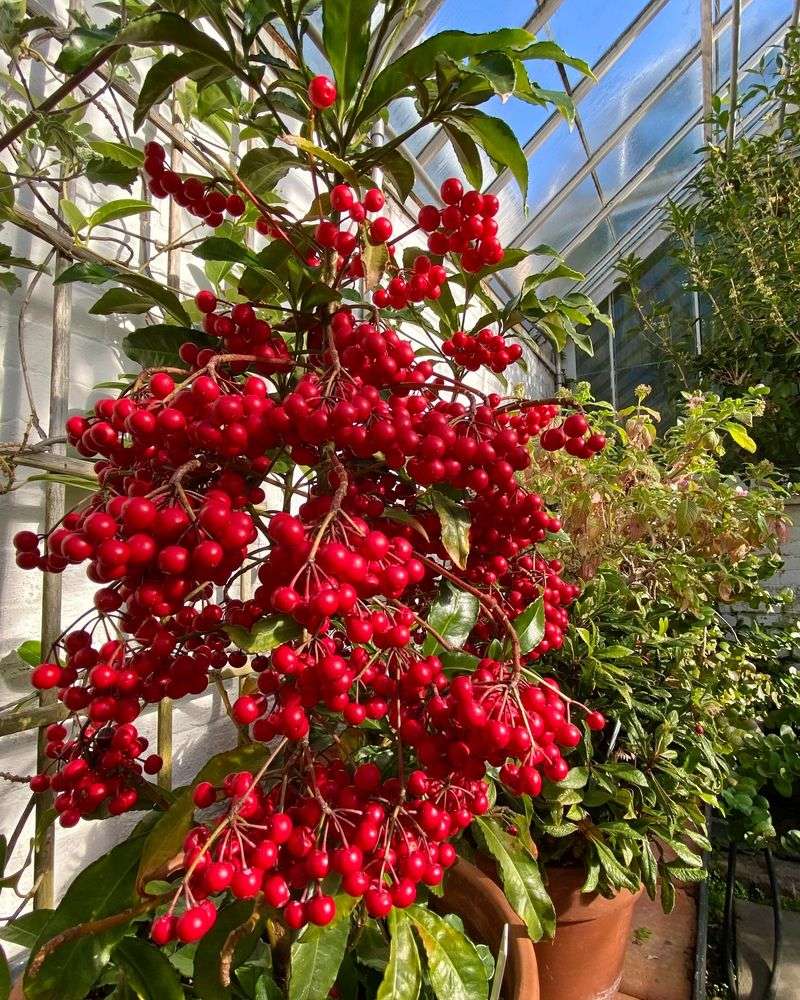
Seeing berries in November can feel like a countdown, but there is no brief window that is about to close. According to UF/IFAS, fruit matures from July through December, and the berries can stay on the shrub for up to a year.
That means a shrub you notice today may already have been carrying fruit for months. Berries do not all drop at once, and you do not need to rush out in a panic because a certain week has passed.
Some seed may already be out in the world. Birds could have eaten fruit from your plant earlier in the season, so you might find seedlings nearby later.
That is not a reason to give up. Taking out the parent plant stops it from producing and offering more fruit in the seasons ahead, which reduces future seed spread.
The UF/IFAS management guide describes the same long fruiting period. So pick a dry, comfortable day soon, gather your tools, and handle it calmly instead of trying to beat a deadline that does not exist.
Remove small plants by the roots
Method depends on size. For small plants, grab the stem close to the soil and pull so the roots come out with it.
Damp soil after rain makes this much easier, and wearing gloves keeps sap and berries off your hands.
If a stem snaps and leaves the roots behind, switch to a shovel or hand trowel and dig out the root crown, the thick base where stem meets roots. Larger plants often need this step from the start.
UF/IFAS explains these steps in its homeowner guide to coral ardisia.
Cutting the shrub to the ground or mowing over it is not reliable control, because plants can resprout from what remains. If you see fresh green shoots coming from a cut stump, the root crown is still alive and needs to come out.
When hand removal is impractical, such as in a big thicket or a spot where digging would damage tree roots, herbicide is an option. Follow the product label closely, and protect nearby desirable plants from drift and drips.
Check with your county extension office if you are unsure which product suits your site.
Fill in the bare spot afterward with a native shade-loving plant or a layer of mulch so new seedlings have a harder time getting started.
Dispose of fruiting debris carefully
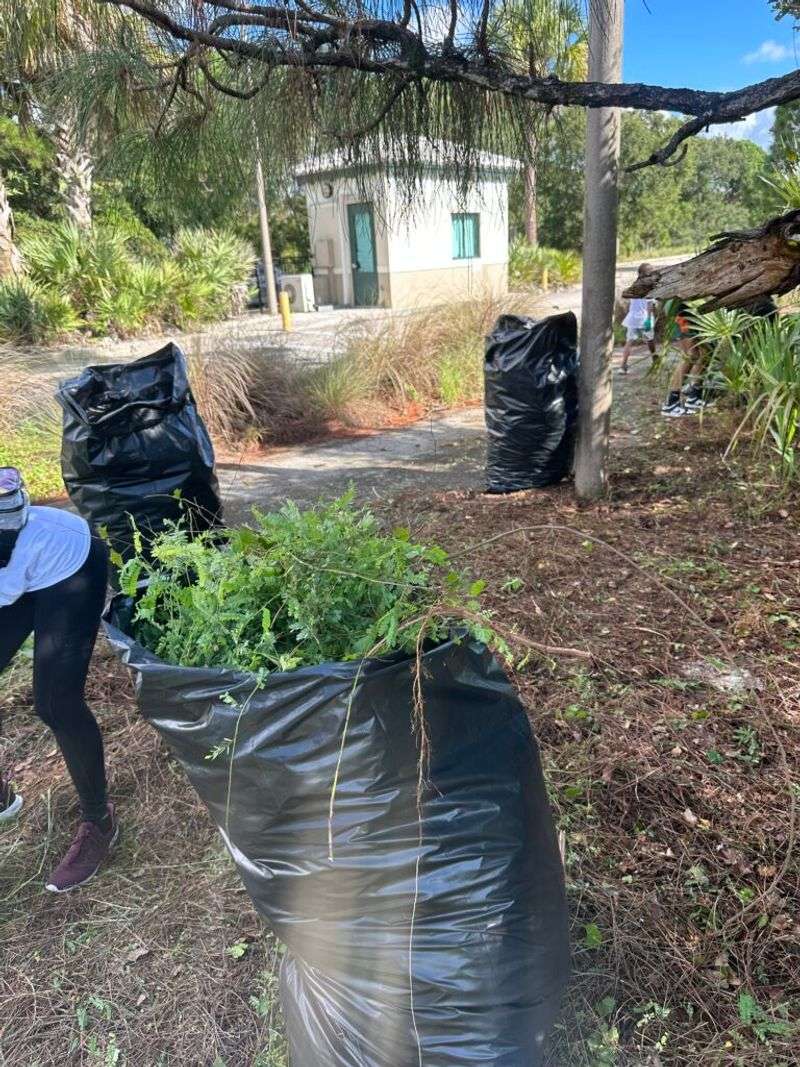
Once the plants are out, what you do with them matters. Seeds and cuttings can establish elsewhere, so seal everything in a sturdy bag.
UF/IFAS Gardening Solutions covers this in its guide on removing invasive plants, advising that bagged material go into regular landfill trash.
Berry-laden branches deserve extra care. Shake as little as possible while loading them, and use a thick contractor-style bag so thorny stems or heavy stalks do not tear it.
Tie it closed before it leaves the yard.
Skip the compost pile, especially one that is off your property. The conditions needed to kill coral ardisia seeds are unknown, according to the UF/IFAS management guide, so casual composting could simply give seeds a new home.
Dumping debris at the edge of a wooded lot has the same risk.
Do not leave piles of pulled plants sitting on bare soil, either. Berries can ripen or roots can reroot if they touch damp ground.
Bag them the same day, and your cleanup will end where it should.
Monitor the area for new seedlings
A single cleanup rarely finishes the job. Seeds already in the soil can sprout, and birds can drop fresh seed into the same shady spot later.
Expect to see a few young plants and treat them as routine, not as a failure.
UF/IFAS recommends monitoring the area for a year after control. Walk the bed every few weeks, look under shrubs and along fence lines, and pull seedlings while they are small and the roots come out easily.
It helps to check neighboring corners too, since seedlings often pop up a short distance from the original plant. Keep a bag handy so anything you pull goes straight into the trash.
If you correctly identify coral ardisia, removing it is worth the effort, and a quick monthly look keeps the work small. A shady bed that stays red-berry free is the best reward.