
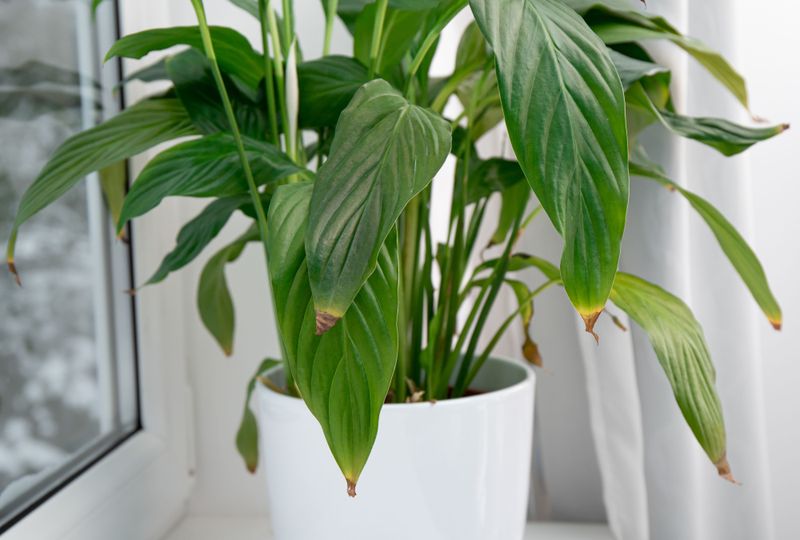
Brown tips on a peace lily can make a healthy-looking plant seem like it is failing. Many caretakers blame themselves and start changing everything at once.
One thing worth a look is the water going into the pot, since some peace lilies seem sensitive to what is in tap water. Here is how to sort out the clues, try a careful water change, and know what to watch for next.
Brown tips do not identify one mistake
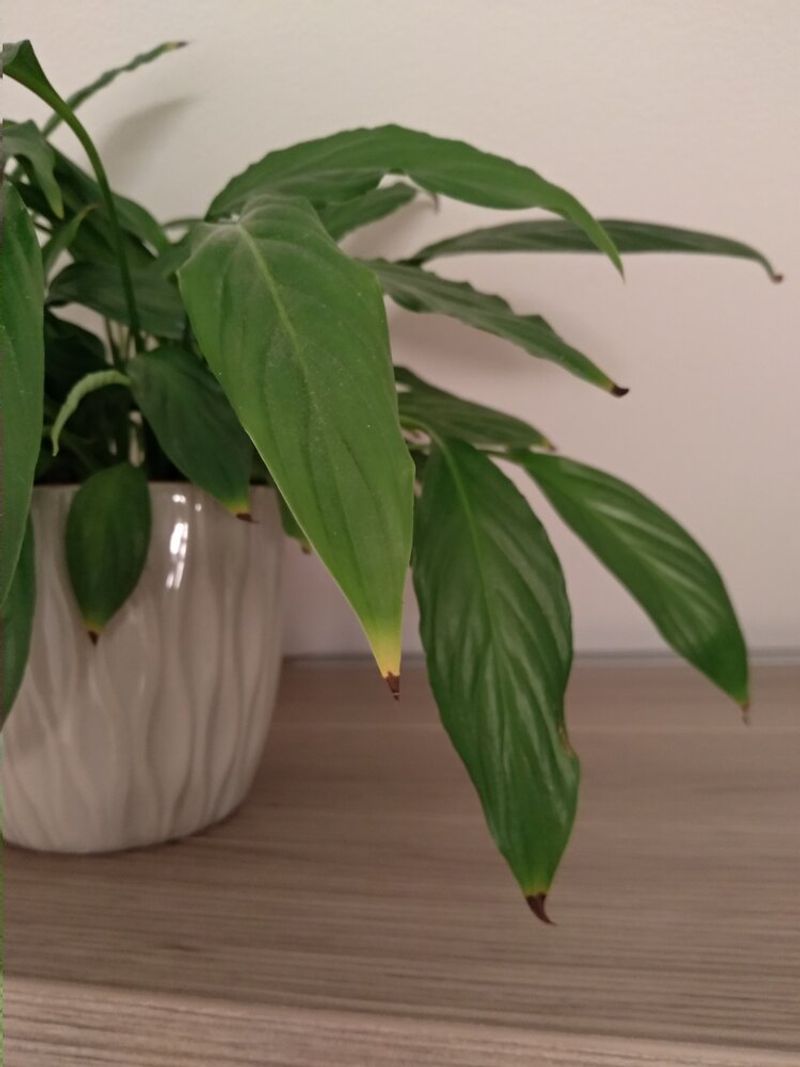
A brown tip is a symptom, and plenty of different problems can cause it. University of Maryland Extension notes that causes such as fluoride or soluble salts, too little water, too much water, low humidity, and too much light can look alike.
That is why one browning leaf cannot tell you what went wrong. Two peace lilies in the same room can show the same tips for totally different reasons.
Before you change anything, take a few minutes to review how the plant has been cared for. Think about how often you water, whether the pot drains, when you last fertilized, how dry the air gets, and how much sun reaches the leaves.
Looking at the whole picture keeps the water-quality idea useful. It becomes one possible clue to test, not a verdict, and you avoid changing five things at once and never learning which one mattered.
Municipal water may be one source of stress
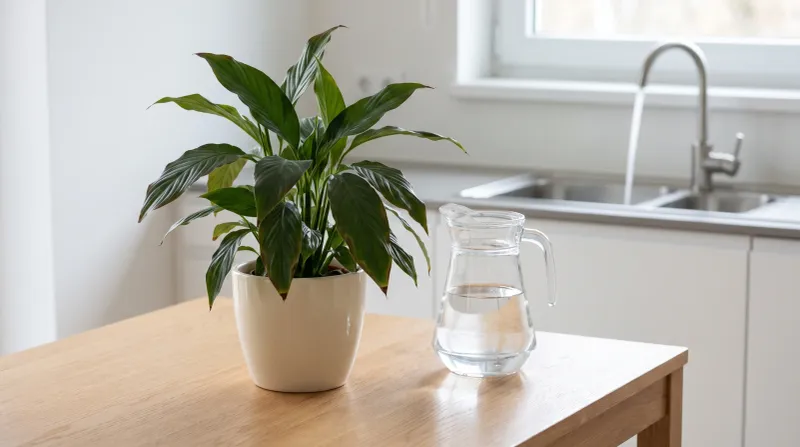
Some peace lilies appear to be sensitive to fluoride, which is added to many municipal water supplies. University of Illinois Extension points to fluoride sensitivity as a possible reason for tip damage and suggests rainwater or another non-municipal source as an option.
Fluoride can build up in leaf tissue, and the tips are often where damage shows first. Soluble salts in water or fertilizer can cause similar injury.
The Pacific Northwest Plant Disease Management Handbook describes how fluoride injury shows up in plants.
So repeated watering with tap water is a plausible factor for some plants, not all of them. It fits best when the tips keep browning even though moisture, drainage, and light seem fine.
Brown tips alone cannot prove tap water is the cause.
Test a different water source carefully
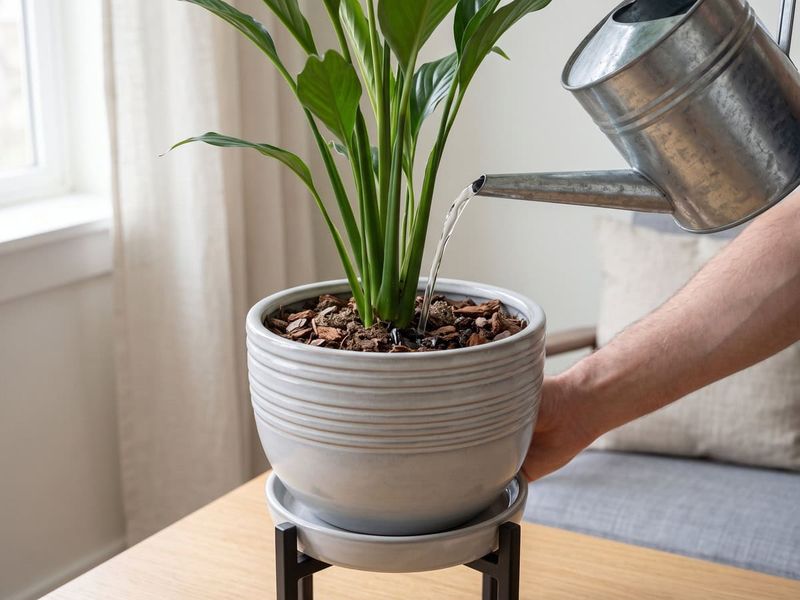
If water quality seems plausible, treat a new water source as a test. Rainwater is one option, and the Pacific Northwest handbook says reverse osmosis can reduce fluoride.
Collect rain in a clean container, or use reverse-osmosis water from a home unit or refill station.
Skip softened water. It can add soluble salts, which may make tip damage worse.
You may have heard that tap water left out overnight loses its fluoride. SDSU Extension mentions standing water in connection with chlorine evaporating, but fluoride generally stays dissolved, so do not count on that trick.
Distilled or purified water is not a risk-free fix either. A Maryland Extension response notes it may leach nutrients from potting mix faster.
Keep the rest of your care steady during the trial so you can tell whether the water made any difference. It is a test, not a guaranteed cure.
Water by the mix, not the calendar
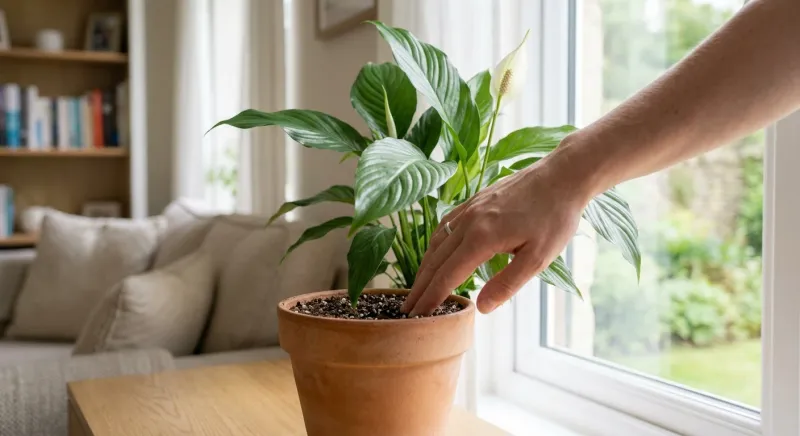
Water quality and watering frequency are two separate things. A fixed schedule ignores changes in light, season, and pot size, so check the plant and the potting mix instead.
University of Maryland Extension says peace lilies like more even moisture than many houseplants, but they should not stay soggy.
When the mix feels like it needs water, soak it thoroughly until water runs out the drainage holes. Let the excess drain, then empty the saucer so the pot is not sitting in water.
Thorough does not mean frequent. Deep watering followed by drainage helps flush the mix, while constant wetness can harm roots.
If the top of the mix still feels damp, wait a bit before watering again.
Check for fertilizer salts and crust
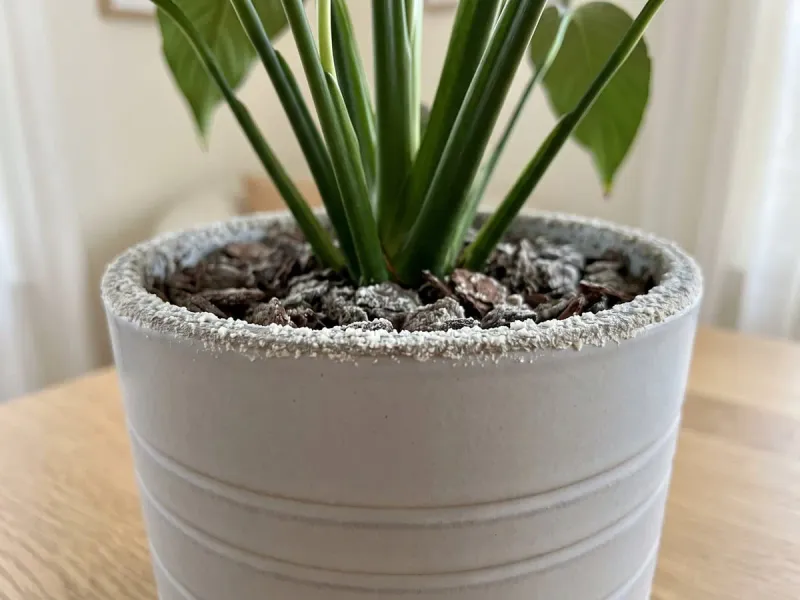
Fertilizer is another source of soluble salts. A white or tan crust on the soil surface or around the pot rim can hint that salts are building up.
According to University of Maryland Extension, that buildup can injure roots and lead to brown tips.
Start by cutting back on fertilizer if you have been feeding often or at strong doses. Peace lilies do not need heavy feeding.
If the pot drains well, you can leach the mix now and then by running fresh water slowly through it and letting it drain fully. Do not do this in a pot with poor drainage, since the water will just sit.
Fertilizer salts and fluoride are different problems, though both involve dissolved substances. Fixing one will not necessarily fix the other.
Rule out other lookalikes
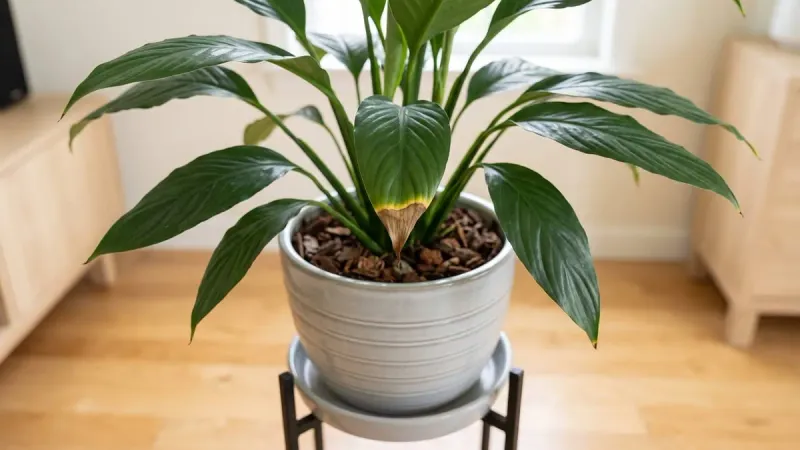
Before you settle on tap water, run through the usual suspects. Dry mix that stays bone dry can brown tips, and so can roots that stay too wet.
Check that the pot has drainage holes and that nothing is blocking them.
Low humidity from a heating vent or a sunny, dry room can crisp leaf edges. Strong direct sun can scorch leaves, and peace lilies generally do better in indirect light.
Different stresses can produce similar brown tips, as Maryland Extension points out. Do not respond by watering more or keeping the soil wet, since persistent excess moisture can damage roots, as covered in this overwatering guide.
Fix the clear problems first, then decide whether a water-source trial still makes sense.
Judge any change by later growth
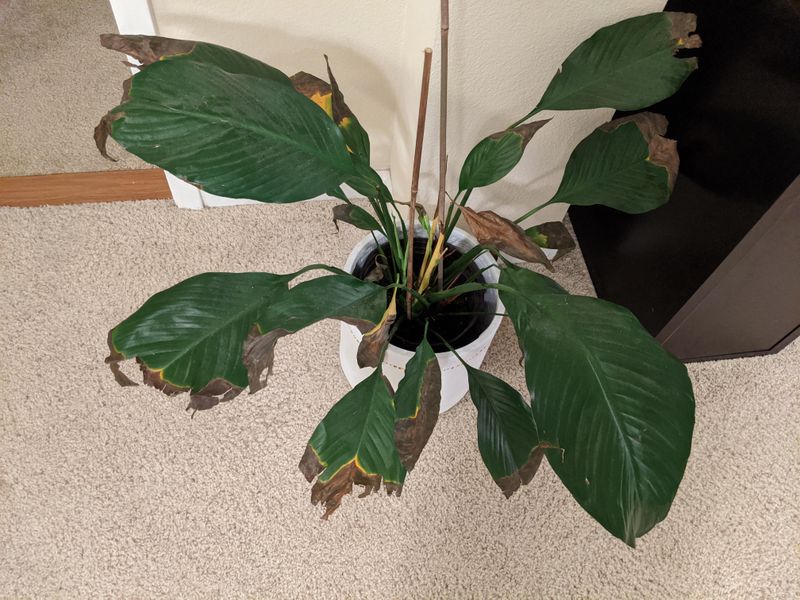
Old brown tissue will not turn green again, and recovery can be slow, as University of Missouri Extension notes for houseplant problems. You can trim the brown edges if they bother you.
Watch the new leaves over several weeks. If they come in with fewer brown tips, water quality may have been part of the problem.
If they do not, look again at the other causes in Maryland Extension’s list.
Peace lilies reward patience more than quick fixes.