
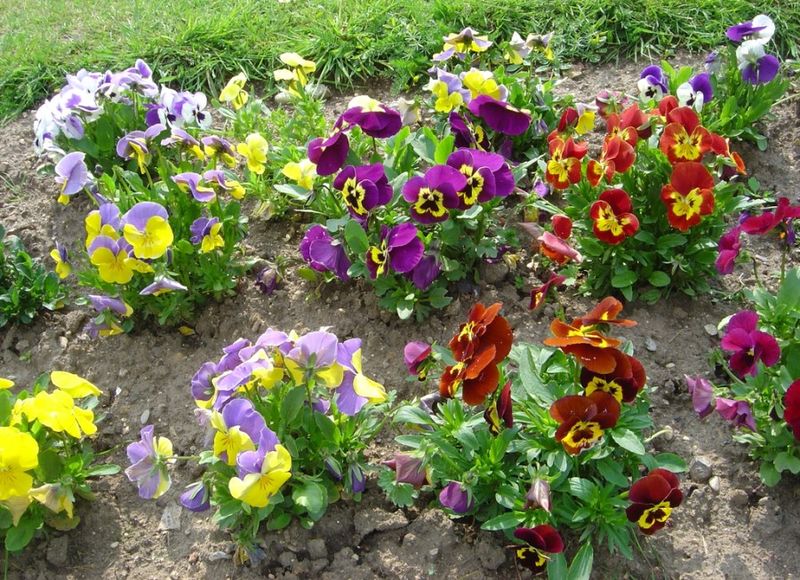
Nothing looks sadder in January than a pansy bed with bare soil showing between small plants. Many North Carolina gardeners plant in fall, then wonder if they spaced too far apart.
One simple measurement can help you lay out the bed with confidence. Here is how to use it, and what it can and cannot do.
Start With Eight Inches Between Plant Centers
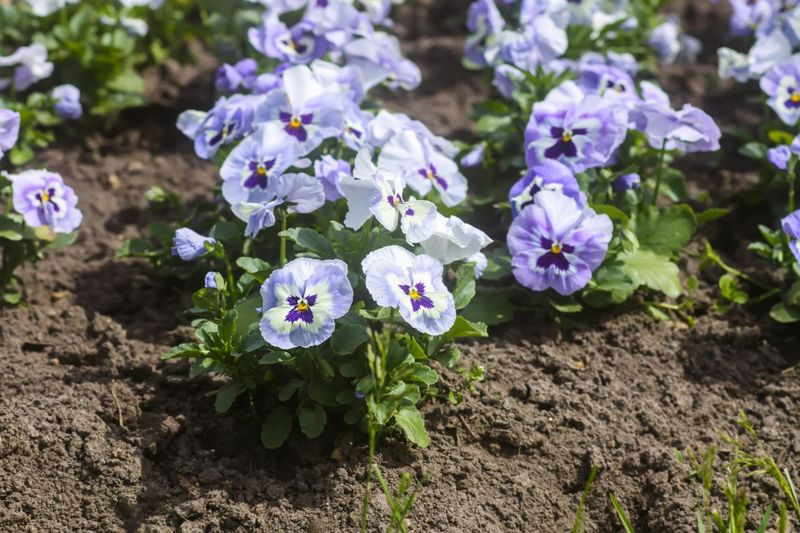
Here is the rule in one line: set pansies 8 inches apart, measured from the center of one plant to the center of the next. Do not measure from leaf edge to leaf edge, because that makes the real spacing smaller than you think.
This number is a practical middle ground. University of Georgia Extension guidance lists 6, 8, or 10 inches as standard options for winter pansy beds.
Eight sits in the middle of that range. It comes from Georgia, not from a North Carolina spacing trial, so treat it as a sensible default and not a proven North Carolina best.
To mark centers, cut a stick or a strip of cardboard to 8 inches and use it as a guide. Set each transplant at the end of the stick, then move the stick to the next spot.
In a larger bed, lay out the first row along a string line and measure the rest from there.
For a bed with several rows, stagger the plants in a zigzag pattern. Each plant then sits 8 inches from its neighbors in more than one direction, and bare gaps are harder to spot from the sidewalk.
This spacing balances two goals. Plants look attractive at planting time, yet each one still has room to spread its leaves.
The next section covers when you might leave the default behind.
When Is Closer Spacing Worth It?
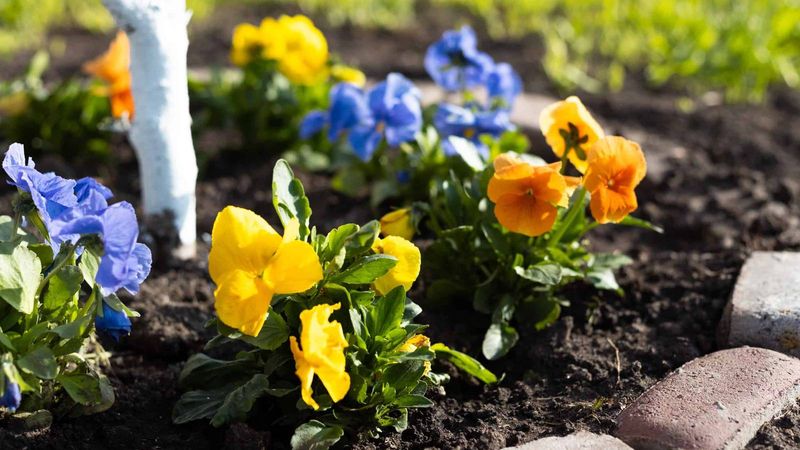
Some gardeners want a full look the day they plant. If that is you, 6-inch spacing is an option.
Extension says it makes a bed appear fuller at the start, but it can also crowd plants and raise their susceptibility to spider mites and diseases. It also means buying more plants, so it is not the best choice for everyone.
Crowded plants hold moisture and block airflow around their leaves. That can matter in a mild, damp stretch of North Carolina winter.
If you go to 6 inches, check the plants often and remove spent flowers and yellowing leaves so air can move through the bed.
On the other side, 10-inch spacing uses fewer plants. It leaves more open space between them at planting, so the bed will look sparser at first.
That may suit a large bed, a tight budget, or a gardener who is happy to wait for plants to spread. Wider spacing does not guarantee better winter growth.
To choose, ask yourself what matters most. If you want an instant show near the front door and will keep up with care, closer spacing may be worth it.
If you want to stretch your plant budget and can accept visible soil early on, wider spacing makes sense. If you want a balance, stay at 8 inches.
No spacing ensures full winter coverage.
Pansy Width Makes a Filled Bed Plausible, Not Certain
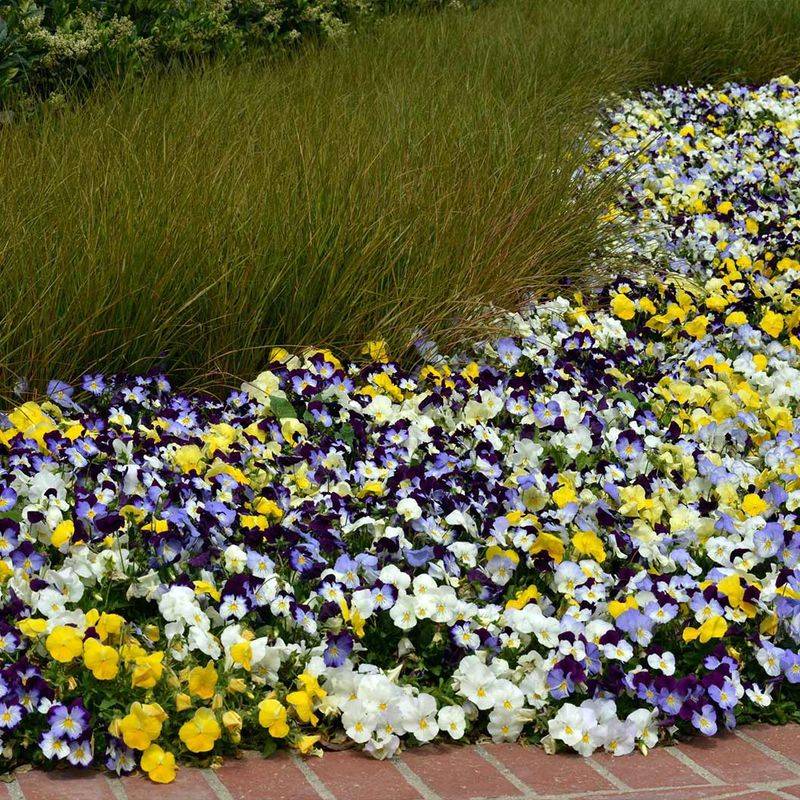
Plant size explains why 8 inches is a reasonable layout. NC State’s Plant Toolbox describes pansies as about 6 to 9 inches tall and 9 to 12 inches wide when grown.
A plant that wide could reach its neighbor when the two sit 8 inches apart, so the leaves may eventually meet.
The word to focus on is may. Mature width tells you what a plant can do, not when it will do it.
A pansy set out in fall will not necessarily reach 9 to 12 inches by midwinter, and nothing here points to a fill-in date you can mark on the calendar.
Habit matters too. Some pansies grow upright and others trail.
An upright type may stay more compact and leave open soil longer, while a trailing type may spread sideways sooner. If you buy a mix, expect some uneven growth across the bed.
It also helps to separate two ideas of a full bed. Leaves covering soil is one thing.
A dense display of flowers is another. Spacing alone does not decide either.
Transplant size, cultivar, planting date, and winter weather all play a part, so judge your bed by what you see and adjust your expectations as the season goes on.
Cold Soil Can Slow Winter Fill-In
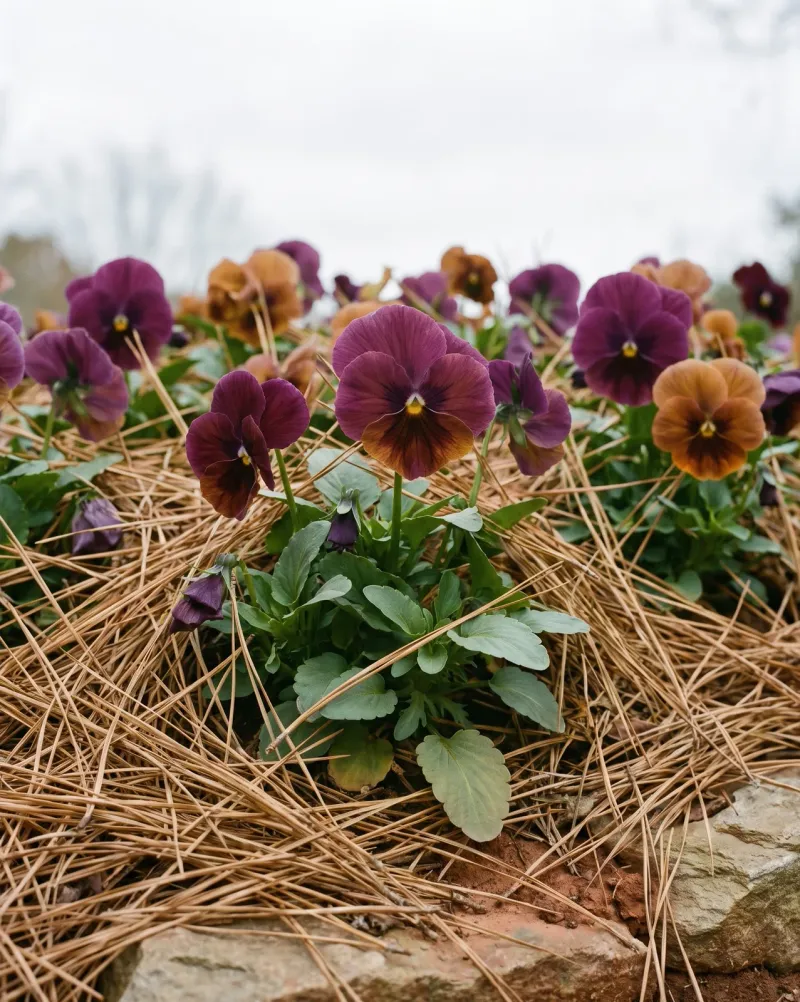
Roots do the work that feeds new growth, and cold soil slows them down. University of Georgia Extension says pansy root function slows sharply once soil temperature falls below 45°F.
In practical terms, a pansy may add leaves slowly during cold spells. That does not mean it stops growing everywhere in North Carolina.
Soil in the coastal plain, the Piedmont, and the mountains warms and cools on different schedules, and even two beds in one yard can differ.
The 45°F figure is a general limit, not a forecast. It cannot tell you when a particular bed will fill in, and a bed may grow during a mild week and stall in the next cold snap.
This is why spacing cannot erase winter gaps on its own. Even a well-planned layout depends on the plants growing, and growth depends on conditions you cannot control.
Flowers may also pause in the coldest weeks, so uninterrupted blooms and full coverage are not something any layout can promise.
If you want a clue about your own bed, push a soil thermometer a couple of inches down in the morning. A low reading helps explain slow progress, and you can be patient instead of replanting too soon.
Give North Carolina Pansies Time to Establish
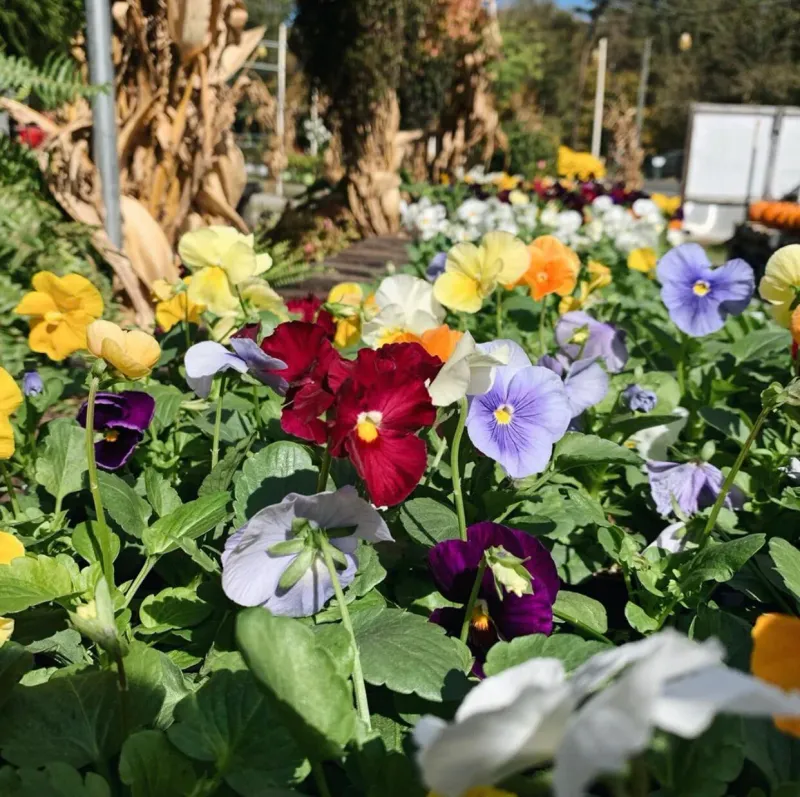
Plants that settle in before the coldest weather have a better start. Timing depends on where you live, and no single date fits the whole state.
Richmond County Extension gives late October to early November as its optimal planting period.
For eastern North Carolina, Wayne County Extension describes late October through November. It also cautions that pansies planted too late may not establish before winter.
These are county recommendations, so check with your local Extension office for your area, especially in the mountains, where cold arrives earlier.
Site and care affect establishment as much as the calendar. Choose well-drained soil, since soggy ground is hard on pansies.
Give them full sun, about 6 to 8 hours a day, and avoid overwatering.
As days shorten and cool, plants use less water, so water less often than you did in warm September weather. Check the soil with a finger before you pull out the hose.
Go easy on fertilizer. High-nitrogen products can push stretched, tender growth when fall is still warm, and that soft growth is not what you want heading into winter.
Skip pine-straw mulch around pansies. NC State guidance advises against it, because it can reduce growth and flowering.
One last caution: even if flowers are edible, do not eat nursery-bought pansies. They may have received systemic pesticides.
Treat Eight Inches as a Layout Rule, Not a Coverage Promise
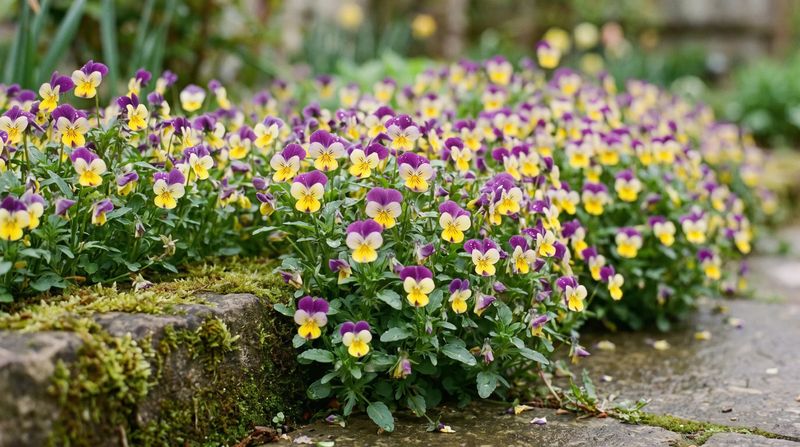
Eight inches from center to center is a solid starting point. It follows Extension spacing guidance and fits the 9 to 12 inch width NC State lists for grown plants.
It is still only one part of the picture. Planting time, winter weather, and the plants you buy all shape the result, and no spacing can guarantee a gap-free bed or a fixed fill-in date.
Think of the layout as the frame, and the season as the painter.