
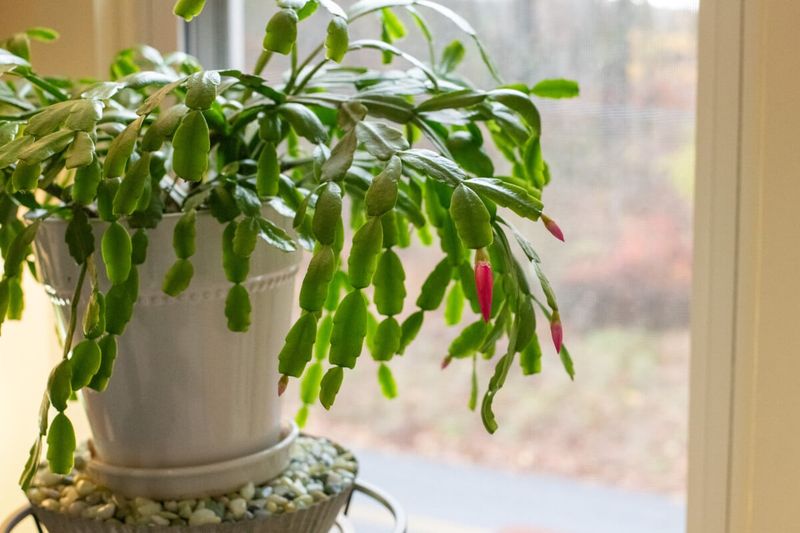
Few things sting like watching flower buds fall off a holiday cactus just as the season gets going. If your plant sits near a heater and the buds are dropping, you are probably wondering what went wrong.
The answer is less simple than blaming the vent, but there is one placement change that can lower the stress on your plant. Here is how to sort out what matters and what does not.
A heater vent is a possible stressor, not a diagnosis
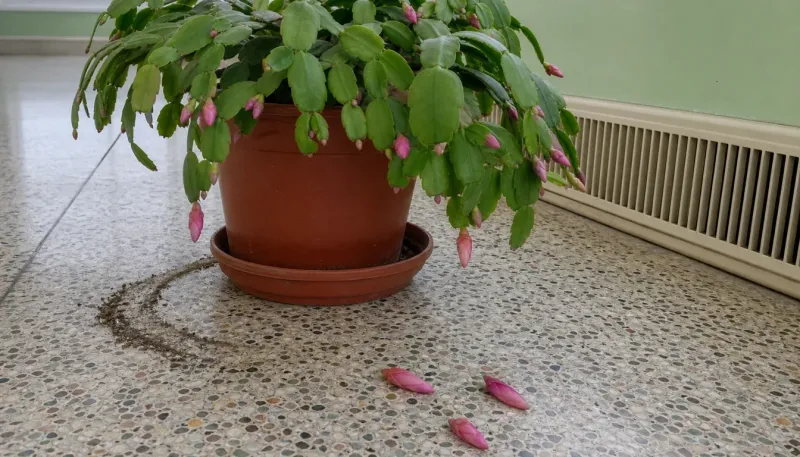
Warm air blowing straight onto a plant is a reasonable suspect when buds start falling. University of Minnesota Extension lists drafts and temperature changes among the causes of bud drop and suggests keeping the plant away from heaters and vents.
A suspect is not the same as a verdict, though. Buds dropping while a plant sits near a vent does not prove the vent caused the loss in your particular plant.
Timing alone cannot tell you the cause.
Other things can lead to the same result. UF/IFAS points to heat sources, drafts, environmental changes, and watering problems as possible reasons.
A plant that was recently moved, or one whose soil swung between soaked and parched, may react in much the same way.
So think of the heater as one item on a short list of things to check. Looking at the whole picture, including light, water, and room conditions, will serve you better than fixating on a single cause.
Pink buds are not a warning signal
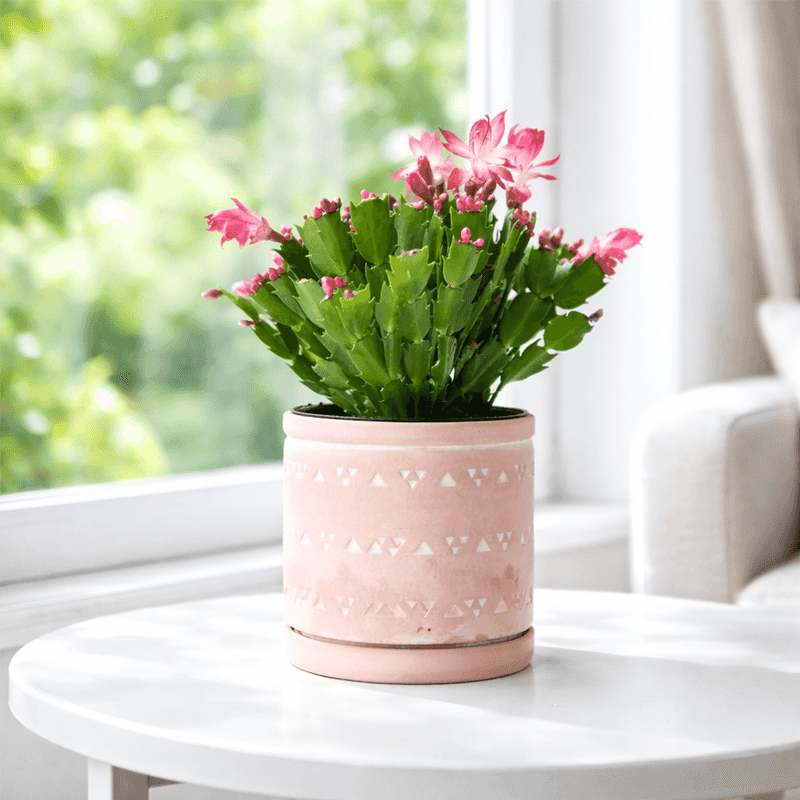
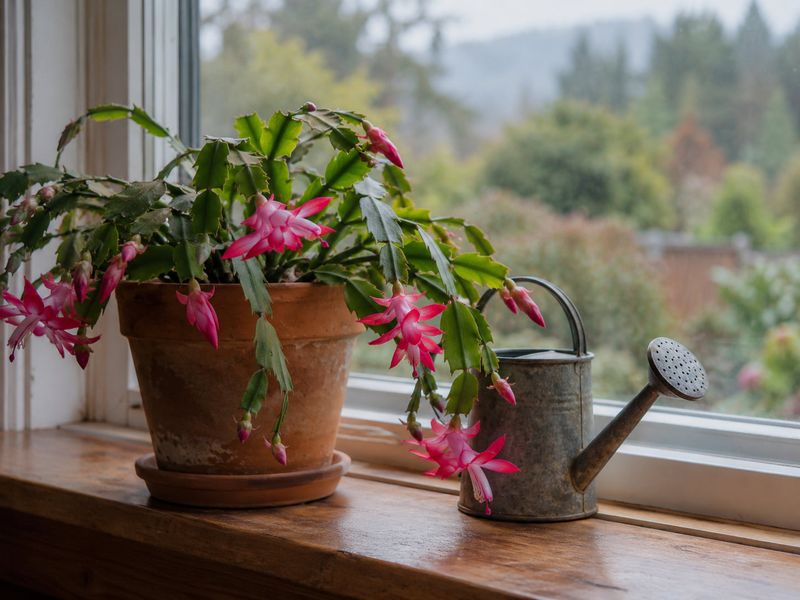
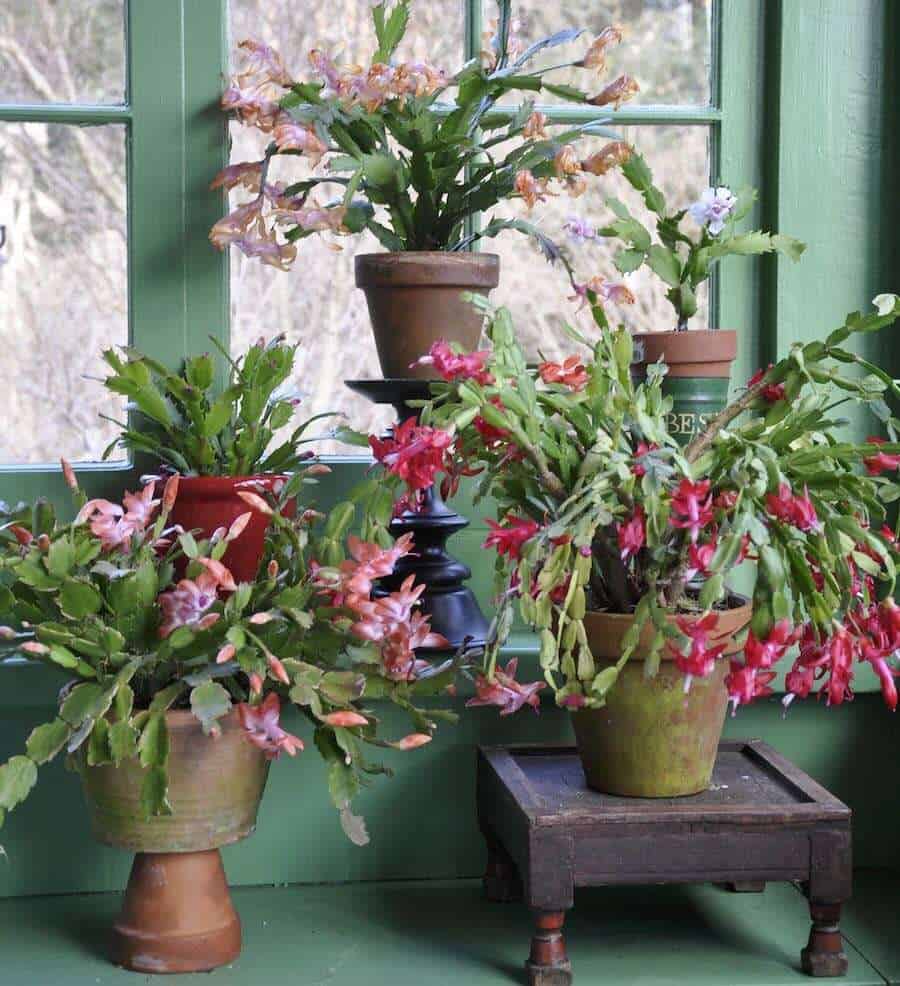
Pink is simply one of the colors this plant makes. According to the NC State Extension Plant Toolbox, Schlumbergera cultivars flower in several colors, including pink, along with red, white, orange, and purple.
Seeing pink on a bud, then, tells you about the variety and the stage of development. It does not tell you the plant is in trouble.
The sources reviewed do not show that buds turning pink cause or predict drop.
If buds are falling, color is the wrong clue to follow. Look at where the plant sits instead.
Is it in the path of warm air or a cold draft? Has it been moved lately?
Is the soil staying dry for days or sitting wet?
Those questions point to things you can change, which is far more useful than worrying over a shade of pink.
Move the budded plant once to a bright, steady spot
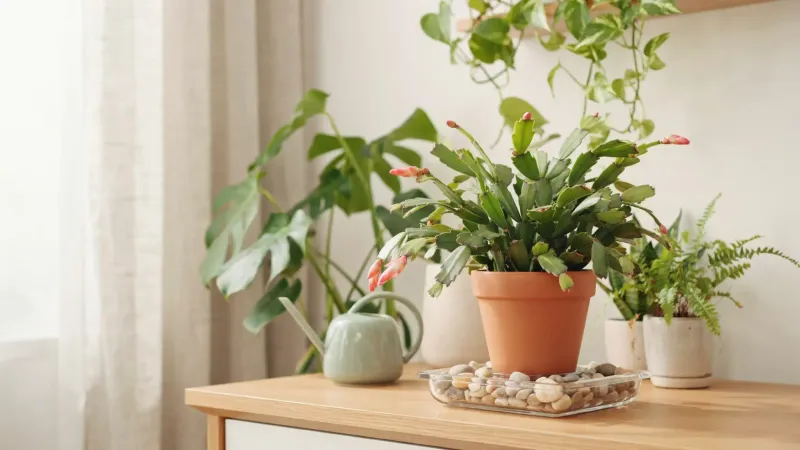
If your plant sits right in the stream of a vent, one move can reduce a possible stressor. Pick a place with bright, indirect light and steady conditions, away from heater blasts and cold drafts.
Then leave it alone while the buds develop.
Iowa State Extension recommends bright, indirect light and generally 60 to 70 degrees F indoors. Treat that as a general guide rather than a strict target.
A room a few degrees outside that range is not a failure.
The same guidance cautions against moving the plant during bud development, because the change itself can prompt buds to drop. That is why a single, well-chosen move beats shuffling the pot around to find the perfect corner.
Once flowers begin opening, you can shift the plant for display.
A steadier spot may help, but it cannot promise that every remaining bud will hold.
Cool conditions start flowering; they do not rescue formed buds
Advice about cool spots can seem to clash with advice to avoid cold. The difference is timing.
Cooler nights help a plant start making buds in autumn, but that is a different job from caring for a plant that already has them.
University of Minnesota Extension gives 65 to 70 degrees F by day and 55 to 65 degrees F in the evening for encouraging buds. The Royal Horticultural Society describes a cooler autumn period until buds appear, then a return to about 65 to 69 degrees F.
Notice that the numbers differ a bit from source to source, so treat them as rough ranges.
Once buds are on the plant, do not chill it on purpose. A cold window or a drafty hallway is not a fix.
Aim for steady conditions, with no hot blasts and no icy air.
Keep the potting mix from getting too dry or too wet
Water can be a separate reason buds fall, so the heater should not take all the blame. Warm rooms dry soil faster, but a plant that sits soggy can struggle too.
Aim for a middle path. The mix should not turn bone-dry, and it should not stay waterlogged.
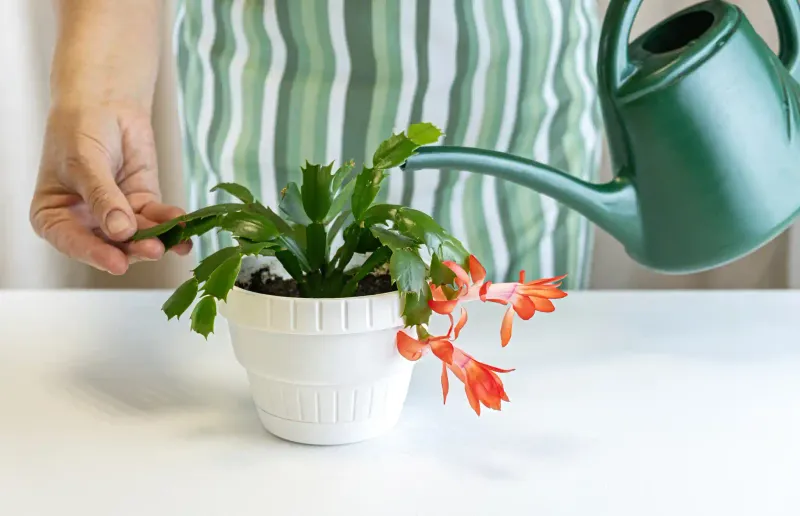
UF/IFAS advises watering thoroughly when the top inch feels dry, then emptying the saucer so roots are not left standing in water.
Simply watering less is not a cure-all. Iowa State warns that both too little and too much water can contribute to bud drop.
Poke a finger into the soil every few days instead of following a fixed schedule. That quick check tells you more than the calendar does, especially near a heat source.
Some bud loss can happen despite steady care
Even a well-placed plant may drop a few buds. University of Minnesota Extension notes that a plant may shed buds when it has set more than it can support.
Changes in light, water, or humidity can add to it as well.
One more thing to know: many plants sold as Christmas cactus are actually Thanksgiving cactus or hybrids, as Iowa State points out. Bloom timing and plant traits differ, but the care guidance generally applies across holiday cacti.
So keep the plant in its bright, steady, vent-free spot and keep the watering even. Pink buds or a few lost ones do not mean the change failed.
A plant that keeps most of its buds in calm conditions is doing its job.