
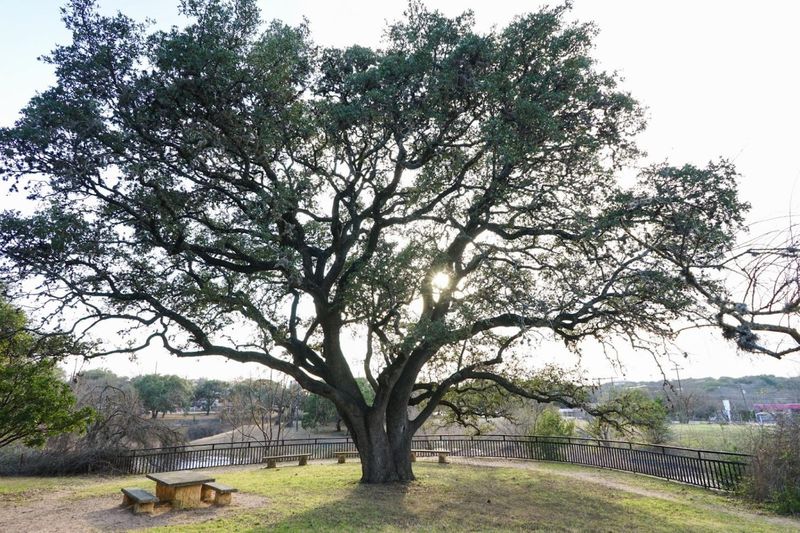
Picture a big, leafy oak spreading over a Central Texas yard while the neighbors’ trees stand bare in January. Escarpment live oak (Quercus fusiformis) is a native tree that often does just that, especially on rocky limestone soil.
It comes with a few honest catches, like a spring leaf swap, acorns, and a very wide canopy. Here is what to know before you plant one near your patio.
What “evergreen” means for an Escarpment live oak
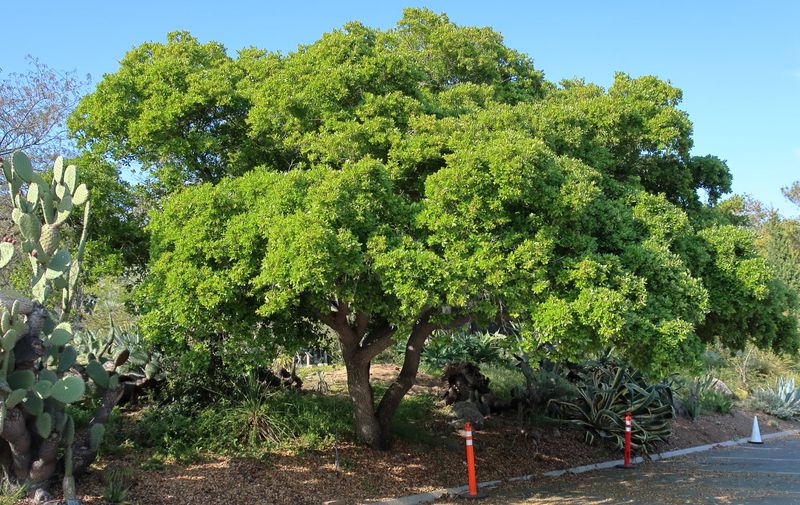
Walk past a live oak in January and it looks green while many other trees are bare. That winter cover is a big part of the appeal.
Still, the word evergreen needs a footnote here.
The Lady Bird Johnson Wildflower Center lists Escarpment live oak (Quercus fusiformis) as semi-evergreen. That means it generally carries foliage through winter, then sheds the previous year’s leaves as new ones emerge, commonly in late February or March.
Leaf drop timing can vary from year to year and tree to tree.
So the tree is not leaf-free in any season, and it is not leaf-litter-free either. For a few weeks in spring, you may see old leaves yellowing, dropping, and piling up while fresh growth pushes out.
A healthy tree can look thin during that swap, which surprises plenty of new owners.
It also helps to keep this species separate from coastal live oak (Quercus virginiana). They are related and often confused, but this article is about the Escarpment type that grows on Central Texas limestone country.
How do you tell normal from worrying? Texas A&M AgriLife Extension says old leaves dropping while new buds appear is usually normal.
Look for the buds. If you see lots of dead branches instead, or you suspect disease, call an arborist or your county Extension office.
Leaf drop by itself does not prove a problem, but severe symptoms should not be brushed off.
Limestone is a fit, not a no-care guarantee
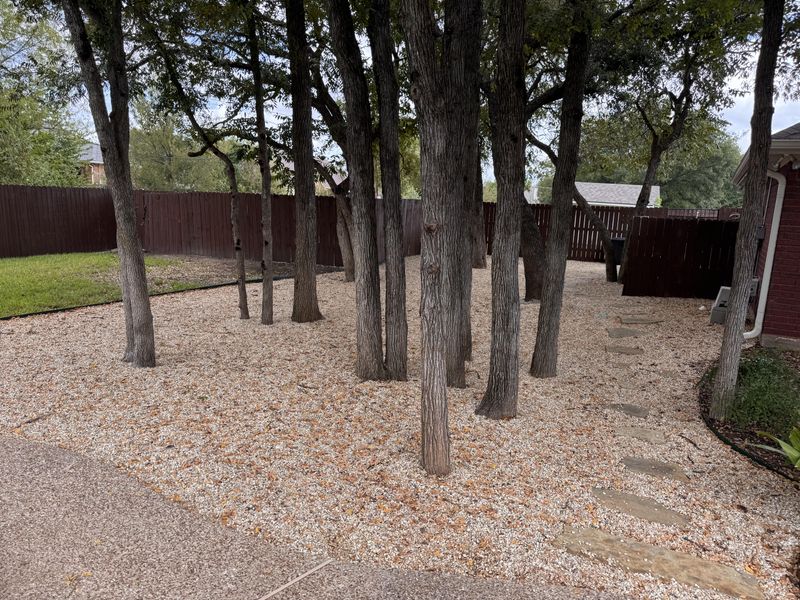
Rocky white soil can feel like a gardening dead end. For many Central Texas sites, Escarpment live oak is a good answer.
It is native to the region and the Wildflower Center describes its habitat as rocky hills and uplands with limestone or calcareous loam.
According to the Wildflower Center’s plant profile, it also tolerates rocky, sandy, clay, and loam soils. It uses little water once established and handles heat and drought well.
Those traits explain why you see these oaks thriving on hillsides and fence lines across the Hill Country.
Notice the words many and once established. A native tree is promising for a lot of yards, not every yard.
Compacted fill dirt, a spot with poor drainage, or a tight space can still make trouble.
A mature oak’s drought toughness is also a different thing from what a newly planted one needs. Roots on a young tree have not spread out yet, so it cannot yet reach what an older neighbor can.
Texas A&M Earth-Kind guidance still calls for watering while a tree settles in, and it warns that overwatering can harm plants too.
A simple test: dig a small hole in your intended spot after rain and see how fast it drains. Standing water means rethink the location.
Can your patio make room for a broad canopy?
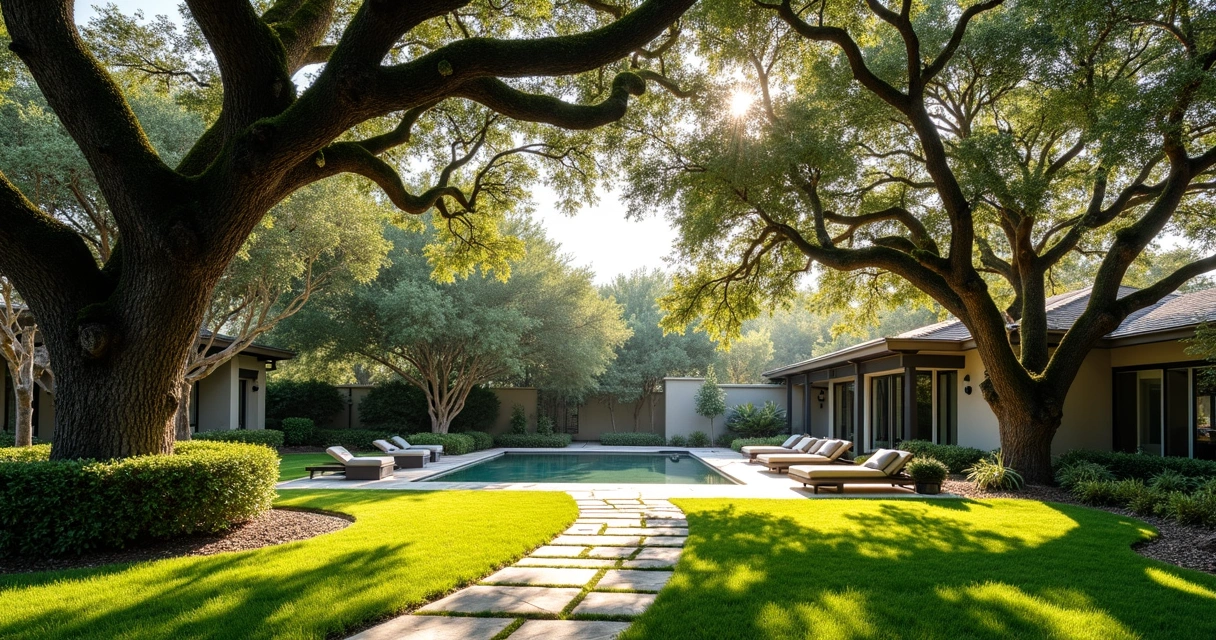
Space is the biggest question for this tree. The Wildflower Center gives a typical height of 20 to 40 feet, and notes that limbs can spread a great distance horizontally.
That range is typical, not a promise, since size and shape vary by tree and site.
Think wide, not just tall. A small patio tucked beside the house may not have room for the crown or the roots.
A larger yard with open space to one side of the patio is a much better match.
Walk the area and list what is nearby: the house, fences, walkways, driveways, overhead lines, and buried utilities. The International Society of Arboriculture advises matching a tree’s mature size to the site before you buy.
Also think about where the sun hits the patio, since a canopy shades the area it sits over.
You may read that live oaks wreck sidewalks. The Texas Tree Selector does warn that its listed live oak, Quercus virginiana, can develop surface roots.
That entry covers coastal live oak, a related species, and it is not a measurement of Escarpment live oak.
So the honest takeaway is to leave generous room and plant at a respectful distance. Do not assume damage, and do not assume there will be none.
The canopy brings wildlife value—and seasonal cleanup
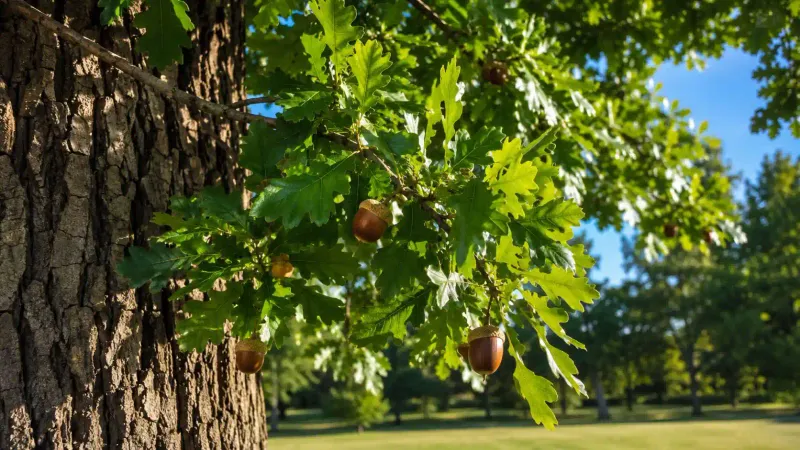
A big oak is a bird and critter hotel. The Wildflower Center notes that acorns feed birds and mammals, and the tree offers cover and nesting sites.
If you want a yard that hums with life, few natives do more.
Now the other side of the ledger. Leaf exchange, flowers, and acorns all end up on the ground.
Spring brings old leaves and flower strands, and acorns arrive later in the year.
Under a patio canopy, that means sweeping or blowing now and then. Acorns can also roll underfoot on pavers, so a chair or table spot directly beneath may need a quick check before guests arrive.
Here are a few ways to weigh it. If you enjoy watching birds and do not mind a broom, the trade is easy.
If you want a spotless entertaining space year round, put the tree a bit farther away so it shades the yard while the patio stays easier to maintain.
Leaves and fallen bits also break down in beds, so some homeowners rake them under the canopy and let nature recycle them. Either way, plan for cleanup as part of owning the tree.
Plant for establishment, not instant shade
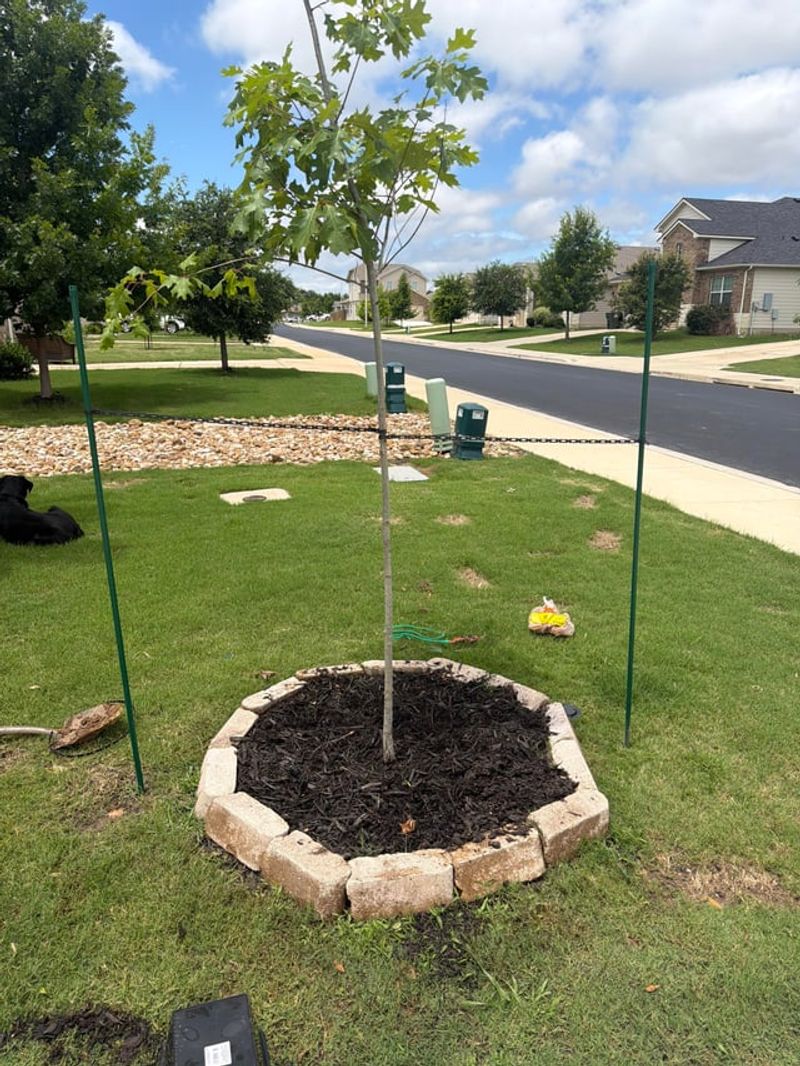
Think of planting an Escarpment live oak as a long-term investment. A newly planted tree will not shade your patio right away, and no timeline is guaranteed.
What you do in the first stretch sets the tree up for the decades ahead.
Timing matters. The International Society of Arboriculture says fall and early spring are generally good windows, when cooler conditions let roots establish before summer heat.
Call before you dig to have buried utilities marked.
Choose a sunny site. Dig a hole twice as wide as the root ball but no deeper.
Plant so the trunk flare, where the trunk widens at the base, stays partly visible.
The Texas A&M Earth-Kind guide recommends backfilling with the soil you removed rather than amendments. Water right away to settle the soil around the roots.
After that, adjust watering to what the soil is actually doing. Poke a finger or trowel into the ground near the root ball.
If it is damp, wait. If it is dry, water.
The guidance cautions that overwatering can kill plants, so a rigid calendar is not the goal.
Finish with mulch spread around the tree, but keep it from piling against the trunk. A thin, wide ring helps hold moisture without smothering the bark.
Protect the oak when pruning season raises the stakes
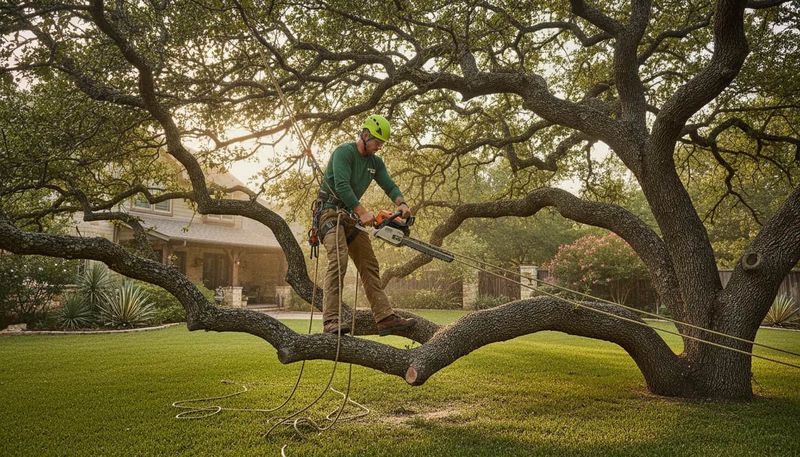
Oak wilt is a serious disease in Central Texas, and fresh cuts can give it an opening. That is why timing matters more for oaks than for many other trees.
Pruning is not something to casually do whenever the mood strikes.
The Texas Oak Wilt Partnership advises avoiding pruning or wounding oaks from February 1 through June 30 when possible. Note that this window overlaps with the spring leaf exchange, so a messy-looking tree is not a reason to grab the loppers.
If a fresh wound happens anyway, from a storm, a mower, or a limb that must come off, paint it immediately. Oak wilt guidance specifically calls for this, and the group’s pruning FAQ covers the details.
Do not treat spring pruning as routine maintenance.
Hazardous limbs and anything beyond safe reach from the ground belong to a qualified arborist. A dangling branch over the patio is not a good place for a do-it-yourself ladder job.
Plan ahead by looking over your tree in late fall or early winter. Mark any limbs you want checked, and book help before the restricted window opens.
Choose it for the yard you have, not the shade you want tomorrow
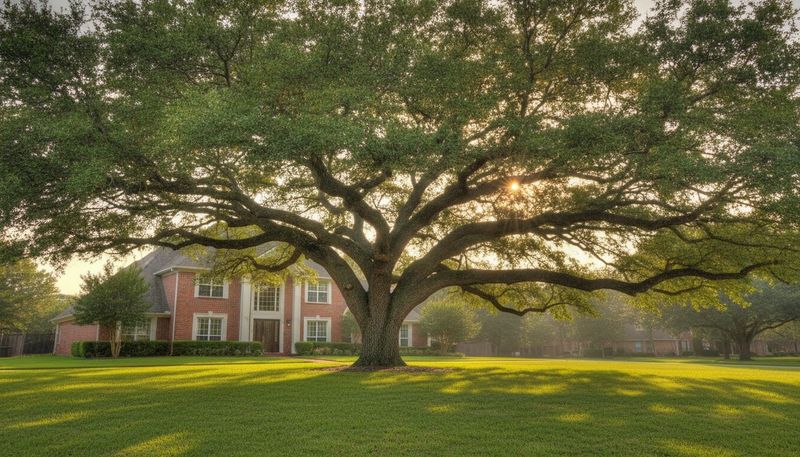
Consider Escarpment live oak if you want a native, broad-canopied tree and your site can handle it. You will need room for the canopy and roots, patience through the spring leaf swap, a broom for seasonal debris, and careful watering while the tree gets established.
It generally holds foliage through winter, but it does not promise a leaf-free season or instant shade. Before you buy, measure your space and review the planting conditions your yard offers.
Some trees reward the yard you have today. This one rewards the yard you are willing to give it room in.