
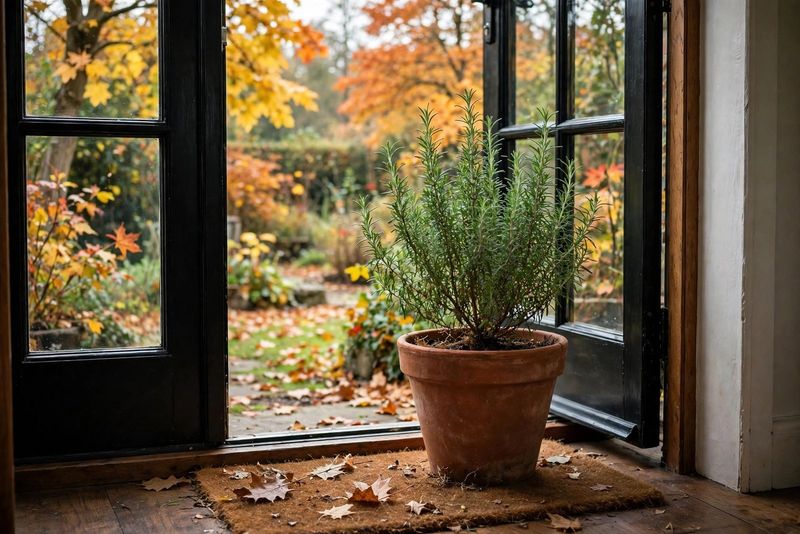
You carried your rosemary inside to save it from the cold, and now the needles are turning brown. That sight can make any gardener nervous.
The move may be part of the story, but it is rarely the whole story. A few careful checks can help you find what is stressing the plant and protect the stems that are still alive.
The move indoors is a clue, not a diagnosis
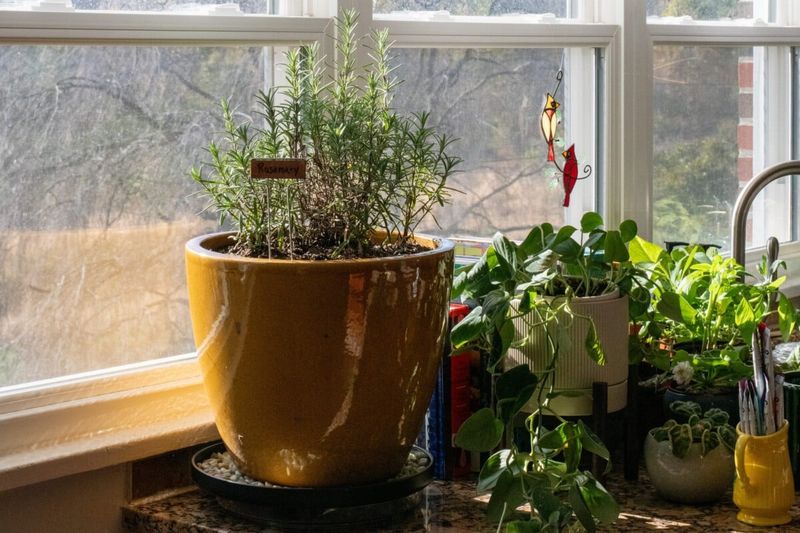
Seeing brown needles soon after bringing a pot inside feels like proof that the move did it. It is a useful clue, but timing alone cannot name the cause, and there is no set number of days after which browning appears.
A move indoors changes many things at once. Light is weaker than outdoor sun, and rooms are often warmer and drier than the cool, bright conditions rosemary likes.
Watering habits shift, and pests can hitch a ride on the plant. UNH Extension winter care guidance points to light, temperature, and moisture as the main things to manage indoors.
Other problems can also look alike. Missouri Botanical Garden’s visual guide lists water problems, dry air, and pests among the causes of browning in indoor herbs.
So treat the browning as a reason to investigate, not a verdict. The next sections walk through soil and drainage, light and temperature, hot drafts, and pests, one check at a time.
Check soil moisture and drainage first
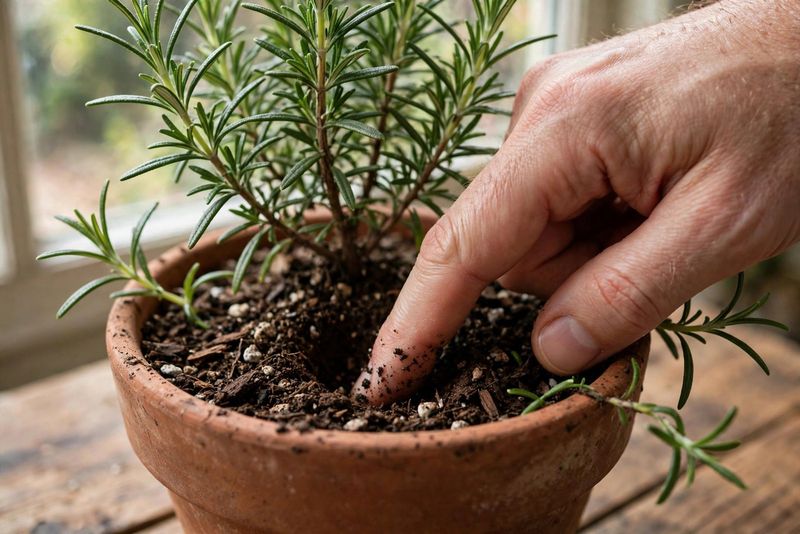
Start with your finger. Push it about an inch or two into the soil and note whether it feels soggy, damp, or dry.
Then lift the pot and look underneath to be sure the drainage hole is open and the saucer is not holding standing water.
Brown tips alone do not prove the plant is thirsty. Wet soil and dry soil can both lead to wilting, yellowing, or browning.
Persistent wetness is a particular worry, because Oregon State’s plant disease handbook describes root rot as a problem that can turn leaves or whole branches brown.
Rosemary needs well-drained soil, a point also made in NDSU Extension’s rosemary guide. Let the surface dry between waterings.
When you do water, soak the pot thoroughly and let the extra drain out completely.
Do not simply water more. If the soil stays wet for days, the fix may be a pot with better drainage or looser potting mix.
If it is bone dry and shrinking from the pot edge, a thorough soak is reasonable.
Choose the brightest, coolest practical spot

Outdoor sun is far stronger than anything a living room offers, so a rosemary that has just come inside may be short on light. Give it the brightest spot you have, such as a south-facing window with nothing blocking the glass.
Temperature matters too. Illinois Extension suggests very bright light and a cool spot around 50 to 60 degrees F.
UNH Extension gives a somewhat colder range of 45 to 55 degrees. Treat both as guidance, not hard rules, since homes and plants vary.
An enclosed porch, a bright entryway, or a cool room near a window may come closer to those numbers than a warm living area. If no spot is cool, aim for the brightest one and keep the plant away from the warmest corners of the house.
Turn the pot a quarter turn every week or so. That helps all sides of the plant get light and may reduce lopsided, leggy growth.
Keep hot, dry drafts away from the plant
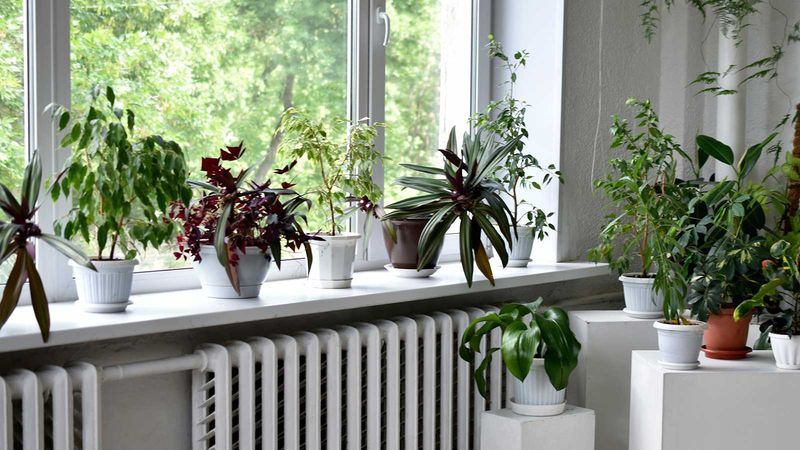
Heat and dry air can scorch rosemary quickly. Radiators, stoves, and heating vents blow or radiate warmth that dries out needles, and the result can be browned edges or curled tips.
Look at where the pot sits. If a vent blows across it or a radiator sits beneath the sill, slide it a few feet away.
Missouri Botanical Garden notes that dry air can brown leaf edges and tips on indoor herbs.
A pebble tray can raise humidity a little around the plant. Mississippi State Extension covers humidity basics for indoor plants.
Fill a shallow tray with pebbles, add water, and set the pot on top so the base stays above the water line. Standing in water can drown the roots.
Also check the glass on cold nights. Needles pressed against a freezing window can be harmed, so a few inches of space helps.
Inspect the foliage before treating for pests
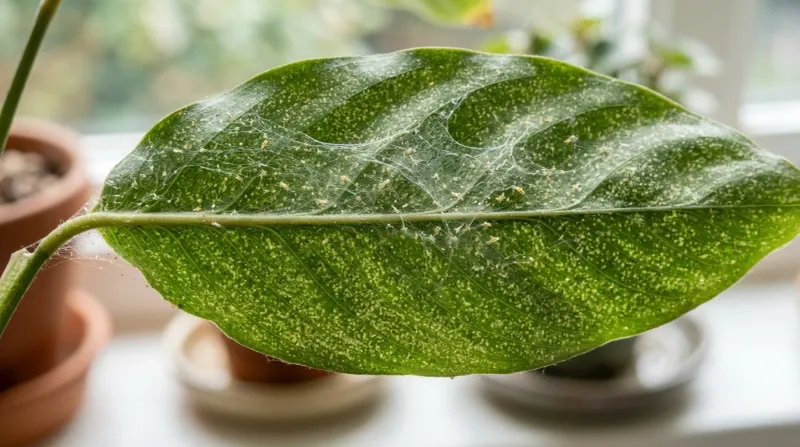
Pests sometimes arrive on a plant that spent summer outdoors, so take a close look. Hold a stem up to the light, turn it over, and check the undersides of leaves and the spots where needles meet the stem.
Spider mites are one example. They can leave tiny pale speckles called stippling, and sometimes fine webbing.
Missouri Botanical Garden’s guide shows what these signs can look like on indoor herbs. A sheet of white paper held under a branch you tap gently can help reveal tiny moving specks.
Browning alone does not mean pests are present. If you find none, move on to the other checks.
If you do, set the plant apart from your other houseplants and identify the pest before choosing a treatment.
Should you consider a pesticide, UC IPM houseplant guidance advises using only products labeled for the plant, the pest, and indoor use, and following the label exactly.
Prune damaged growth and set a realistic recovery goal
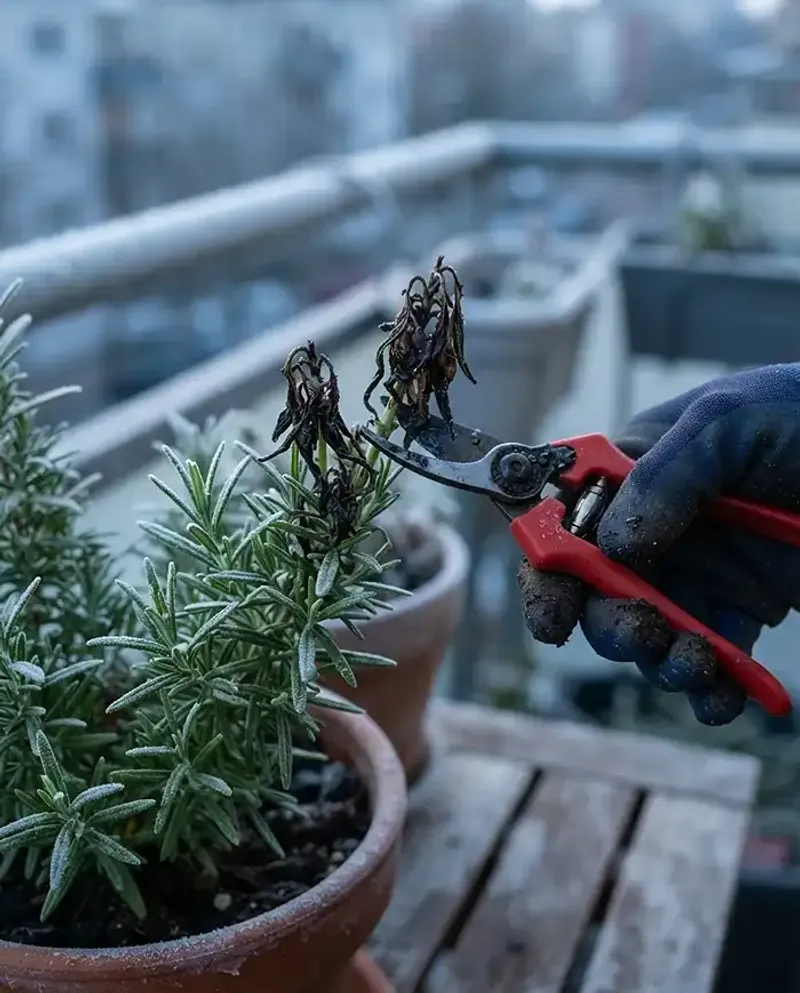
Once you have checked the conditions, trim off what is clearly dead. Cut each damaged branch back to healthy stem, where the tissue is green or flexible rather than dry and brittle.
A light scratch of the bark can show whether green lies beneath.
Go easy, though. Extension experts answering a question about cutting back a rosemary bush caution against a severe cut into bare, woody growth, which may not sprout again.
A winter haircut is best kept modest.
Be realistic about results. Brown needles will not turn green again.
A good outcome is that the browning stops spreading and living stems push out new growth, which may be slow in winter. Even winter care advice treats rosemary indoors as a plant to maintain, not to push.
Keep going with the basics: check the soil and drainage, give it a bright and cooler spot, and look over the leaves now and then for pests. Patience is the quiet tool that does the most for a stressed rosemary.