
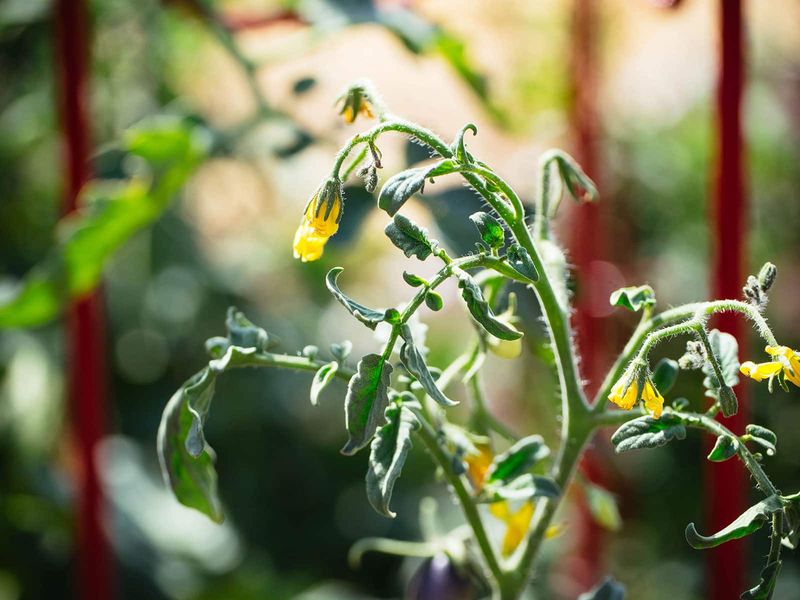
Your indoor tomato is covered in yellow blooms, and then the flowers fall off one by one with no fruit in sight. It is a worrying sight, but it is also a common one.
Still indoor air may keep pollen from moving, and a few other window conditions can play a part too. Here is how to sort out the likely causes and try one easy first step.
Blossom drop is a symptom, not a diagnosis
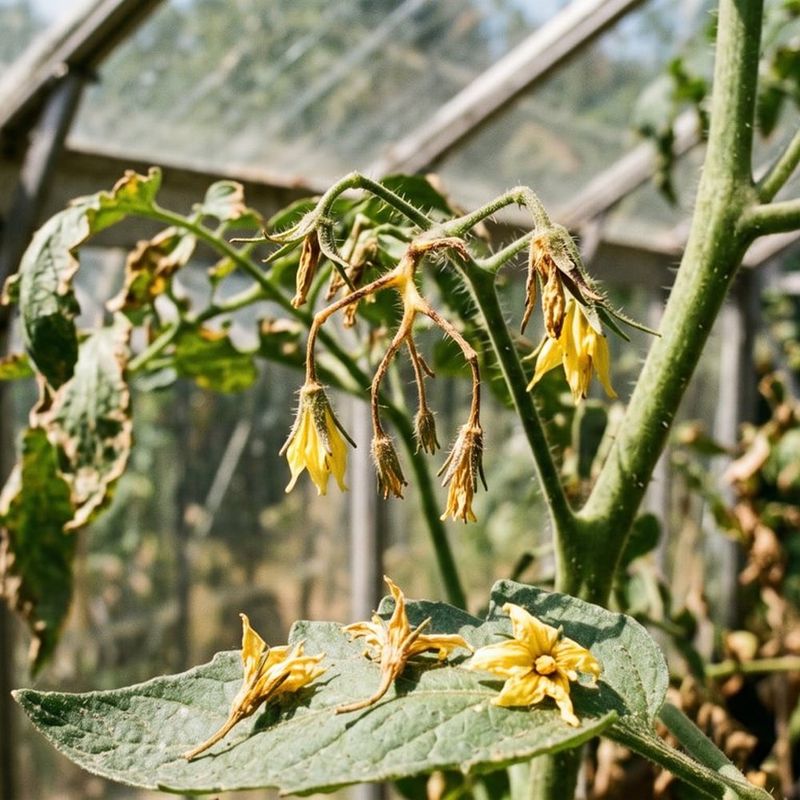
A flower that falls before fruit forms tells you something is off, but it does not tell you what. Still indoor air may keep pollen from moving, yet that is only one possibility on a longer list.
Extension guidance names several other triggers. Illinois Extension links blossom drop to nights below 55°F and to hot days above 95°F with drying winds.
Mississippi State Extension lists drought stress and too much nitrogen among the causes.
So think of the fallen flowers as a clue rather than a verdict. In the sections ahead, you will try one gentle step to help pollen move, then check the temperature, light, watering, and feeding around your plant.
Working through them in order may help you spot the culprit without guessing.
Self-pollinating tomatoes still need pollen to move
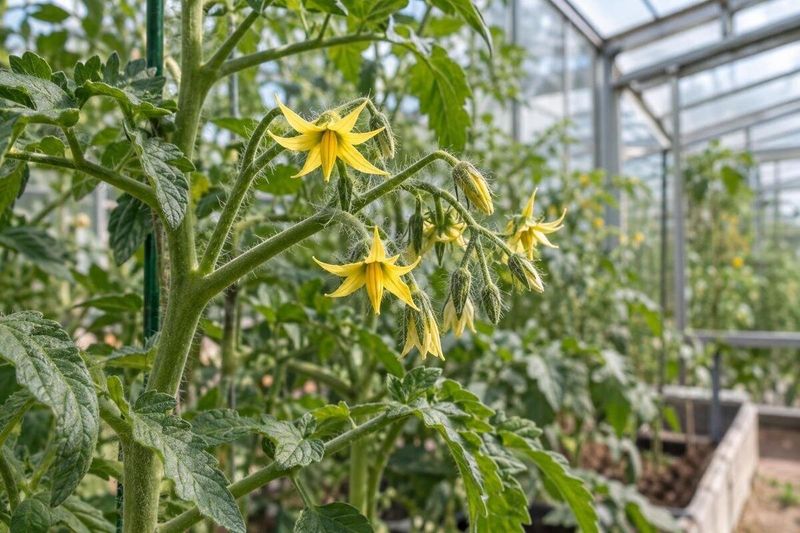
Bees are not required for a tomato to set fruit. Each flower carries its own pollen-making parts and its own stigma, so the flower can pollinate itself, and cross-pollination between blooms is not needed for ordinary fruit set.
Self-pollinating does not mean the pollen moves on its own, though. It still has to be released from the anthers and land on the stigma.
Outdoors, wind and passing insects shake things loose without any help from you.
Indoors, the air barely stirs. UConn Extension describes this as a greenhouse pollination problem, and Alaska Cooperative Extension recommends vibration to help.
That is why a little gentle movement may be useful in a still room, even though it cannot promise fruit.
Vibrate the flower truss gently
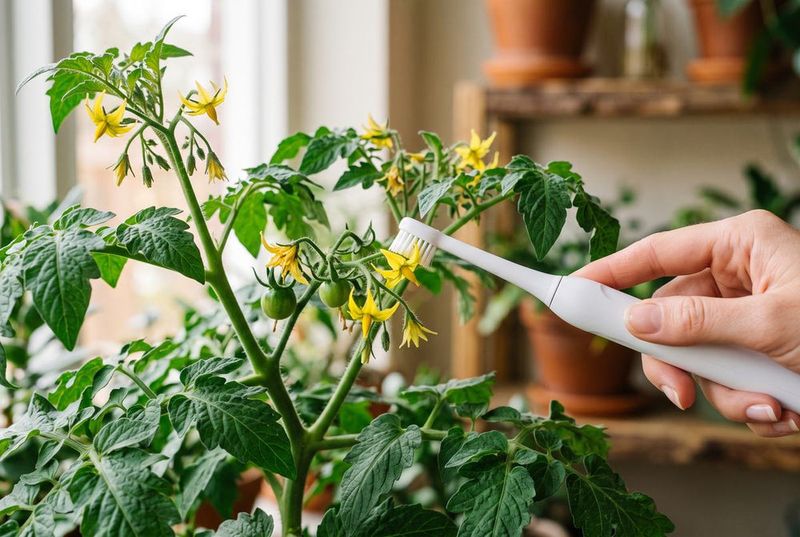
The flower truss is the branching stem that holds a cluster of blooms. Rather than flicking or striking individual flowers, give that stem a light tap with a finger, or hold an electric toothbrush against it for a second or two.
The goal is a small shiver that helps pollen shake loose.
Vibration is described as a pollination aid by UConn Extension, and Maine Extension suggests shaking the stem or using an electric toothbrush on home plants.
As for timing, greenhouse guidance such as Alaska Extension and University of Florida IFAS suggests vibrating at least every other day. That is greenhouse advice, not a tested schedule for a windowsill plant, so treat it as context.
Gentle vibration may help, but it does not guarantee fruit.
Check the window’s temperature and light
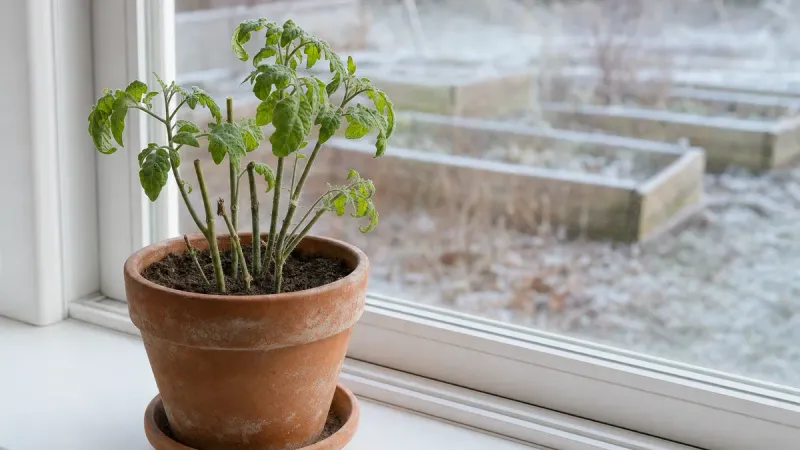
Windows can be colder at night than the rest of the room, so put a thermometer right next to the plant and check it after dark. Extension numbers work best as warning ranges rather than hard cutoffs.
Illinois Extension ties blossom drop to nights under 55°F and days over 95°F with drying winds.
For greenhouse pollination, Alaska Extension gives a range of at least 60°F at night and no more than 85°F by day. Alaska also reports that dark, cloudy conditions can slow pollen development and reduce fruit set.
Light matters too. Utah State Extension recommends a bright south- or west-facing window and notes that supplemental lighting may help in winter.
If you feel a chill leaking through the glass, move the pot back a bit. Tapping cannot make up for cold, drafts, or dim light.
Keep water steady and avoid excess nitrogen
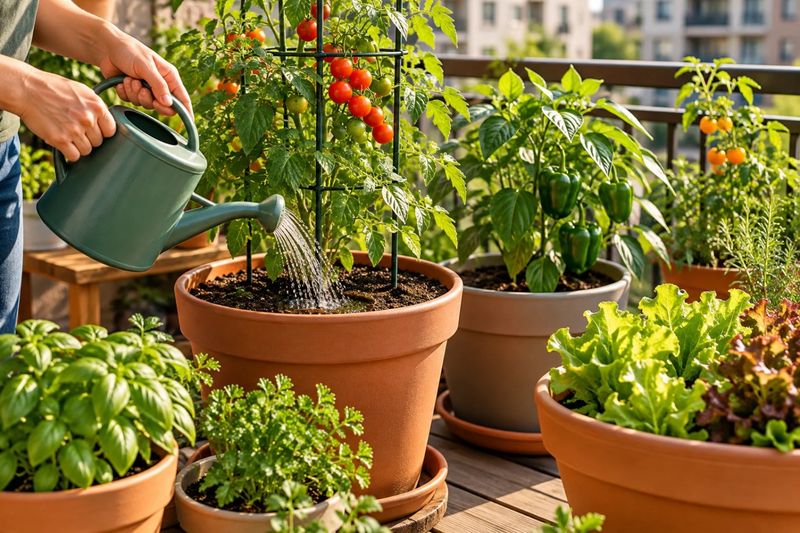
Swings between bone dry and soggy soil put stress on a potted tomato. Mississippi State Extension lists drought stress and excessive nitrogen as causes of blossom drop.
A simple habit helps: check the top inch or two of soil with a finger, and water when it feels dry, letting extra water drain out. Avoid overwatering, which Utah State Extension also cautions against for container tomatoes.
When it comes to feeding, follow the directions on the fertilizer label rather than adding extra in hopes of more blooms. Too much nitrogen can push leafy growth and may work against flowering.
Steadier watering and careful feeding may reduce flower drop, though they cannot promise fruit on their own.
Use vibration as one troubleshooting step
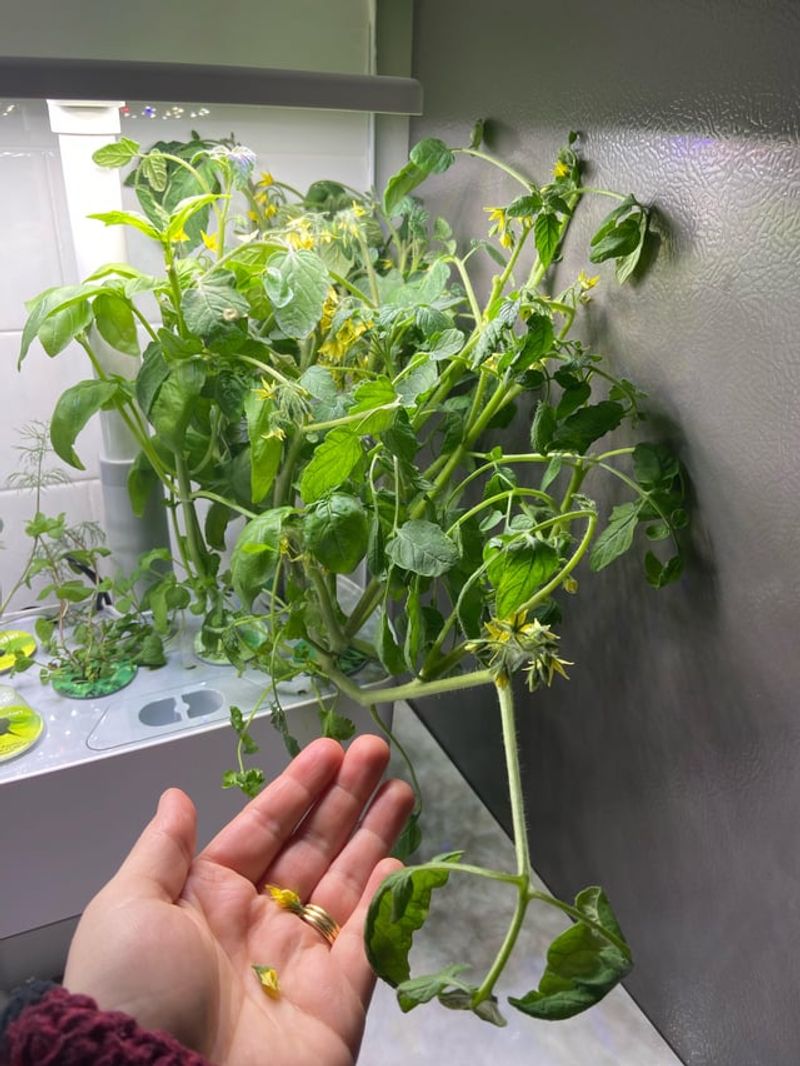
Start with the easy part: gently vibrate the truss to help pollen move. Then, if flowers keep falling, work through temperature, light, watering, and fertilizer one at a time.
Greenhouse sources such as Alaska Extension support the method, but they do not prove daily tapping will make a windowsill tomato set fruit. Since Illinois Extension points to several stresses behind blossom drop, tapping is a first step, not a cure-all.
A fallen flower is a clue, and each fix you rule out narrows the search.