
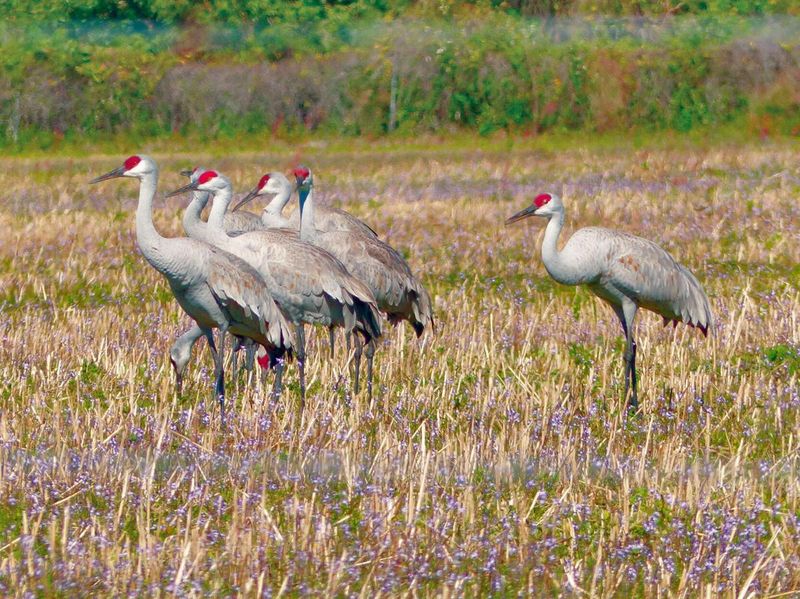
If a loud, rattling call wakes you at sunrise, you may have sandhill cranes nearby. The sound is dramatic, and it makes many Florida homeowners wonder what the birds want with their yard.
The truth is more mixed than a single call can tell you. Here is how to read the clue, understand what lawns offer, and respond in ways that are safe for you and the birds.
A rattling call is not a lawn diagnosis
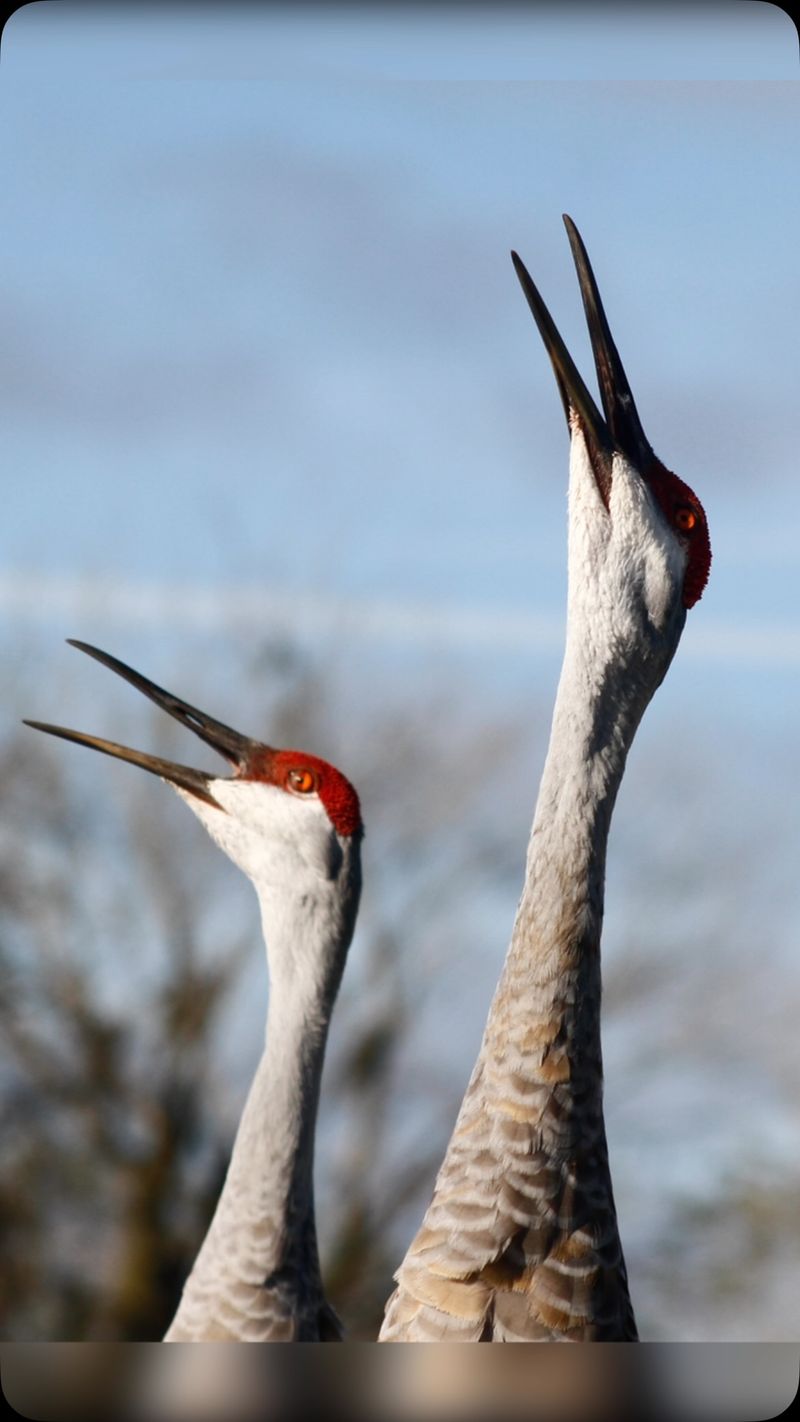
Few sounds in Florida carry like a crane at dawn. It is rough, rolling, and loud enough to pull you to the window.
But the sound itself is only a clue, and it does not explain much on its own.
Sandhill cranes use several kinds of calls, and people describe them as rattling, bugling, or trumpeting. A Florida study of crane vocalizations describes flight calls, guard calls, and unison calls.
Unison calls are duets by a pair, while guard calls tend to show up around threats or disturbance.
That means a rattle at your fence line could be a pair announcing itself, a bird warning off something it sees, or cranes calling as they pass overhead. Without seeing what the birds are doing, you cannot assign one precise meaning to the sound.
It also does not prove the birds picked your lawn for the winter. Not every call happens at sunrise, and hearing one tells you nothing about where the birds came from or whether they will be back next week.
Treat the call as a reason to look, not a conclusion. Watch from a distance for a few mornings and note how many birds there are, what they are doing, and whether they stay or move on.
Resident cranes and winter visitors share Florida

Seeing cranes in January does not mean they just arrived. Florida has birds that live here all year, and it also hosts visitors from the north.
According to the Florida Fish and Wildlife Conservation Commission, an estimated 4,000 to 5,000 Florida sandhill cranes live in the state year-round. This resident subspecies does not migrate.
Larger flocks of migratory greater sandhill cranes arrive from the north in November and December and head back in March and April.
So a winter crane in your yard could be a neighbor that has been in the area for years, or a seasonal guest, or both could be present at once. The two groups are different subspecies, and they should not be treated as the same bird.
The Florida sandhill crane is state-designated Threatened and is protected under the federal Migratory Bird Treaty Act, which is one reason local rules matter. A homeowner cannot tell a bird’s origin from its call, and size or season alone is shaky evidence too.
If the same pair shows up in summer, they are almost certainly residents. If big flocks appear only in the cooler months, migrants are likely in the mix.
What a lawn may offer for foraging
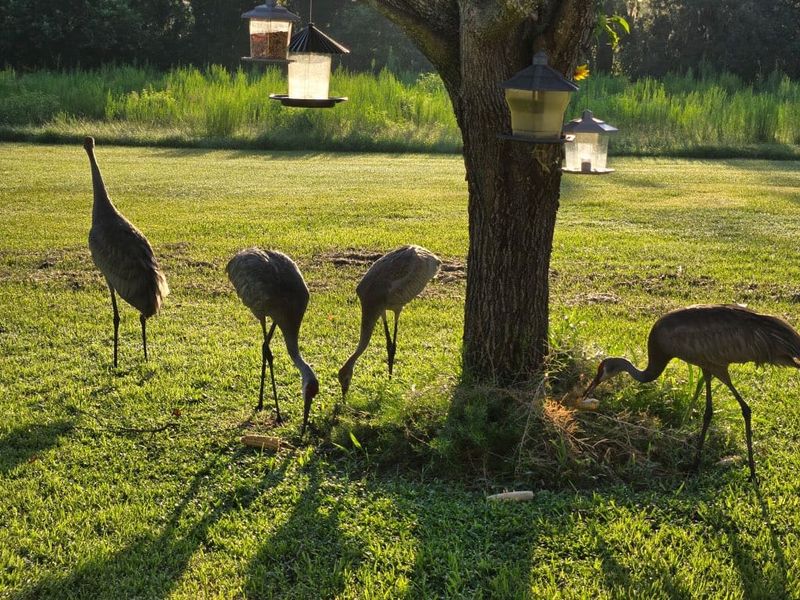
Cranes are foragers with a wide menu. They eat seeds, roots, insects, and small animals, so a yard can look like a buffet if the right pieces are in place.
FWC lists several features that may attract cranes to residential and golf course lawns, including mowed grass, water features, earthworms, mole crickets, and turf grubs. Short, open grass lets a tall bird see around and walk easily.
A pond, fountain, or damp patch adds water and can draw soft-bodied prey toward the surface.
Those foods live in the soil, which is why you may see a crane jab its bill into the turf again and again. That probing can leave small holes or torn patches, and FWC notes that foraging can damage turf.
Still, no single feature proves what brought a particular bird. A neighbor’s retention pond, a nearby field, or a quiet street may matter just as much.
Because cranes eat so many things, the better question is what mix of open ground, water, and food your yard happens to offer. If you see grubs or mole crickets in your lawn, that is a clue worth noting, but it is only one piece of the picture.
Reduce avoidable food access without expecting a guarantee
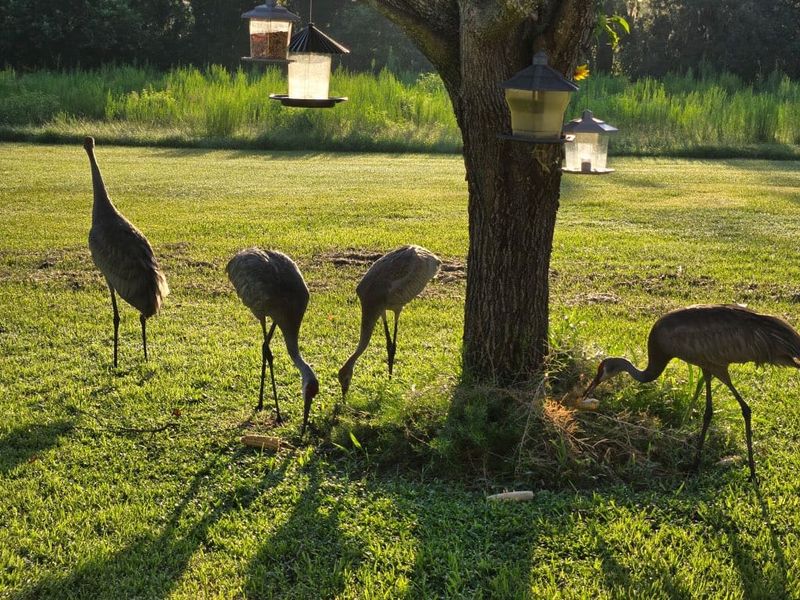
Start with the rule that matters most: do not feed cranes. FWC says intentionally feeding sandhill cranes is illegal in Florida.
Feeding can make birds linger, lose their wariness around people, and become more prone to aggressive behavior.
Next, close off accidental meals. Bring pet food indoors, keep trash secured, and sweep up seed that falls from feeders.
FWC recommends hanging feeders high and preventing spillage so cranes cannot pick through what lands on the ground.
If lawn damage is your concern, water only as needed. Overwatering can make soil more appealing to the insects cranes hunt, so a lighter schedule may take away one attractant.
Use this as a Florida sandy-soil reality check too: if your irrigation runs on a timer, make sure it is not soaking the turf after rain.
Be realistic about results. These steps can reduce some attractants, but they cannot promise the birds will leave.
FWC cautions that a lawn may remain suitable habitat even after deterrent efforts. If cranes keep visiting, that does not mean you did something wrong.
It may simply mean your yard, and the open land around it, still works for them.
Check nest and deterrence rules before yard work
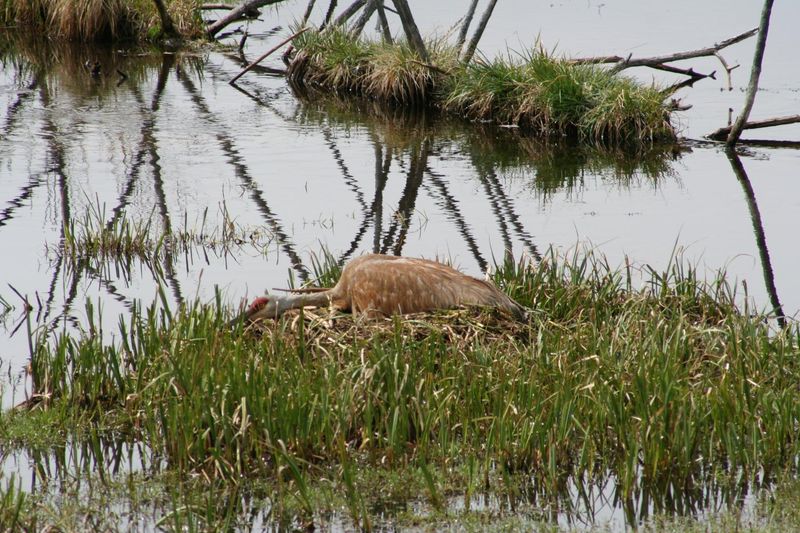
Routine yard care changes the moment you suspect a nest. A nest may be a low mound of grass and vegetation on the ground, sometimes near water, and the adults may stay close and act protective.
FWC advises avoiding mowing, landscaping, and tree trimming within 400 feet of an active nest, as described on its sandhill crane page. That distance can include a neighbor’s property or a shared pond edge, so postpone the work and keep your distance rather than guessing.
Deterrence is a separate question. Approved methods and restrictions vary with the season, how close a nest is, and whether flightless young are present.
For that reason, do not haze, spray, touch, or chase the birds on your own.
Before you act, check current FWC guidance. The agency’s species conservation measures and permitting guidelines are the place to see the formal rules.
If a real conflict is underway, contact FWC and ask what is allowed at that time of year. A short call can keep both you and the birds out of trouble.
Use the call as a clue, not proof
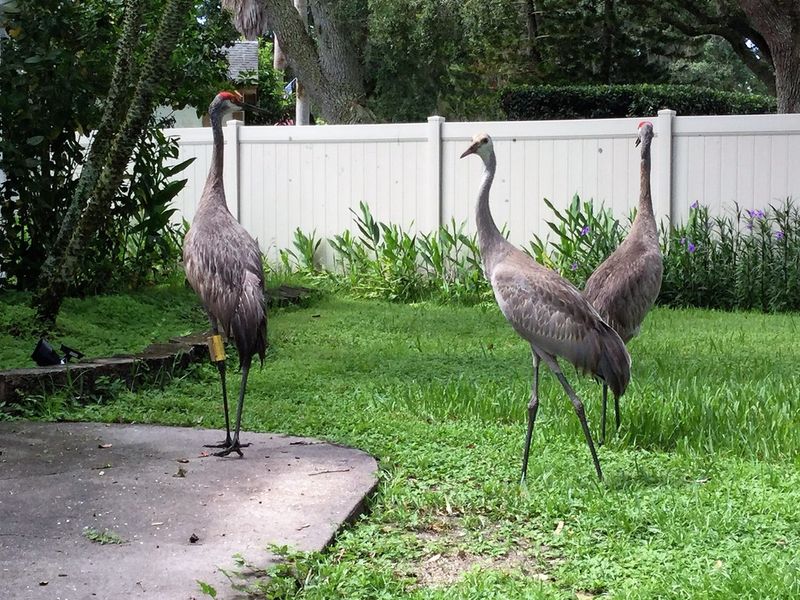
Cranes may well be foraging on your lawn, but a call cannot tell you whether they are residents or winter migrants, or why they chose your yard. Keep your priorities simple: never feed them, limit spilled food and pet food, and read FWC guidance before any deterrence or work near a possible nest.
The call is an invitation to look closely, not a verdict on your lawn.