
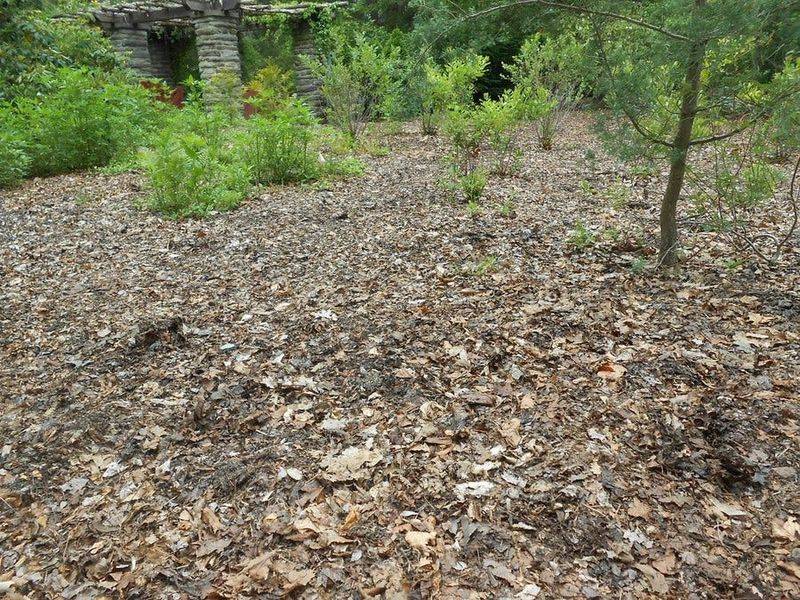
Every fall, North Carolina yards fill up with leaves, and most of us rush to bag them. But those leaves can do real work in your garden beds.
Used in the right spots and in the right amounts, they help soil hold on to the moisture it already has. Here is how to put them to use without causing problems.
Leaf mulch can slow moisture loss from soil
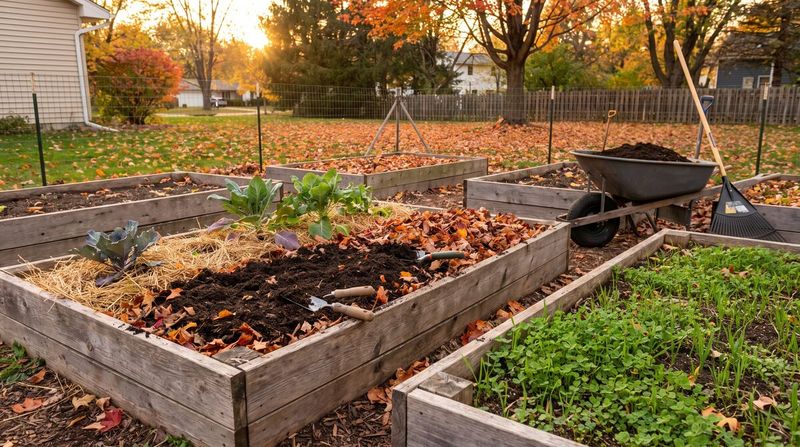
Bare soil dries out fast. Sun and wind pull water from the surface, and heavy rain can wash exposed dirt away.
A layer of leaves works like a blanket over the bed, slowing that loss.
NC State guidance notes that organic mulch helps conserve soil moisture. Think of it as a way to protect water that is already in the ground.
Leaves do not add water, so they cannot stand in for rain or a hose.
The same covering can also soften swings in soil temperature, which matters in a state where a mild afternoon in January can be followed by a hard freeze overnight. In the mountains, Piedmont, and coastal plain, the details differ, but the basic job of the mulch is the same.
It also helps cut down on erosion by breaking the force of raindrops on the soil surface.
There is a slow payoff too. As leaves break down, they add organic matter to the soil.
According to N.C. Cooperative Extension, they also release nutrients gradually as they decompose.
That word, gradually, matters. Leaves are not an instant fertilizer, and they will not feed every plant evenly through the winter.
Treat them as a modest soil builder that works over months, and as one useful tool among several for beds during dry stretches.
Place leaves where garden beds can use them
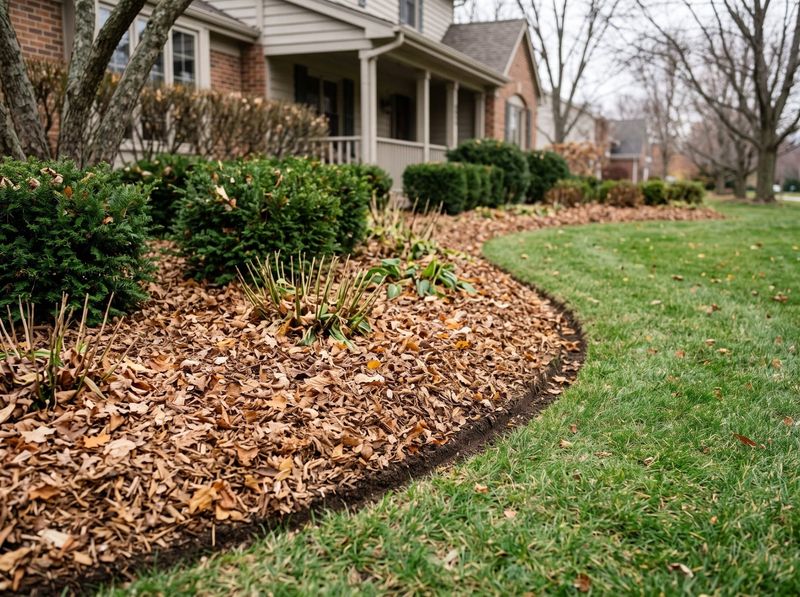
Saving leaves does not mean leaving them everywhere. The goal is to move them to places where they earn their keep.
Garden beds are the best candidates.
N.C. Cooperative Extension suggests raking leaves beneath trees and shrubs, where they act as mulch.
In those spots they help the soil hold moisture and make it harder for weeds to get started.
Walk your yard with a rake and a tarp before you start. Look for shrub borders, the soil under young trees, and perennial beds with bare patches.
Those are the places that can use the cover. A lawn that is already thick with grass, or a gravel path, does not need extra leaves.
Moving leaves by hand also gives you a chance to be picky. Pull them from the areas where they pile up too thickly and spread them where soil is exposed.
A maple that drops a heavy carpet in one corner can end up supplying mulch for beds across the whole yard.
Keep in mind that you are making choices, not simply letting fall do its thing. Pick the beds, move the leaves, and leave the rest of the yard clear.
Preparation and depth come next.
A thin, fine layer can reduce the risk of leaf matting
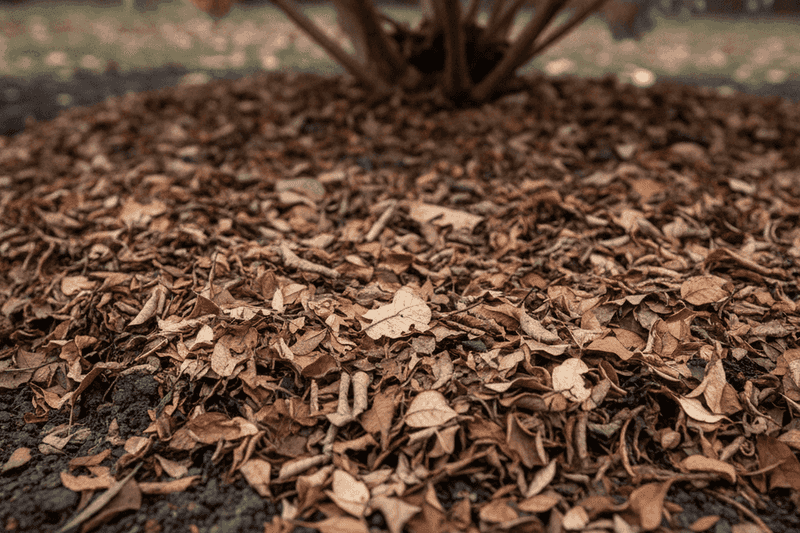
Whole leaves, especially big flat ones like sycamore or maple, can stack up into a dense, soggy mat. Shredding helps.
University of Connecticut Extension describes mowing leaves into smaller pieces, and University of Illinois Extension notes that leaf mulch is less prone to matting when shredded.
A simple way to shred is to run a mower over a leaf pile, ideally with a bag attached. Smaller pieces also break down faster.
Shredding and a thin layer lower the chance of a dense mat, though they do not rule it out, so check the bed now and then.
For depth, NC State recommends about 1 to 2 inches of fine-textured leaf mulch in garden plots. For herbaceous landscape beds, another NC State guide says no more than 2 inches.
Spread the mulch evenly over the soil, then pull it back a little from each plant. Never pile it over crowns, the point where stems meet roots, because trapped dampness there can cause trouble.
Whole, unshredded leaves still have a purpose, and that is wildlife habitat. We will get to that in a later section.
Mulch conserves moisture but does not replace water
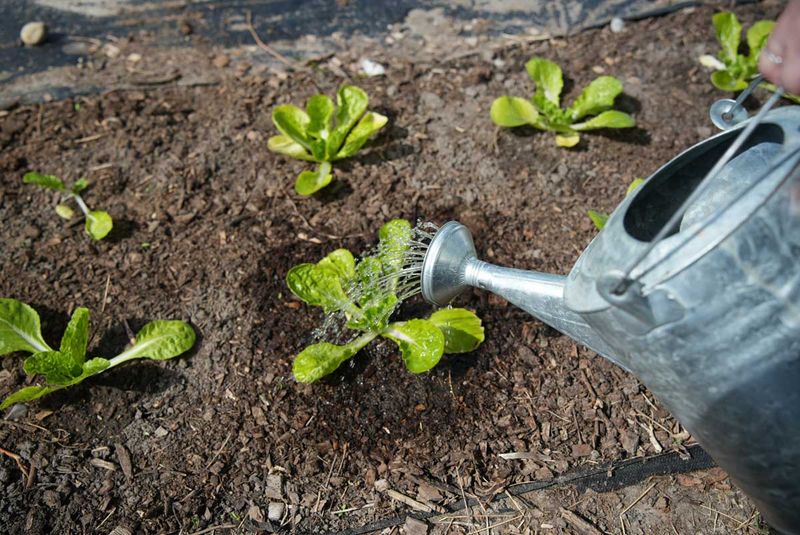
Picture a cooler that keeps ice from melting. It slows the loss, but it cannot make more ice.
Leaf mulch works the same way with soil moisture.
That means plants still need water when rain stays away. Mulch just helps the water you provide, or the rain that falls, stay in the soil longer.
NC State’s vegetable gardening guidance advises making sure the soil has adequate moisture before you apply organic mulch. It warns that dry mulch can pull moisture out of the soil.
In a vegetable garden, that makes the order of steps important.
A good routine is to water the bed first, check that the soil is damp a few inches down, and then spread the mulch. If the leaves themselves are bone dry, a quick sprinkle can help them settle in.
That advice comes from vegetable-garden guidance, so treat it as a handy habit there rather than a rule for every landscape bed. For shrub borders and perennial beds, the same common sense still applies: look at the soil, not just the calendar.
Poke a finger into the soil under the mulch every week or so. If it feels dry, water deeply.
The mulch will do its part, but the watering decision stays with you.
Keep leaves away from problem areas

Some spots are just wrong for leaves. Walkways top the list, since a wet layer gets slippery fast.
Storm drains are next, because clogged drains can lead to standing water and runoff trouble.
Lawns need care too. N.C.
Cooperative Extension says to shred or mulch leaves left on turf instead of leaving a heavy layer. A thick blanket can suppress grass and may contribute to disease problems.
Then there is the question of sick plants. If a plant has had a recurring disease, its fallen leaves may be better removed than reused as mulch.
Spreading them in beds could put the problem right back where you are growing.
Oak leaf spot is a good example. NC State notes that removing infected fallen oak leaves can reduce Tubakia and Actinopelte leaf spot.
If your oak showed those spots this year, bag or dispose of its leaves instead of mulching with them.
That advice is specific to that oak problem. It is not a rule that every disease needs the same handling, so check with your local Cooperative Extension office if you are unsure about a particular plant.
Leave an out-of-the-way patch for wildlife
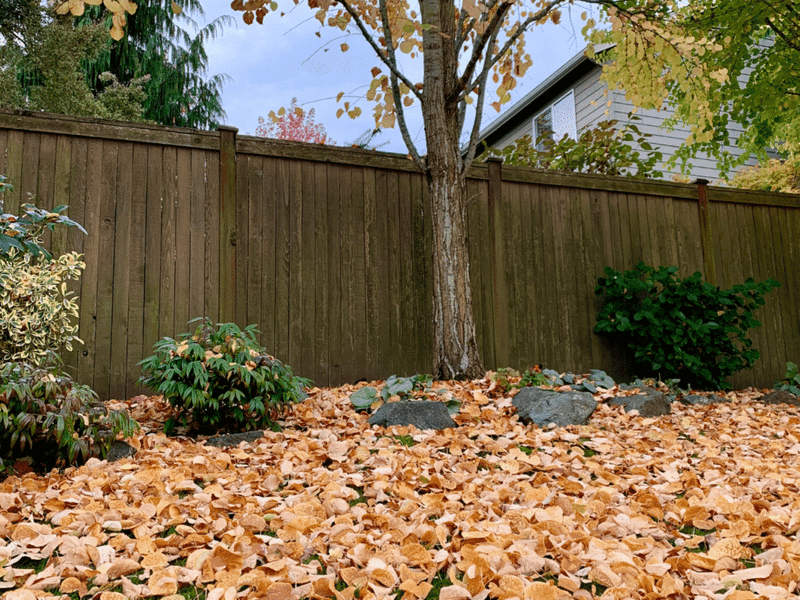
Shredded mulch in a bed and a pile of whole leaves are two different tools. The mulch is there for the soil.
The pile is there for the creatures that live in your yard.
N.C. Cooperative Extension explains that leaves provide overwintering habitat and support the food web.
Another Extension article from Beaufort County makes a similar case for leaving some fall landscaping behind over the winter. Insects, spiders, and other small animals tuck in there, and they become food for birds later.
Choose a corner that nobody walks through. The back of a shrub border, the edge of a wooded lot, or the space behind a shed all work well.
Leave the leaves whole and undisturbed in that spot. There is no need to shred them or spread them thin.
Keeping one reserved patch is easier than trying to leave dense leaves across paths, lawns, and every planting bed. You still get the wildlife benefit, and the rest of the yard stays tidy and workable.
Use leaves as a buffer, not a guarantee
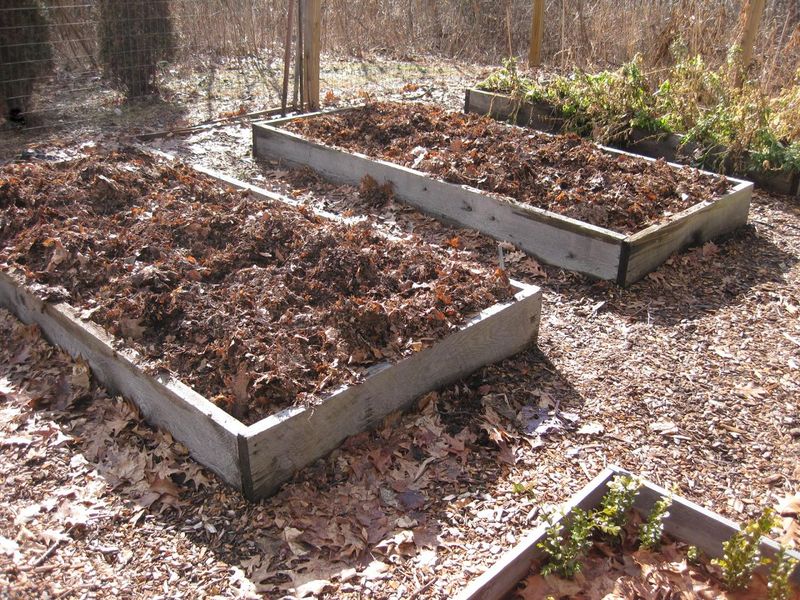
Here is the plan: spread a thin layer of suitable leaves over bed soil, keep them clear of plant crowns and problem areas, and water when your plants need it. Leaf mulch can help conserve soil moisture, and build the soil gradually as it breaks down.
It cannot promise protection from dry conditions. A buffer softens the bumps; it does not remove the road.