
A gardenia full of yellow leaves and fallen buds can make a Florida flower bed feel like extra homework. Fast-drying sand, high soil pH, and uneven watering can all cause trouble, though pests and root problems may also play a part.
Native shrubs matched to your part of Florida can bring flowers and wildlife with less fuss once their roots settle in. These seven choices offer different colors, shapes, and uses, so you can pick the right replacement instead of another demanding plant.
1. Simpson’s Stopper
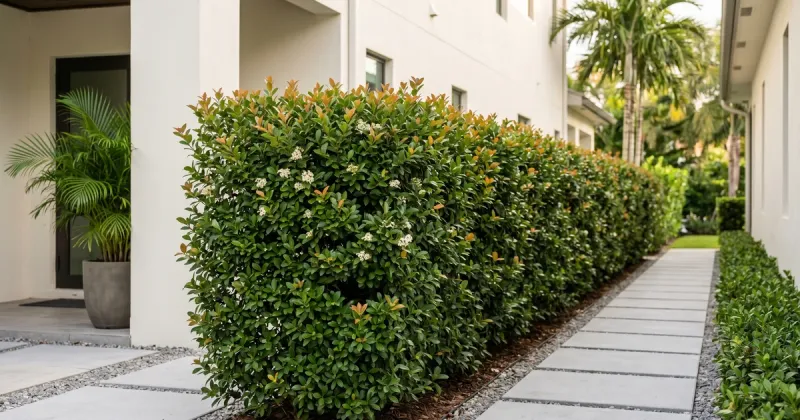
A hedge can do more than hide the neighbor’s fence. Simpson’s stopper offers fragrant white flowers, colorful fruit, and evergreen cover, making it a useful replacement where gardenias once formed a struggling screen.
Known botanically as Myrcianthes fragrans, it suits Central and South Florida, with protected locations possible farther north. Expect roughly 10 to 20 feet of height unless you choose a compact selection or prune it carefully.
Give it sun to partial shade and well-drained soil. Once established, it handles dry spells and a range of soil conditions, including limestone-influenced ground that can make gardenias struggle to take up iron.
The flowers attract pollinators, and birds eat the orange to red fruit. For more blooms and berries, let the branches keep a loose outline rather than clipping them into a tight box every few weeks.
Use it along a property edge or as a tall backdrop behind shorter plants. Keep mulch away from the trunk, water through establishment, and leave enough room that regular size-control pruning does not become your next chore.
2. Firebush
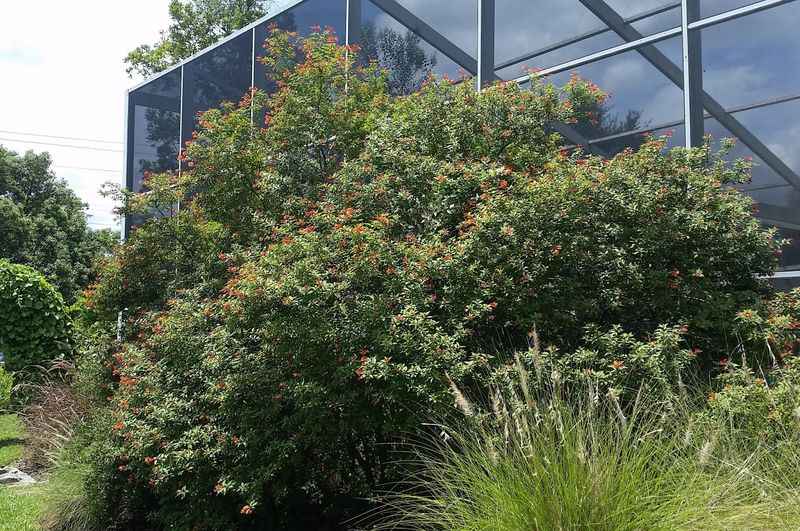
For a flower bed that needs a shot of color, orange-red tubes beat another season of watching gardenia buds fall. Firebush puts its energy into repeated bloom during warm weather, with butterflies often arriving to investigate.
Choose Florida’s native Hamelia patens var. patens from a nursery that can confirm its identity. Plants sold simply as firebush may include nonnative forms, so the label deserves a closer look.
Full sun brings the heaviest flowering, although partial shade is workable. Well-drained sand suits it, and established plants generally need much less supplemental water than a thirsty ornamental bed.
In South Florida, firebush can become a large shrub, often 8 to 12 feet tall or more. Central Florida freezes may kill the stems back, while colder North Florida locations make it a less dependable permanent shrub.
Place it behind low-growing plants, not directly beneath a window. Prune after cold weather has passed if needed, and avoid constant shearing that removes flower-bearing growth.
It is a colorful choice for a sunny wildlife border, but not a substitute for shrubs needed to stay leafy through frost.
3. American Beautyberry
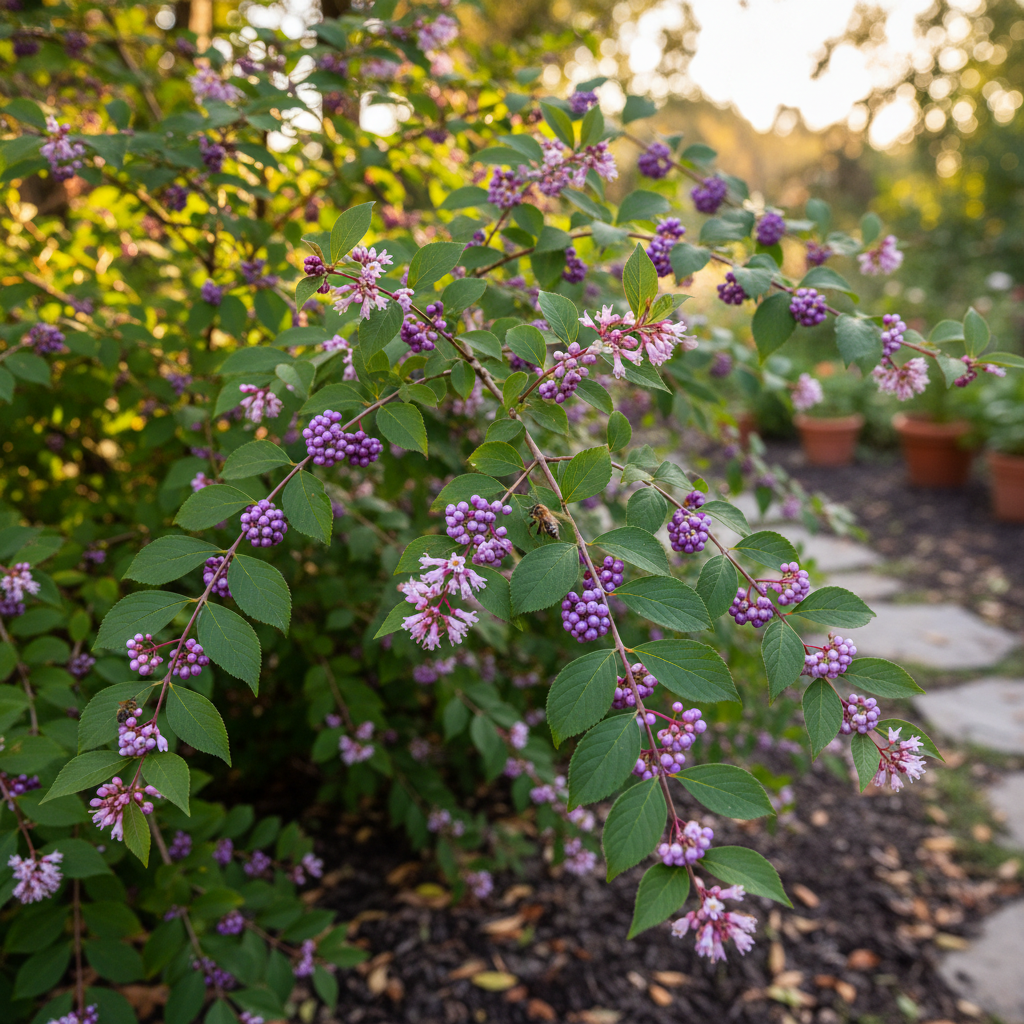
Purple berries steal the show here, but the flowers get the whole display started. American beautyberry produces small pinkish-lavender blooms along its stems in spring and summer, followed by bright fruit that draws birds.
Callicarpa americana grows across Florida and fits especially well along a woodland edge or in a relaxed backyard border. Its arching shape usually reaches about 4 to 8 feet tall and wide, so it needs room to lean rather than a narrow formal bed.
Plant it in sun to partial shade. It accepts sandy soil and seasonal dryness once established, though a harsh, reflected-heat site may call for extra water during prolonged drought.
Unlike an evergreen gardenia, beautyberry usually loses its leaves in winter. Put it behind evergreen groundcovers or near other shrubs if bare winter stems would bother you beside the front door.
Flowers and fruit form on new growth, making late-winter pruning useful when the shrub needs renewal. Skip repeated trimming during the growing season, and leave some berries for visiting birds.
Choose it for seasonal drama, not large or fragrant flowers.
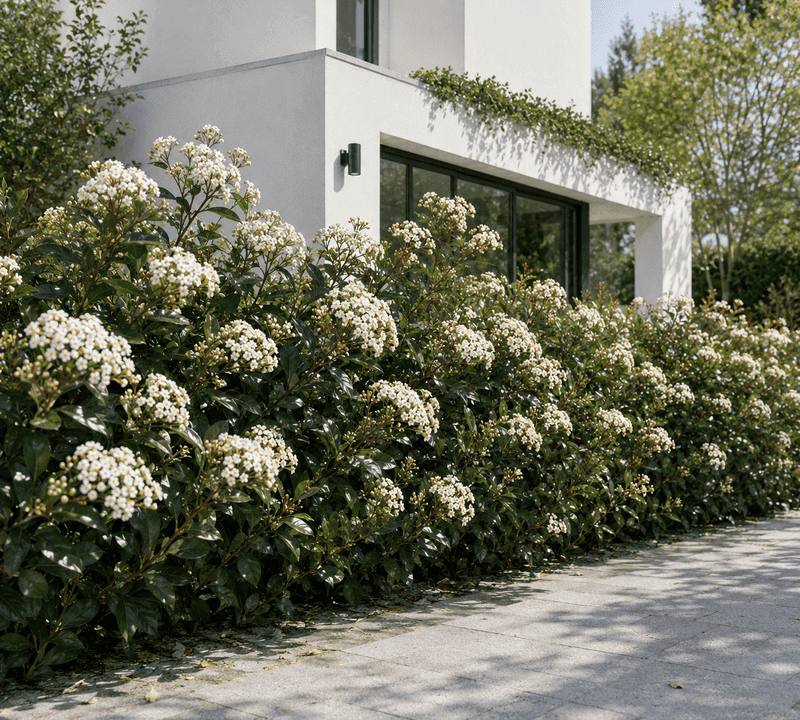
4. Walter’s Viburnum
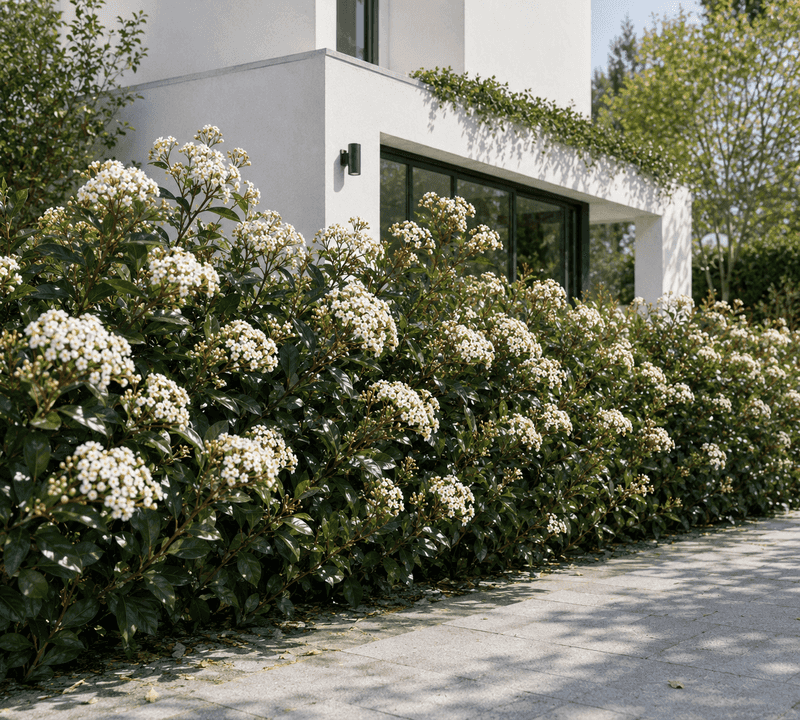
Early white flowers can brighten a yard before many warm-season shrubs wake up. Walter’s viburnum brings that fresh look with small leaves and dense branching that work well near a house or along a boundary.
Viburnum obovatum is especially useful in North and Central Florida. The straight species can grow into a large shrub or small tree, while named compact selections offer more manageable sizes for home landscapes.
Read the mature dimensions before buying. A plant labeled dwarf may still outgrow a tight walkway bed, and giving it enough space saves years of corrective trimming.
Sun to partial shade works, with good flowering generally favored by brighter conditions. Although this native occurs in moist habitats, established plants can tolerate periods of drought; deep, extremely dry sand still deserves careful watering while roots develop.
Use it where you want a more orderly look than beautyberry or firebush provides. Prune after flowering rather than before it, and expect leaf retention to vary with climate and selection.
Small fruits can feed birds, though fruit production depends on pollination and the plants grown nearby.
5. Necklacepod
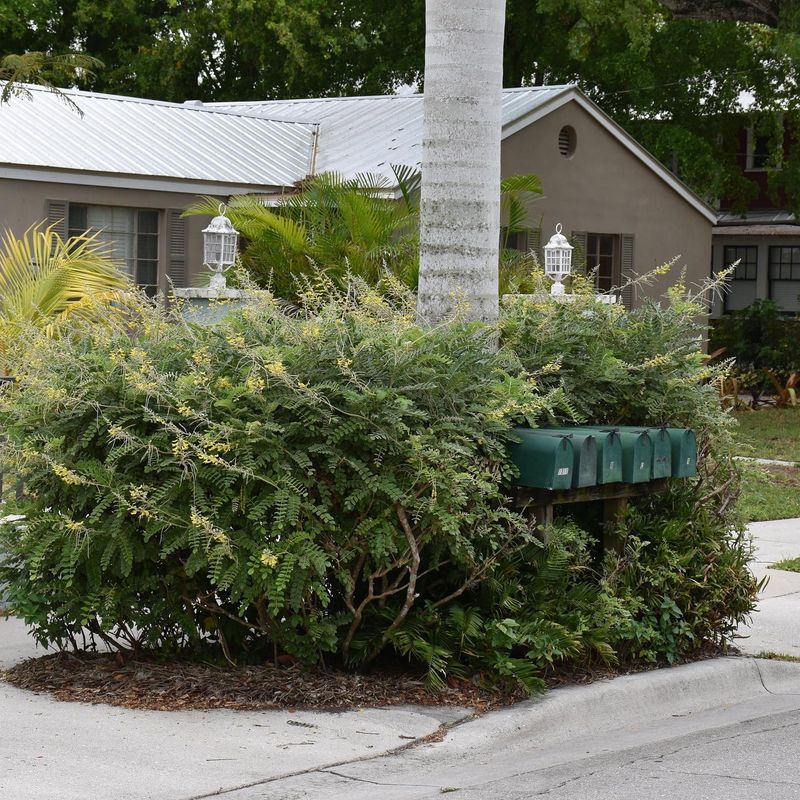
Yellow flower spikes and beadlike seedpods give necklacepod a look all its own. Where warm coastal conditions frustrate more delicate ornamentals, this shrub offers a loose, airy shape rather than a dense green wall.
Ask for Florida’s native Sophora tomentosa var. truncata. Nursery stock may include other forms, and a native-plant specialist can help you select the right one.
Necklacepod fits frost-free South Florida best, with use in suitable warm coastal locations farther north. Give it full sun and excellent drainage; sandy ground and some salt exposure are much closer to its comfort zone than a soggy, heavily irrigated bed.
Allow roughly 6 to 10 feet of height and plenty of width, depending on conditions. The yellow, pea-shaped flowers attract bees and can appear over a long period in warm weather.
Keep the pods and seeds away from children and pets because they are poisonous if eaten. That rules it out beside a play area, but a sunny outer border can be a good fit.
Avoid frequent shaping, which spoils its branching and removes blooms.
6. Buttonsage
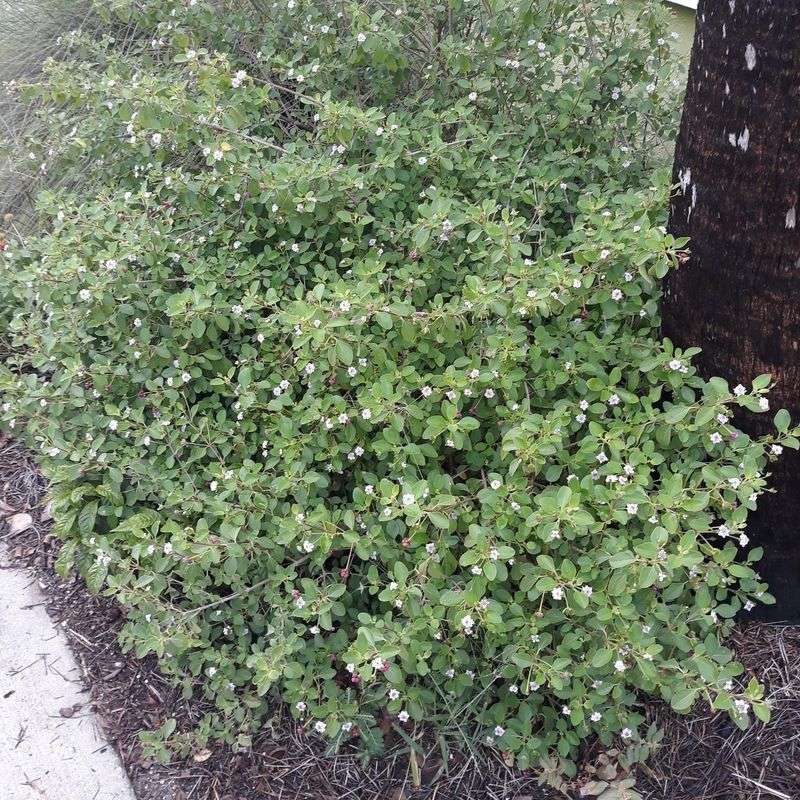
Small white flower clusters can keep a butterfly corner busy without overpowering the rest of the garden. Buttonsage has a soft, informal appearance that suits coastal beds and sunny yard edges.
The name to look for is Lantana involucrata, a Florida native. Do not substitute invasive lantana types sold under vague common names; confirm the botanical name before bringing a plant home.
Warm Central and South Florida locations provide the best fit, particularly near the coast. Give buttonsage full sun to light shade, freely draining soil, and space for a shrub commonly reaching about 3 to 6 feet tall, sometimes larger.
Its pale blooms appear over a long season in warm conditions and supply nectar for butterflies. Once rooted in, it tolerates drought and salt exposure, making it useful where sand dries quickly between rains.
Set it along an informal path or in a mixed pollinator border, but keep fruit away from curious children and pets. Light selective pruning can guide its shape without turning it into a clipped cube.
For a neat entrance planting, choose a more naturally compact shrub instead.
7. Wild Rosemary
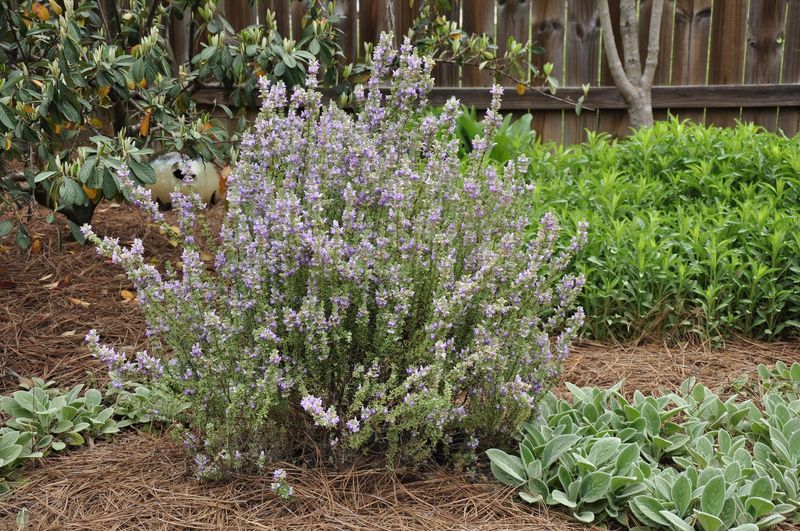
That hot, dry patch beside the driveway needs a different answer from a damp backyard corner. Wild rosemary offers pale lavender flowers and fine, gray-green foliage for the kind of sandy site where extra irrigation can do more harm than good.
Conradina canescens is native to the Florida Panhandle and nearby Gulf Coast areas. It is not culinary rosemary, and it should not be treated as a statewide recommendation for every Florida yard.
Choose full sun and sharply drained, sandy soil. A low spot that holds stormwater or a bed watered daily for nearby lawn grass is the wrong setting, even if the plant looks like a good size.
Usually about 2 to 3 feet tall with a spreading habit, it works near the front of a dry border. Its small flowers, often most noticeable in spring, support visiting bees without the space demands of a tall hedge.
Buy nursery-grown plants rather than collecting from wild populations. Water during establishment, then adjust irrigation to rainfall and soil moisture instead of following a fixed daily schedule.
For Panhandle gardeners, this is a chance to make naturally dry sand an advantage.