
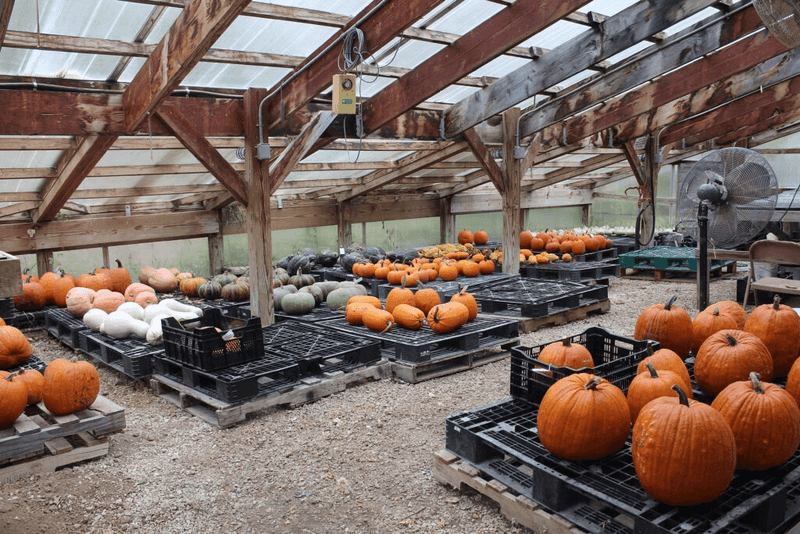
You reach for a squash from the basement and find a mushy patch where it sat. It is a sinking feeling, especially when the rest of the harvest is lined up beside it.
A few storage changes may help protect the fruit that is still sound. Here is how to sort, shelve, and check your stash, and what to expect from it.
A soft spot at the bottom is a symptom, not a diagnosis
A soft patch on the side that rested on the floor tells you where the damage showed up. It does not tell you why the fruit softened.
Squash can break down in storage for several reasons, and the early signs often look alike.
According to University of Wisconsin vegetable pathology guidance, storage decay can involve disease organisms, earlier wounds, too much moisture, or condensation. Symptoms can overlap, and some cases need a proper diagnosis.
Oregon State Extension’s rot guide also describes several different storage rots.
So skip the guesswork about a single culprit. Pick up each fruit, press gently on the underside, and look for cuts, broken stems, wet areas, or fuzzy growth.
Then improve the storage setup for whatever is still firm, without assuming every soft spot has the same cause.
Sort damaged fruit before changing the storage setup
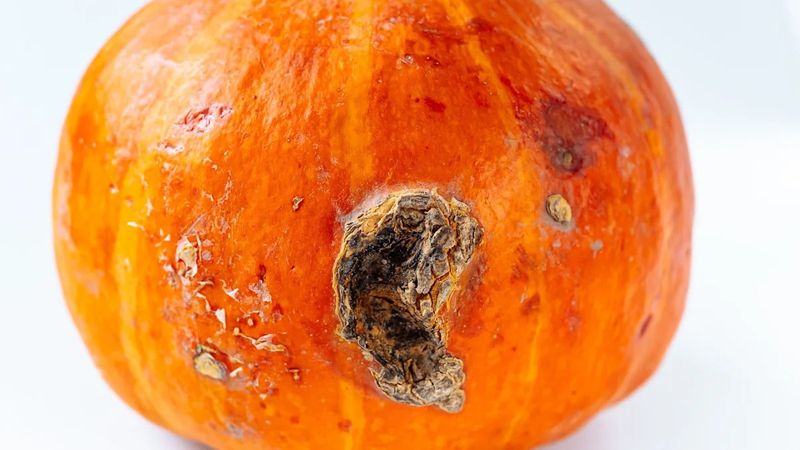
Before you build or buy anything, do a quick triage. Set aside any squash with visible rot, such as sunken wet areas, mold, or leaking.
Decay can spread or get worse in storage, so those fruits should leave the stash.
Next, look at fruit that is sound but questionable, like one with a small bruise or a slightly soft stem end. UConn’s integrated pest management newsletter notes that injured fruit does not keep as well.
Cook those first, since they are the least likely to last.
Moving an already-soft squash onto a shelf will not reverse the decay. The University of Minnesota Extension advises using blemished fruit promptly.
The Wisconsin guidance also treats removal as part of good storage practice.
Use a dry, raised shelf to limit damp-floor contact
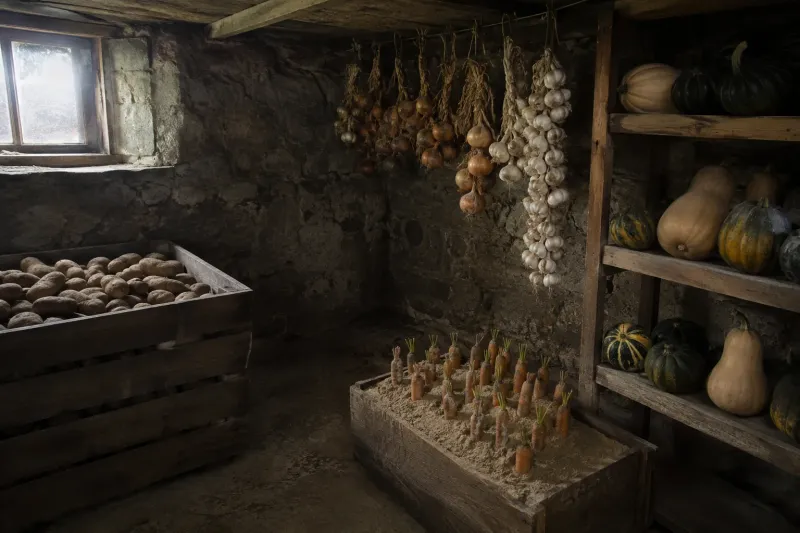
Once the fruit is sorted, get the sound squash off the floor. A cool basement or garage floor can stay damp, and fruit resting on it can stay wet or collect condensation.
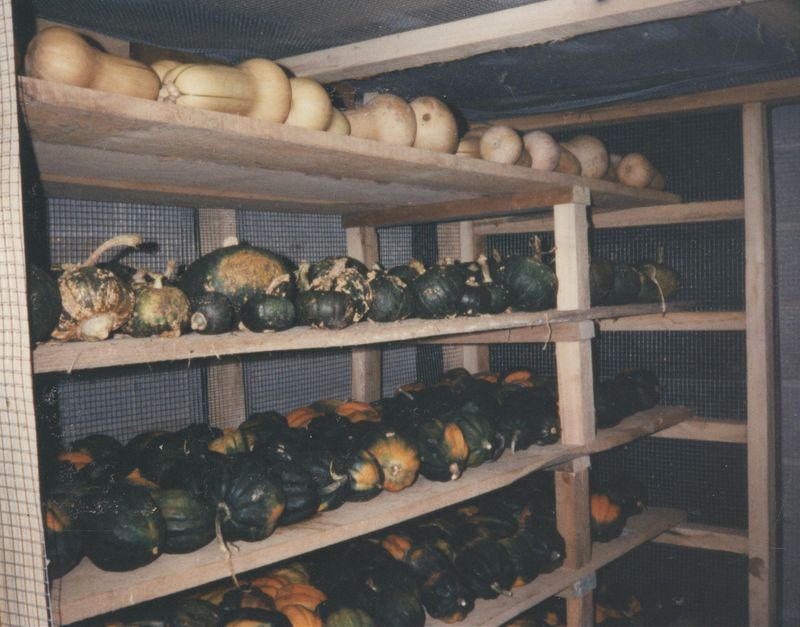
A dry, sturdy shelf or slatted rack lets air move around each squash.
This may lower the moisture risk, but it cannot guarantee against rot. University of Minnesota Extension recommends dry, ventilated storage around 50 to 55°F.
Try to keep fruit above 50°F when you can, since colder storage can cause chilling injury and later decay.
Pick a spot away from exterior walls, windows, and spots where temperature swings. UConn and Wisconsin sources both stress avoiding condensation.
Not every home can hit the ideal range, so choose the best spot you have.
Give squash room and handle it gently
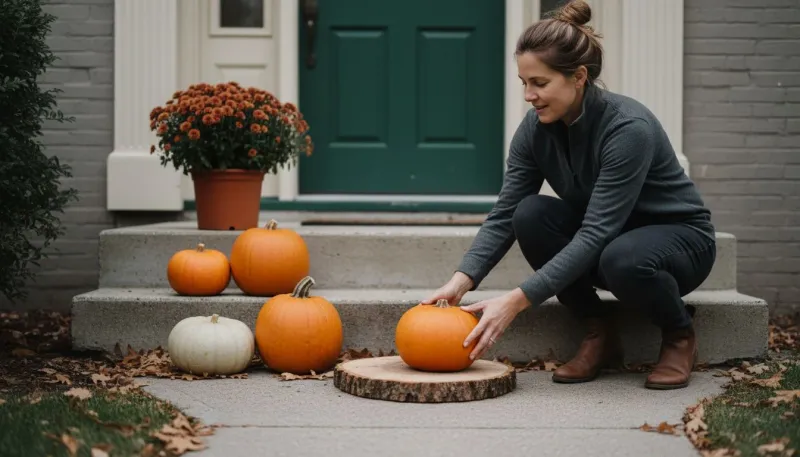
Arrangement matters as much as the shelf itself. Lay squash in a single layer where practical, and leave a little space so fruit is not touching.
If one starts to go bad, that gap gives it less chance to affect its neighbor.
Handle each fruit like an egg. Cuts, bruises, broken stems, and other injuries can shorten storage life, as both Wisconsin vegetable pathology and Minnesota Extension note.
Lift fruit by the body, not the stem, and avoid dropping or stacking. Gentle handling will not repair an injury already there, so set any damaged fruit aside for the kitchen.
Curing advice depends on the type of squash
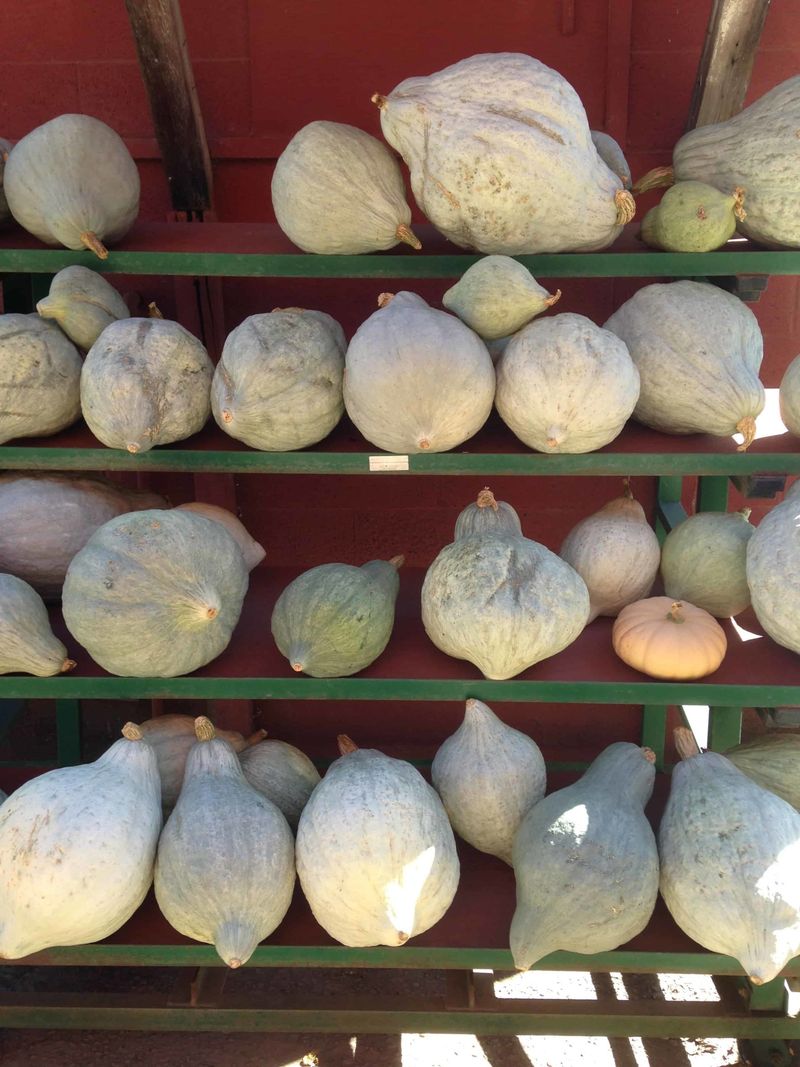
You may have heard that every squash needs curing. The advice is not that simple.
Illinois Extension generally recommends curing but lists acorn, delicata, and sweet dumpling as exceptions.
Wisconsin Extension also cautions against a cure-everything rule. If you grew several types, check what applies to each rather than treating the whole harvest the same.
Curing is also not a repair job. It will not fix fruit that is cut, bruised, frost-injured, or infected.
If your squash is already past harvest, focus on sorting, shelving, and using the questionable fruit first.
March is possible for some varieties, not a guarantee
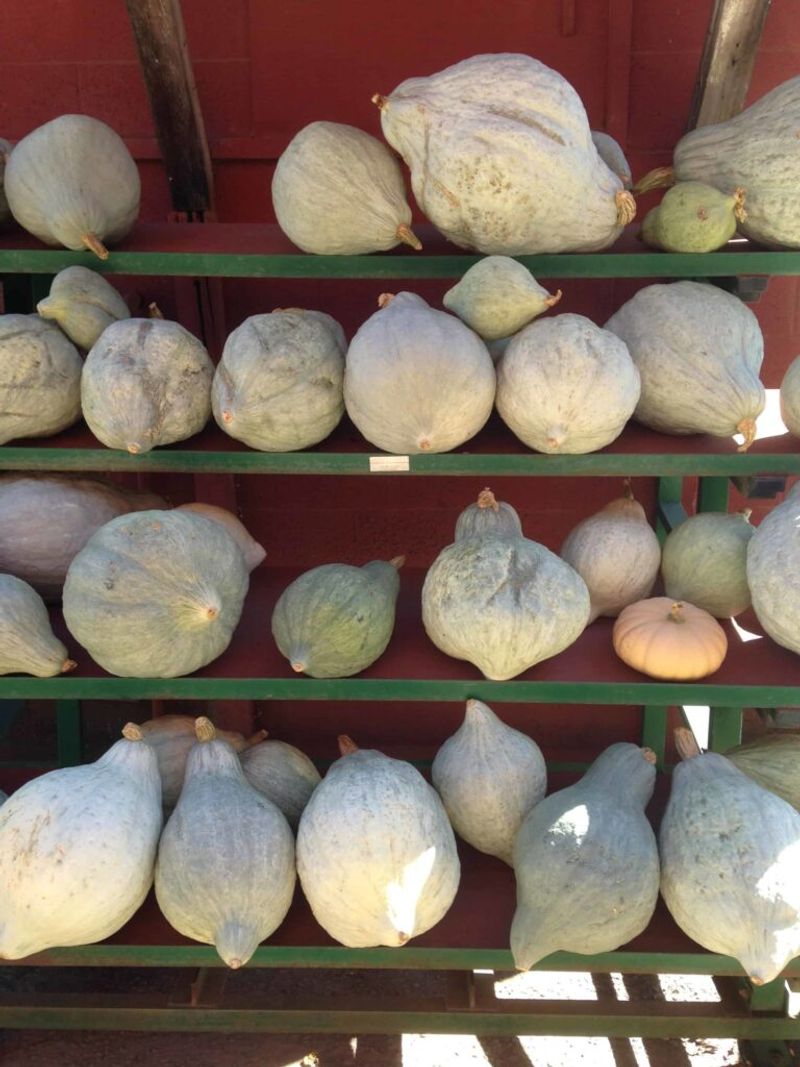
Storage life varies a lot by type. Illinois Extension gives roughly up to two months for acorn, three months for butternut, and six months for Hubbard.
Penn State Extension lists different estimates under its stated conditions, including 4 to 7 weeks for acorn and up to 27 weeks for Hubbard. Because the sources use different conditions, treat the numbers as separate guides rather than direct comparisons.
That leaves March possible for some sound, long-keeping squash that are stored well. It is not a promise for every squash, and these figures should not be applied to every pumpkin.
Your own results depend on variety, fruit condition, handling, and how close your space gets to ideal conditions.
Inspect stored squash and use questionable fruit sooner
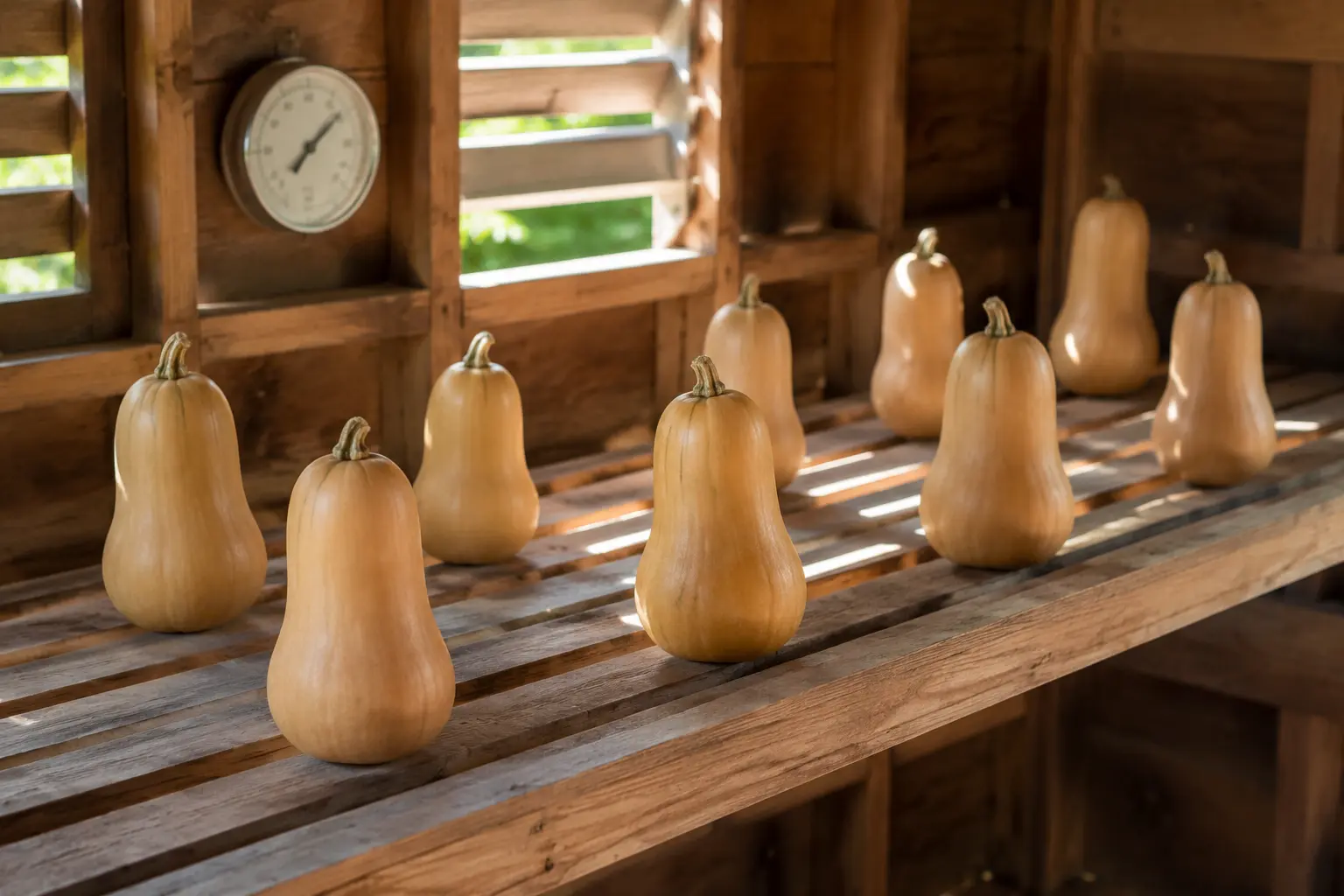
Make a quick check part of your routine, every week or two. Look over each fruit, turn it gently, and feel the underside.
The University of Minnesota Extension and Wisconsin vegetable pathology both support regular inspection.
Pull out any squash that develops rot, and cook sound-but-questionable ones sooner. A dry, raised shelf may help protect the firm fruit, but variety, condition, and conditions in your space set the limits.
Whether any of them reach March is a bonus. A squash you eat in January beats one you lose in February.