
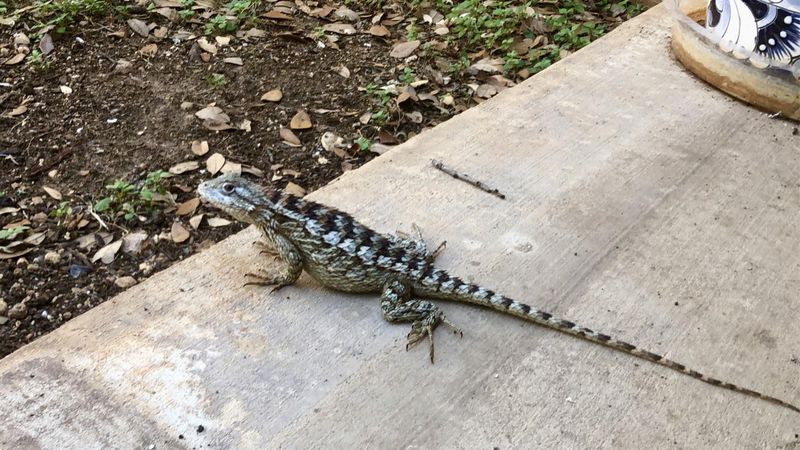
You step outside and there it is again, a rough-scaled lizard clinging to a fence post or tree trunk. In Central Texas, that visitor is probably a native Texas spiny lizard, and its return trips tell you something useful.
They show what the lizard finds in your yard, though not everything you might guess. Here is how to read the clues and share your space with it.
One lizard is using the yard, not grading it
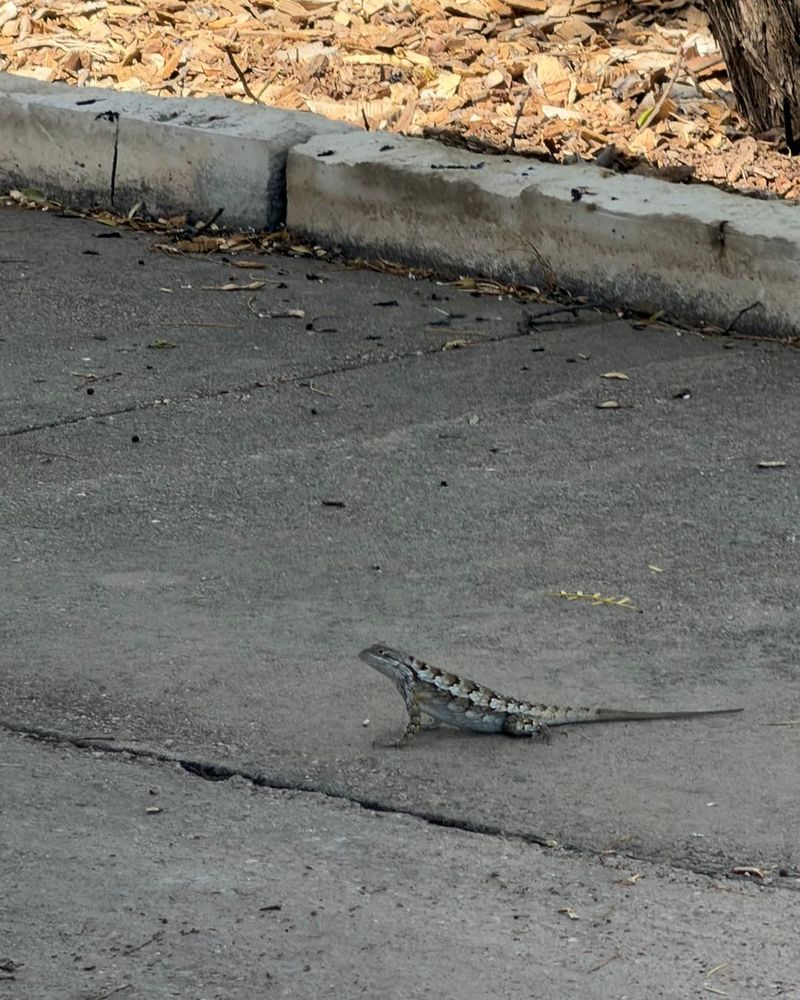
Gray-brown and rough-scaled, the Texas spiny lizard blends into bark so well that many people notice it only when it moves. This native species, Sceloporus olivaceus, is active by day and climbs trees with ease.
Adult males carry blue markings on the belly, a handy clue if one flips up its body or pauses in a pose.
According to the UT Austin Biodiversity Center, this lizard is a regular part of Central Texas backyards. So when the same one keeps turning up near your oak, woodpile, or back fence, that tells you something simple.
It can find what it needs there, whether that is a place to climb, a patch of sun, or something to eat.
What it does not tell you is how your whole yard is doing. A single lizard sighting is not a report card on soil, plants, or pest levels.
It is also not proof that your yard has no pesticides or that insects are booming.
Part of the reason is that Animal Diversity Web describes relatively small home ranges for the species. A lizard that lives on your property may simply be easy to see because you walk past its favorite spot every day.
Think of each sighting as a note about one animal’s choices, not a grade for your landscape.
Climbable structures and nearby cover make a yard usable
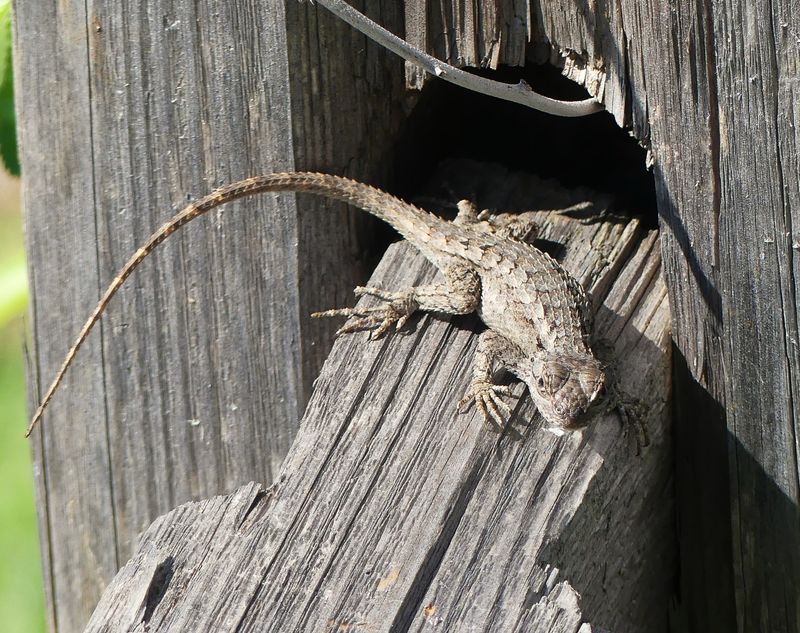
Picture your yard from a lizard’s point of view. Tree trunks, scrub, wooden fences, and the outside walls of your house all offer something to climb and a place to perch.
Texas Parks & Wildlife Magazine lists trees, fences, and building exteriors among the places these lizards live around people.
Climbing and hiding are two different jobs, and it helps to keep them apart. Fences and walls are documented as places the lizard lives and moves around.
Trees and other cover, such as leaf litter and low shrubs, are where it can climb away from trouble or retreat. A bare fence line gives a lizard a perch, but it does not give it a hiding spot.
That is why a yard with a mix of features tends to be more usable than one with a single feature. A fence beside an oak with some shrubs underneath gives a lizard options.
A fence on its own across open lawn gives it far fewer.
No single feature guarantees a visit, though. A lizard may skip a perfect-looking corner and favor a scruffy one across the property for reasons you cannot see.
For homeowners, the modest reading is the safest one. Repeated visits suggest the lizard is making use of some combination of structure, cover, sun, and food, and you may never know which piece matters most to it.
What its appetite says—and what it does not
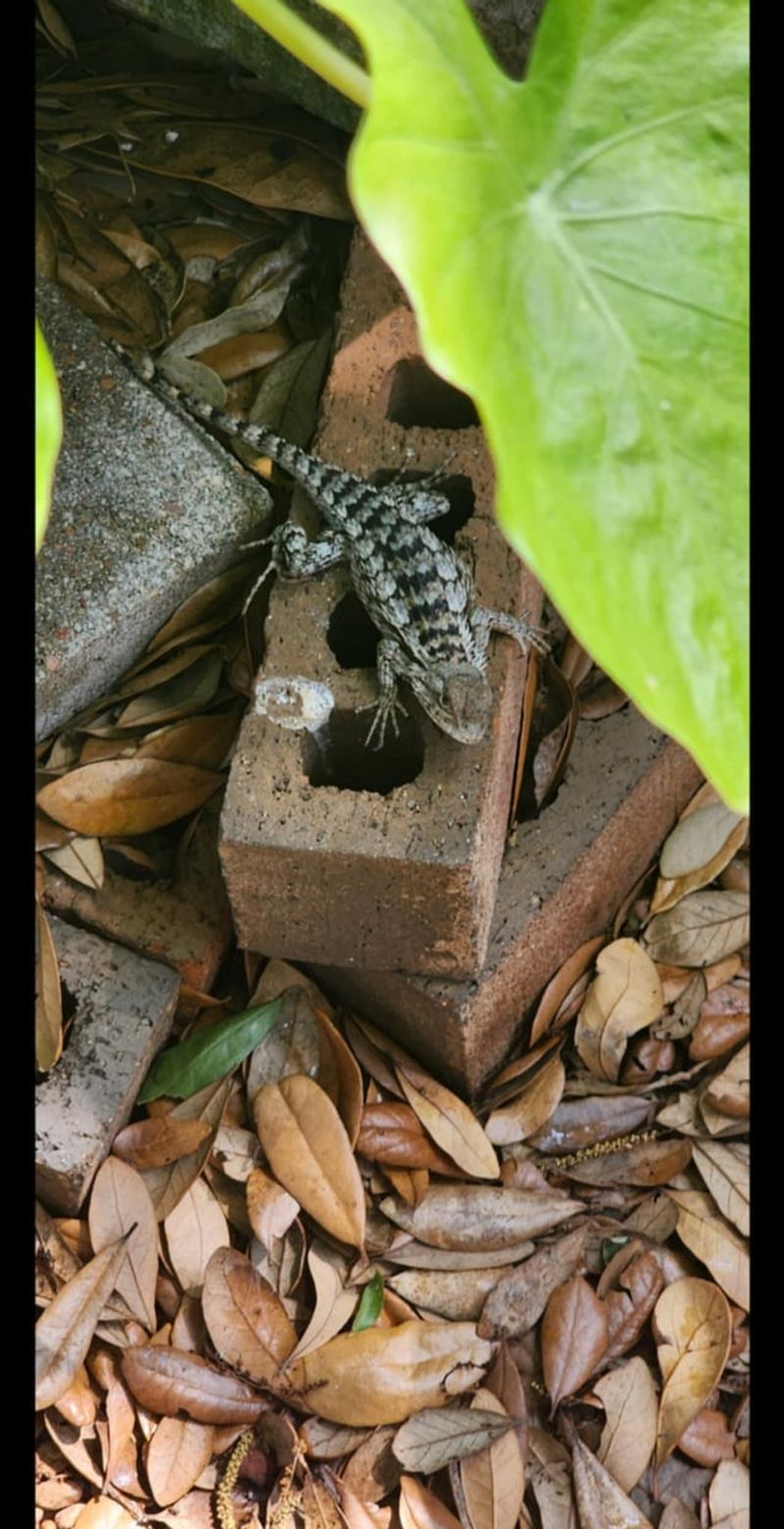
Grasshoppers, beetles, ants, caterpillars, and other larvae all show up on the menu, according to Texas Parks & Wildlife Magazine. The UT Austin Biodiversity Center also points to crickets and grasshoppers.
In plain terms, this is an insect and invertebrate hunter that watches from a perch and grabs what passes close.
Hearing that, it is tempting to picture a free pest crew. The facts do not go that far.
A lizard that eats many kinds of small prey is not a reliable fix for any one problem, and nobody has shown that spiny lizards put a real dent in mosquitoes, ticks, or roaches around homes.
The same caution applies to a bumper crop of sightings. UT Austin’s profile supports the idea that the animal eats insects, not that more lizards means more bugs.
You might see more of them simply because the weather is warm, a young lizard is exploring, or you finally sat on the porch.
So enjoy the hunting show without counting on it. If you have a pest problem, treat it as its own question and look for solutions designed for that pest.
Think of the lizard as one more predator in the mix, not a service you can order.
A sunny winter wall can be a possibility, not a rule
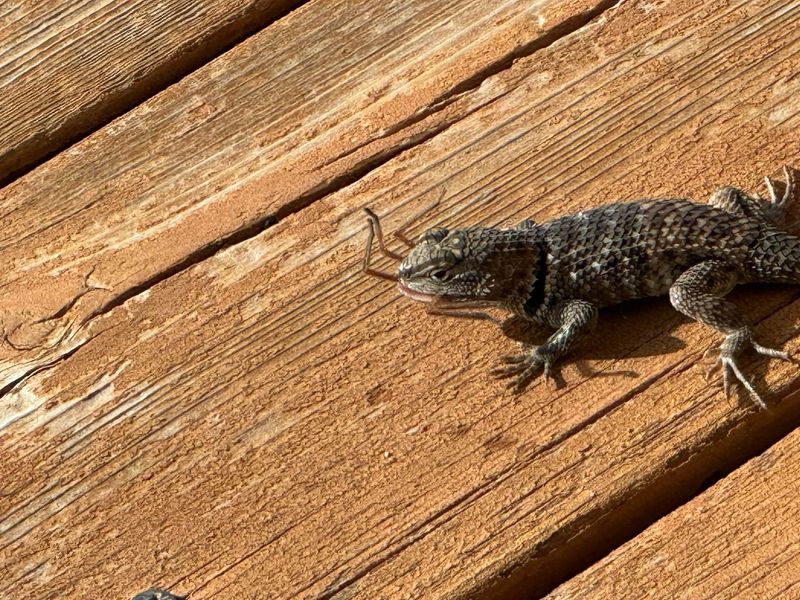
Winter slows these lizards down. Texas Parks & Wildlife says they spend the cold months under leaf litter or in soil.
Most days from December through February, you are unlikely to see one at all.
There is one reported exception. A Texas Master Naturalist in the Rio Grande Valley describes Texas spiny lizards basking during sunny winter stretches, then hunkering down again when it turns cold.
That report comes from South Texas, so it cannot tell us how often Central Texas lizards do the same.
Where would a lizard warm up on a bright winter afternoon? A sun-facing wall is a plausible spot, since the species is known to use building exteriors, as UT Austin notes.
But nobody has shown that it prefers walls in winter, so treat a sunny wall as a possibility, not a promise.
A small student study in San Antonio found lizards in city and scrub sites kept similar body temperatures despite different surroundings, which fits with lizards choosing warmer or cooler spots. It does not pin down winter timing or any wall preference.
If you spot one on a mild day, enjoy it, give it space, and leave the leaf litter in place for the colder days ahead.
A few yard choices can make sharing space easier
Small changes go a long way here, and most of them involve doing less. If you have a mature tree that is healthy and safe, keeping it is one of the best moves, since Texas Parks & Wildlife Magazine lists trees among the lizard’s documented habitat.
Fences and building exteriors can stay as they are, too.
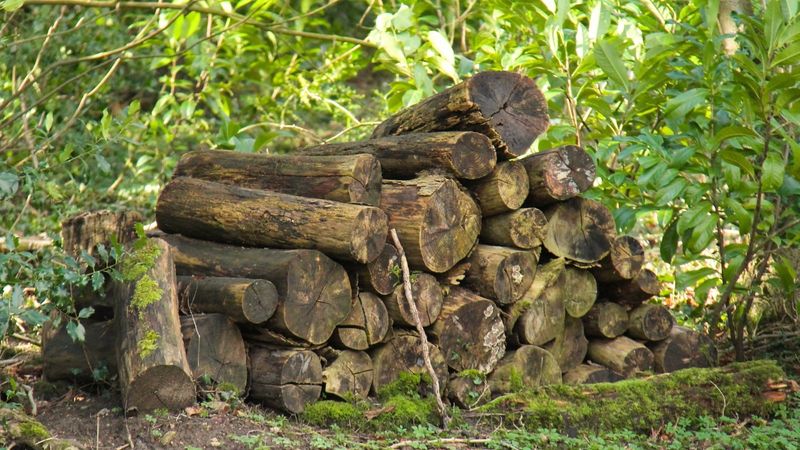
For shelter, try tucking a small log beneath a shrub and leaving a patch of leaf litter in a quiet corner. That suggestion comes from a Texas Master Naturalist article aimed at wildlife-friendly yards.
Pick a spot away from foot traffic, mowers, and pets, and skip the tidy-up there.
Pesticides deserve a careful approach. The same article advises limiting them because they can affect lizards and the insects they eat.
That is general habitat advice, not proof that a particular product has harmed spiny lizards in a home yard, so spot-treat only when you need to instead of spraying broadly.
Finally, keep your hands to yourself. UT Austin notes that the lizard can drop part of its tail when threatened or captured, and the regrown tail comes back shorter.
Watch from a few steps away, and let kids and pets know the lizard is a look-only neighbor.
Read the sighting as a clue, not a verdict
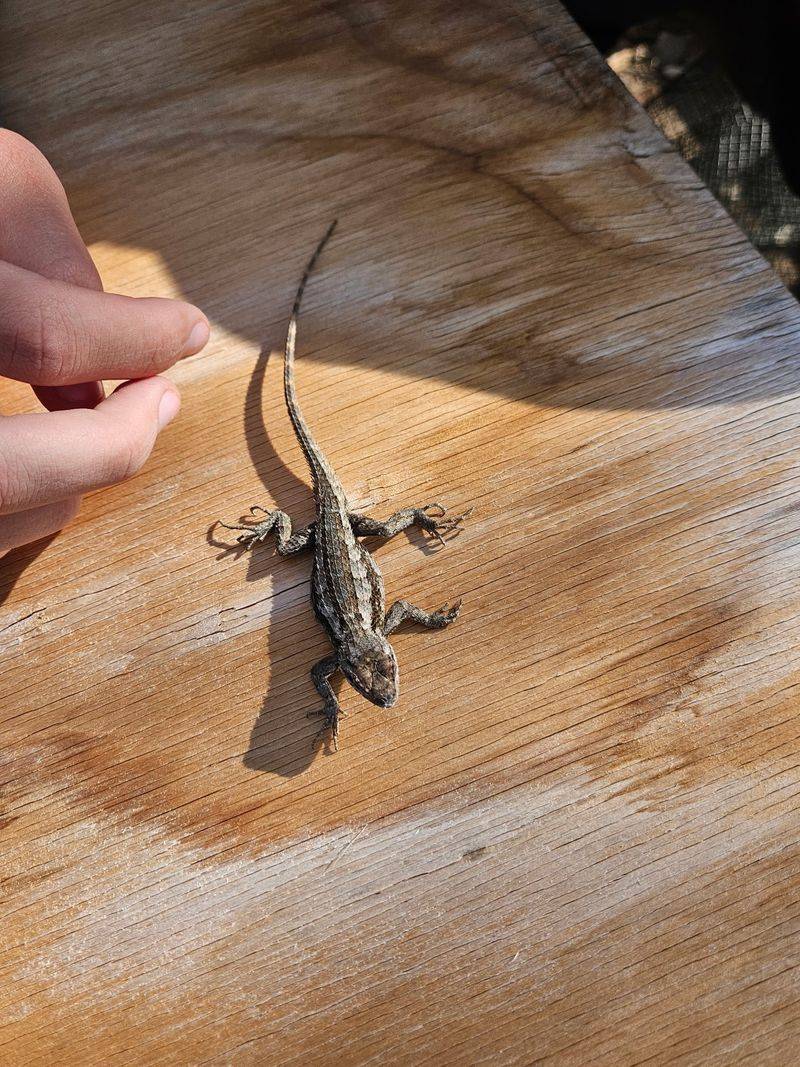
A lizard on your fence says that your yard has something it can use, such as structure, cover, sun, and prey. It cannot tell you how healthy the whole yard is.
Keep the shelter you have, avoid unneeded disturbance, and enjoy any warm-day winter sighting without reading it as an insect surge or a Central Texas routine, since winter mostly means hiding. Sometimes a good neighbor is just one that gets to stay.