
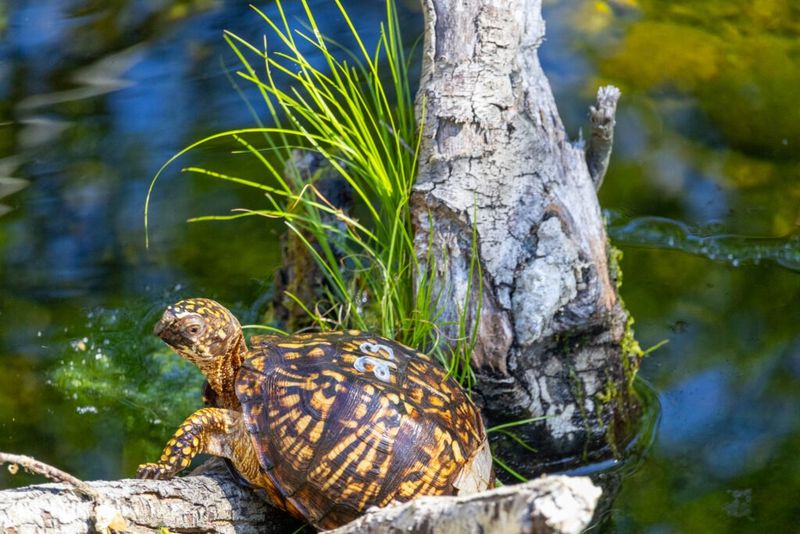
A slow, domed turtle plodding across a North Carolina lawn after a rain is a small thrill for any gardener. Eastern box turtles live across much of the state, and they do best when yards offer cover and a bit of quiet.
A few simple habits can make your beds and borders easier on them. Here is how to garden with turtles in mind, without promising anything the animals will not deliver.
A small home range does not mean one turtle stays in one bed
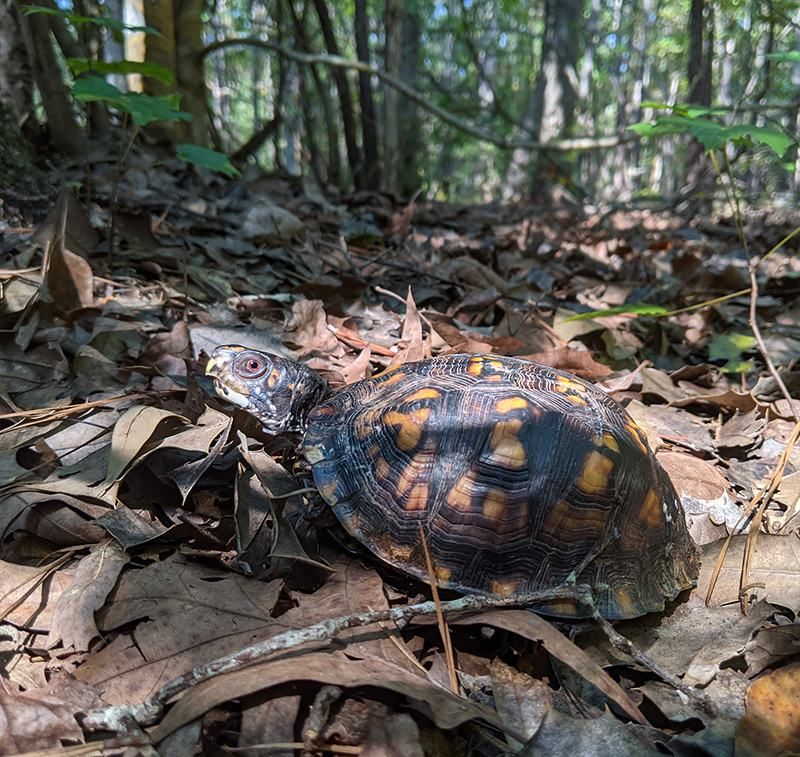
Seeing a box turtle once can make a gardener wonder if it lives right there. It is a fair question, and the honest answer has a few layers.
Eastern box turtles generally use a small home territory, and NC Wildlife says it is usually under 2 acres. They also have strong homing instincts, which is why the agency advises against moving a turtle somewhere new.
Still, a small territory is a general pattern. It does not prove that one turtle returns to one bed, follows a fixed route, or even stays in your yard.
Research shows why moving turtles backfires. A relocation study in North Carolina found that moved turtles ranged more widely, and some died or disappeared.
Turtles that are left alone are not locked in place either.
Movement is also hard to measure. A 2025 Wake County study tracked just four turtles, and it found occasional longer trips that less frequent tracking can miss.
Four animals cannot give a universal range size, but they do show that a turtle may wander farther than you would guess.
The practical lesson is to skip the mapping and the guessing. Instead of trying to claim or track a turtle, focus on keeping suitable habitat in your yard, such as shade, leaf litter, and low cover, so a passing turtle has options.
Turtles use cover, not necessarily a visible burrow
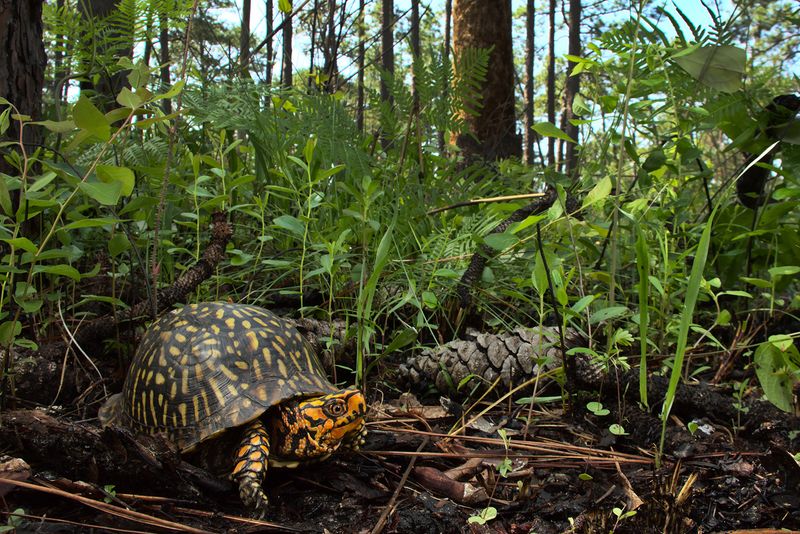
Picture a turtle tucked under a mossy log on a muggy afternoon. That kind of spot is typical.
Turtles may shelter beneath logs or damp vegetation, and what looks like a plain pile of leaves can serve as a resting place.
Many gardeners imagine a neat burrow with a doorway. Most yards do not offer one that is easy to spot, and not every turtle has a permanent hole.
Words like shelter, resting site, and wintering site fit better than burrow, because they describe what the animal does without suggesting you can point to its address.
Winter is when this matters most. NC Wildlife notes that turtles typically bury themselves in soil or leaf litter for the cold months.
A buried turtle looks like nothing at all, which is the point, so a bed that seems empty in January may not be.
Timing is not as neat as a calendar either. The same agency reports turtles have been seen in every month, and burial in winter is typical rather than guaranteed.
A mild spell in the Piedmont or coastal plain can bring a turtle out, and a cold snap in the mountains can send one back under.
So skip the rule that says soil work is safe after a certain date. Go by what you have seen in your own yard, and treat any quiet, leafy, shaded patch with a bit of care.
Protect a known wintering site from disruptive work
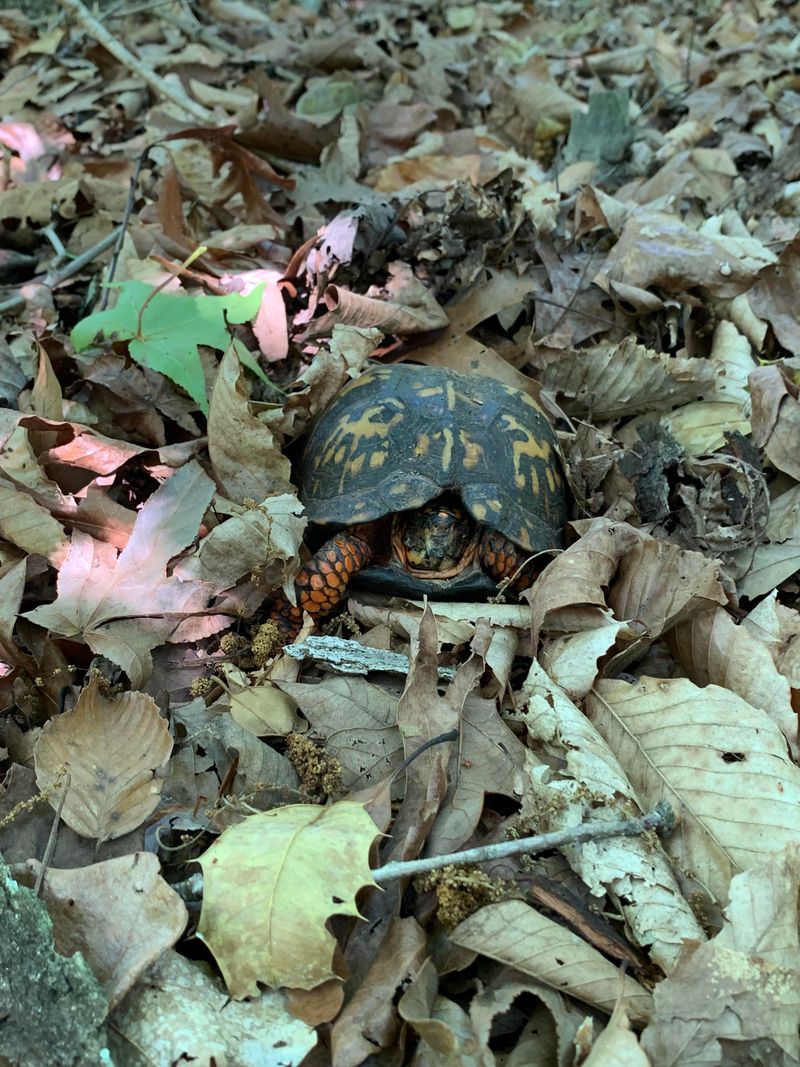
Say you watched a turtle push into the leaves along a back fence last fall. That patch is worth treating gently, even though you cannot be sure the turtle is still there.
The UNCG box turtle handbook advises keeping disruptive activity away from a known wintering site. That includes raking, burning, and hauling wood, and it even includes regular foot traffic.
Soil that gets compacted or leaves that get scraped away can remove the cover a dormant turtle relies on.
In practice, this can be as simple as a boundary. Pick a small area and leave it out of your winter cleanup.
A few stakes or a ring of stones can remind everyone in the household, including the person who mows or hauls firewood, to go around it.
Keeping leaf litter fits here too. NC Wildlife says turtles may bury in leaf litter, so a leafy corner can be a sensible low-impact choice.
You do not have to keep every leaf in the yard. Clear the lawn, the walkways, and the beds where leaves smother plants, and save the quiet edge near shrubs or trees.
None of this proves a turtle is present. It is a low-cost way to avoid harming one that might be.
A shady, leafy corner can fit both a garden and turtle habitat
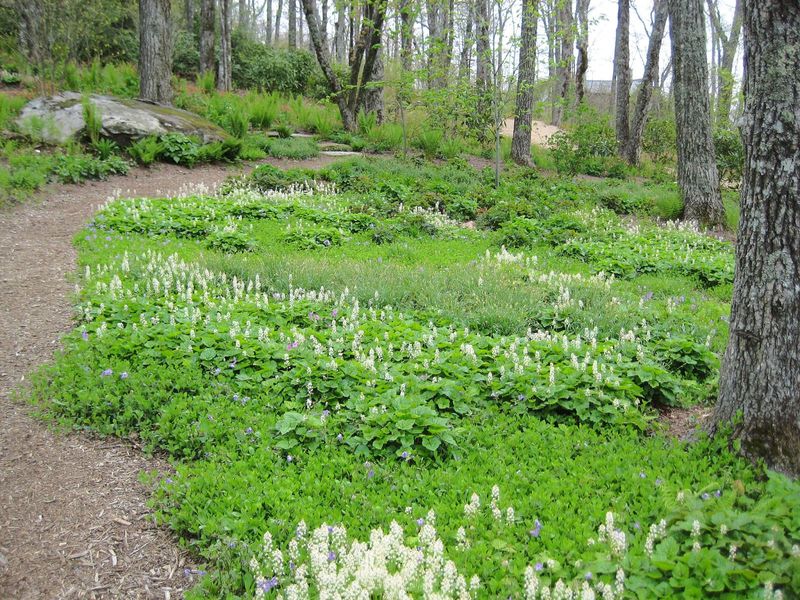
If your yard has a bare, shady strip under a tree, you may already have a start. A low, planted corner with a layer of leaves can look tidy and also offer the kind of cover turtles may use.
NC State Extension suggests low-growing shady spots with leaf litter and native plants such as ferns, wild ginger, and black cohosh. Treat these as options, not a prescription.
Choose what suits your light, soil, and region, whether that is a mountain slope or a coastal plain lot.
Planting them does not ensure a turtle will arrive or stay. What you get for certain is a native planting that holds moisture, shades the soil, and supports other wildlife.
Habitat matters here. NC Parks describes hardwood forests as key habitat, with fields, shrublands, and pine stands also used in some circumstances.
A shady, leafy yard corner echoes the forest floor on a small scale.
Start modestly. Leave a few fallen branches, tuck in a handful of ferns, and keep the area out of the mower’s path.
Place it away from busy walkways and pet runs, and let it fill in over a season or two.
Check the ground before major yard work
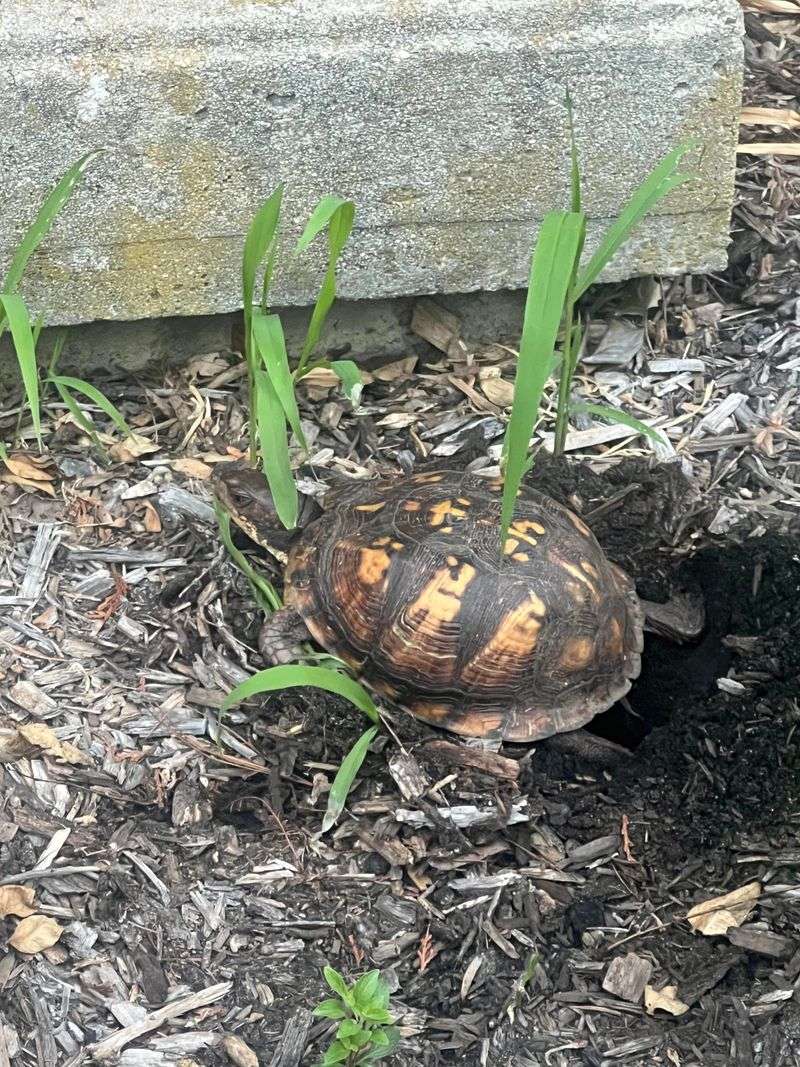
Before the shovel goes in, take two minutes to look. Walk the work area slowly and scan the leaf litter, the base of shrubs, and any spot under logs or dense plants.
Think of this as a cautious precaution. It is not a published wildlife threshold, and it does not guarantee you will find a turtle.
A buried or sheltering animal can be very hard to see, which is why a quick look is a starting point rather than a clearance.
The check matters most near a place where you have seen a turtle resting or sheltering. NC Wildlife points to soil and leaf litter as places turtles may bury, and the UNCG handbook warns against digging and similar disturbance at known wintering sites.
If you find a turtle, pause the job in that spot and work somewhere else for the day. Often a small shift in plans, such as moving a new bed a few feet or clearing another section first, is enough.
Ordinary gardening will still cause some disturbance now and then. The aim is to cut down on avoidable harm by leaving cover where it is feasible and saving the biggest jobs for areas you have checked.
If a turtle is in danger, move it only as far as needed
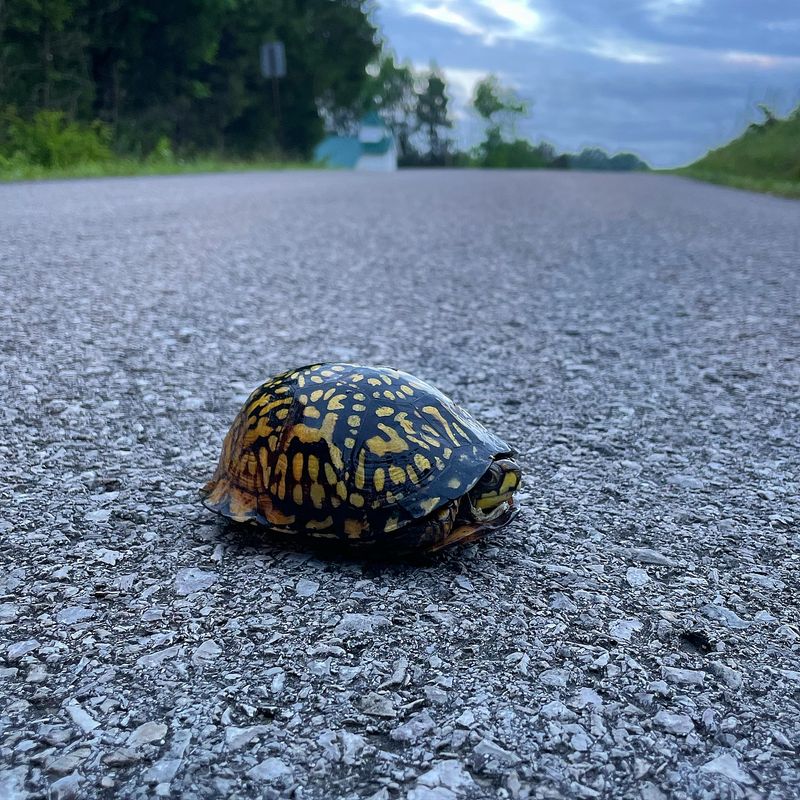
Most turtle encounters need nothing from you. Let the animal walk on, and keep pets and mowers out of its way.
A road is different. NC Wildlife advises moving a turtle across in the direction it was already traveling.
Check for traffic first, use both hands, and set it down on the far side facing the same way it was headed. Turning it around only sends it back into the road.
The same goes for other immediate danger, such as an open work area. Make the shortest move necessary, ideally less than 50 feet, and keep it heading in its original direction.
That brief safety move is not relocation. Do not carry a turtle to another yard or a distant wooded area, and do not keep one as a pet.
Moved turtles may roam widely, and NC Wildlife discourages possession of fewer than five. State rules also bar hunting or trapping, and taking, possessing, buying, or selling five or more is prohibited commercial take.
If a turtle looks injured, with a cracked shell or visible wounds, contact a licensed reptile rehabilitator for advice. Place it in a ventilated container while you call, and avoid trying to treat it yourself.
Keep the cover, protect the quiet spots, and the turtles will mostly handle the rest.