
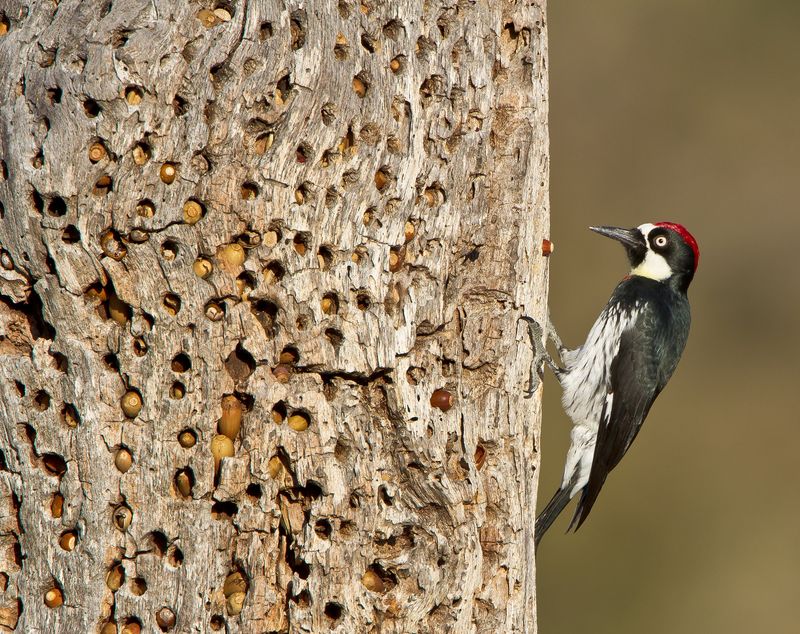
You walk out one morning and find a tree trunk or a wall pocked with holes, and maybe you heard tapping at dawn. Many California homeowners assume the culprit is an Acorn Woodpecker, but the pattern of the holes may tell a different story.
Knowing which bird is at work, and why, helps you protect your trees and siding without harming wildlife. Here is how to read the clues and what to do next.
Rows of holes do not identify the woodpecker
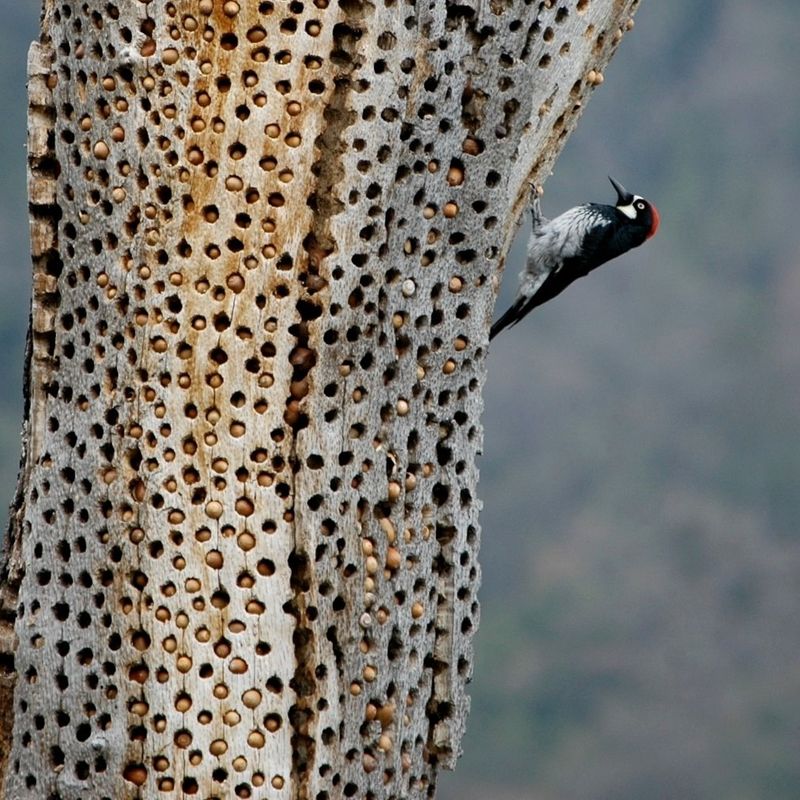
Finding rows of holes on a trunk naturally makes you ask which bird did it and what the pattern means. The honest answer is that the pattern alone does not name the bird.
UC IPM describes neat rows of small holes as typical sapsucker feeding damage, where the bird drills to reach sap.
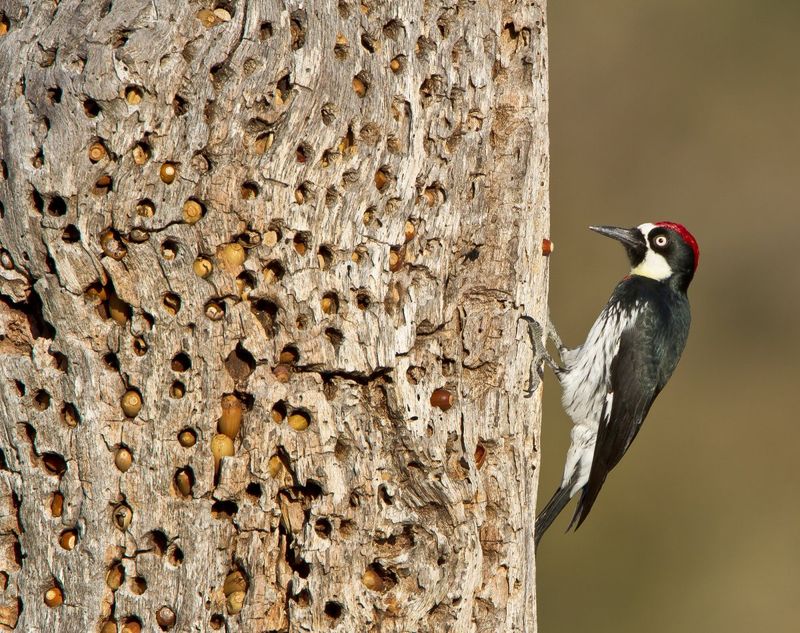
Acorn Woodpeckers work differently. They make granaries, which are food stores where acorns are wedged into individual holes.
A hole-covered tree may be a granary, but rows by themselves do not prove it.
So what should you look for? Stronger evidence is acorns sitting snugly in the holes, or watching a bird push an acorn into one.
Seeing an Acorn Woodpecker perched nearby is weaker evidence. A bird can visit a tree for many reasons, and its presence does not tell you what the holes are for.
The Cornell Lab of Ornithology notes that these birds wedge acorns into holes and return to use them, which is why stored acorns are such a useful clue.
Take a few minutes to watch the tree from a distance, with binoculars if you have them. Note the size and spacing of the holes, whether they are shallow or deep, and whether sap is oozing.
Those details come first, before you decide on any fix.
How an Acorn Woodpecker uses a granary
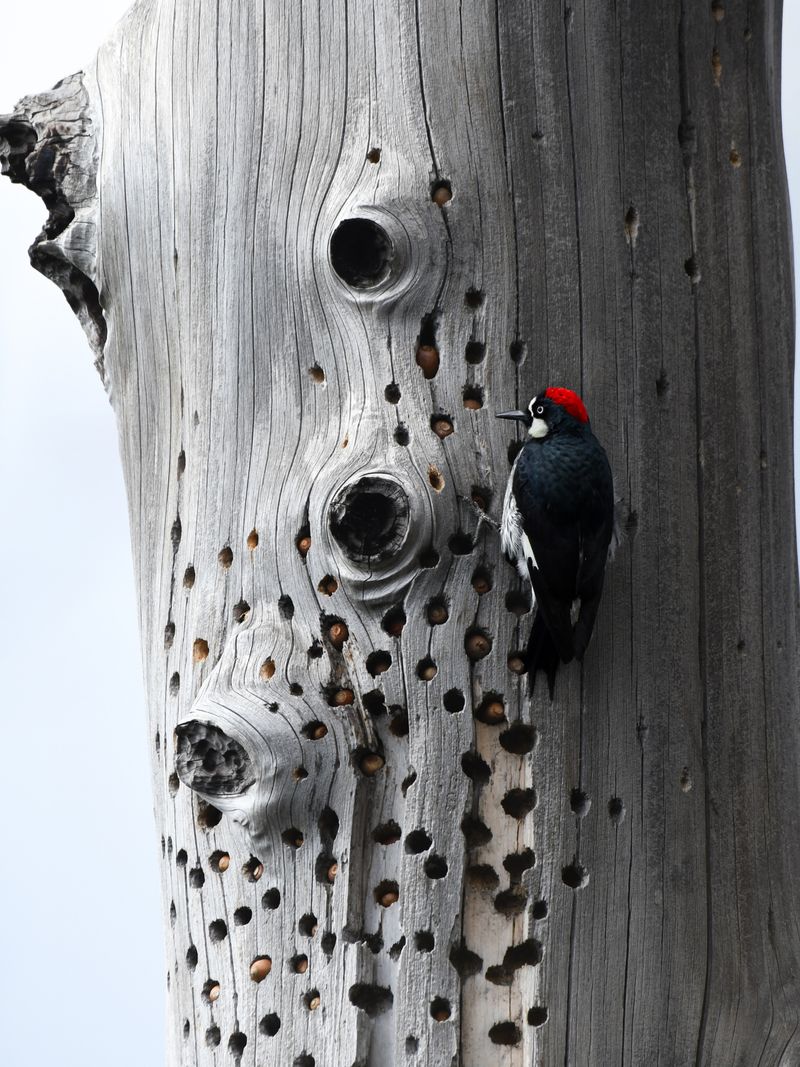
A granary is a pantry. Acorn Woodpeckers drill individual holes, wedge an acorn into each one, and come back to eat from the stash and keep it in order.
The Cornell Lab of Ornithology describes this habit as a hallmark of the species.
Groups often reuse a favorite granary tree for years and add holes as time passes. Not every group follows the same routine, though, so one tree may look very different from another.
A few holes in one yard and hundreds in the next can both be normal.
That ongoing use explains something homeowners notice. If birds keep returning to the same tree, tapping and shuffling acorns, they may be tending a cache they depend on.
Repeated visits to a familiar site fit that picture better than a one-time visit does.
Storage holes are only one kind of opening. These birds also excavate nest and roost cavities, and those serve different purposes.
A deeper, larger hole that a bird slips into is more likely a nest or roost than a pantry slot. The USDA Forest Service species review reports that granaries can be in living or dead trees, so a healthy-looking tree can still hold one.
Look for acorns tucked in snugly, each in its own small hole. That detail separates a granary from other cavities.
Holes alone do not tell you whether a tree is in trouble
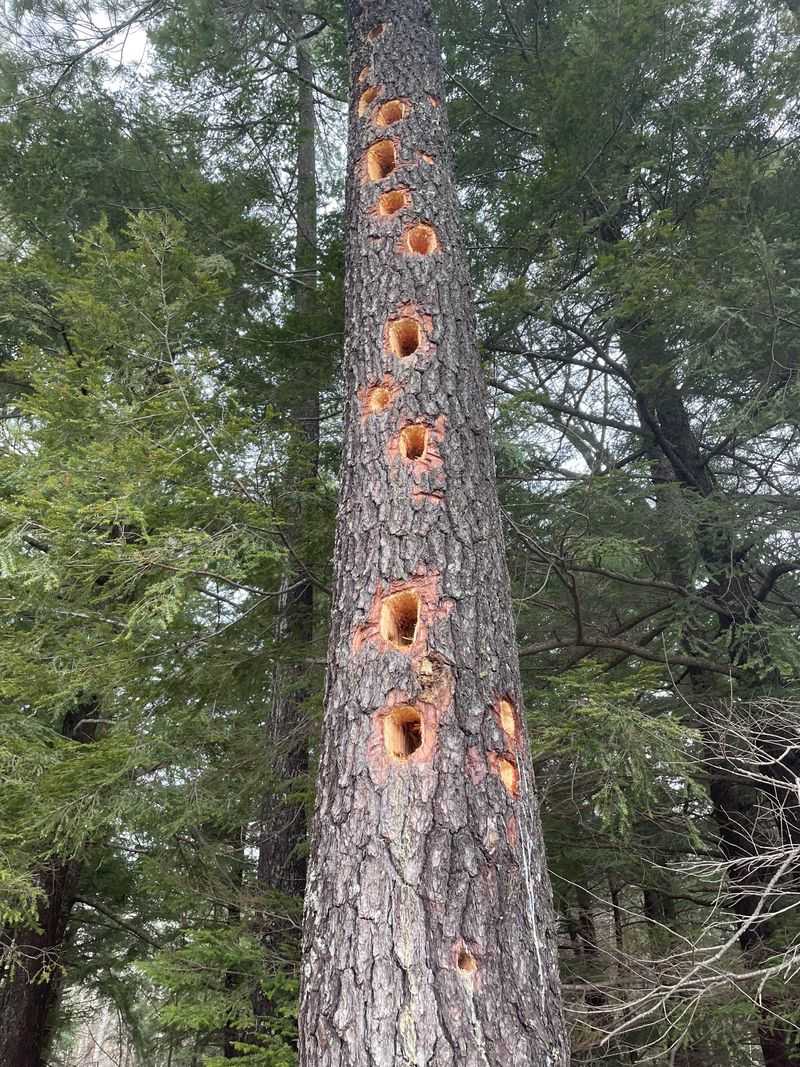
A trunk full of holes looks alarming, and many people jump to the conclusion that the tree is dying. Holes alone do not show that.
The USDA Forest Service review reports that granaries can occur in living trees, that the cambium is rarely penetrated, and that detrimental effects are generally limited.
That is reassuring, but it is not a promise. Any individual tree could have other problems, so the holes should not be read as a clean bill of health either.
Sapsucker feeding is a different story. UC IPM explains that repeated sap loss can weaken a tree and open the way for insects or disease.
Tight rows of fresh, sappy holes on a young or stressed tree deserve closer attention than scattered acorn-filled holes on a sturdy oak.
Judge the whole tree. Check for thin or yellowing leaves, dead branches, cracks, fungus at the base, or soft, crumbling wood.
A UC ANR guide to inspecting trees for hazards lists many of these warning signs.
If you see extensive injury, decay, canopy decline, or anything that looks like a safety risk, call an ISA Certified Arborist. UC ANR’s advice on hiring an arborist explains what to ask before you commit.
When the drilling reaches a house
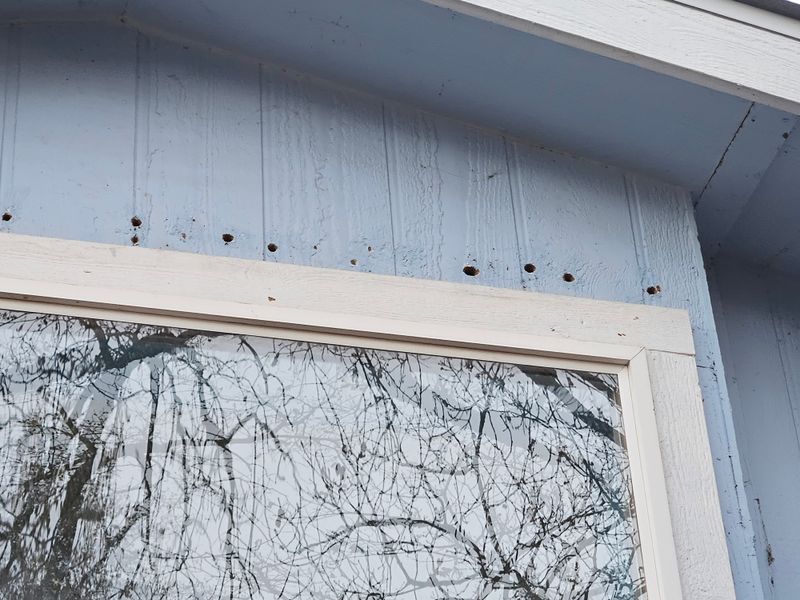
Acorn Woodpeckers do not limit themselves to trees. UC IPM notes that they may store acorns in buildings, fence posts, and utility poles, and can wedge acorns beneath shakes or shingles, which can cause damage.
Still, holes in a wall do not always mean storage. They can also come from nesting or from insects that the birds are chasing.
Treating the wrong problem wastes time and may leave the real one in place.
Start by looking closely. Check the affected area for acorns, sawdust, and tunnels.
Look for signs of insect damage in the wood, such as fine powder, tiny exit holes, or soft spots. If insects are the draw, the birds may keep returning until that issue is handled.
Once you are sure about what is going on, repair and paint the holes promptly so they do not invite more drilling or let in water. Before you patch anything, make sure no active nest is inside.
The U.S. Fish and Wildlife Service stresses checking for an active nest first, since you must not disturb one.
If the siding damage is substantial, or the wall is hard to reach and cover, a professional may be useful. A contractor who understands wildlife rules can save you from a repair that has to be redone.
Protect siding with maintained exclusion
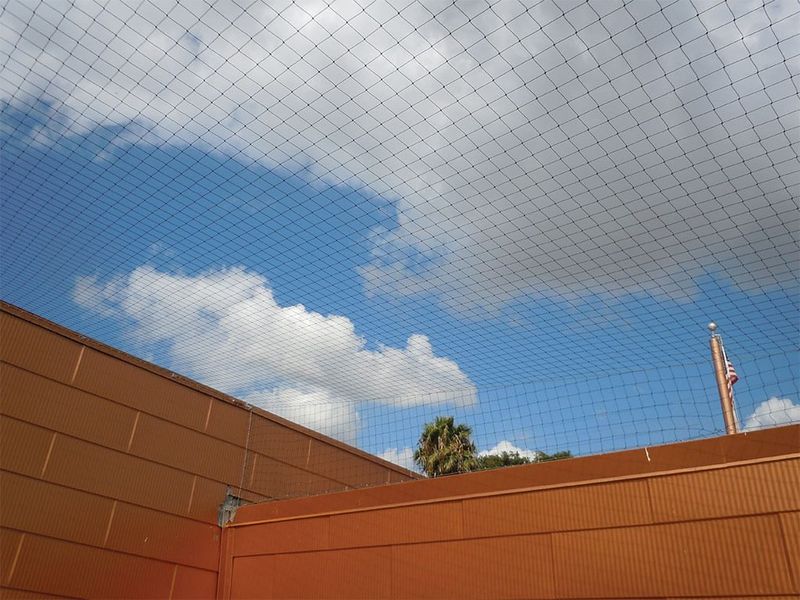
Of all the options researched, physical exclusion works best. UC IPM calls it the most effective approach for woodpecker damage to siding.
Bird netting can run from the eaves down the wall, or cover just the damaged area with at least 3 inches of clearance so birds cannot cling to the wall through the mesh.
Keep the netting taut and check it regularly. Covering only part of a wall may simply shift the activity to the next stretch of siding, so think about the whole side of the house.
Netting needs care. The U.S.
Fish and Wildlife Service warns that flexible netting can entrap birds if it is poorly installed or maintained. Sagging or torn mesh is a hazard, so fix it or take it down.
Skip the shortcuts. Sticky or tacky products can coat feathers and harm a bird’s flight and insulation.
Owl, hawk, and snake models and other scare devices give inconsistent results, and UC IPM says the models are ineffective. Feeders, nest boxes, and a nearby snag are not reliable fixes either, and some may draw in more woodpeckers.
Never kill, trap, or disturb a woodpecker or an active nest. Woodpeckers are protected under the Migratory Bird Treaty Act.
If the conflict is serious, contact your state or federal wildlife officials for guidance before you act.
Identify the behavior before choosing a response
Start with the clues: acorns in the holes, a bird wedging them in, or tidy sapsucker rows. Then look at the whole tree rather than the holes alone, and bring in an arborist if something seems wrong.
If a building needs protection, use maintained exclusion and check for nests first, as USFWS guidance advises.
A granary tree is not automatically a threat, and the birds are protected. Often the best yard has a pantry oak and an unblemished wall.