
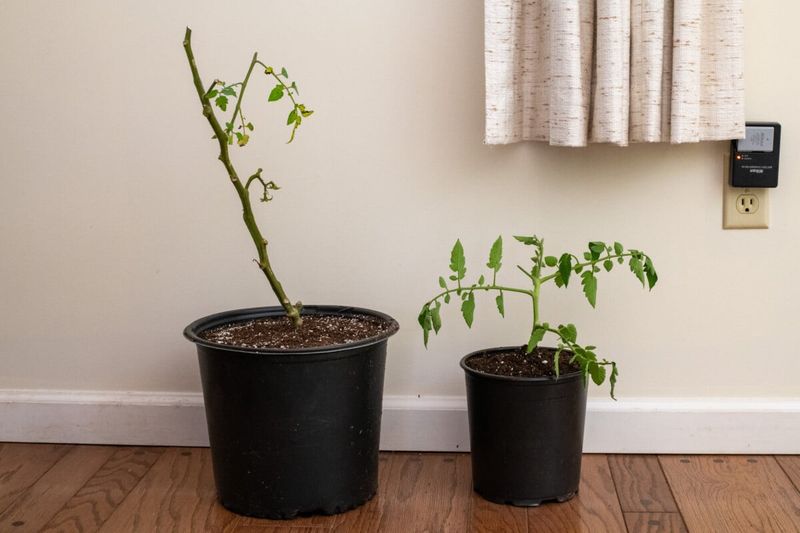
You hauled a summer tomato inside, and now it looks tall, thin, and a little sad. Stretched stems are a common sign that a plant wants more light than a windowsill gives.
A basic shop light may help new growth come in better, though it is no magic fix. Here is how to try one, how to check your results, and what to expect from a tomato that is spending the winter indoors.
Why an indoor tomato may stretch
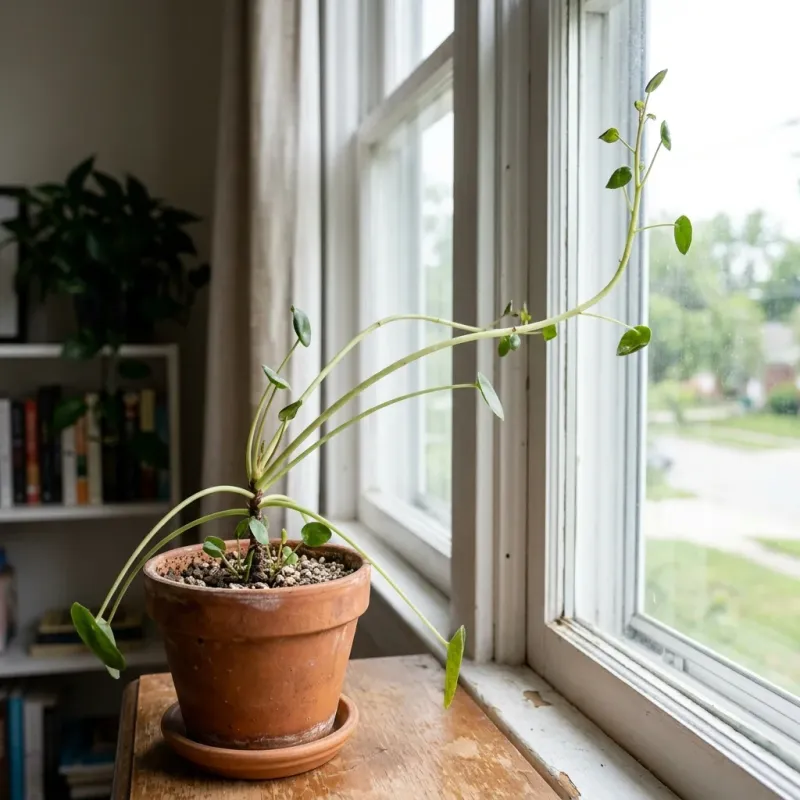
Some indoor tomatoes grow long and thin when they get too little light. The classic look is a stem with big gaps between leaves, as if the plant is reaching for something.
University of California IPM guidance links this kind of stretched growth to inadequate light.
Low light is a common contributor, but it is not the only one. Pale or weak growth can also come from other problems, and not every tomato brought indoors will stretch.
Warm rooms and crowded pots can play a part too, as UConn Extension notes for leggy tomato transplants.
Here is the reassuring part. More light may help guide growth from this point forward.
It will not shorten stems that have already stretched, so think of it as shaping what comes next rather than undoing what already happened.
Try a shop light if it reaches the foliage
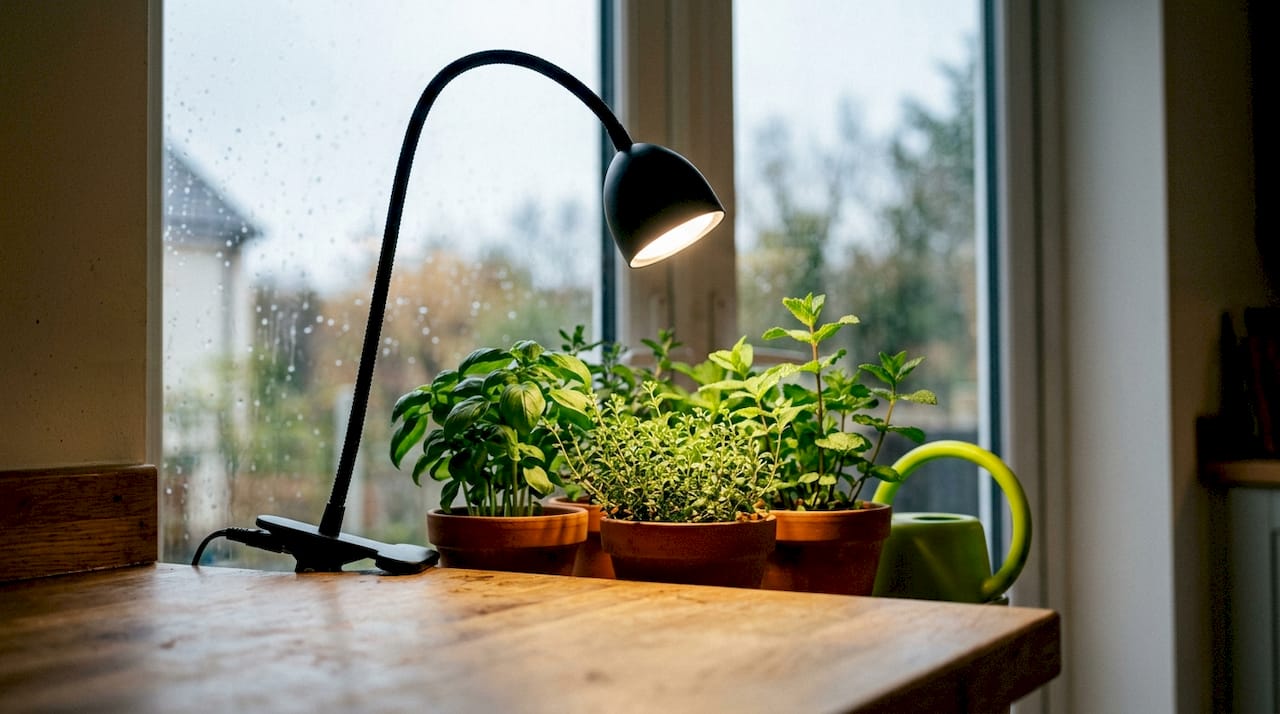
A regular LED shop light is a low-cost option worth trying. It does not need a fancy grow-light label to be useful.
What matters is how much light actually lands on the leaves.
Distance changes that a lot. Light gets weaker quickly as it moves away from the fixture, which is why UNH Extension explains that watts and lumens alone do not tell you how much plant-usable light you are providing.
A bright-sounding bulb hung too high may do little.
Hang the fixture on chains or set it on a stand so you can raise and lower it as the plant grows. Aim it over the leaves, not just the pot.
University of Minnesota Extension also stresses keeping lights close enough to matter. Results still depend on your setup and your plant.
Set a daily schedule that includes darkness
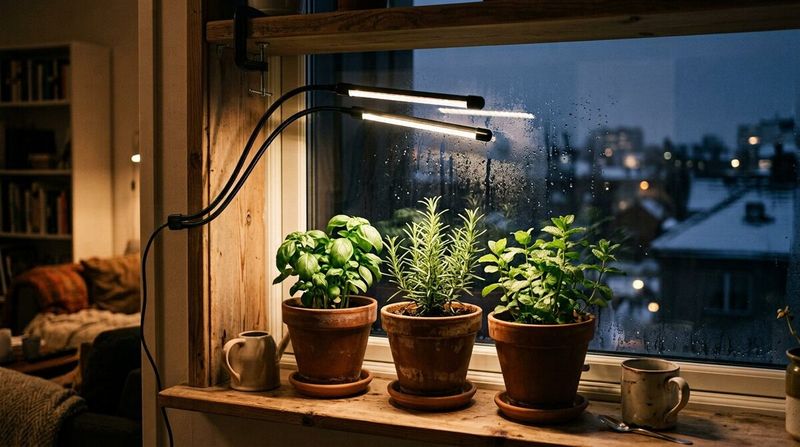
Plug the light into a simple outlet timer. A steady daily routine beats flipping a switch when you remember.
The timer also guarantees the plant gets a break.
For seedlings, University of Minnesota Extension recommends 16 to 18 hours of light a day. That is seedling guidance, not a schedule tested on large, overwintered tomatoes.
Treat it as a starting point and watch how your plant responds.
Do not leave the light on around the clock. A peer-reviewed study on tomatoes reported leaf injury under continuous light.
A nightly dark stretch gives the plant a needed rest, so keep it in your plan.
Adjust the setup by watching new growth
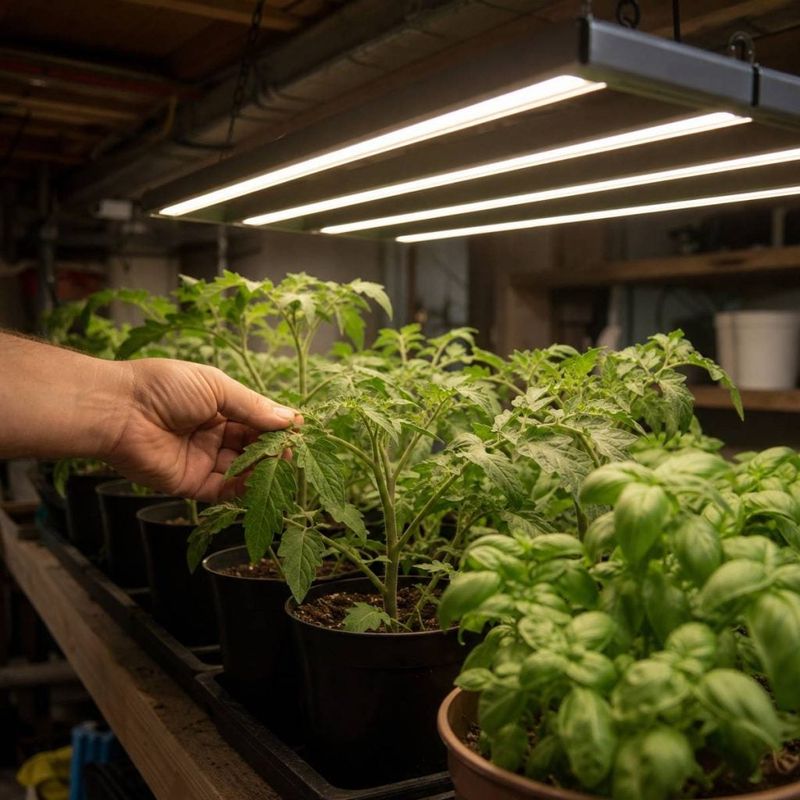
Treat your lighting as a trial you can tweak. Judge it by the growth that appears after you add the light, not by the old stems.
Those older stems will stay as long as they are.
If new growth keeps coming in thin and stretched, the plant may need more intensity. UNH Extension points to options like lowering the fixture, using a brighter one, or adding a second light.
If leaves look scorched or bleached, back off. Raise the fixture or reduce intensity, and follow the fixture’s own guidance as described in Iowa State University Extension’s setup advice.
Feel for heat near the leaves too.
Photos taken weekly make changes easy to spot. Better growth going forward is the realistic goal, since extra light only helps limit further stretching.
Check for other causes and protect indoor plants
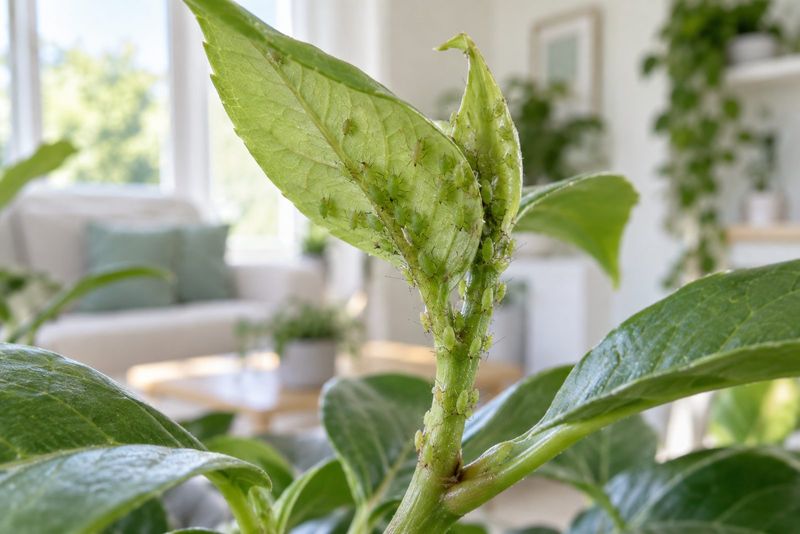
Pale or droopy leaves do not automatically mean the plant is starved for light. UC IPM lists other possible culprits, including watering habits, root trouble, nutrient shortages, temperature swings, and pests.
Run a quick checklist. Is the soil soggy or bone dry?
Do roots circle the pot or smell sour? Is the room drafty or too hot near a heater?
Fixing one of these may help more than another light.
Pests deserve special attention. A pot that spent summer outdoors can carry insects inside, so inspect leaf undersides and stems before the move.
Extension guidance on bringing plants indoors advises keeping the plant away from your other houseplants while you monitor it.
Check it every few days for sticky leaves, webbing, or tiny insects.
Keep overwintering expectations realistic
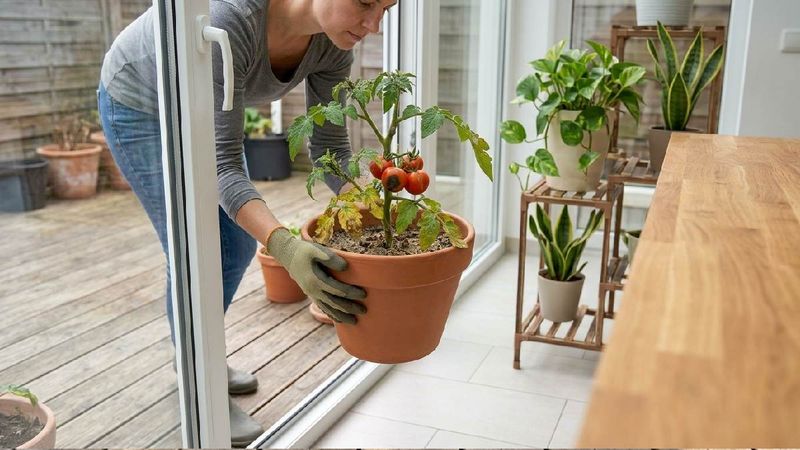
Tomatoes are tender, warm-season perennials, yet gardeners across the continental United States usually grow them as annuals, as Illinois Extension describes. So keeping one alive indoors is possible, but it is not always easy or worth the effort.
UNH Ask Extension cautions that it can take plenty of work without delivering the payoff people hope for.
Keeping leaves green and managing vegetative growth is one job. Making tomatoes is another.
Iowa State University Extension notes that fruiting indoors can require much more light.
A timed shop light may help limit further stretching in new growth. It cannot promise a stocky plant, winter fruit, or a successful spring transplant.
Sometimes a cutting or a fresh seedling is the easier path.
Give the plant a fair trial, and let it show you what it can do.