
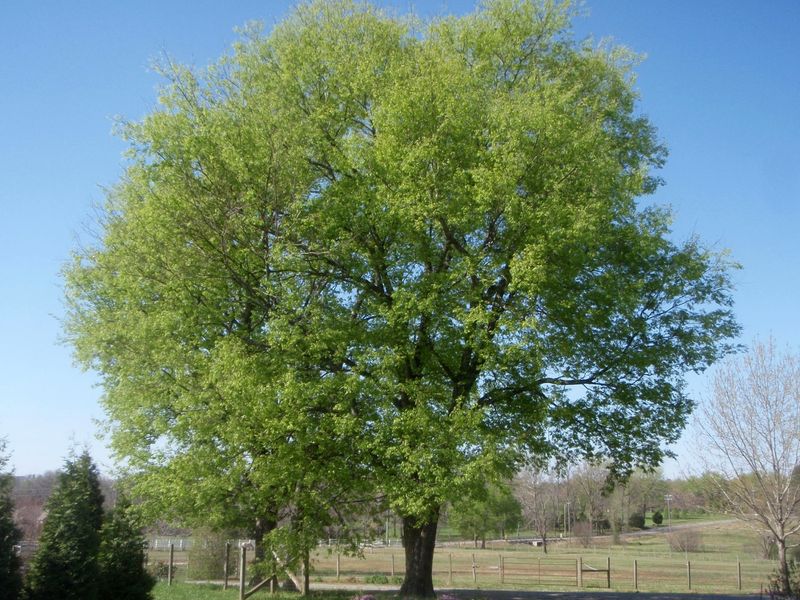
Some Texas trees do quiet work for backyard birds, and sugarberry is one of them. Its small fruits ripen late in the year and can hang on into winter, when some birds look for fuel.
Bluebirds, robins, and mockingbirds are all listed as fruit eaters. Before you plant one, though, it helps to know what this big tree needs and what it can and cannot do.
Meet sugarberry, a Texas native with berry-like fruit
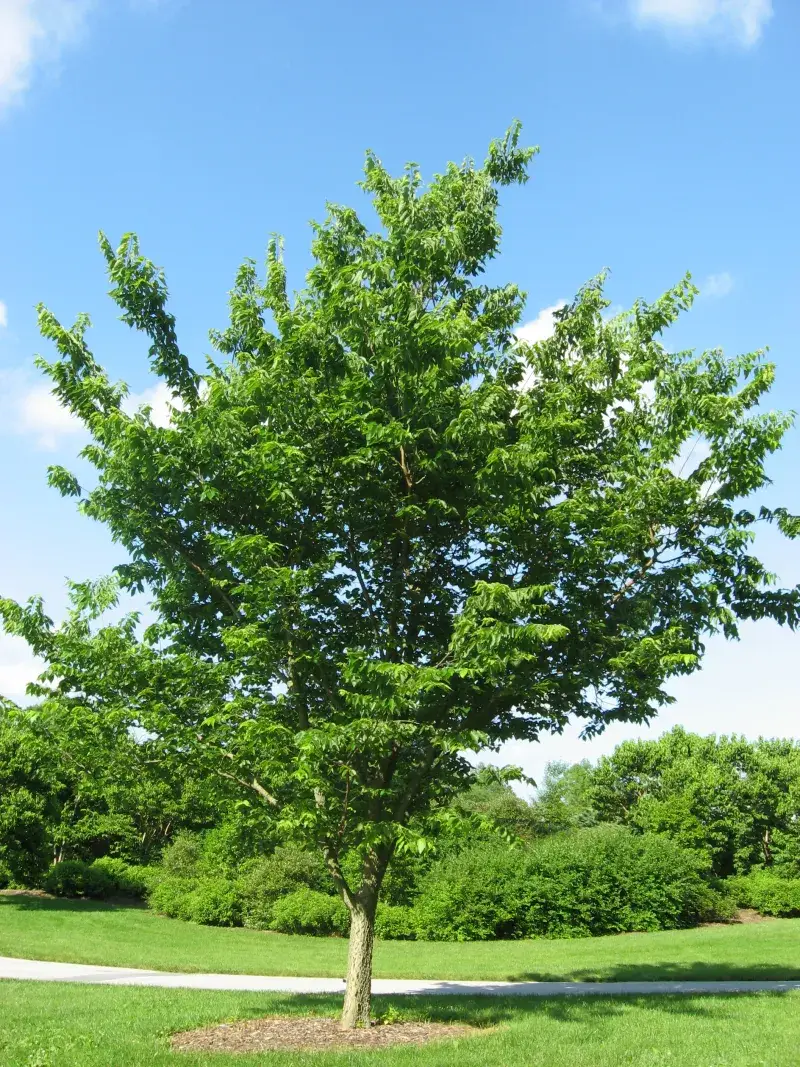
Sugarberry goes by several names: sugar hackberry, Texas sugarberry, and southern hackberry. Its scientific name is Celtis laevigata.
According to Texas A&M Forest Service, it is native across much of Texas.
The name matters because many trees are called hackberry. Netleaf hackberry grows mostly in West Texas, and Lindheimer’s hackberry (C. lindheimeri) occurs only in Central Texas.
They are different species, so what is said here about sugarberry should not be assumed for every hackberry in your neighborhood.
The fruit is a drupe, a small fruit with a single hard pit inside, so it is not a true berry. The forest service describes the small fruits as orange-red in September, turning dark purple to black later in fall.
Other references give different ripening dates, and a Texas Parks and Wildlife table lists July and August. A safe summary is that the fruit ripens in late summer or fall and may persist into winter, as noted by Texas A&M AgriLife.
You may see this tree described as forgotten, but that is an editorial label, not a documented fact. The forest service calls sugarberry very common, and the sources reviewed show no decline.
Overlooked in home landscapes is a fair description. Rare is not.
Its fruit can be a seasonal food source for some birds

A Texas Parks and Wildlife wildlife table lists bluebirds, robins, and mockingbirds among the birds that eat sugarberry fruit, according to the agency’s publication. That list is specific to sugarberry.
It should not be copied onto other hackberries.
Timing is where sources disagree a little. The drupes may ripen anywhere from late summer into fall, and Texas A&M AgriLife says they can persist through winter.
Rather than pinning down a date, think of the fruit as available over a stretch of the cooler season.
Fruit can matter in colder months. Audubon describes the eastern bluebird’s diet as mostly insects and berries, with berries especially important in winter.
The Texas Breeding Bird Atlas says mockingbirds rely on fruit as an essential winter food, but also notes that birds move between territories as resources change.
So a sugarberry is a possible food source, not a promise. Birds have other foods, and what they find depends on your neighborhood, the weather, and what else grows nearby.
Some yards may see regular visitors, and others may not.
Check that your yard has room for a mature tree
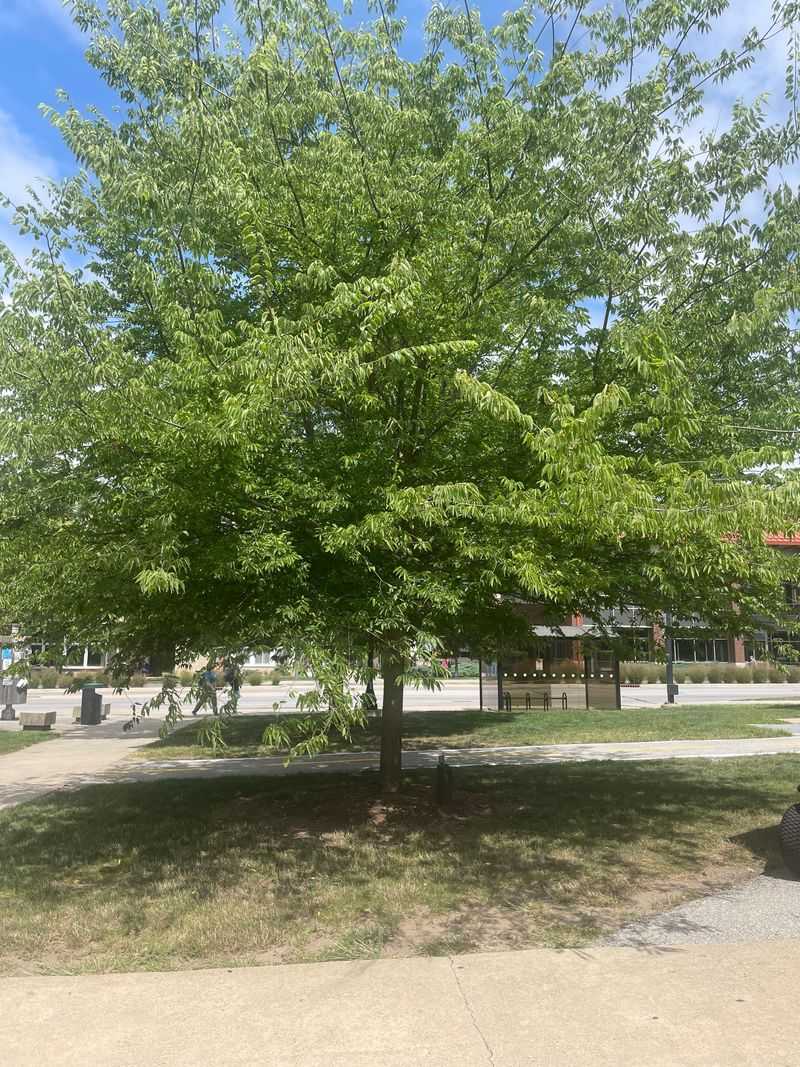
Walk your property with the full-grown tree in mind. Texas A&M Forest Service says sugarberry can reach 90 feet, though it is often smaller.
Either way, it will want substantial space overhead and underground.
Measure the distance to your house, fences, pools, driveways, septic lines, and overhead wires. A tree that looks modest in a 5-gallon pot can eventually spread over a roof or lift paving with its roots.
If the spot feels tight, a different tree may be a better fit.
Soil is the other check. Sugarberry is most abundant in rich river-bottom soils but also grows in other well-drained soils.
Look for a spot where water drains instead of standing after a heavy rain.
You may also hear about hackberry psyllids, tiny insects that make bumps called galls on leaves and sometimes gather around windows in late summer and fall. Texas A&M AgriLife Extension says the galls can look unsightly but do not cause long-term tree damage.
The insects are not harmful to people or companion animals, though they can be a nuisance.
Plant during the Central Texas window
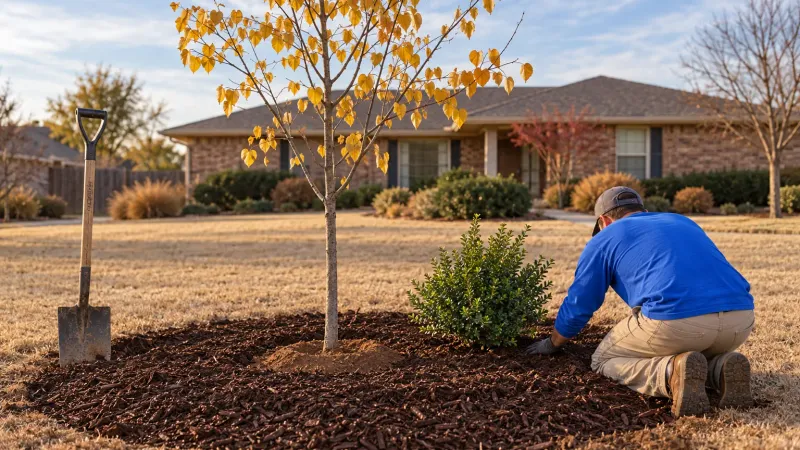
For Central Texas, Texas A&M Forest Service gives a planting window of November to early spring. That timing lets roots settle in before the triple-digit heat arrives.
If you are reading this in fall, you are entering the right season to plan.
Start with the site. Pick a spot with room for mature growth, using the space check described earlier, and mark it before you buy anything.
Choosing the location first keeps you from planting a large tree somewhere you will regret.
When you dig, set the tree no deeper than its root ball. Burying the trunk base too far is a common mistake, and the forest service flags planting too deeply as a leading cause of establishment failure.
Look for the point where the trunk widens near the roots and keep that at or just above ground level.
The same guidance names improper watering as the other frequent cause of failure. Watering is covered in the next section.
Beyond depth and site, there is no need to add special tricks to the planting process.
Water a new tree through establishment
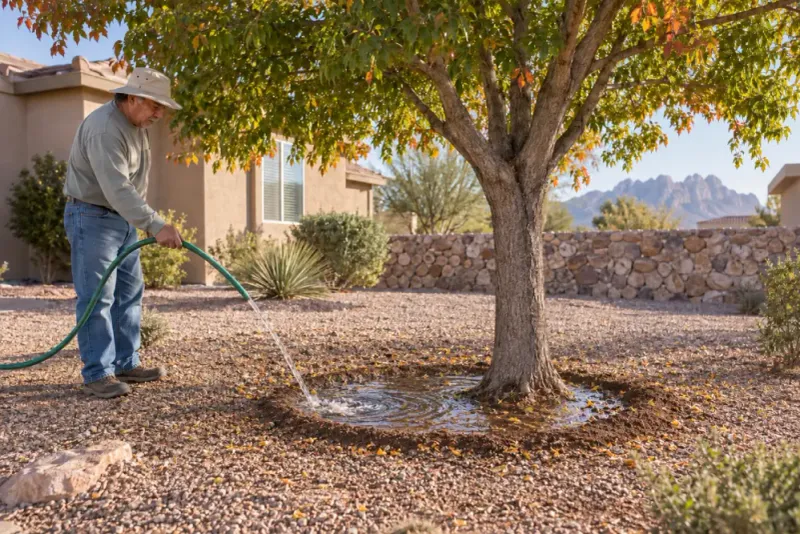
A native tree still needs help in its first years. Texas A&M Forest Service guidance recommends watering newly planted trees through two growing seasons.
Plan on that commitment before you plant.
Favor deep, infrequent watering over frequent light sprinkling. A slow soak encourages roots to reach down instead of staying near the surface.
Check the soil a few inches down before you water again.
Adjust for the weather instead of following a rigid calendar. After a soaking rain, you can skip a session.
In a hot, dry stretch, the tree will need more attention, and cooler months need less than summer.
You may read that sugarberry is drought-tolerant once established. Texas A&M AgriLife describes it as a hardy native, but that describes a mature tree with an established root system.
A sapling has not built that yet. Check local water restrictions too, and plan your soaks around the days you are allowed to water.
Pair fruit with the habitat birds also need
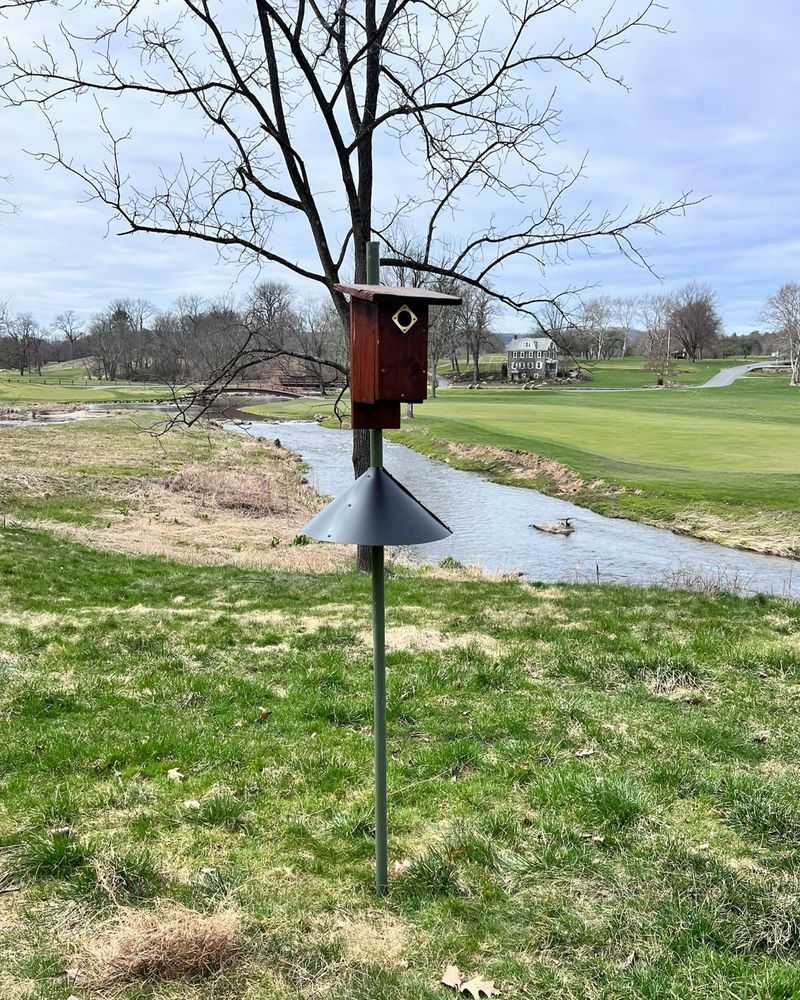
Take the eastern bluebird as an example. A USDA Natural Resources Conservation Service leaflet describes a bird that eats many insects and forages in open areas.
Fruit helps, but a tree full of drupes does not meet all of its needs.
Think about the whole yard. Leave open ground or short grass near the tree where birds can spot insects.
Keep some perches nearby, and avoid heavy pesticide use that reduces the insects birds feed on.
Sugarberry may suit you if you have the space, well-drained soil, and the willingness to water it for two growing seasons. If the site is cramped, a smaller native may make more sense.
Either way, treat the fruit as a possible seasonal bonus.
Planting a tree is a long game. The birds will decide for themselves, and the habitat around the tree will matter as much as the tree.