
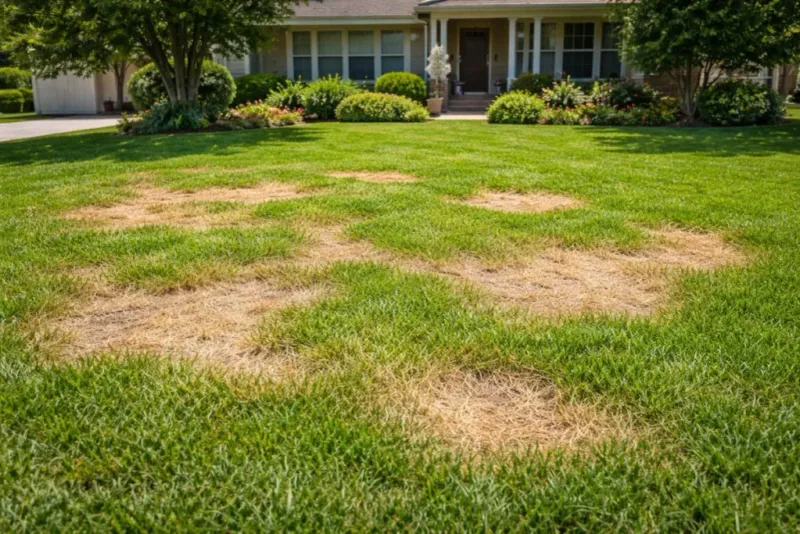
Brown patches in your St. Augustinegrass do not always mean the grass is gone. If living runners or crowns are still in the soil, many lawns can grow back with the right care.
Chinch bugs are a common cause of damage in Florida, but they are not the only one. Here is a calm, step-by-step plan to find out what happened and help your lawn recover.
Brown grass can still have living runners
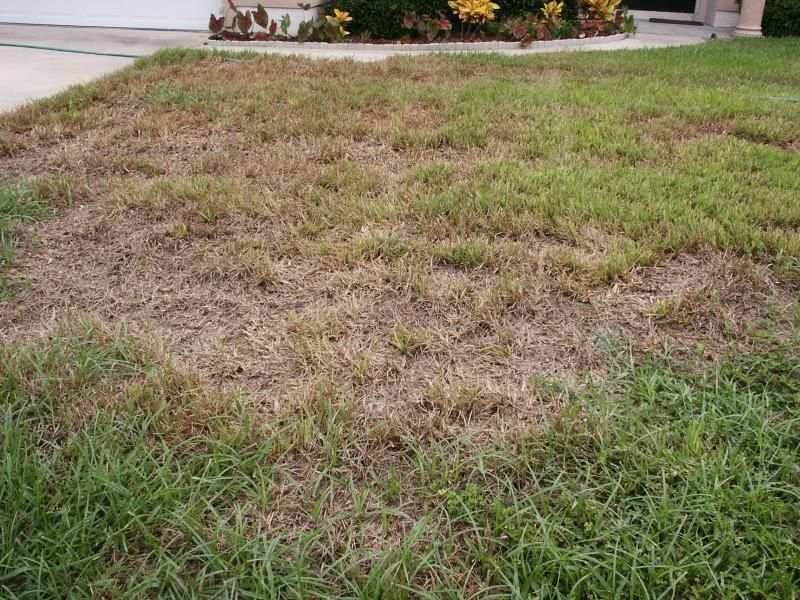
Some brown St. Augustinegrass can recover. The key is whether living stolons (the above-ground runners) or crowns (the base of each plant) are still alive under the dead-looking blades.
Brown leaves on top of a living plant can be replaced by new growth. Bare ground cannot.
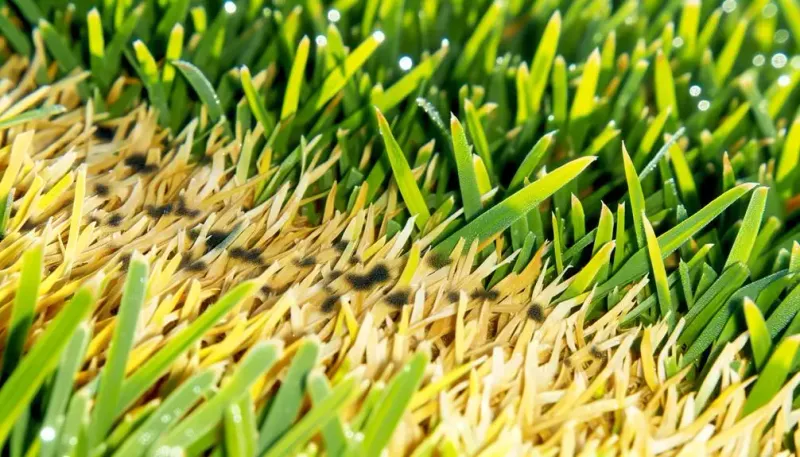
Chinch bugs can cause real harm. According to UF/IFAS Gardening Solutions, their injury often starts as yellowing, then turns brown, and sometimes leaves dead, bare centers in the patch.
That is why a patch that looks the same from the sidewalk can have very different stories up close.
Get down on your knees and part the grass. Look for firm, green or tan-white runners and crowns that feel alive.
Brittle, gray, or missing stems, and soil you can see, point to turf that is truly dead. Recovery is a real possibility, but it is never a guarantee, and UF/IFAS guidance on St. Augustinegrass notes that severely damaged areas may need to be replaced.
This article follows a simple order. First, figure out the cause.
Next, deal with any confirmed problem. Then judge how much of the lawn is coming back and repair only what stays bare.
Look beyond chinch bugs for the cause
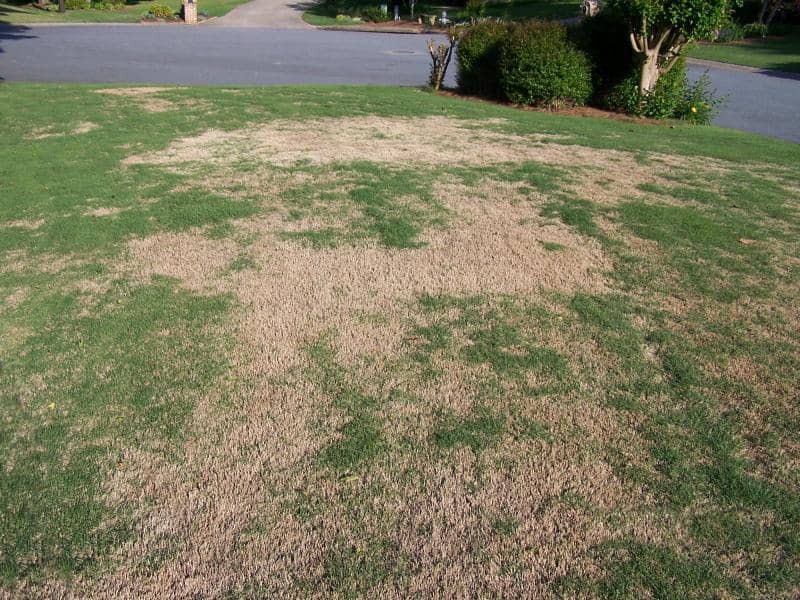
Color alone cannot tell you what is wrong. UF/IFAS says that not all brown grass means chinch bugs.
Several other problems turn St. Augustinegrass tan or brown, and some of them need no treatment at all.
Seasonal dormancy is one. UF/IFAS notes that St. Augustinegrass may go dormant and turn tan or brown in parts of Florida when the weather cools.
Cold injury can look similar, as the UF/IFAS Pasco County Extension explains in its comparison of chinch bugs and cold damage.
Drought stress can leave dry, crispy patches, especially in spots with poor sprinkler coverage. Fall disease is another suspect.
UF/IFAS points to large patch as a St. Augustinegrass disease that becomes more common as temperatures cool.
Timing and conditions give you clues. Chinch bugs are most active in warm weather, but they can cause damage year-round, particularly in South Florida.
A patch after a frost in North Florida deserves a different first guess than a sunny, dry patch in a South Florida yard.
Clues are not a diagnosis. Look for insects at the edge of the damage, and if you cannot tell what you are seeing, UF/IFAS recommends getting help from your county Extension office.
Check the edge of the damage for chinch bugs
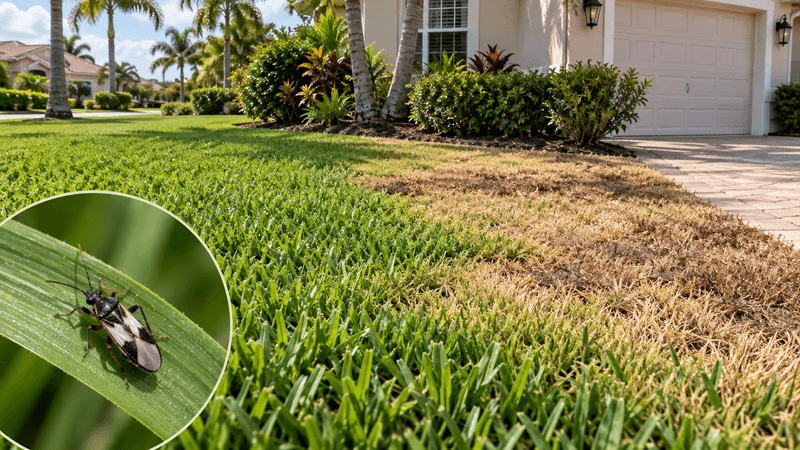
Chinch bugs are tiny, so you need to look closely. Adults are black with white wings, and the young nymphs are orange with a pale stripe across the back.
Start where healthy grass meets damaged grass, because that is where active bugs are most likely to be feeding.
Part the blades near the soil line and watch for movement. Sit still for a minute or two, since the bugs may scurry once your shadow settles.
A magnifying glass or phone camera zoom helps.
For a firmer check, UF/IFAS describes a vacuum method. Use a vacuum to pull up about one square foot of turf that includes both healthy and injured grass, then empty it onto a light-colored surface like a white sheet or poster board.
Any bugs will stand out against the background.
A coffee-can flotation test is another option. Cut both ends off a can, push it into the turf at the edge of the damage, fill it with water, and watch for bugs floating to the surface.
You can also read more in the UF/IFAS St. Augustinegrass publication.
If you find something and are not sure what it is, take a sample or clear photos to your county Extension office. Florida sources stress identification and monitoring rather than a set bug count, so do not borrow a number from another state to decide for yourself.
Treat a confirmed infestation, not a hunch
Spraying just in case is not a good plan. Treatment makes sense only when you have found active chinch bugs.
Without that confirmation, you may spend money, miss the real problem, and harm helpful insects.
Resistance is another reason to be careful. UF/IFAS reports that chinch bugs have developed resistance to many insecticides.
If you are unsure which product fits your situation, your county Extension office can help you sort through the choices.
When treatment is warranted, pick a product labeled for the site and the pest. That means the label should list chinch bugs and allow use on home lawns.
Read the whole label before you buy and again before you apply, since directions can change.
The label is not just advice. The EPA explains in its pesticide registration information that using a pesticide in a way that is inconsistent with its labeling violates federal law.
Following the label protects you, your pets, your neighbors, and nearby waterways.
If your check found no bugs, skip the insecticide. Move on to the other likely causes, such as cold, dormancy, drought, or disease, and handle those with the right fix instead.
Adjust watering, mowing, and fertilizer
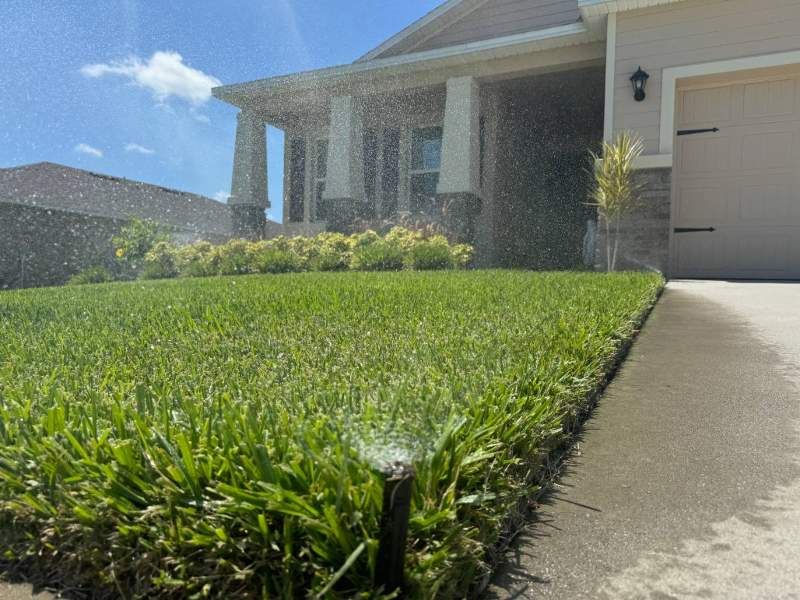
A stressed lawn needs a steady routine, not a rescue blast. Start by checking that your sprinklers cover the whole yard, since dry corners can brown while other spots stay green.
UF/IFAS lists irrigation coverage, mowing height, and nitrogen use as practices tied to chinch bug prevention and turf stress.
Water established St. Augustinegrass when it shows signs of need: blades fold, wilt, or turn blue-gray, or your footprints stay pressed in the grass. Apply about ½ to ¾ inch per irrigation, according to UF/IFAS.
Fall and winter usually call for less frequent watering, and you should always follow your local watering restrictions.
Mow at the right height for your grass. Standard cultivars do best at 3.5 to 4 inches, while dwarf cultivars like those are kept at 2 to 2.5 inches.
Never remove more than one-third of the blade at a time, so a tall lawn may need two gradual cuts.
Fertilizer is not a quick fix for brown spots. Too much nitrogen can stress turf, and timing depends on your region, active growth, and local rules.
UF/IFAS suggests stopping seasonal applications around mid-to-late September in North Florida and early October in Central Florida, while South Florida’s year-round growth can allow applications when needed.
Dormant turf should not be fertilized, as the Pasco County Extension notes. Check your county or city ordinance before you apply anything.
Wait for living turf, then repair bare spots
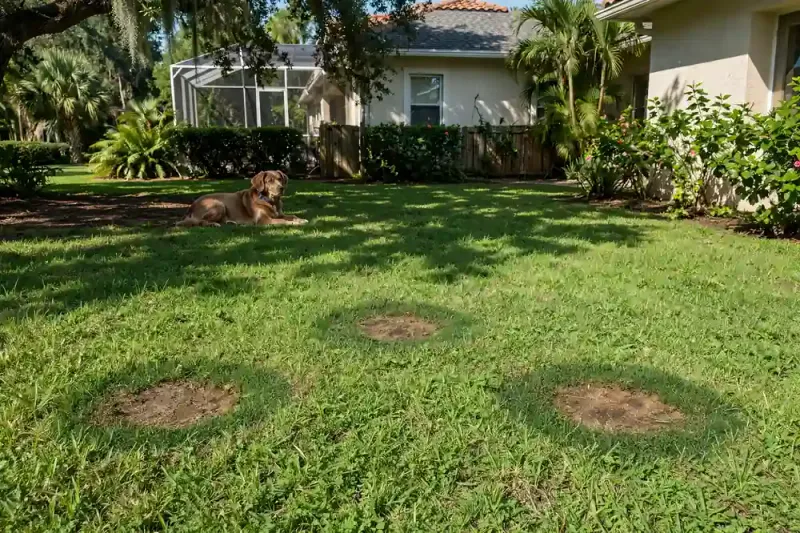
Patience pays off when living runners or crowns remain. Once the pest problem is handled and watering, mowing, and fertilizer are on track, surviving grass can slowly spread into the damaged area.
Check every couple of weeks to see whether new green growth is creeping in from the edges.
Not every spot will fill in. As UF/IFAS notes, heavy chinch bug infestations can kill grass, and dead, bare centers will not fix themselves with extra water or fertilizer.
If a patch stays bare while the grass around it grows, it needs a repair.
St. Augustinegrass can be established vegetatively with sod, sprigs, or plugs. Sod gives the quickest cover, while sprigs and plugs cost less but take longer to knit together.
Water new pieces as needed to help roots take hold, and follow local restrictions.
Timing matters. UF/IFAS says warm-season grass establishes fastest during active growth, and it cautions against establishing it in cold winter conditions in Central and North Florida.
If you are in those regions, wait for warmer weather, while South Florida gardeners may have more flexibility.
The sequence is simple: diagnose first, treat only what you confirm, care for the turf steadily, and patch what stays bare. A brown lawn is a question, not a verdict.