
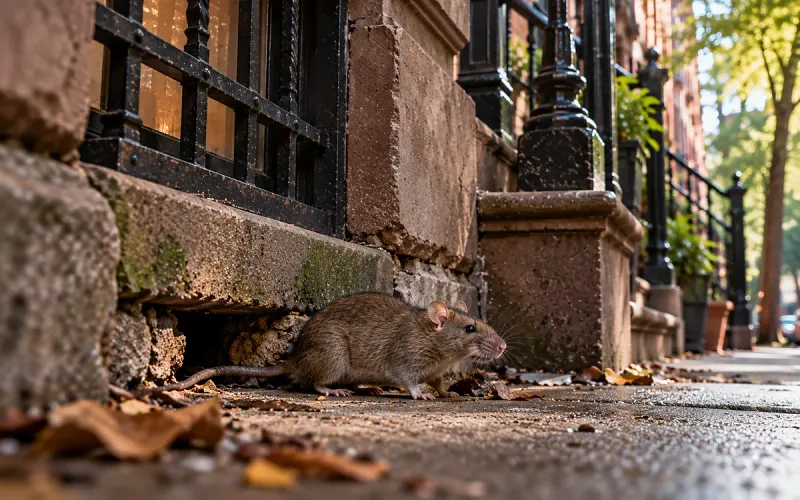
Rats can be living in your yard right now, and the signs are easy to walk past. A small hole near the shed, a few droppings by the bird feeder, or a chewed tomato might be the first clues.
Spotting them in fall gives you time to act before cold weather makes your house look inviting. Here is how to check your property calmly and carefully.
Rats Can Live Outdoors, Indoors, or Around Both
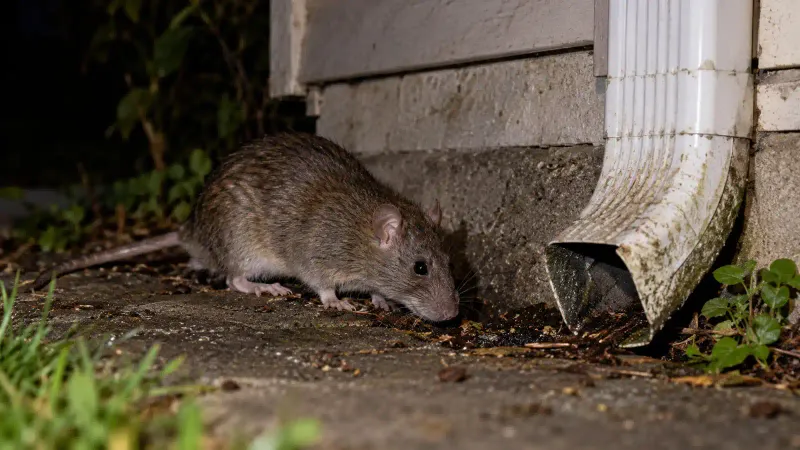
Fall is a smart time to look around your property, but the story is not as simple as “rats outside move in when it gets cold.” Rats may live outdoors, indoors, or in both places at once. Some rats in some settings may move into buildings when the weather turns cold, while others stay put for the whole year.
In North Carolina, NC State Extension says the Norway rat is the most common rat in the state and usually nests in underground burrows. Rats can also chew through materials like siding and sheetrock to reach the inside of a structure.
So an outdoor burrow is a clue worth following, but it does not prove rats will come inside later.
Researchers have found that seasonal movement is not universal. A species account from California Fish and Wildlife says some rats in farm settings may move into buildings in cold weather, but rats already living around buildings often do not move.
A study of city reports in Madrid, Spain, found that rat sightings peaked in summer. That study only shows that a winter peak is not a rule everywhere.
It says nothing about North Carolina yards.
The practical lesson is simple. Checking now and reducing food, shelter, and entry gaps can lower the odds of trouble, though it cannot promise that rats will stay away.
Think of it as regular upkeep, not a one-time fix.
Check Burrows and Holes Near Food or Shelter
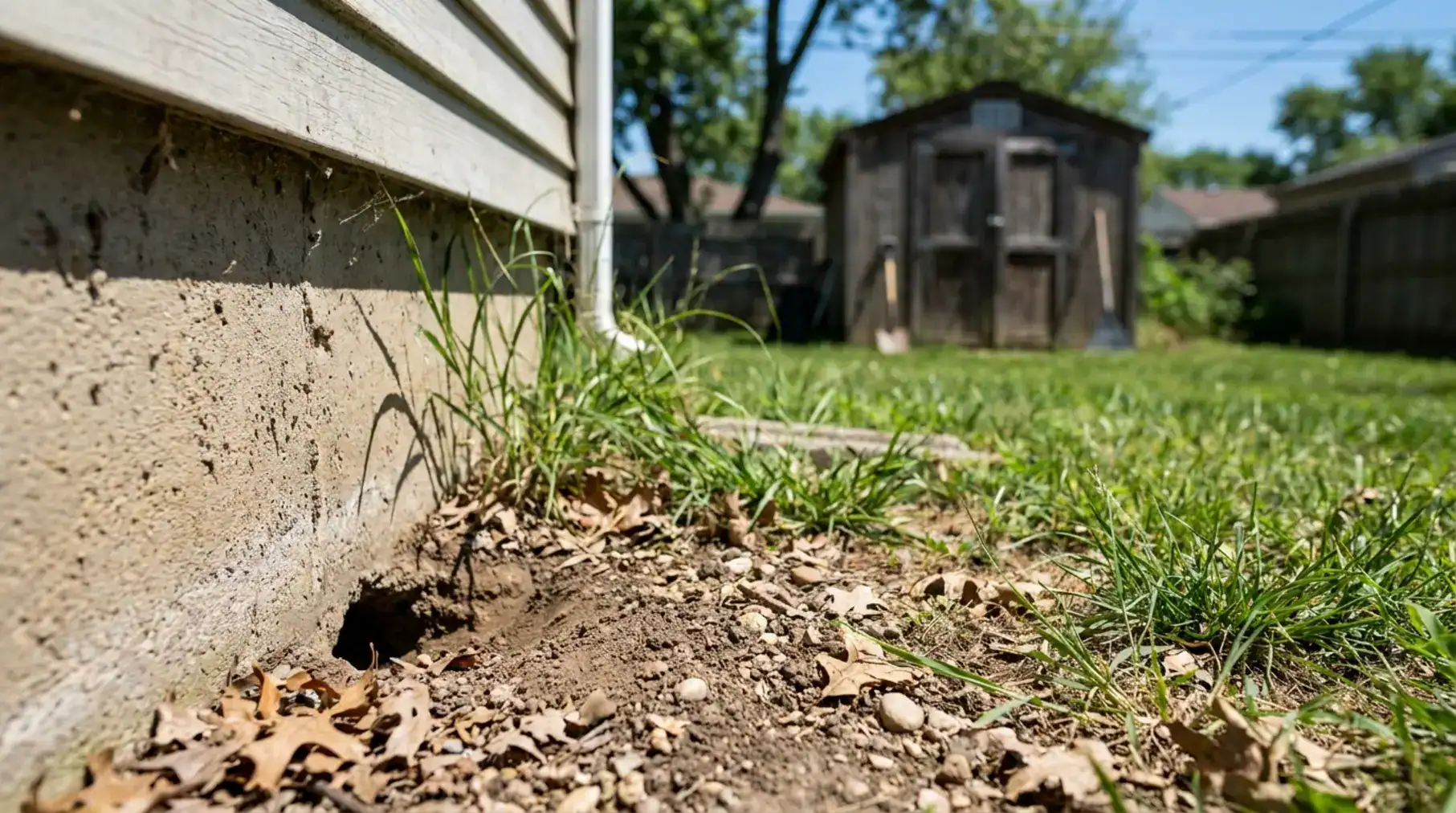
Start your walk at the places rats like best: spots with food close to cover. Look along foundations, around compost piles, beside garbage cans, under garden plants, along woodpiles, and around sheds.
Norway rats tend to dig where they can tuck a nest near an easy meal.
As described by NC State Extension, Norway rats usually nest in underground burrows, so ground-level holes are a good place to begin. Get down and look closely at the edges.
Burrows used often may have smooth, packed soil at the opening and little cobweb or leaf litter blocking the way.
Still, a hole is only a clue. A North Carolina Cooperative Extension guide to yard holes says a roughly two-inch hole under a shrub, log pile, or slab could belong to a chipmunk or a rat.
Other yard holes can come from voles, moles, and other animals, each with different habits.
So treat any hole as a reason to look for more evidence nearby. Check for droppings, gnawed items, and trails within a few feet.
Take a photo, jot down the location, and look again in a few days to see whether anything has changed. A hole with no other signs may be nothing at all, while several clues in one spot deserve a closer look.
Look for Travel Routes, Droppings, and Gnawing Together
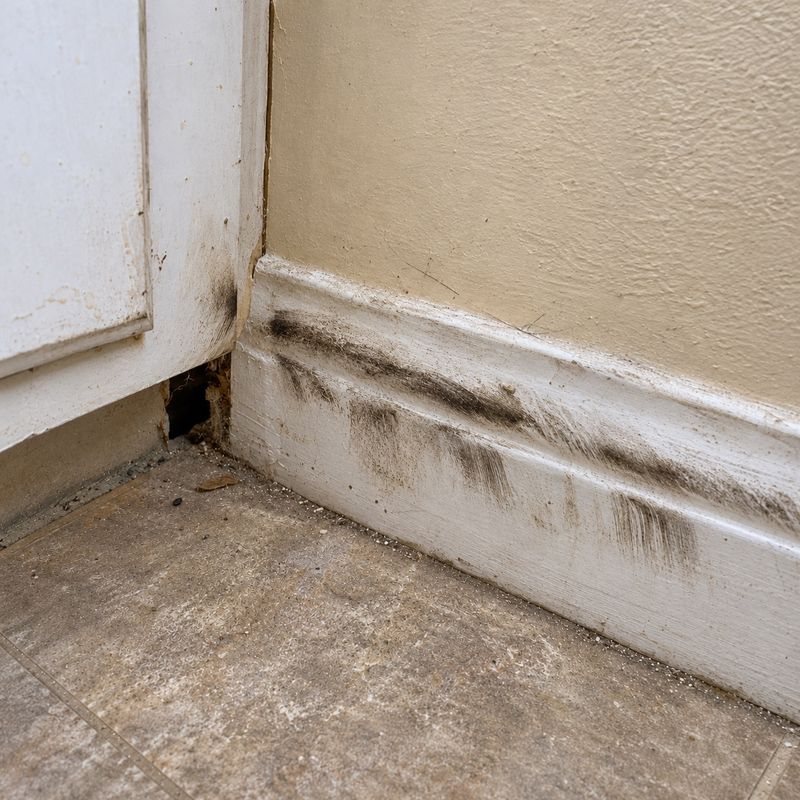
One mark rarely tells the whole story, so look for clues that line up. At dusk, rats may travel along fences or utility lines, following the same route night after night.
Droppings near pet food, birdseed, or stored feed, and fruit or containers with gnaw marks, add to the picture.
According to UC IPM, rats may also leave greasy smudge marks along walls and edges they rub against, and they can build nests in firewood or clutter. Check stacked wood, stored boxes, and tangled corners of the garage or shed.
Several of these signs together point more strongly to rats than any single one.
Be careful about jumping to conclusions. Mice also gnaw, and NC State Extension notes that identification matters when choosing a control plan.
Worn paths in the grass can come from voles, as this turf guide explains, and some holes come from other wildlife, as the yard-hole guide points out.
If you cannot tell what you are seeing, take clear photos with something for scale, like a coin. Then contact your county Cooperative Extension office.
Local staff can help you sort out what is a rat sign, what belongs to another animal, and what to do next.
Include Trees and Elevated Spaces in Your Inspection
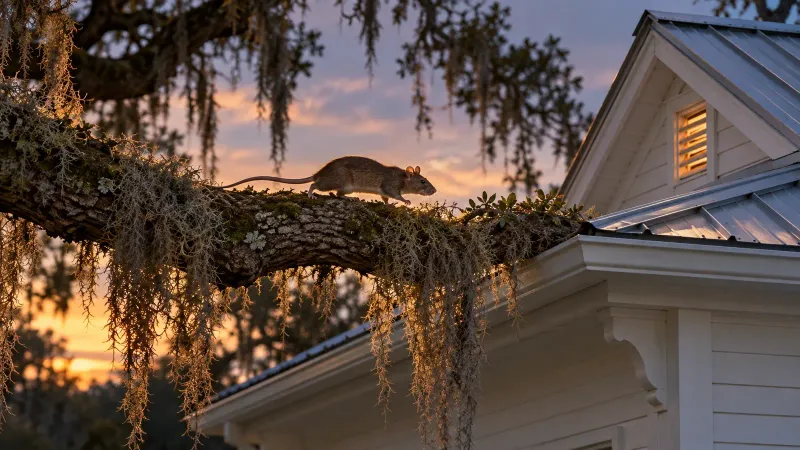
Walking the lawn and checking burrows will not find every rat. Roof rats behave differently from Norway rats, and a yard-only inspection can miss them entirely.
Their activity often happens above the ground, where most people never look.
Norway rats are linked with ground-level burrows and lower parts of buildings. Roof rats are climbers.
UC IPM explains that they favor trees, dense vegetation, attics, and other elevated spaces. NC State Extension likewise notes that roof rats typically nest above ground, including in trees.
So lift your eyes. Look for branches that touch or hang over the roof, thick vines climbing the walls, and wires or cables that run from trees or poles to the house.
Check the eaves, soffits, and attic vents for gaps or gnawed edges. Listen for scratching in the attic around dusk or after dark.
As with burrows, one elevated sign is only a lead. A chewed edge could come from a squirrel, and a noise overhead could be something else.
Look for droppings, smudges, or nesting material in the same area before drawing a conclusion.
Remove Food and Cover Around the House
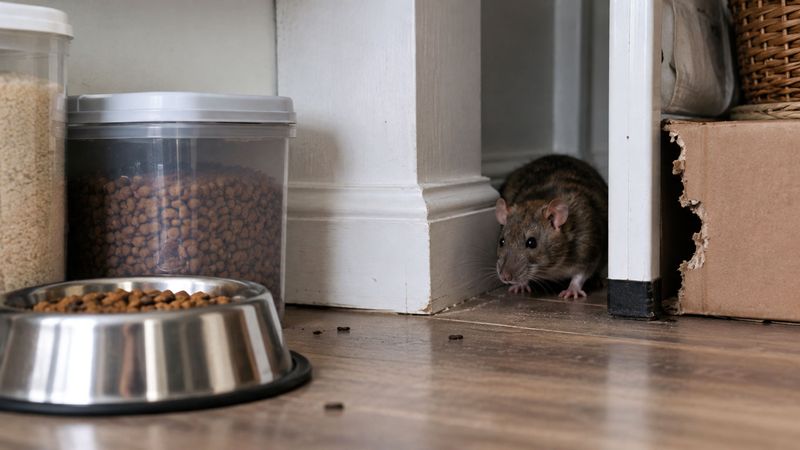
Rats stay where meals and hiding spots are easy to find. Taking those away is the heart of prevention, and it works best as a steady habit rather than a single weekend project.
Even so, it can only reduce what attracts rats. It cannot guarantee they will leave or stay away.
Both UC IPM and the CDC recommend cutting off food and shelter as part of ongoing rodent control. Rats may return if food and cover remain available, so the routine matters more than the burst of effort.
Here is a simple fall checklist:
- Use trash cans with tight lids and keep bags off the ground.
- Pick up fallen fruit, nuts, and garden debris often.
- Store pet food, birdseed, and animal feed in sturdy sealed containers.
- Bring pet bowls in after feeding.
- Clear brush piles, tall weeds, and clutter near the house.
- Stack firewood off the ground and away from walls.
Bird feeders deserve special attention, since spilled seed under them is a common buffet. Try a tray to catch seed or sweep up spills each evening.
Trim shrubs so there is open space along the foundation. That bare strip makes it harder for rats to move unseen.
Close Gaps Around the Building
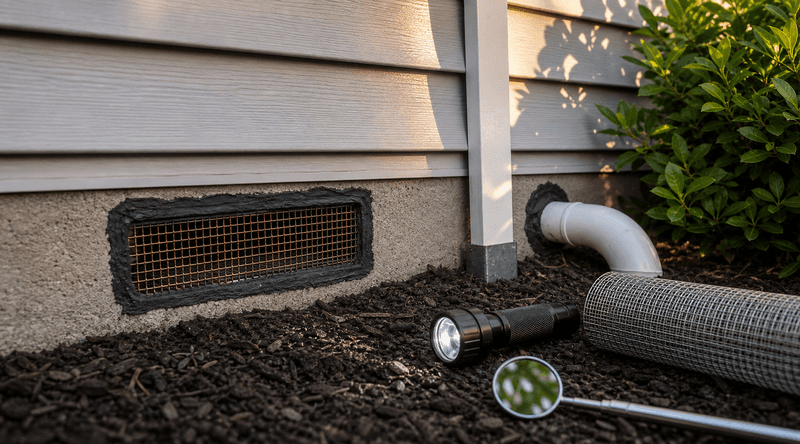
Once the yard is tidier, turn to the house itself. Walk the outside slowly and look at gaps around the foundation, doors, vents, and places where pipes, cables, or wires enter the walls.
A small opening can be enough for a rodent to squeeze through.
The CDC’s seal-up guidance suggests steel wool packed into small holes and sealed with caulk. For larger openings, it recommends sturdier materials such as metal, cement, or hardware cloth.
Rats are strong chewers, so soft materials like foam or plastic alone are a poor choice.
Pay attention to door sweeps with daylight showing underneath, damaged vent screens, and gaps where siding meets the foundation. NC State Extension points out that rats can gnaw through siding and sheetrock, so inspect any spot that looks chewed or widened.
Sealing reduces access, but it is not a guarantee. A determined rat can find a new weak spot, and a sealed house with food and shelter still outside may keep attracting them.
Pair repairs with the yard habits above, and recheck every season, especially after storms or home repairs.
Use Safe Control and Cleanup Steps
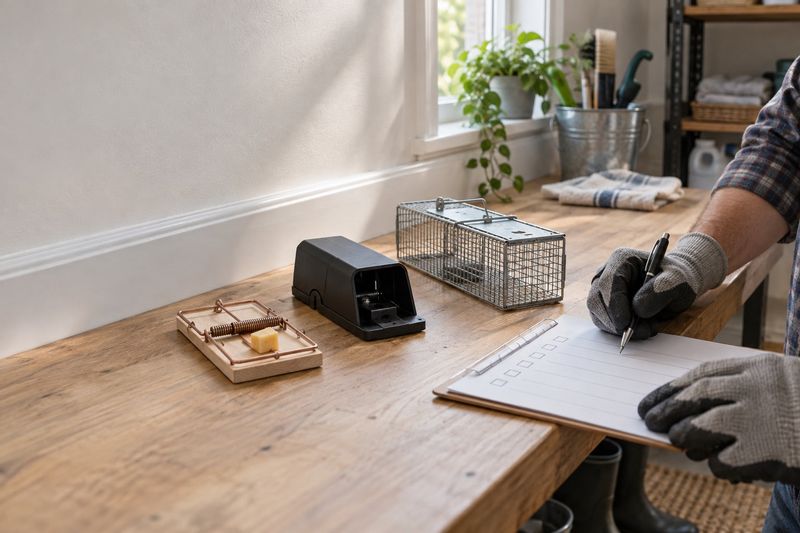
If signs keep showing up, move carefully. Bait feeding is a good place to start, because eaten bait does not identify the animal or prove an infestation.
Mice and other rodents will feed at a station too, so treat it as another clue, not an answer.
If you use traps, place them along routes where you have seen activity, as UC IPM advises, and keep them out of reach of children and pets. Never scatter exposed poison.
Rodenticides can harm kids, pets, and wildlife, so follow the product label and use supplied stations as directed, as the EPA explains. NC State Extension recommends considering professional pest management when bait is needed.
Rules can change, and they differ for trapping, poisoning, and relocating wildlife. Check current requirements before acting, starting with the North Carolina Agricultural Chemicals Manual or your county Extension office.
For cleanup, the CDC advises wearing gloves and wetting droppings, urine, or nests with disinfectant before wiping them up. Do not sweep or vacuum them dry, and do not handle dead rodents casually.
A quiet yard is the best sign of a job well done.