
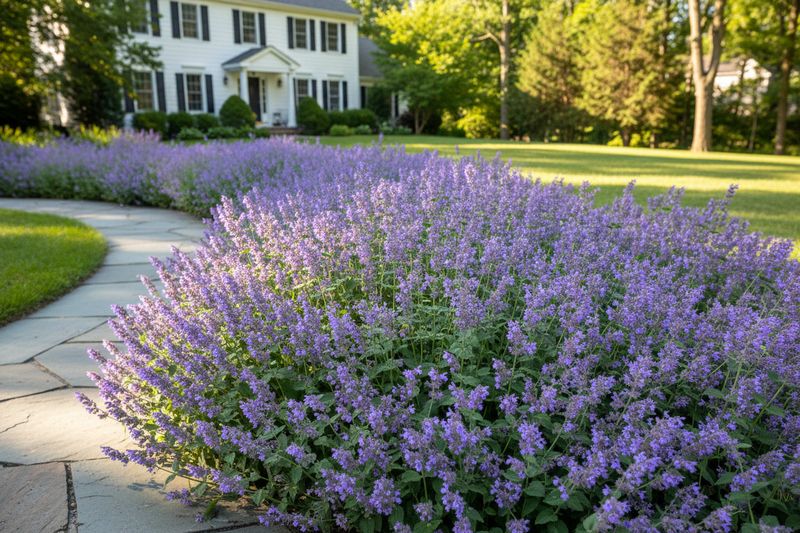
Imagine planting something once and watching it grow larger and fuller every single year while you sit back with a glass of lemonade. That is the magic of tough, easygoing perennials.
They save you money, fill empty spots in your yard, and keep coming back even when you forget about them. Here are nine of the most reliable ones that ask for almost nothing and give you more every spring.
1. Daylily
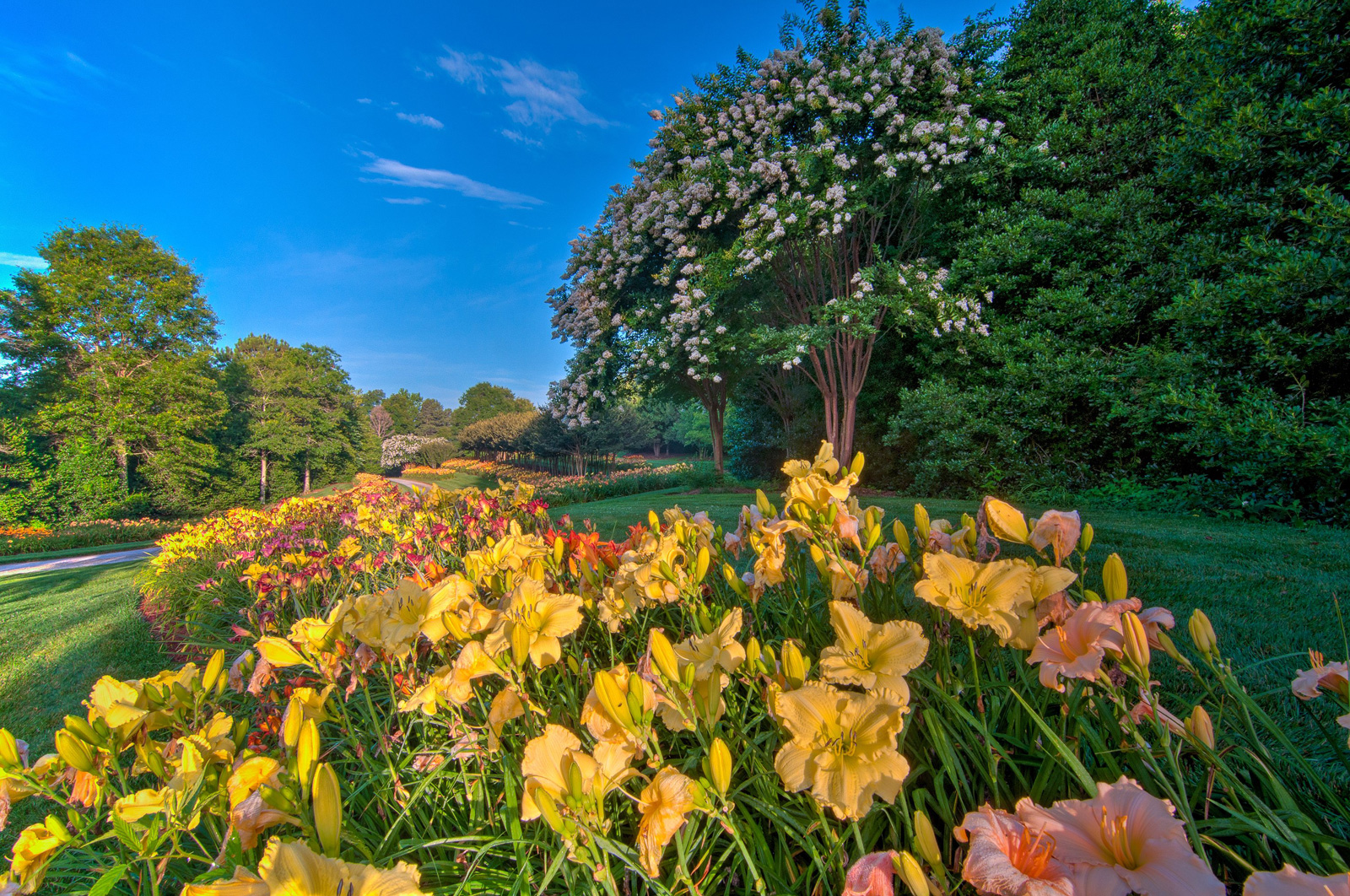
Ever notice orange flowers thriving in roadside ditches with zero care? Those are daylilies, and they are about as close to unkillable as a garden plant gets.
Plant one small clump and in three years you will have a fountain of leaves wide enough to fill a corner.
Each flower lasts only one day, which is how the plant got its name. Luckily, every stem carries a long line of buds, so the show goes on for weeks.
Modern varieties like Stella de Oro rebloom from early summer into fall.
Daylilies handle heat, drought, clay soil, and cold winters across nearly the whole country. Their thick, fleshy roots store water, so a dry spell barely slows them down.
Pests rarely bother them, and you never need to spray anything.
The best part is how they multiply on their own. Every spring the clump widens with new fans of leaves.
When it gets too big, you can dig a chunk out with a shovel and plant it somewhere else for a free new bed.
Fun fact: daylily buds are edible and show up in some Asian dishes. Just make sure you know you have a true daylily before you taste anything.
2. Hosta
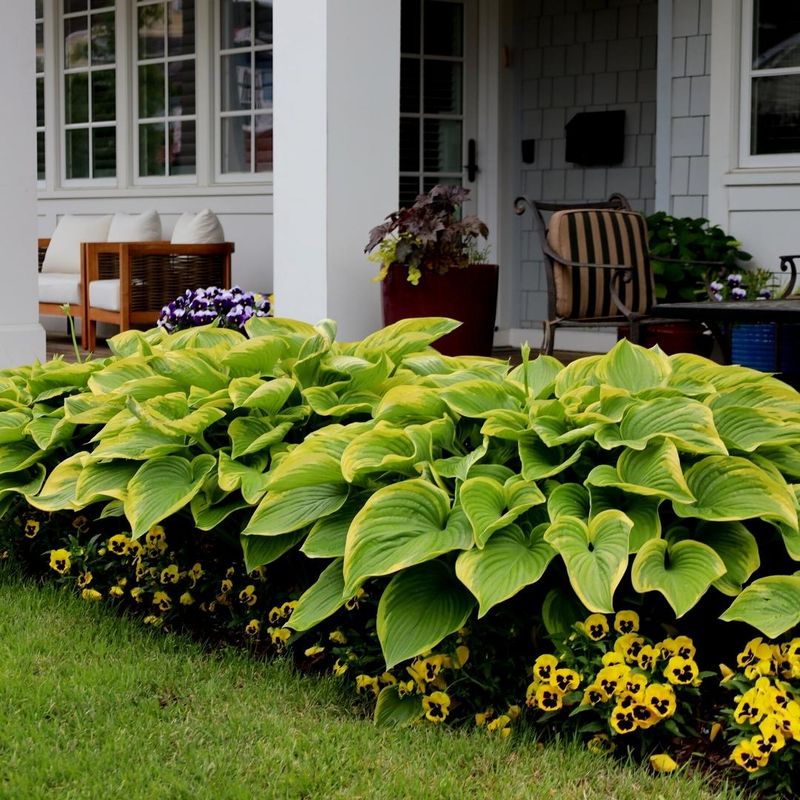
Shady spots under trees can feel hopeless, but hostas turn them into something special. Picture a fist-sized plant becoming a mound three feet across, all without a single bag of fertilizer from you.
Hostas grow mainly for their leaves, and the variety is huge. You can find tiny mouse-ear types, giant blue ones like Sum and Substance, and leaves striped with cream, gold, or white.
In summer, tall stems of lavender or white flowers rise up and attract hummingbirds.
These plants sleep all winter, then push up curled shoots in spring that unfold almost overnight. Each year the crown adds new eyes, so the clump grows thicker and wider.
Older plants often look better than young ones.
Hostas like moist soil and some shade, and they handle cold winters beautifully. Their main enemies are slugs and deer, so thicker-leaved varieties are a smart pick if those are common in your yard.
If you want more plants, wait for early spring when the shoots are just poking up. Slice off a section with a spade and replant it.
The mother plant will not even notice, and you will have a matching pair along your walkway.
3. Black-Eyed Susan
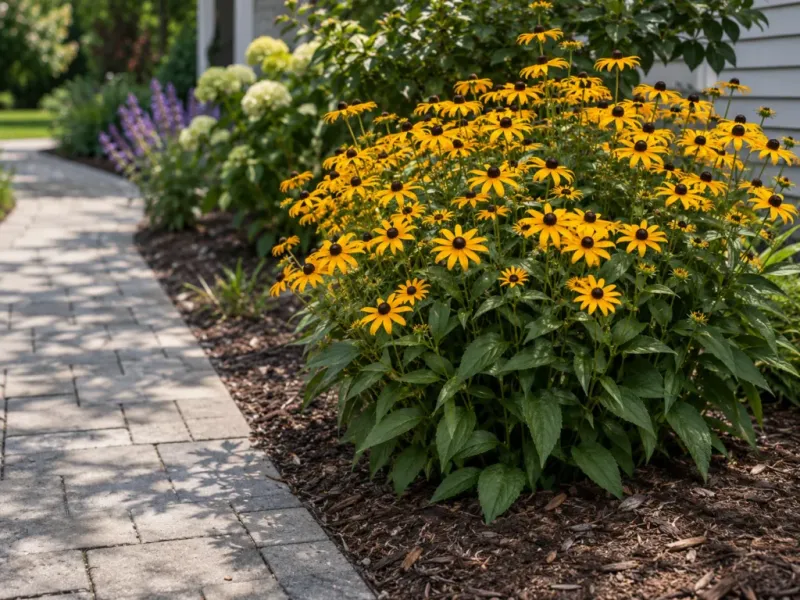
Late summer can make a garden look tired, and that is exactly when black-eyed Susans light up like a pile of tiny suns. Golden petals circle a dark chocolate center, and they bloom for weeks when other flowers quit.
Native to much of North America, these cheerful plants already know how to handle local weather. Heat, humidity, poor soil, and dry spells do not scare them.
The variety Goldsturm is a favorite because it is reliable, compact, and blooms heavily.
Black-eyed Susans spread in two clever ways. Their roots creep outward to form bigger clumps, and their seed heads drop seeds that sprout nearby.
Within a few seasons, one small pot can become a sweeping drift.
Here is a tip that saves you time: leave the seed heads standing in fall. Goldfinches love to pick at them all winter, and you get free entertainment from your kitchen window.
In spring, just pull off the old stems if you like, or let new growth hide them.
Bees and butterflies visit constantly, making these flowers a great choice for a pollinator-friendly yard. Plant them in full sun and let them do their thing.
4. Bee Balm
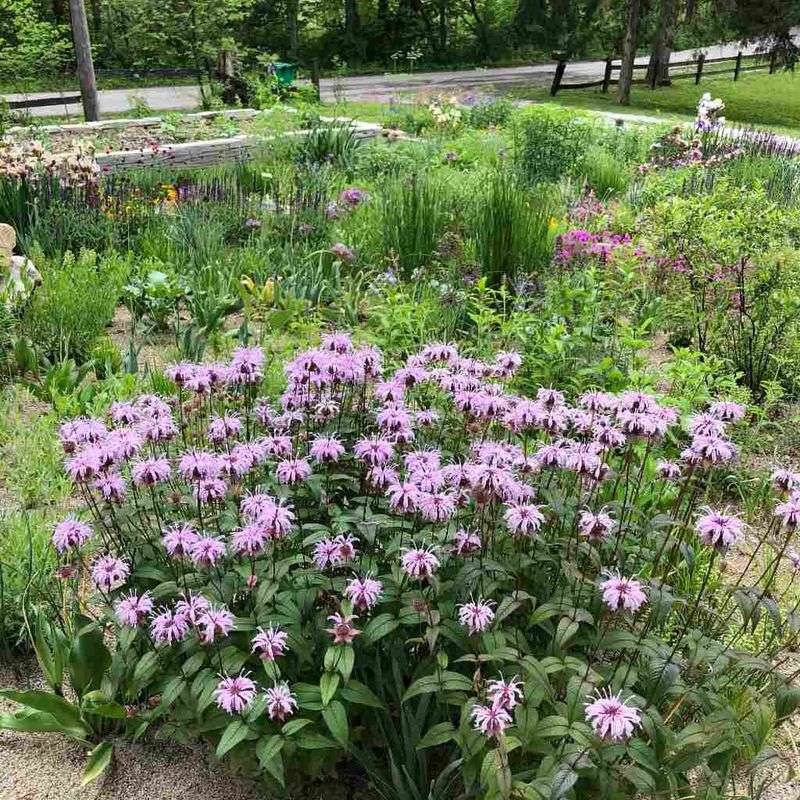
Want hummingbirds zipping around your yard all summer? Plant bee balm and wait.
Its shaggy, firework-shaped flowers in red, pink, and purple act like a neon sign for hummingbirds, bees, and butterflies.
Bee balm belongs to the mint family, and it shows. The plant spreads by shallow underground runners, so each spring the patch is noticeably wider than the year before.
Gardeners who want fast coverage love this, though you may need to tug out a few strays that wander too far.
Crush a leaf between your fingers and you will smell something like oregano mixed with citrus. Native Americans brewed the leaves into tea, and colonists used it as a substitute after the Boston Tea Party.
That is a lot of history for a backyard flower.
Bee balm prefers sun and soil that does not dry out completely. Older types can get powdery mildew, a white dusting on the leaves, but newer varieties like Jacob Cline and Raspberry Wine resist it well.
Every few years, the center of the clump may thin out. Simply dig up the healthy outer edges in spring and replant them.
You will end up with even more blooms.
5. Purple Coneflower
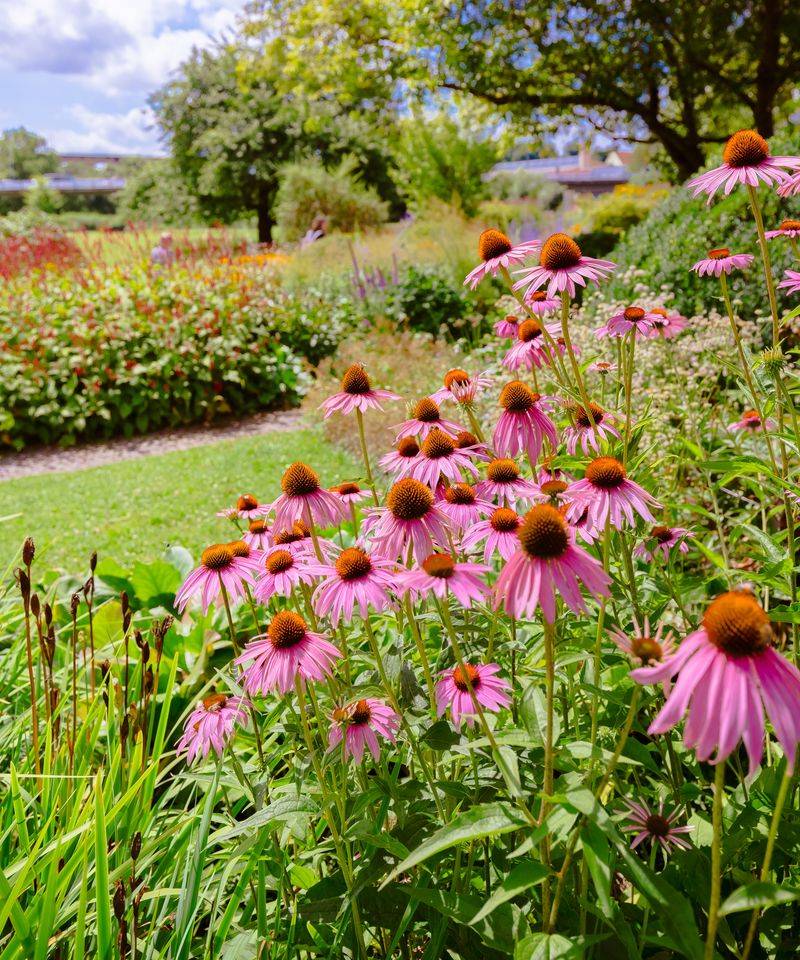
Some plants look delicate, but purple coneflower is a prairie tough guy in a pretty pink-purple jacket. Born on the open grasslands of the central US, it shrugs off blazing sun, drought, and freezing winters.
The flowers have drooping petals around a spiky orange cone, and they bloom from early summer into fall. Butterflies, especially monarchs, park on those cones for long sips of nectar.
In autumn, the seeds become a snack for finches.
Coneflowers grow a deep taproot, which helps them survive dry stretches without watering. Each year the plant gets sturdier and sends up more flower stems.
Seeds dropped around the base also sprout into new plants, filling gaps for you.
You may know the plant by its scientific name, Echinacea, the same one sold as an herbal remedy. The name comes from a Greek word for hedgehog because of that prickly center.
For the most reliable results, stick with classic purple types like Magnus. Some flashy new colors are bred for looks and may not return as strongly.
Give them sun and decent drainage, then step back. Overwatering and rich soil are honestly bigger threats than neglect.
6. Catmint
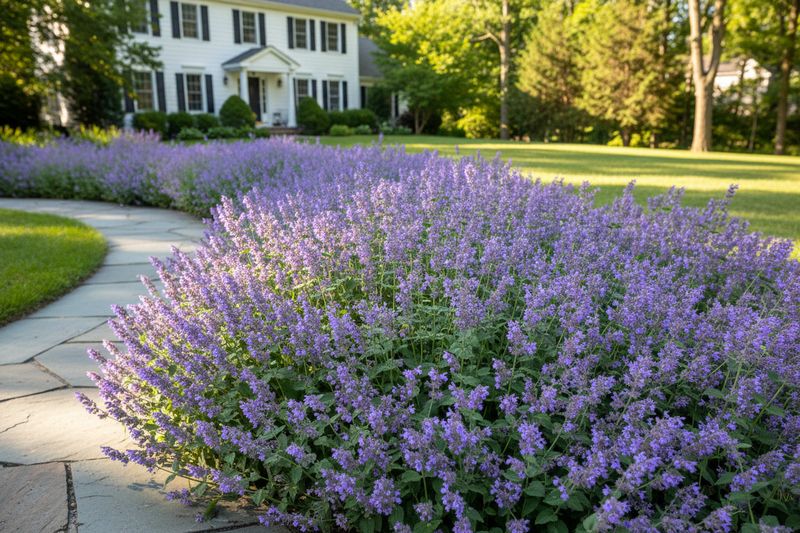
Picture a soft cloud of lavender-blue flowers spilling over a walkway and humming with bees. Catmint gives you that cottage-garden dream with almost no effort at all.
Gardeners often call it the lazy person’s lavender. Unlike true lavender, which can be fussy about soil and winter wet, catmint grows almost anywhere with sun.
It handles heat, drought, and poor soil, and deer and rabbits usually leave it alone because of its strong scent.
Each spring, the mound returns wider and fuller. Walker’s Low, a popular variety, can stretch about three feet across after a couple of seasons.
The gray-green leaves stay tidy, and the blooms start in late spring.
One optional trick: if the plant looks floppy in midsummer, shear it back by about half. Within a few weeks it will bounce back with a second round of flowers.
Skip that step and it still looks lovely.
Yes, cats may enjoy it. Catmint is a cousin of catnip, though most varieties are less exciting to felines.
If the neighborhood tabby rolls around in it, the plant is tough enough to recover quickly.
7. Sedum Autumn Joy
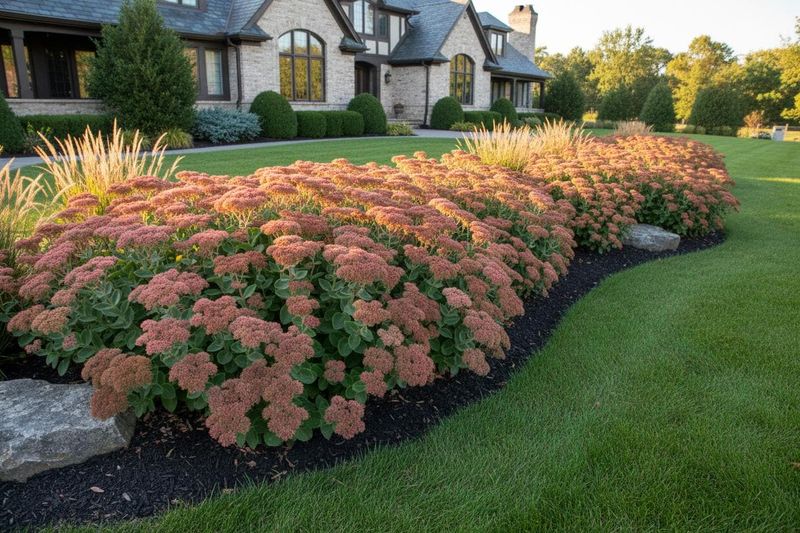
Forgot to water for three weeks during a heat wave? Sedum Autumn Joy will not hold a grudge.
Its thick, juicy leaves store water like a camel, making it one of the most forgiving plants you can grow.
In spring it pops up as neat green rosettes that look a bit like broccoli. By late summer, flat flower heads turn pale pink, then deepen to rusty red as fall arrives.
The color change alone makes it fun to watch.
Each year, the clump gets bigger and puts up more stems. Sedum loves full sun and fast-draining soil, so it shines near driveways, patios, and rocky spots where other plants bake.
Bees crowd onto the blooms in fall when food is scarce.
Propagation could not be easier. Snap off a stem, poke it into the soil, and it will usually root on its own.
Kids love this trick because it almost always works.
Leave the dried flower heads standing over winter. They catch snow beautifully and give the garden some shape in the cold months.
Cut them down in early spring when you see new green rosettes appear at the base.
8. Siberian Iris
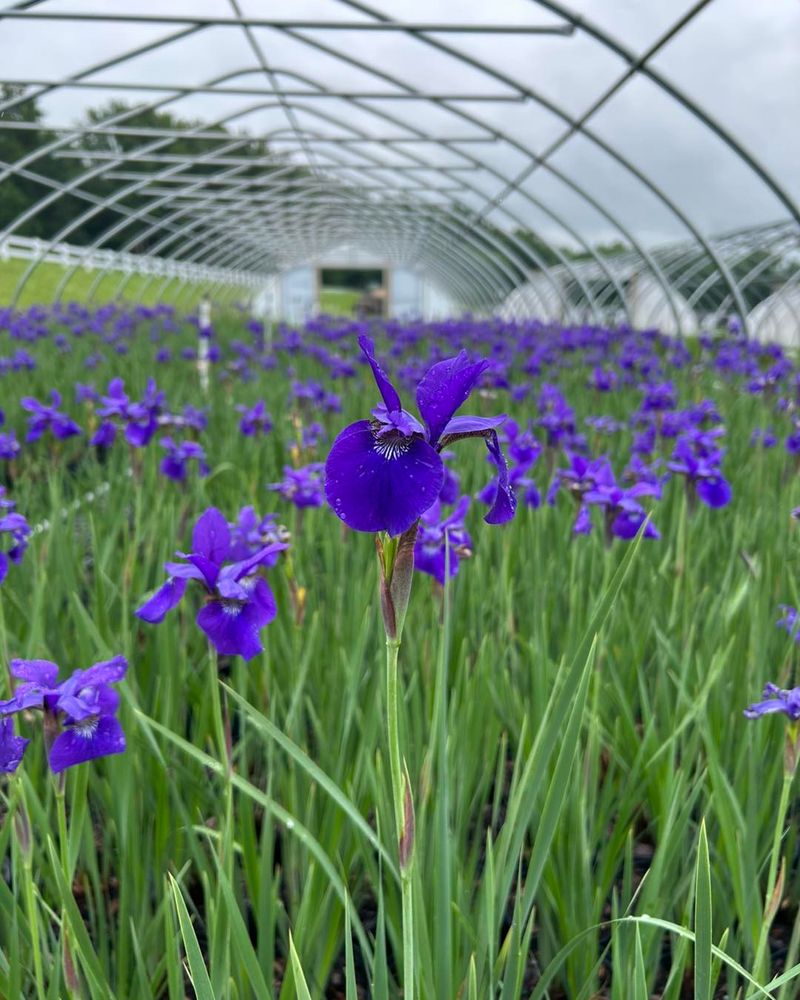
Grandmothers across the country have passed Siberian iris clumps over garden fences for generations, and there is a good reason. Once planted, they just keep getting bigger and better for decades.
Slender stems hold elegant blue, purple, white, or yellow flowers in late spring. The blooms look delicate, almost like butterflies resting on the leaves.
After they fade, the grassy foliage stays fresh and upright all summer, adding nice texture.
Siberian irises are much easier than bearded irises. They do not suffer from the borers and rot that trouble their fancier cousins.
They grow happily in sun or light shade, and they even tolerate damp spots near downspouts or ponds where many plants drown.
Cold is no problem either. Despite the name, they come from parts of Europe and Asia, and they handle harsh winters with ease.
Deer usually pass them by.
Year after year, the clump expands outward into a thick ring. Eventually the middle may open up, which is your signal to divide.
Dig the whole thing in late summer, cut it into pieces, and share them with a friend. That is how this plant keeps traveling from yard to yard.
9. Peony
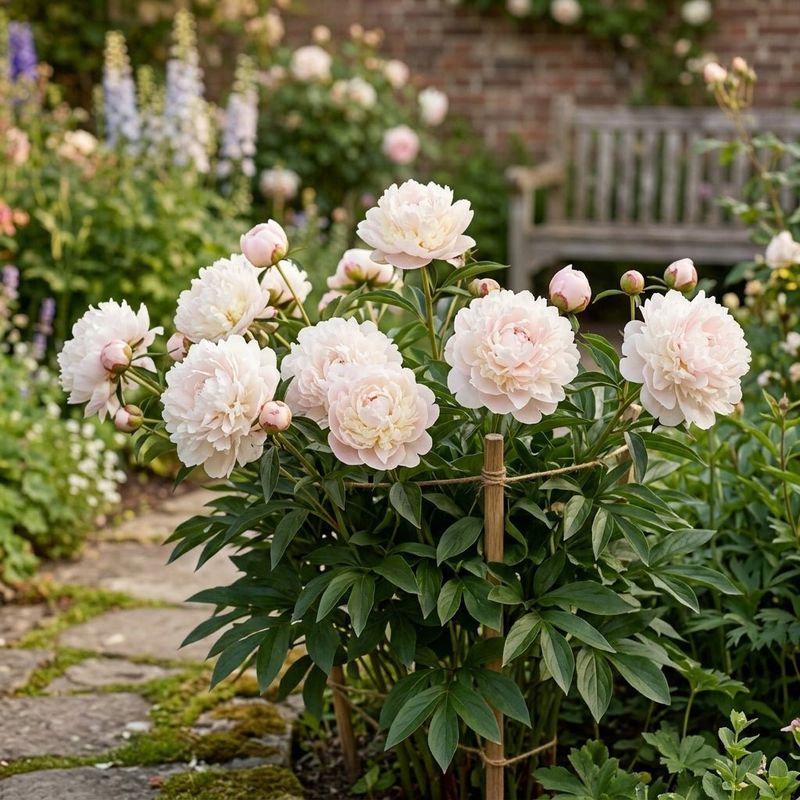
Here is a plant that can outlive the person who planted it. Some peony bushes have bloomed in the same farmhouse yards for over a hundred years, still putting on a show each spring.
Peonies are a little slow to settle in. The first year they focus on roots, and you may see few flowers.
By year three, though, the plant explodes with huge, ruffled blooms in pink, white, red, or coral, and the scent is unforgettable.
Every spring, more red shoots push up from the ground, and the bush gets fuller. Peonies need a cold winter to rest, so they thrive in most northern and middle states.
Gardeners in warmer areas can try early-blooming varieties for better results.
Do not worry about the ants crawling on the buds. They are sipping sugary nectar and do not harm the flowers.
Simply shake the stems gently before bringing blooms indoors.
The main rule is to plant them shallow, with the buds no more than two inches below the soil. After that, leave them alone.
Peonies dislike being moved, and they reward patience with a lifetime of beauty and armfuls of cut flowers.