
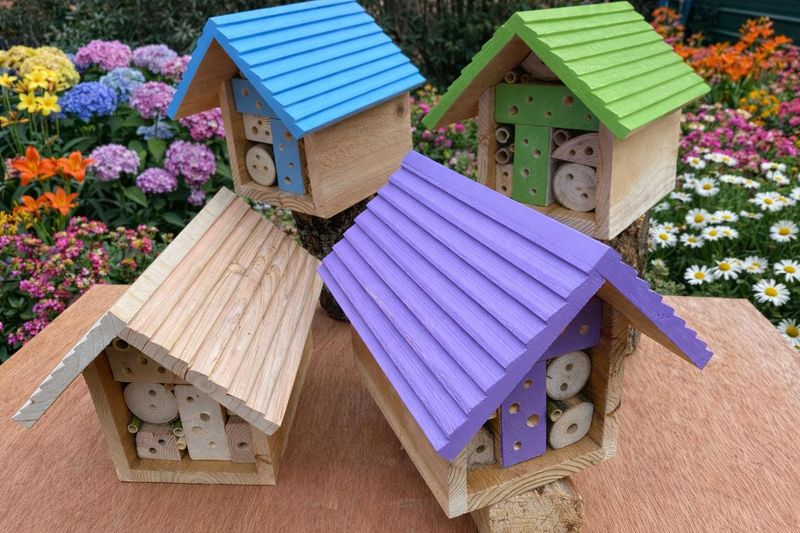
A bee house built this fall can give native blue orchard bees a ready-made nesting spot before your fruit trees bloom. These bees are one kind of mason bee, and they visit early spring blossoms.
Building the house is an easy weekend project with simple materials. Whether local bees choose it is up to them, so think of it as getting your yard ready.
Fall Is the Time to Prepare
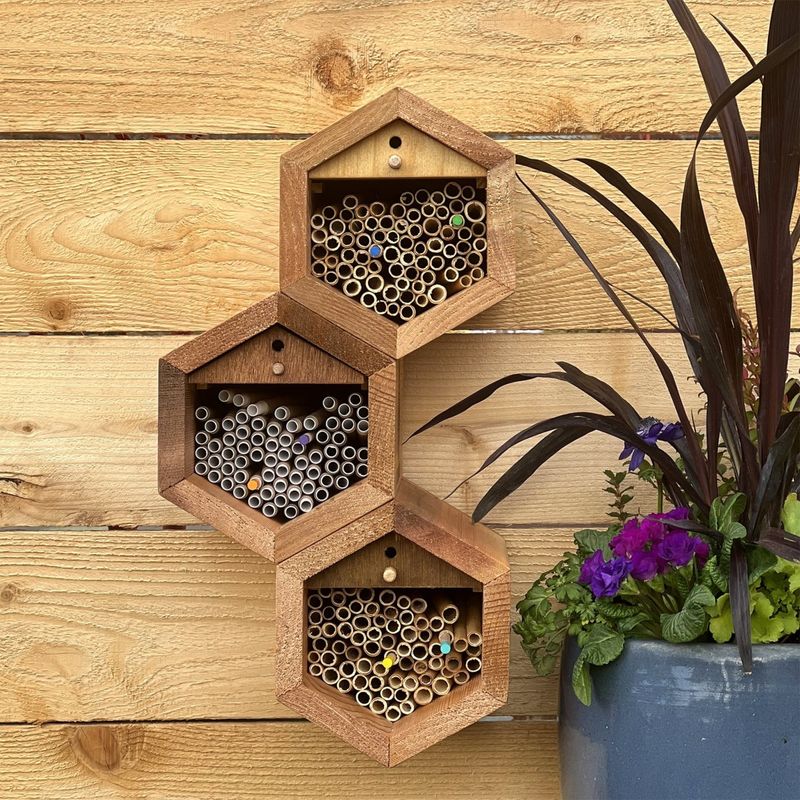
A well-built nest house can offer local blue orchard bees (Osmia lignaria) a cavity to use before spring, and these native bees can pollinate early-blooming fruit crops. Late fall is a good time to get one ready, because there is no rush once the weather warms.
Timing matters here. Blue orchard bees emerge in spring as temperatures warm, according to UC Master Gardeners of Sacramento County.
A house hung in November is not winter shelter for bees that are already around, and it will not call them in on a set date.
Think of it as setting the table early. Your yard is ready if bees nearby are looking for a place to nest when the weather turns.
Warm-up dates differ by California region and by year, so there is no single arrival day to circle on the calendar. Blue orchard bees are early-season workers, and Utah State University Extension notes that adults stay active for only about four to six weeks.
They will not be pollinating your trees all season.
Because the house is just preparation, you can finish it without stress. If you build it now, you will not be scrambling in February when buds start to swell.
Build Smooth, Blind-Ended Tunnels
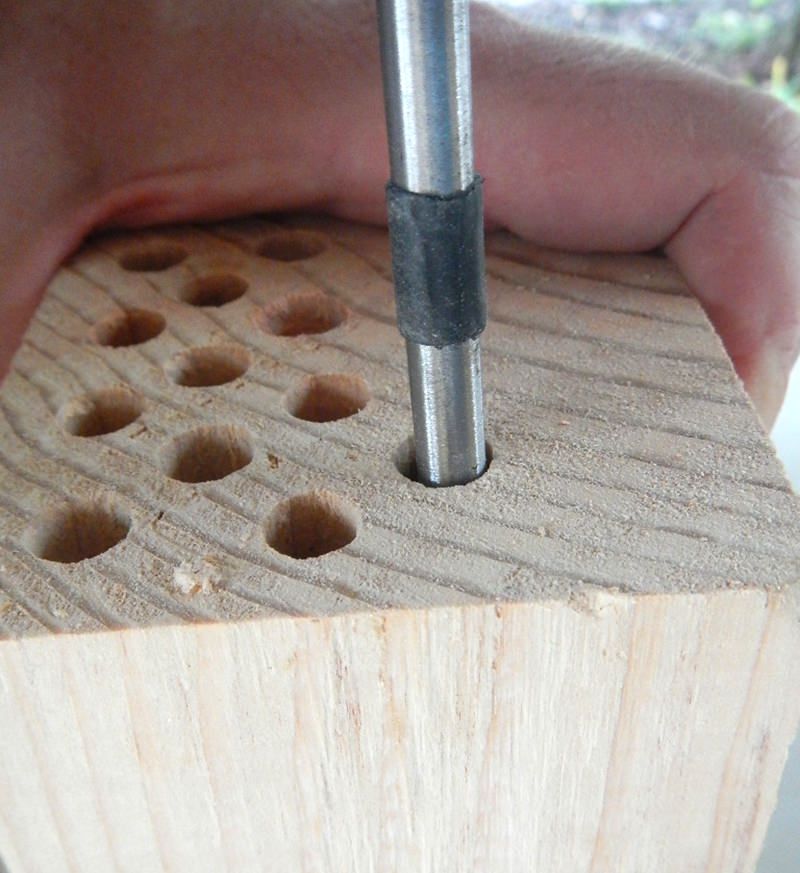
For blue orchard bees, aim for smooth tunnels about 5/16 inch wide and 6 inches deep in untreated wood. Drill them so they close off at the back and do not pass through the block.
UC Master Gardeners give this as a target size for this bee.
A blind end matters because a female builds a row of mud-walled cells, then plugs the entrance. An open back leaves her with nothing to build against.
Sand rough hole edges and clear out wood dust, since splinters can snag wings.
This size is aimed at one species. If you want a house for a wider group of cavity-nesting bees, UC Davis suggests offering several hole sizes.
That is a different goal, so do not treat the two plans as the same thing.
Skip plastic and glass tubes. USU Extension warns that plastic can hold moisture and encourage fungus.
Decorative fillers such as pine cones and moss are not useful nesting material and can attract pests.
A plain block of untreated wood with neat holes beats any fancy novelty hotel. Choose a design you can open or refresh later, which comes up again when we talk about upkeep.
Choose a Sheltered Spot Near the Trees
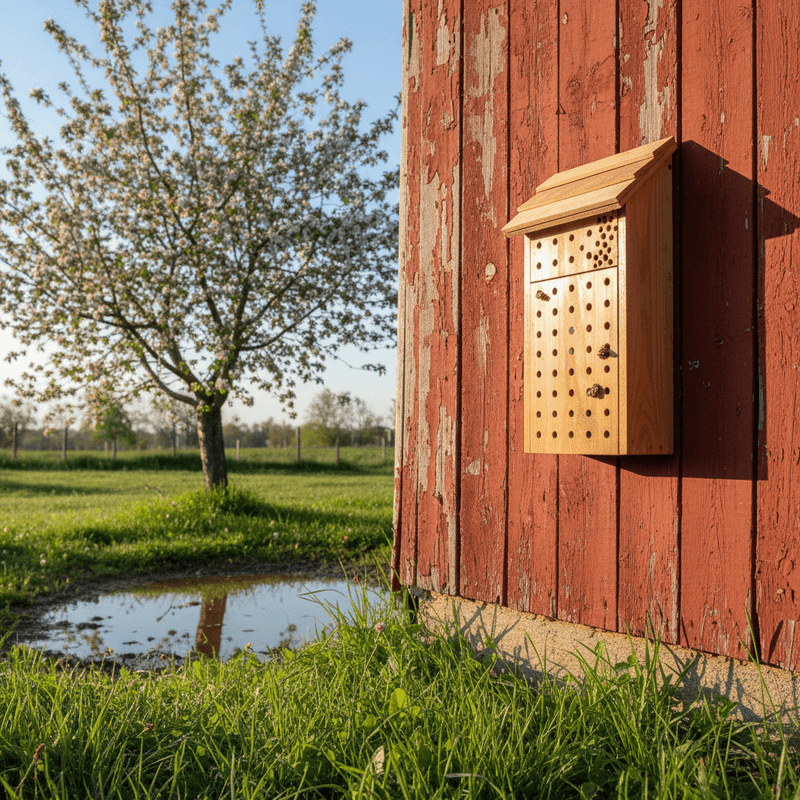
Location counts almost as much as construction. UC Master Gardeners suggest placing the house within 300 feet of your fruit trees, so bees nesting there do not have far to travel to your blossoms.
The details are in their orchard bee nesting house guide.
Look for a spot that gets morning sun, which warms the tunnels and helps bees get moving. Shelter from direct rain and from hot afternoon sun helps too.
A roof overhang or a nook under an eave can do both jobs.
Point the entrance away from prevailing winds. If you are not sure which way the wind blows in your yard, watch a few days of flags, leaves, or wind chimes before you decide.
Fasten the house firmly so it does not swing. A house that sways in a breeze is unsettling for a bee trying to find her tunnel, and a solid post, wall, or fence works well.
These are practical recommendations, not a formula. A perfect site does not guarantee that bees will move in, but a poor one makes it less likely.
Provide Mud and Spring Flowers
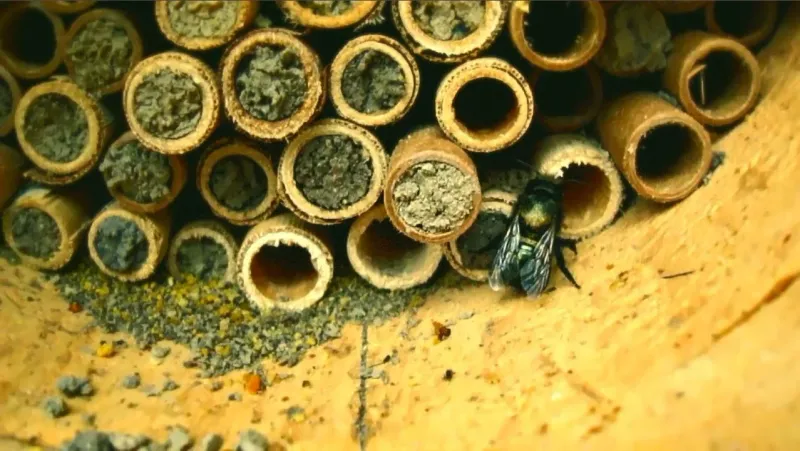
Mud is a building material for these bees. Females use it to divide the tunnel into cells and to plug the entrance once the cells are filled, as described by UC Master Gardeners.
A patch of bare, damp soil near the house gives them a short trip for supplies.
Clay-rich soil works best. If your ground is sandy, dig a small hole and keep it moist during nesting weather.
Flowers matter as well. Adult blue orchard bees have a short season, about four to six weeks, according to USU Extension.
Fruit trees bloom for only part of that time.
Having other spring flowers in bloom after the fruit blossoms fade can keep the bees fed while they finish nesting. Native wildflowers and spring-blooming shrubs are good candidates.
No single bee works all season. Other bees take over later in the year, so a yard with something blooming from spring through fall supports a mix of pollinators.
Keep the House Clean and in Place
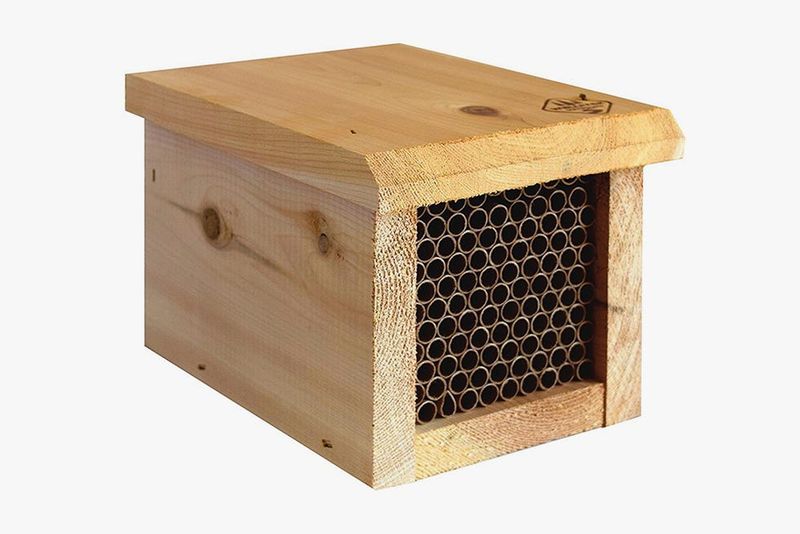
A bee house needs some care. UC Davis advises replacing tubes after the bees have chewed their way out.
Unlined blocks should be replaced after two years.
The reason is simple. Old nesting material can harbor pests or disease, which can harm the next generation.
A decorative house that cannot be opened, cleaned, or refreshed is a poor choice.
Plan on a yearly check after the bees have emerged and the tunnels are empty. If you used removable tubes, swap them out.
If you used a solid block, mark the date you hung it so you know when to replace it.
Once nesting begins, leave the house where it is. Moving an active nest can disorient females or harm developing brood, as UC Master Gardeners point out.
Signs that nesting has started include tunnel entrances sealed with a smooth mud plug. If you see plugs, walk by and enjoy it, but do not shift the house.
What Orchard Research Can—and Cannot—Show
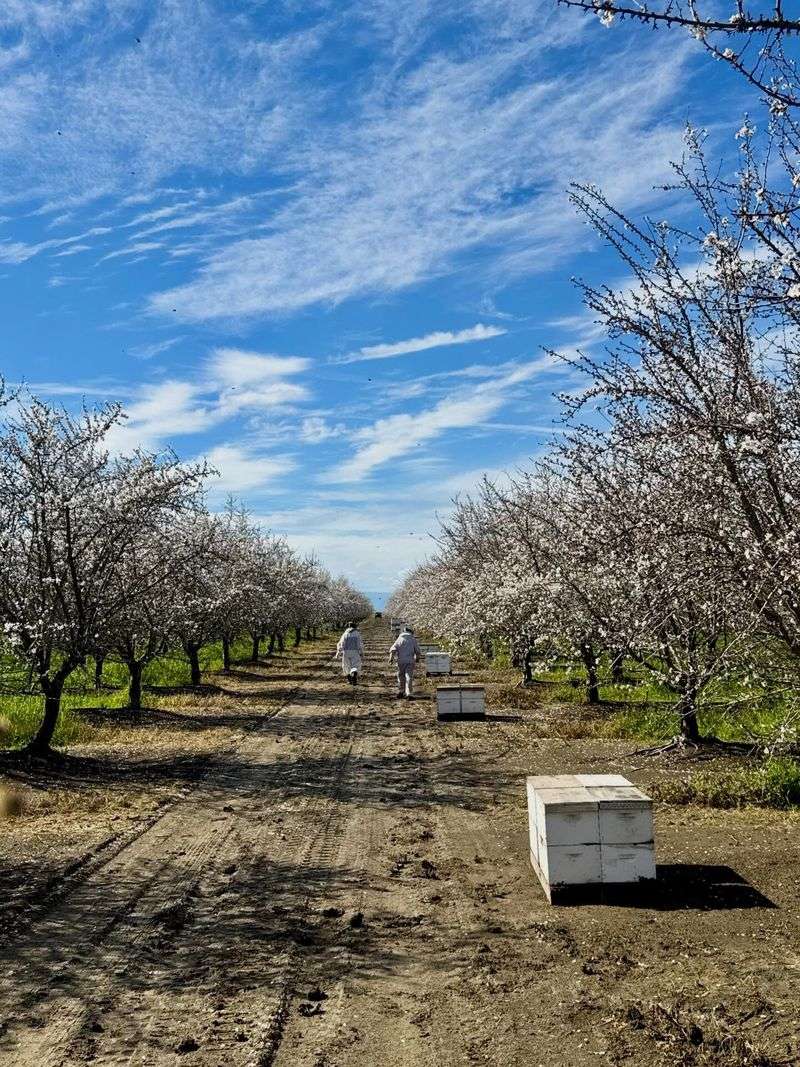
Research shows what these bees can do in the right setting. A two-year California almond orchard study found that adding managed blue orchard bees alongside honey bees increased nut set and sometimes yield.
That is evidence of pollination potential under managed conditions. Growers in that setting control how many bees are released and when.
The study does not show that a newly hung backyard house will be occupied, or that it will measurably improve a homeowner’s crop.
Occupancy depends on whether local bees are around and on local conditions. Commercial almond operations may manage emergence to match February bloom, per USU Extension, which is not the normal backyard schedule.
The bigger conservation picture is also unsettled. NC State Extension says current evidence is not enough to conclude that bee hotels help or harm native bees overall.
So a house is neither a sure fix for declining bees nor something to avoid. It is a small habitat addition, best paired with flowers, mud, and good upkeep.
Prepare the Yard and Let the Bees Decide
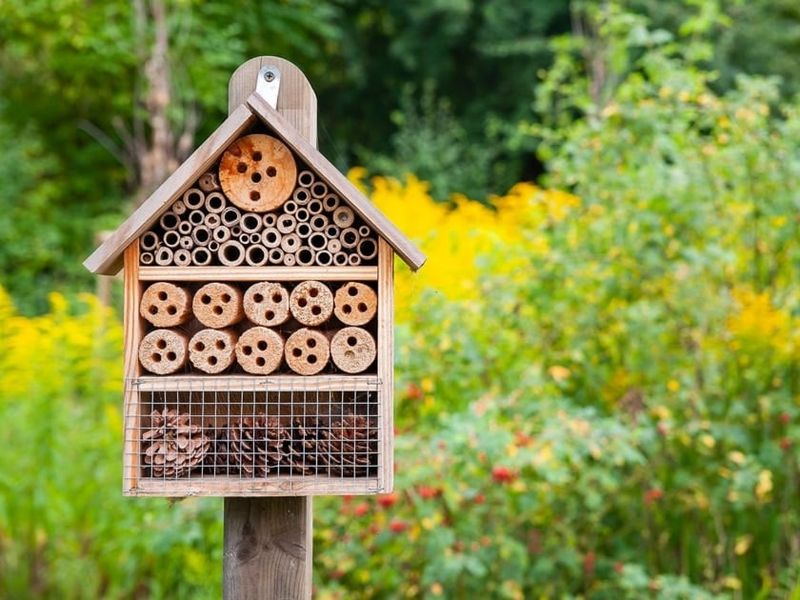
Build the cavity house, set it in a sheltered spot near your trees, keep damp mud and spring flowers handy, and plan to refresh the nesting material. That is the whole project, and it fits in a weekend.
UC Master Gardeners offer a good place to start.
None of it controls what happens next. Local bees may or may not move in, and a bigger harvest is not promised, as NC State Extension reminds us.
Hang it, then wait for spring to answer.