
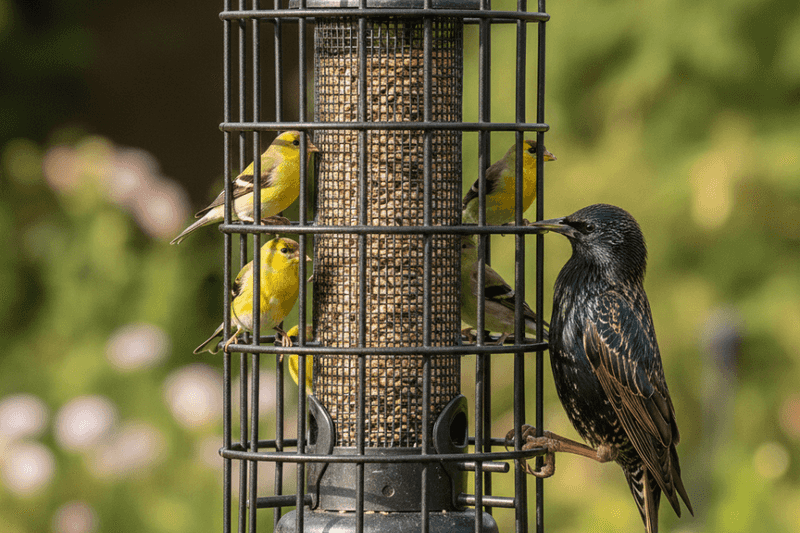
You fill the feeder at sunset, and by sunrise it is bare, scattered, or knocked to the ground. A Cooper’s hawk may be hunting your songbirds, but plenty of other animals are after the seed itself.
Winter makes food scarce, so hungry critters from tiny mice to huge bears start treating your yard like an all-night buffet. Knowing who the real culprit is helps you protect your birds, your budget, and your peace of mind.
1. Raccoons
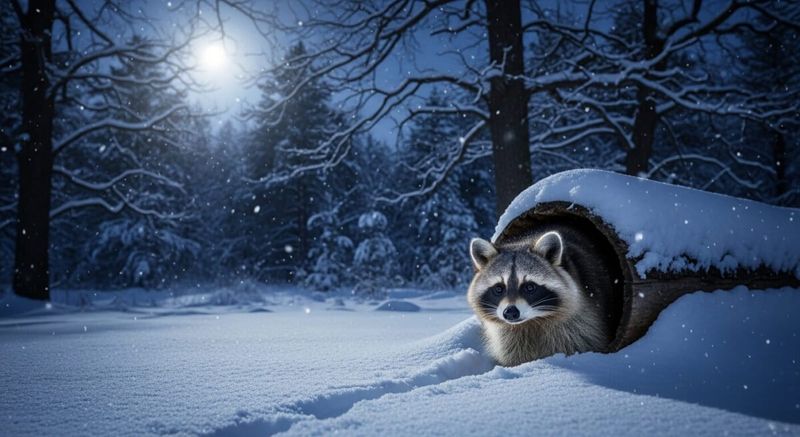
Picture a masked bandit with tiny hands and zero shame. Raccoons are famous for prying lids off feeders, unscrewing caps, and even lifting the whole thing off its hook to carry it away.
If your feeder vanishes overnight and turns up in the lawn, you likely have one.
Winter does not send most raccoons into true hibernation. They slow down during deep cold snaps, but on milder nights they roam hungry and bold, and a full feeder is an easy win.
A single raccoon can empty a hopper in under an hour.
Muddy prints that look like little human hands are the giveaway. You may also notice suet cages bent open or seed trays flipped upside down.
They tend to return to the same spot night after night once they find it.
The best fix is simple: bring feeders inside at dusk. If that feels like a chore, mount feeders on a smooth metal pole at least five feet tall with a wide cone baffle below.
Keep the pole ten feet from trees, decks, and fences so they cannot leap over. Store your seed in a metal can with a locking lid, too, because the garage is their next stop.
2. Gray Squirrels
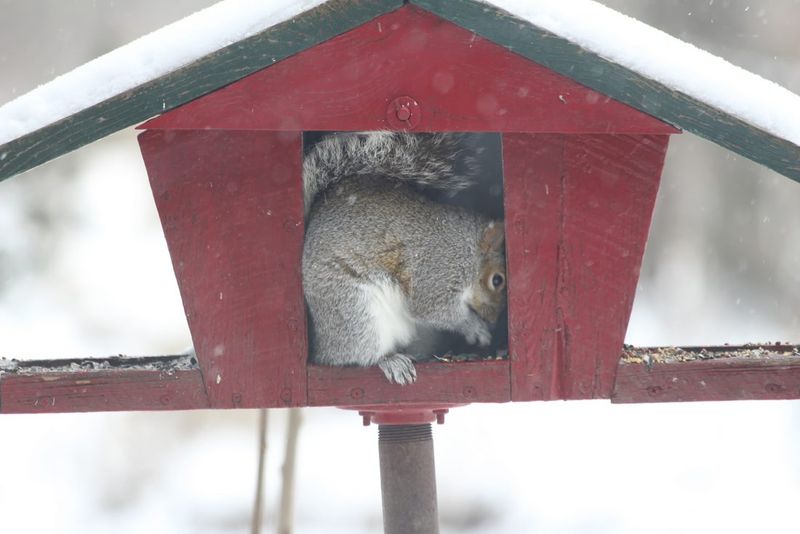
Ask any bird lover about their longest rivalry, and you will probably hear one word: squirrels. Gray squirrels are acrobats, engineers, and stubborn problem solvers all rolled into one fluffy package.
They can leap about ten feet sideways and drop straight down from branches above.
Here is a twist many folks miss. Squirrels usually feed during the day, but they start at first light and can clean out a feeder before you finish your coffee.
That makes it look like an overnight job when it really happened at dawn.
Chewed plastic ports, gnawed wooden roofs, and seed hulls piled under the feeder point straight to them. They also bury extra seed, so surprise sunflowers popping up in spring are part of their calling card.
Weight-activated feeders that close under a squirrel’s heft work surprisingly well. Another clever trick is switching to safflower seed, which most squirrels dislike but cardinals and chickadees enjoy.
Hot pepper coated seed also helps, since birds cannot taste the heat. Some people simply set up a separate corn station far from the bird feeders, giving squirrels their own snack bar and buying a little peace.
3. Southern Flying Squirrels
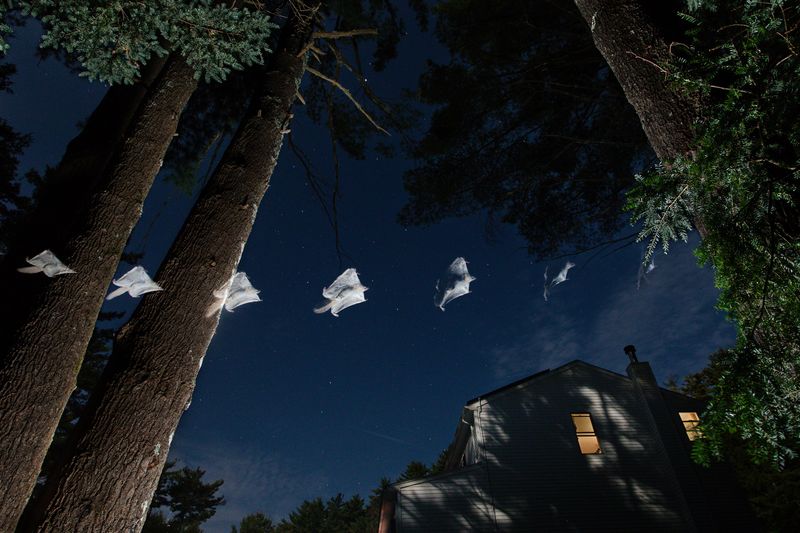
Did you know you might have squirrels in your yard you have never once seen? Southern flying squirrels live across much of the eastern half of the country, and they only come out after dark.
Most homeowners have no idea they exist until a trail camera catches them.
These little gliders are about the size of a chipmunk, with huge black eyes and a furry flap of skin stretching from wrist to ankle. They do not truly fly, but they can glide well over a hundred feet from tree to tree.
Landing on a feeder is a breeze for them.
What makes them sneaky raiders is teamwork. In winter, several often share a single nest cavity to stay warm, then head out together to eat.
A small crew can drain a seed feeder or chew through a suet cake in one night.
Honestly, many people end up charmed instead of annoyed. If you want to keep them off, bring feeders in before dark.
If you would rather watch, put out a little extra seed and set up a red-filtered flashlight, which they do not seem to notice. It is a backyard show worth staying up for.
4. Deer Mice and House Mice
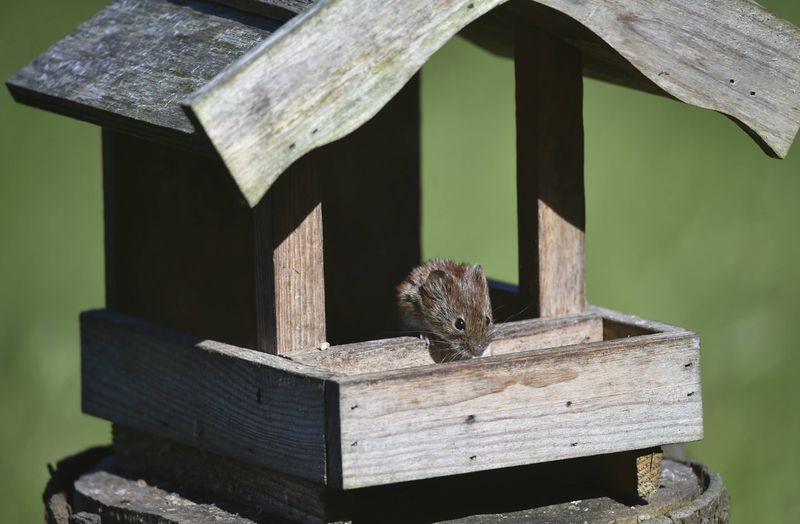
Tiny teeth, big trouble. Mice may not empty a feeder in one bite, but a busy family of them can work through spilled seed and low trays all winter long.
Worse, a reliable food source pulls them closer to your house, shed, and garage.
Look for small, rice-shaped droppings near the feeder base or along walls nearby. You might spot tiny tunnels under the snow leading straight to the seed pile.
Chewed corners on seed bags in storage are another loud warning sign.
Deer mice deserve extra caution. They can carry hantavirus, which spreads through dust from their droppings and nesting material.
Wear gloves and a mask when cleaning up, and dampen the area with a disinfectant before sweeping instead of stirring up dry dust.
The fix starts with tidiness. Use a seed catcher tray under feeders, choose no-mess blends with hulled seeds, and rake up leftovers every few days.
Keep feeders well away from your foundation. Store bulk seed in sealed metal containers, never in the original paper bag.
Cutting off the free buffet makes mice move on, and it keeps them from deciding your cozy shed looks like a great winter home.
5. Norway Rats
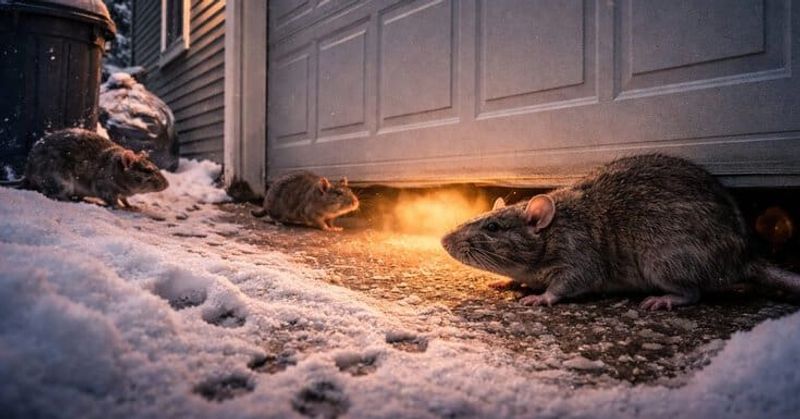
Nobody likes this one, but it belongs on the list. Norway rats are drawn to bird feeders across cities, suburbs, and farms alike.
Once they find steady seed, they settle in nearby and start raising families fast.
Rats are mostly active at night, which is why many people never realize they have them. Signs include burrows about two to three inches wide dug under decks, sheds, or compost bins.
You may also notice greasy rub marks along fences and walls where they travel the same path again and again.
A single pair can produce dozens of offspring in a year. That growth is why acting early matters so much.
Rats can also chew wiring and spread disease, turning a simple feeder problem into a household one.
If you suspect rats, pause feeding for a few weeks. It feels harsh, but birds have other food sources and will return quickly.
When you start again, use tray catchers, feed only what birds finish in a day, and raise feeders on baffled poles. Clear brush piles and woodpiles near the feeding area to remove hiding spots.
For a real infestation, calling a pest professional is the smartest move.
6. White-Tailed Deer
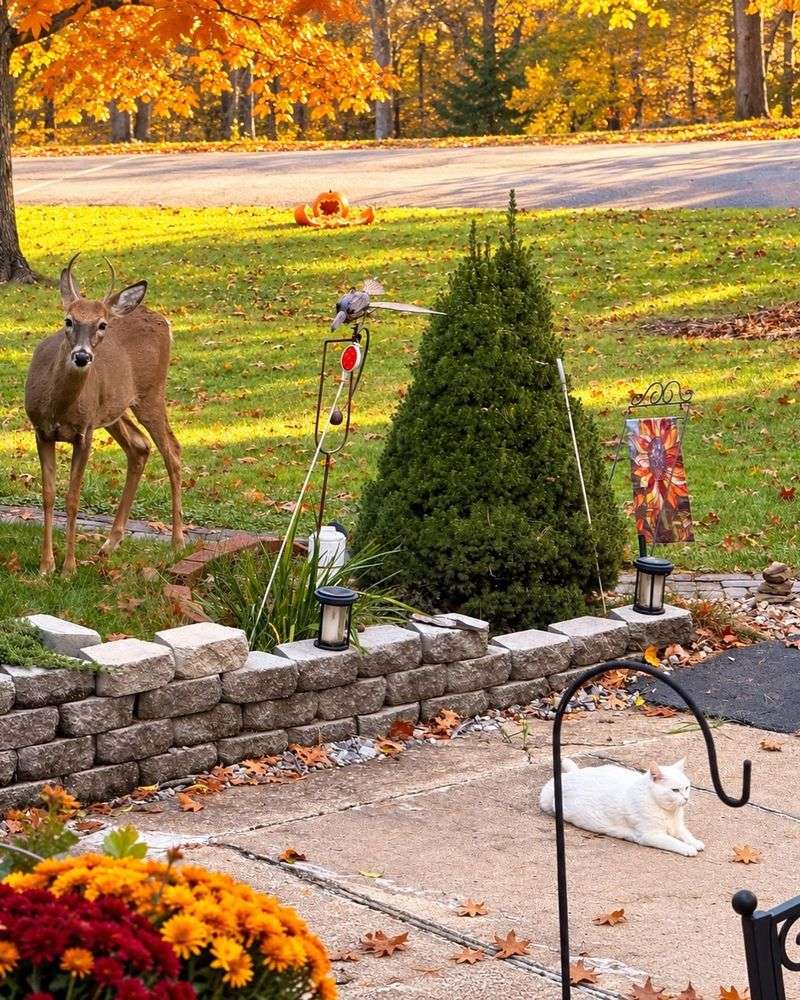
One frosty morning, you might find your feeder licked clean and tilted at a strange angle, with hoof prints all around it. Surprise, the culprit stood five feet tall.
White-tailed deer are skilled at stretching their necks to reach hanging feeders, and they love corn, sunflower seed, and suet.
Hard winters push deer into neighborhoods searching for easy calories. They often feed at dusk and through the night, so the damage shows up by morning.
A small herd can wipe out several feeders in one visit.
Here is something many people do not realize. Sudden heavy grain in winter can actually upset a deer’s stomach, because their gut bacteria adjust slowly to new foods.
Feeding them corn on purpose can do more harm than good.
Raising feeders higher than seven feet usually solves the problem. Hanging them from a long arm off a pole, or from a wire between two trees, keeps them out of reach.
Deer also bring ticks and can browse your shrubs once they get comfortable, so discouraging their visits protects your landscaping too. A motion-activated sprinkler near the feeding area can startle them away during milder spells.
7. Black Bears
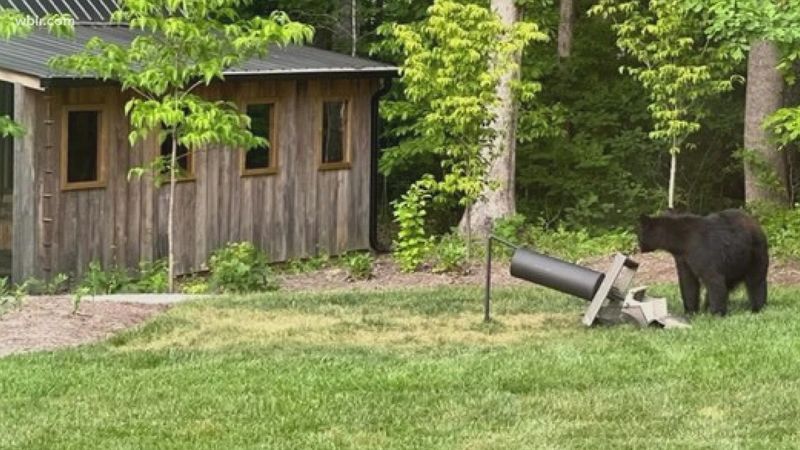
Bent poles, shattered feeders, and a seed bag dragged into the woods? That is not a squirrel.
Black bears live in more than forty states, and they can smell a feeder from over a mile away.
You might think bears are fast asleep all winter. Many do den up, but in warmer regions and during mild spells, some stay active or wake early.
Late fall and early spring are especially risky, when they are hungry and feeders are loaded.
Bird seed is pure fuel for a bear. A single feeder can hold thousands of calories, making it far more tempting than foraging for berries or nuts.
Once a bear learns your yard is a food source, it will keep coming back, which can lead to serious trouble for both the bear and your family.
Wildlife agencies across bear country give the same advice. Take feeders down from early spring through late fall, and only put them up once bears are reliably denned.
Clean up spilled seed, and store all bird food inside a locked building. Check with your state wildlife office for local timing, since it varies a lot.
Sharing your yard safely means removing the temptation.
8. Opossums
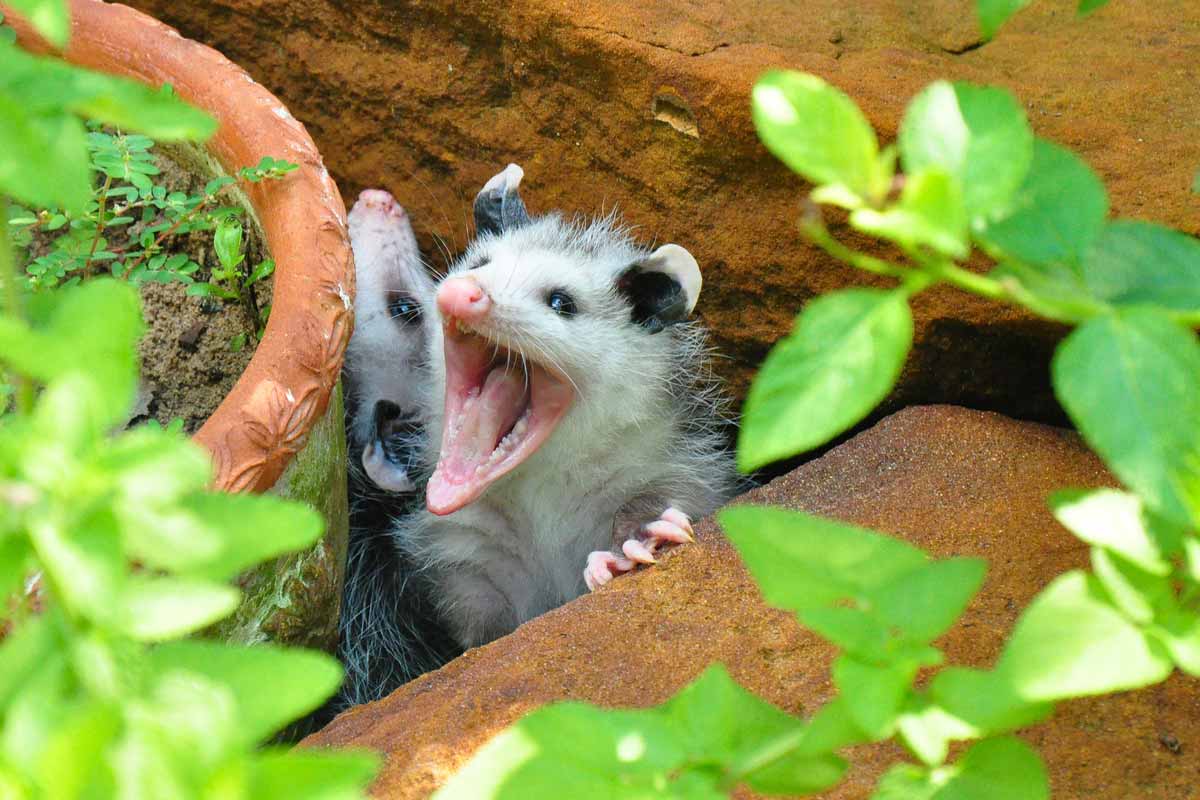
Slow, quiet, and a little goofy looking, the opossum is the night shift cleanup crew. North America’s only marsupial waddles in after dark to eat whatever seed has fallen to the ground.
If your ground trays are bare each morning, an opossum may be the reason.
Opossums are not strong climbers of smooth poles, but they will happily scale a wooden post or nearby fence to reach a platform feeder. They also love suet and will gnaw at low cakes.
Their tracks are easy to spot in snow, with a back foot that has a thumb-like toe pointing sideways.
Here is the good news. Opossums are surprisingly helpful neighbors, eating ticks, beetles, slugs, and even small rodents.
Their low body temperature also makes them poor hosts for rabies.
Still, you probably do not want them eating your expensive seed. Skip open ground trays at night, or bring them inside before sunset.
Use a baffle on any feeder post they might climb. Their thin, hairless ears and tails are prone to frostbite, so they work hard to find food in cold weather.
Giving them a little space elsewhere in the yard keeps everyone content.
9. Starlings and Grackles
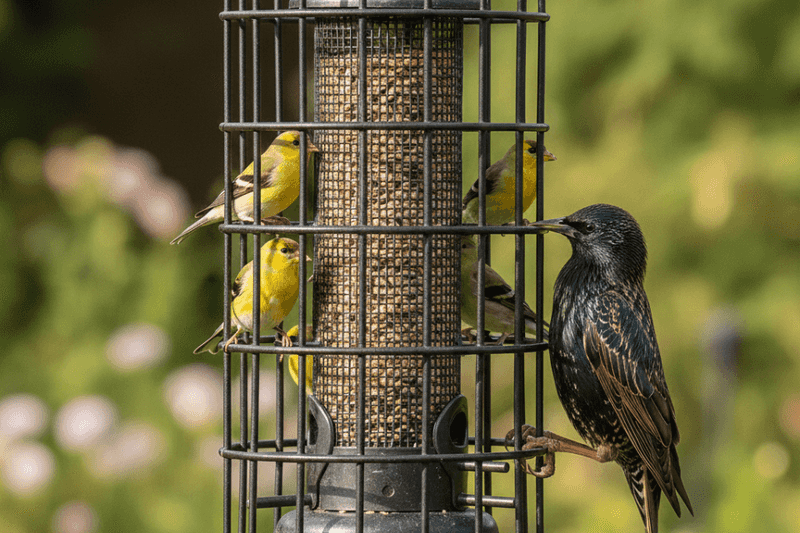
A swirling black cloud drops into your yard, and two minutes later the feeder is empty. Starlings and grackles roam in big winter flocks, sometimes numbering in the hundreds.
They do not raid at night, but they move so fast at dawn it feels like the seed disappeared in the dark.
European starlings are not native to North America. Around 100 starlings were released in New York’s Central Park in 1890, and today their population stretches coast to coast in the tens of millions.
They push smaller songbirds aside and gobble suet with startling speed.
Common grackles are native, but they share the same flock-and-feast strategy. Their strong beaks crack seeds easily, and they will hog platform feeders for long stretches.
Chickadees and finches often cannot get a turn.
Luckily, you have smart options. Upside-down suet feeders let woodpeckers and nuthatches cling underneath, while starlings struggle with the angle.
Tube feeders with short perches and cage feeders sized for small birds keep big ones out. Switching to safflower or nyjer seed helps too, since neither flock is very fond of them.
With a few tweaks, your feeder becomes a welcoming spot for the little birds again.