
If you missed the October bulb rush, you have not missed your chance. In much of California, the ground stays warm and workable well into November, and winter rains do most of the watering for you.
That makes late fall a sweet spot for tucking bulbs into the soil. Plant the right ones now, and your yard will reward you with bright, water-wise color when spring rolls around.
1. Daffodils
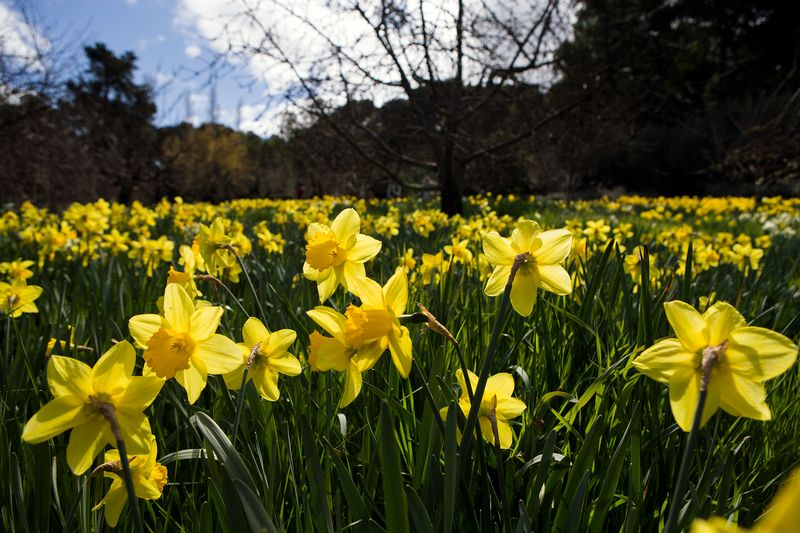
Gophers hate them. Deer walk right past them.
Daffodils contain a bitter, toxic sap that most critters won’t touch, which makes them a top pick for California yards that border open hillsides.
Plant bulbs about 6 inches deep, pointy end up, with roughly 5 inches between them. Our winter rains handle most of the watering, and once foliage dies back in late spring, they’re happy to bake dry all summer.
For warmer inland and southern spots, look for varieties like ‘Ice Follies’, ‘Tete-a-Tete’, or paperwhites, which need little winter chill. They come back year after year and slowly multiply into bigger clumps.
2. Dutch Iris
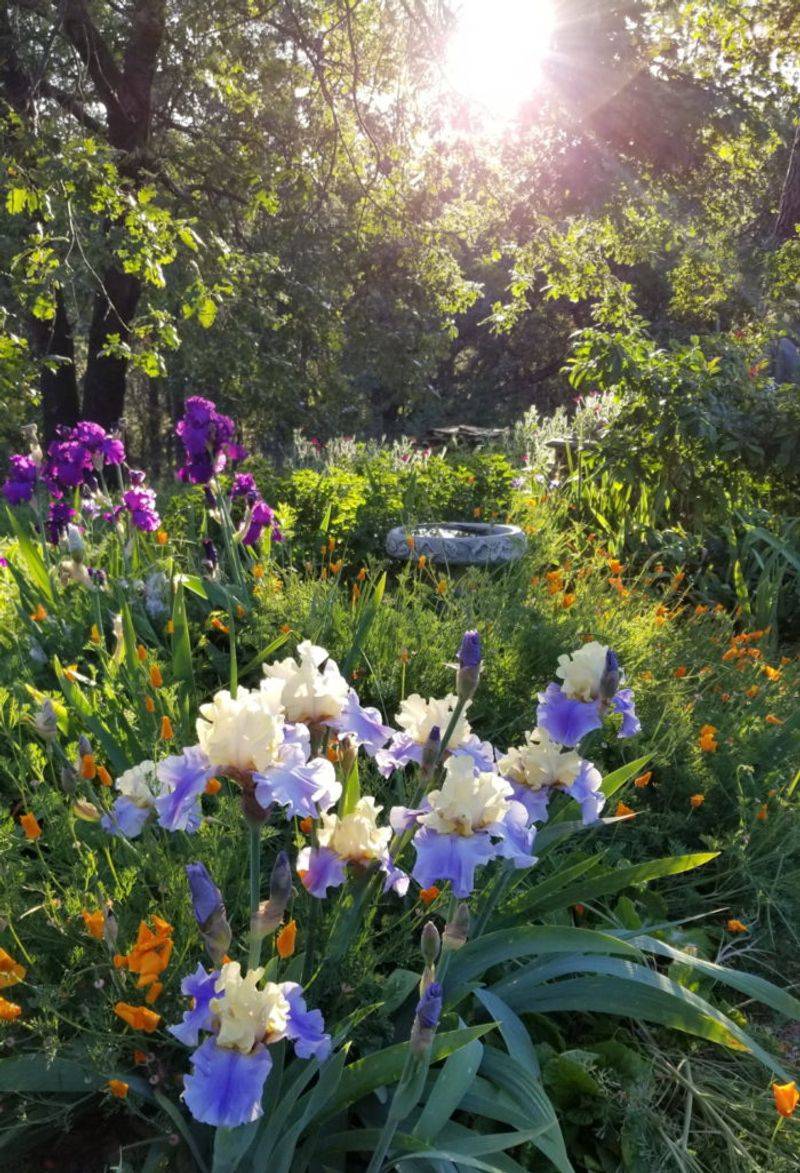
Picture a florist’s bouquet growing straight out of your flower bed. That’s the vibe Dutch iris brings, with crisp blue, purple, white, and yellow blooms on tall, sturdy stems.
They thrive in full sun and well-drained soil, and they don’t mind our dry summers one bit. Set bulbs about 4 to 5 inches deep in groups of ten or more for the best show.
Here’s a bonus: they make excellent cut flowers. Snip stems when buds show color, and they’ll open indoors and last about a week in a vase.
3. Freesia
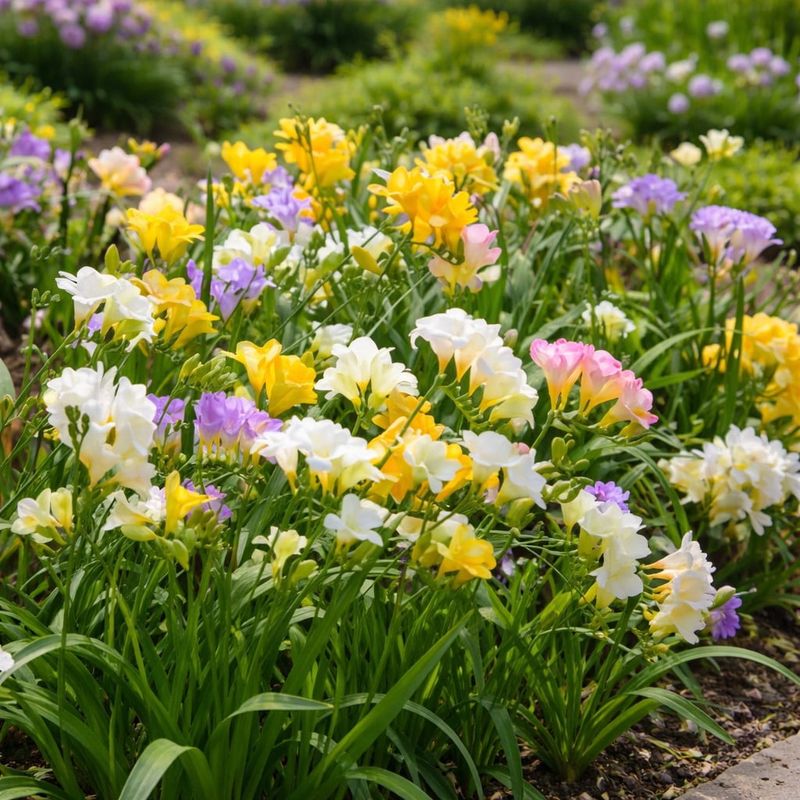
Sniff once and you’ll be hooked. Freesia has one of the sweetest scents in the bulb world, a citrusy, honeyed fragrance that drifts across a patio on a warm spring afternoon.
Originally from South Africa, freesia feels right at home in California’s mild, Mediterranean climate. Plant corms about 2 inches deep, pointed side up, in a sunny spot with good drainage.
In coastal and southern gardens, they often naturalize and pop up again each spring with zero fuss. Try them near a walkway or under a window where you’ll catch that perfume daily.
4. Ranunculus
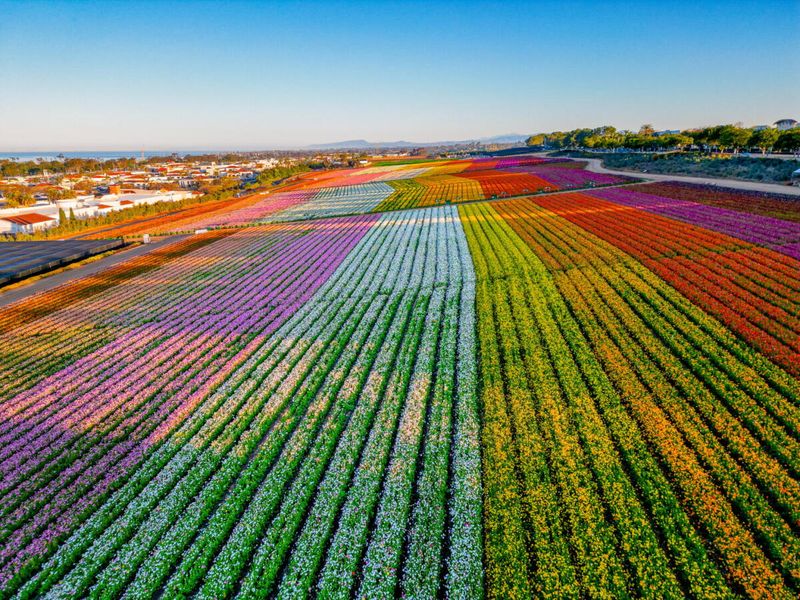
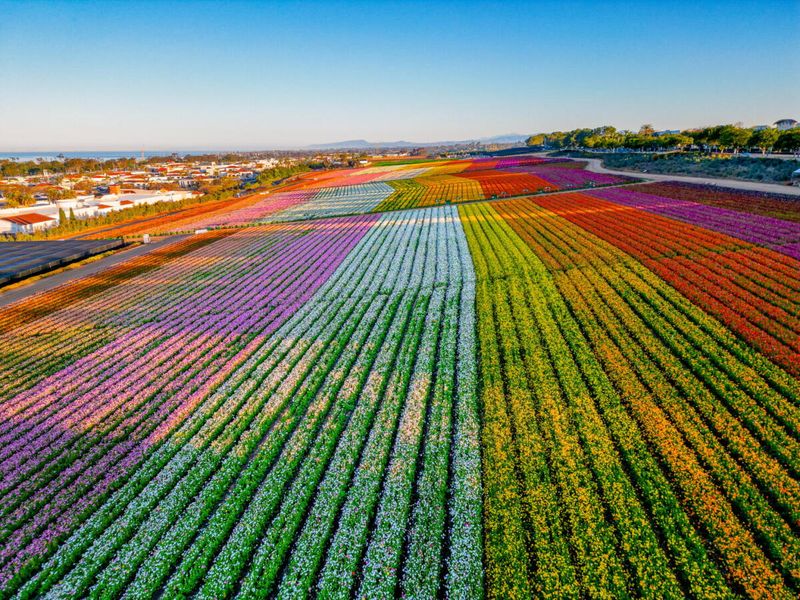
Ever wonder where the famous Flower Fields in Carlsbad get their jaw-dropping stripes of color? Those are ranunculus, and you can grow the same ruffled beauties at home.
The little claw-shaped tubers look odd, so plant them claws down about 2 inches deep. Many gardeners soak them for a few hours first to wake them up.
Each plant can push out a dozen or more rose-like blooms with paper-thin petals. Water lightly until sprouts appear, since soggy soil can rot them.
In hot inland areas, treat them as annuals and replant each fall.
5. Grape Hyacinth
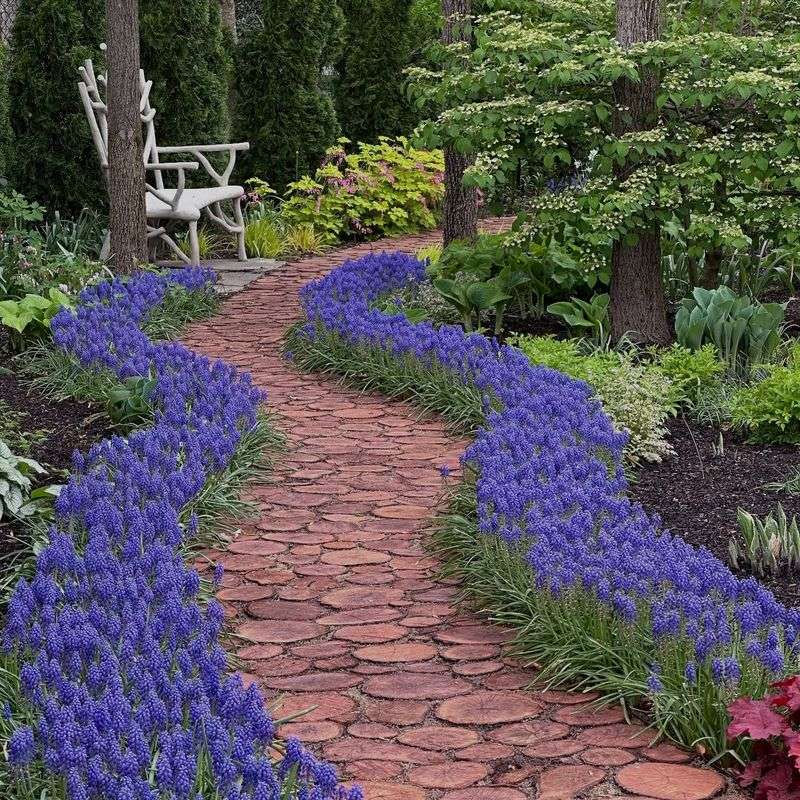
Small but mighty. Grape hyacinths, or muscari, form tiny cones of cobalt blue that look like bunches of grapes turned upside down.
They’re perfect for edging paths, filling gaps between shrubs, or tucking under deciduous trees. Plant them just 3 inches deep and close together, about 2 to 3 inches apart, for a carpet effect.
Fun fact: their grassy leaves often pop up in fall, long before the flowers. Don’t panic, that’s normal.
They spread happily and need almost no summer water, which suits a water-wise yard nicely.
6. Sparaxis
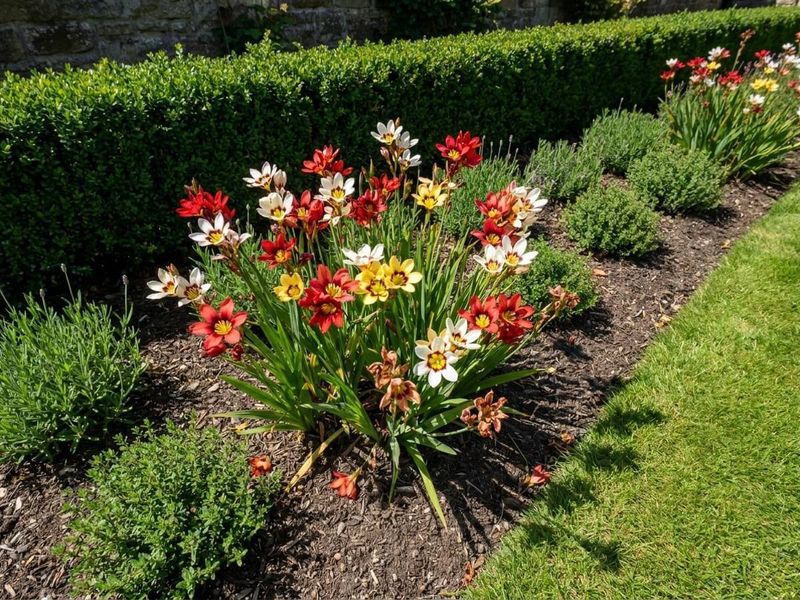
Nicknamed the harlequin flower, sparaxis looks like it was painted by a kid with a brand-new set of markers. Bold oranges, reds, and purples surround bright yellow centers ringed in black.
Another South African native, it loves the same dry summers and rainy winters we get. Plant corms about 3 inches deep in a sunny, well-drained spot, and leave them alone.
Sparaxis works beautifully in rock gardens and slopes alongside succulents. Few neighbors will know what it is, so expect plenty of questions come March.
7. Tulips
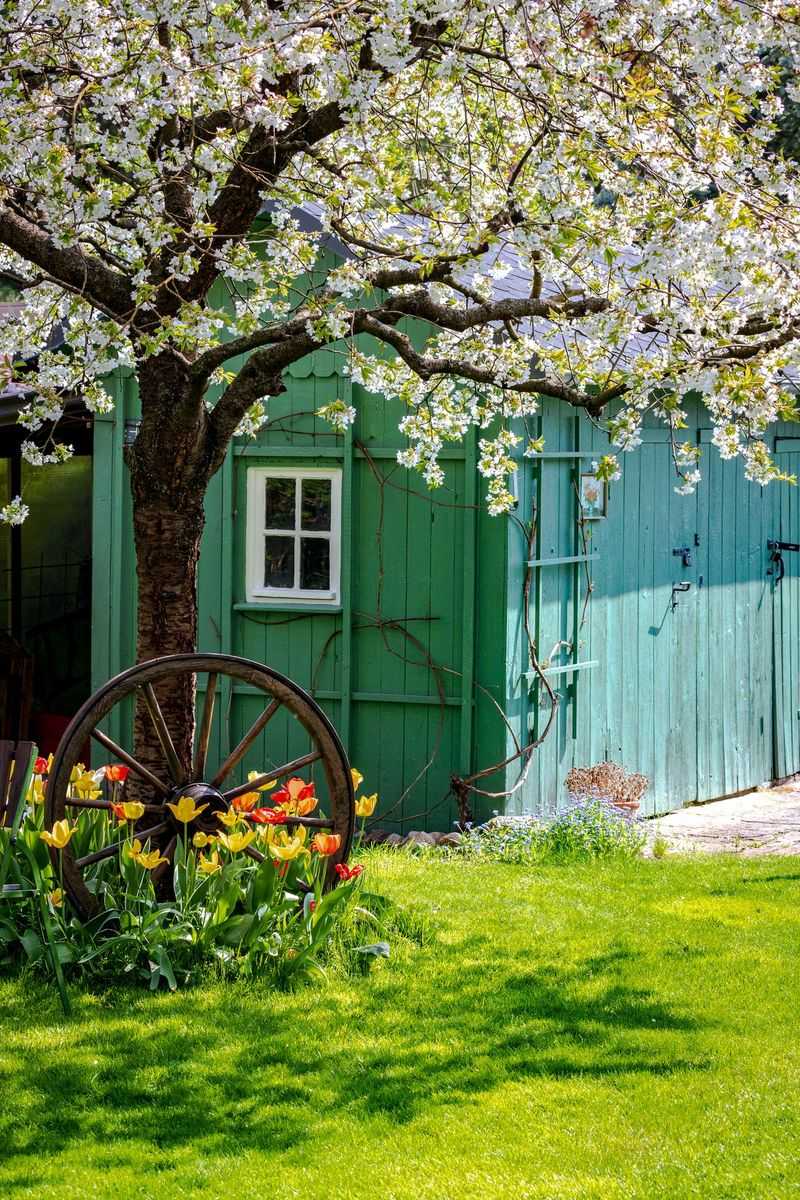
Yes, you can grow tulips in California, but there’s a trick. Most varieties need weeks of cold to bloom, and our mild winters don’t provide it.
The fix is simple. Chill bulbs in a paper bag in your fridge for 6 to 8 weeks, away from fruit, which releases gases that harm them.
Then plant them 6 to 8 inches deep in December or early January.
Because they rarely rebloom here, many gardeners treat them as annuals in pots or beds. Species tulips like Tulipa clusiana are a smart exception, since they handle warm winters and often return.