
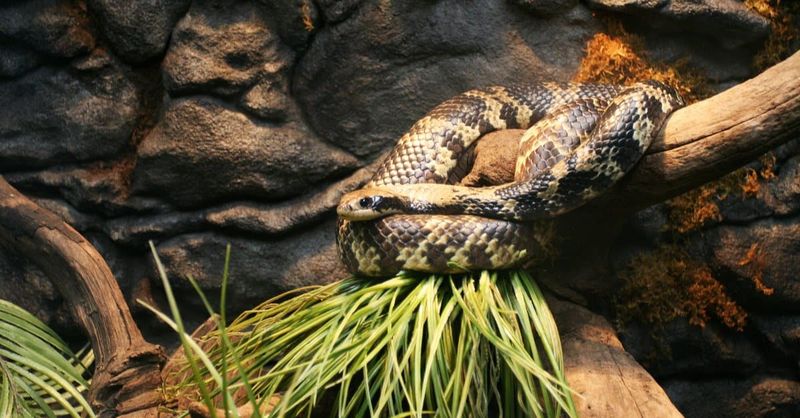
A sharply upturned snout can point to a southern hognose snake, a small and mostly harmless Florida native. But a pointed nose on its own cannot tell you what kind of snake is in your yard.
Several look-alikes share parts of the same look, and the clues most people check are not the dependable ones. Here is how to size up a snake from a safe distance and what to do next.
A pointed nose is a clue, not an identification
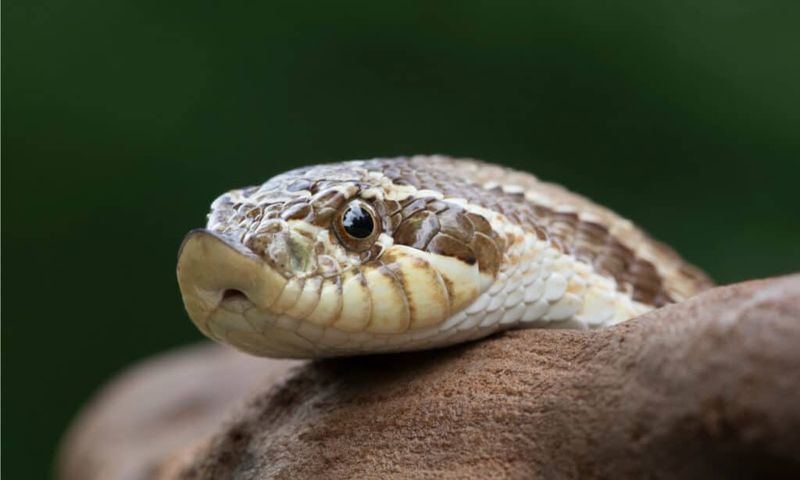
A sharply upturned snout really can suggest a southern hognose snake. That is a useful starting clue, but it is only one clue.
Other snakes also have pointed snouts, so a pointed nose cannot prove that an unknown snake is safe or even tell you what it is.
Many people also lean on head shape. The thinking goes that a triangular head means venomous and a slim head means harmless.
UF/IFAS guidance on Florida’s venomous snakes warns that this is not a dependable test, because harmless snakes can flare or flatten their heads when they feel threatened and suddenly look triangular.
Other fine details are no better. Checking pupils or scale patterns means getting far too close, and the coral snake, a venomous species, has round pupils.
A trick that sends you toward the snake is not a safe trick.
A better habit is to look at the whole animal from a comfortable distance. Note its size, body shape, color, pattern, and where in Florida you live.
The Florida Museum snake ID guide lets you filter by region and appearance, which works much better than judging one feature.
The sections below walk through the lookalikes homeowners most often mix up. If you still are not sure after reading them, the answer is simple: leave the snake alone.
What a southern hognose looks like
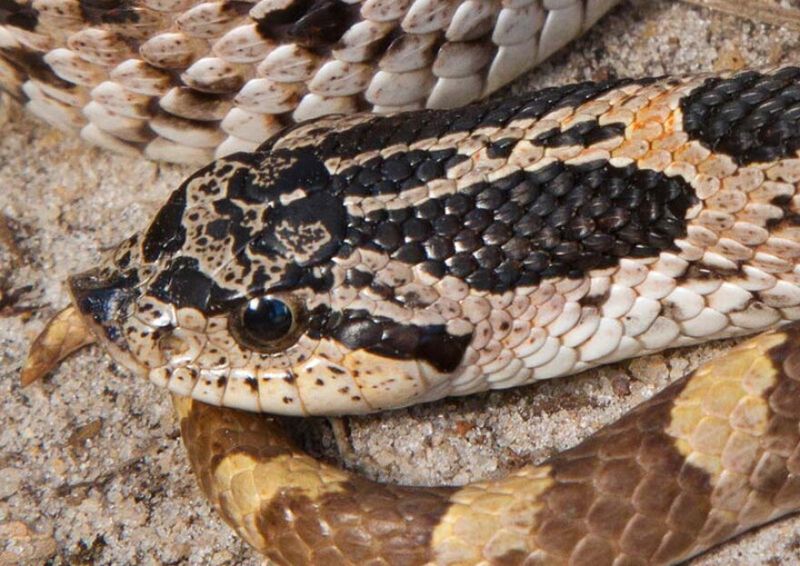
The southern hognose is a small, thick-bodied snake with a snout that turns up sharply, almost like a little shovel. Its color varies quite a bit, so do not expect every one to look the same.
The Florida Museum’s southern hognose page places it in the Panhandle and parts of the north and central peninsula west of the St. Johns River. It is absent from the Keys.
This snake is known for drama. When worried, it may flatten its head and neck, hiss loudly, bluff-strike with a closed mouth, or even roll over and play dead.
These are defensive behaviors. They do not prove what species a snake is, and they are never a reason to step closer for a better look.
In practical terms, the southern hognose is not considered dangerous to people or pets. Still, it does make a mild venom that helps it subdue prey.
A rare bite may cause local irritation or swelling in some people.
The Florida Museum’s venomous snake statement explains that species like this are labeled non-venomous for safety purposes because their weak venom poses no real danger. That is a good reason to stay calm if one shows up, and also a good reason to still let it be.
Corn and rat snakes can look alike
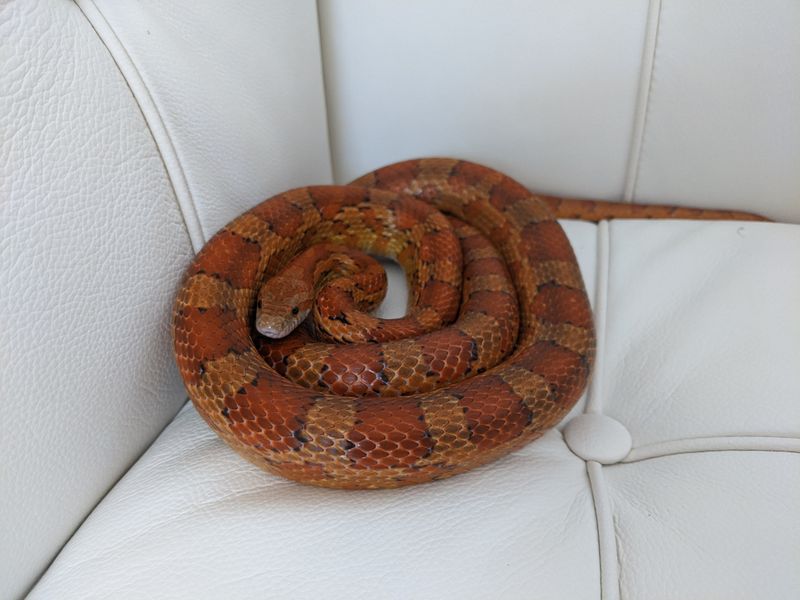
Cornsnakes are common visitors to Florida yards, sheds, and woodpiles. They live throughout mainland Florida and the Keys, and they are not venomous.
Typical clues include orange-brown coloring, reddish or brown blotches with dark borders, and a spear-shaped mark running from the head onto the neck.
The belly is another giveaway, since a black-and-white checkerboard is typical. Of course, you will rarely see a belly without handling the snake, so treat that as a detail for photos taken by others or for later reading.
The Florida Museum’s red cornsnake page lists all of these features.
Eastern ratsnakes add to the confusion. Young ones can resemble cornsnakes, with blotches that fade as they grow.
Adult peninsular ratsnakes, on the other hand, may show four dark stripes down a lighter body, according to the Florida Museum’s eastern ratsnake page.
Treat all of this as a set of clues, not a guarantee. From across the yard, lighting, movement, and distance can make patterns hard to read.
Both snakes help control rodents, and both may bite defensively if someone tries to grab them, so admire them from afar.
Red-and-black patterns need more than a rhyme
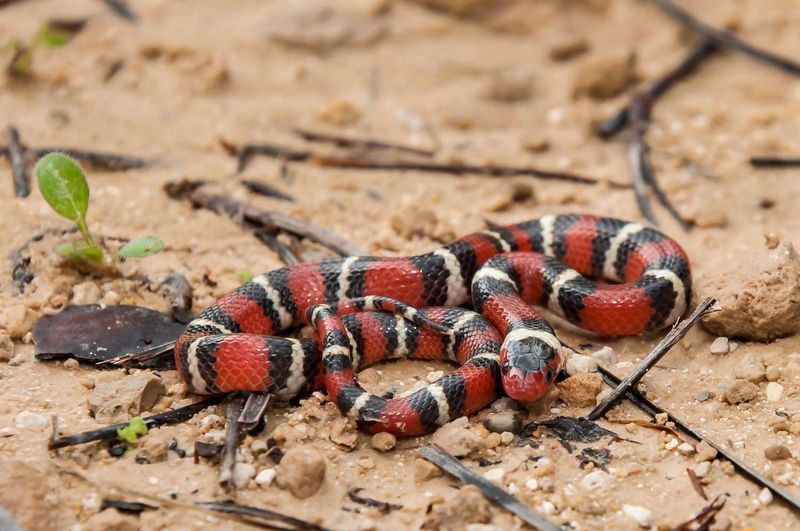
Red, black, and light bands on a snake make many homeowners nervous, and for good reason: the Florida coral snake is venomous. This is where a pointed snout stops being helpful.
Scarlet snakes and scarlet kingsnakes, both harmless, also have pointed, reddish snouts.
One narrow clue does help. The Florida coral snake has a rounded black snout, while its harmless lookalikes have reddish ones.
UF/IFAS also describes how the order of the bands differs between coral snakes and these lookalikes.
Band order and snout color are limited tools for telling those few species apart. They are not a general system for identifying snakes, and they do not cover every other pattern you might see.
The Florida FWC brochure on venomous and nonvenomous snakes is a good reference to read ahead of time.
Do not rely on a memory rhyme in the moment, and never move closer to check which color touches which. Reading bands correctly at close range is exactly the situation to avoid.
If red and black bands are in view, step back and give the snake room.
Use the whole snake and its location
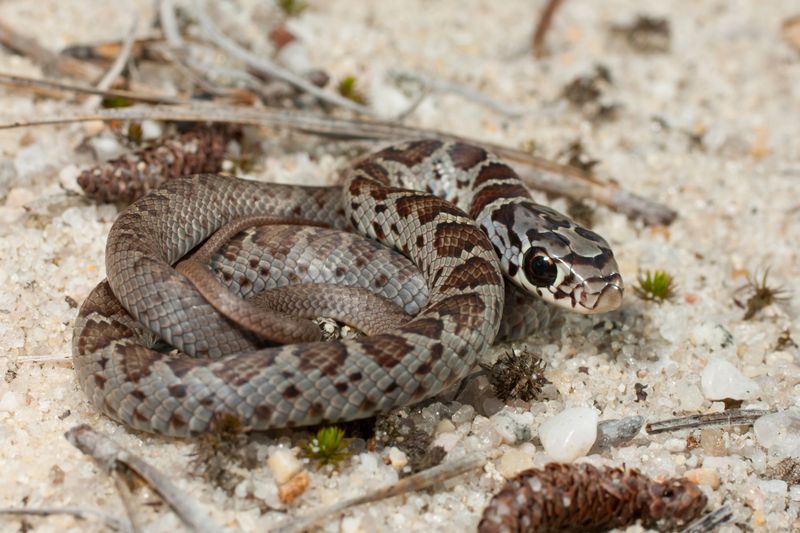
Think of identification as a puzzle with several pieces. Size, body shape, color, pattern, and behavior all count.
So does the place where you live, and no single nose, head, eye, or color feature should settle it.
Location can rule species in or out. The southern hognose is a good example, since the Florida Museum notes it is absent from the Keys.
A snake with an upturned nose in Key Largo is therefore not a southern hognose. Not every lookalike lives everywhere in the state, and even the copperhead is not found statewide.
Florida-specific tools make this easier. The Florida Museum guide lets you filter by region, and UF/IFAS offers help with the state’s venomous species.
Browse them on a calm day, before a snake appears.
If you can snap a photo from a long distance with a zoom, that can help someone else identify it later. If the snake is still unclear, treat that as a signal to keep your distance.
Doubt is never a reason to move closer.
Give a yard snake room to move
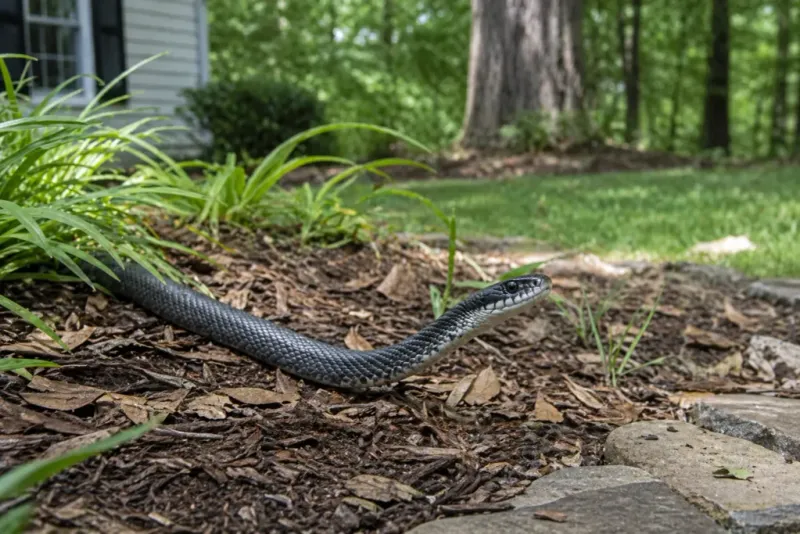
Most snakes want nothing to do with people. Florida FWC says snakes usually flee, and it recommends standing back and simply observing.
Often the best plan is to wait and let it go on its way.
Bring children inside or well away, and keep dogs and cats leashed or indoors until the snake has left. Pets are often curious, and curiosity is how most close calls happen.
Do not try to catch, kill, or handle the snake, and do not edge closer for a photo. Those are the situations in which people get bitten.
Killing a harmless snake also removes a helpful rodent eater from your yard.
If the snake stays put in a risky spot, such as a garage or near a door, or if you truly need it identified or removed, use a Florida-specific resource or call a qualified professional. UF/IFAS advice on preventing snake encounters also covers yard habits that make snakes less likely to linger, like trimming brush and clearing clutter.
A bite calls for medical care, not a close-up
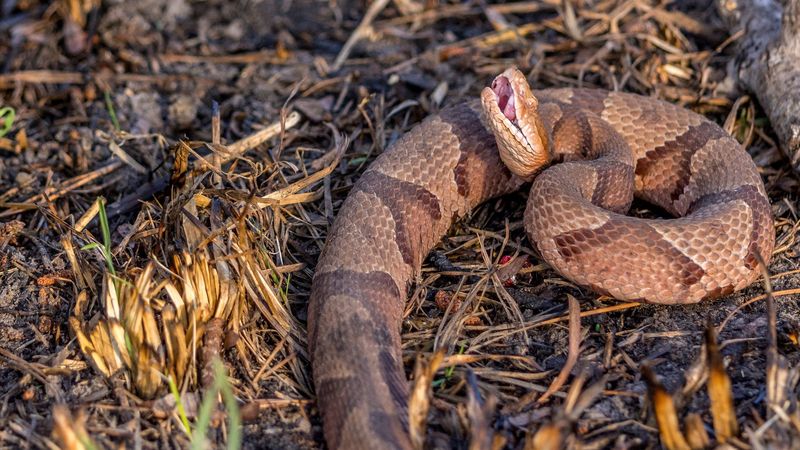
If someone is bitten, get urgent medical attention and call 911. Do not wait to see how it feels.
Treating a bite as an emergency is the safe choice, whatever kind of snake it was.
You do not need to catch the snake or know what it was. UF/IFAS’s Emergency Snakebite Action Plan says a positive identification is not necessary, and trying to capture it risks a second bite.
Skip the photo too, since nothing should delay care.
The same UF/IFAS plan advises against several well-known first-aid ideas. Do not use a tourniquet, ice, cutting the wound, suction, heat, or electric shock.
These do not help and can cause harm.
CDC guidance on venomous snakes likewise points people toward prompt medical care. Keep the person calm and still, and let the professionals take it from there.
A snake’s nose is never worth a second look when someone needs help.