
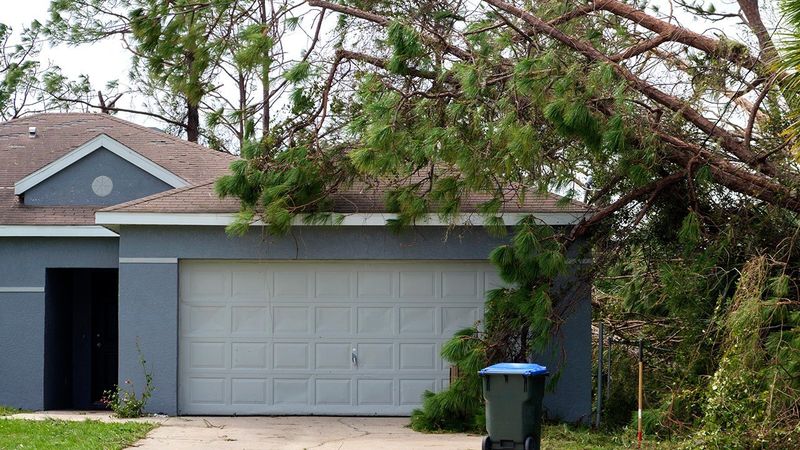
Florida law lets you document a neighbor’s leaning pine, tell the neighbor in writing, and ask for a professional look at the tree. It also lets you trim growth that crosses onto your side, but only up to the property line.
What it does not do is hand you the right to cut down the tree or automatically make your neighbor liable. Knowing where those lines sit can keep you safe, protect your records, and keep a tense situation from turning into a legal one.
Notice warning signs without diagnosing the tree
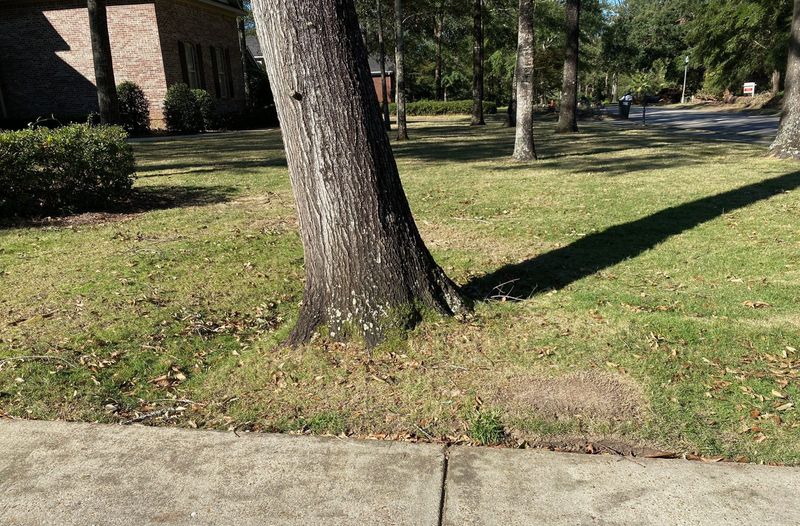
A pine that leans toward your roof can deserve attention. It does not prove the tree is dead, about to fall, or certain to hit your house.
Trees lean for many reasons, and some lean for decades without trouble.
What you can do is watch for visible warning signs. UF/IFAS tree-risk guidance lists a lean that develops rapidly, dead or hanging branches, cavities in the trunk, fungal growth, and visible root problems.
Any one of these is a clue to record, not a verdict.
Walk your side of the fence and take dated photos from several angles. Note what you see in plain words, such as brown needles across the upper crown, a mushroom-like growth near the base, or soil heaved up on one side.
Photograph the tree beside a fixed object, like your fence or roofline, so a change in lean is easier to spot later.
Resist the urge to decide what is wrong with the tree. Diagnosing rot or root failure takes training and tools.
UF/IFAS recommends having an ISA Certified Arborist assess the risk, and that is the step that turns a worry into useful information.
Keep your notes factual. Words like “visible dead limbs over my roof” will serve you better later than “a dangerous tree that will kill us.” Calm, specific records make every next step easier.
Put the concern in writing and keep a record
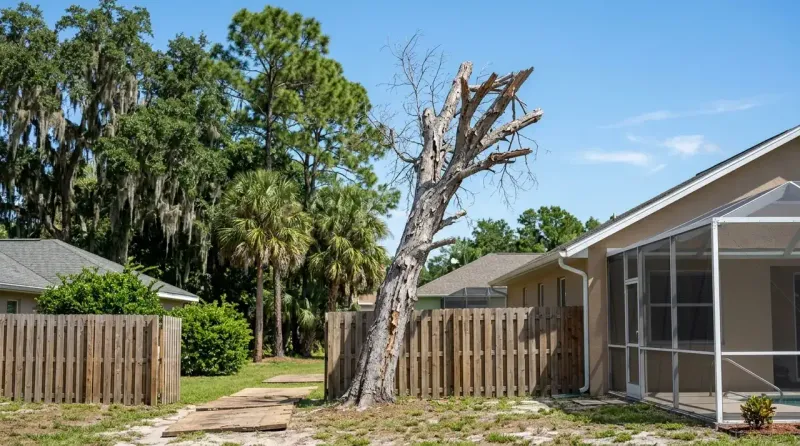
Once you have photos and notes, tell your neighbor. A short, dated message works well, whether it is a letter, an email, or a text.
Florida does not require a certified-letter procedure, so choose a method that leaves a clear record.
Describe what you see and where you see it. For example, mention the dead upper limbs, the lean toward your roof, and the date you took the photos.
Say plainly that you are concerned for your home, and ask the neighbor to arrange a professional assessment or any needed corrective work.
Keep a copy of the message, the photos you sent, and any replies. Note the date of any phone call or conversation too.
If the neighbor answers, save that response, even if it is brief.
Think of this as evidence-gathering, not a legal switch. A letter does not create liability by itself.
It can, however, help show what the owner knew and when.
That matters because of the Vaughan decision, where the complaint alleged the owner knew a tree was rotten and had received repeated complaints about falling limbs. The case did not turn on any particular form of notice.
It simply shows that a record of what an owner was told can be relevant.
What notice can—and cannot—show
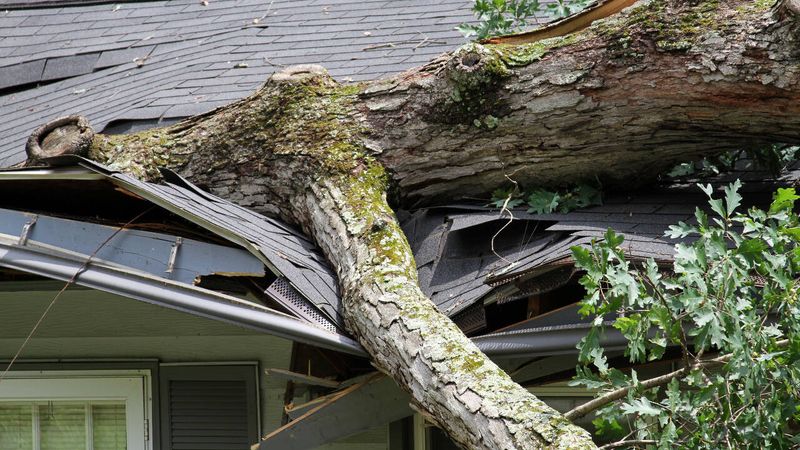
Written notice can help show that an owner knew about a problem. It does not prove the owner was negligent, and it does not guarantee that anyone will recover money if a tree falls.
Those questions depend on the facts, the tree’s actual condition, and what a court decides.
The Vaughan v. USMI Properties Five, LLC ruling is a good example of how narrow this area is.
The Sixth District reversed a judgment on the pleadings after treating the complaint’s claims as true, including allegations of known rot and repeated complaints. It then sent the case back for further proceedings, and you can read the full opinion.
The court did not find that the owner was negligent or ultimately liable. It also did not resolve whether Florida recognizes the Massachusetts rule for healthy-tree encroachments.
The dead-versus-live tree question is also unsettled. As the UF/IFAS handbook describes it, that distinction comes from a secondary legal source and has not been directly resolved in a Florida case.
So a dead tree does not automatically make an owner liable.
You may also hear about the Fallen Tree Act. SB 724 in 2025 proposed a notice process and broader liability for shared trees, but the official bill history shows it died in committee.
Its rules are not current law.
Section 163.045 does not give you control of a neighbor’s tree
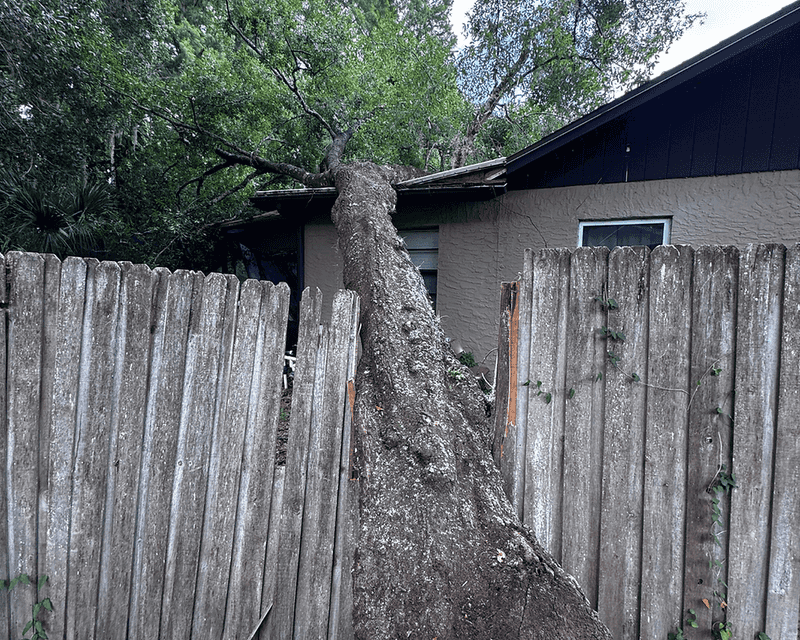
Some homeowners hear about section 163.045 and assume it lets them act on a dangerous tree next door. It does not.
The law is about what local governments can require, not about private rights between neighbors.
In plain terms, section 163.045 of the Florida Statutes limits certain local-government requirements, such as permits, for qualifying tree work on a residential property. That applies when the owner has the specified professional documentation that the tree poses an unacceptable risk.
Notice the key phrases: the work is on the owner’s own residential property, and the limit is on local government. The statute is not a neighbor-notice rule.
A letter to your neighbor does not trigger it, and it does not make your letter more powerful.
It also does not give one owner the right to remove a tree on someone else’s land. If the tree stands on your neighbor’s lot, the decision about removal belongs to your neighbor, subject to local rules.
Where this statute may matter is when your neighbor decides to act. They may find the permit path easier if they obtain proper professional documentation.
For you, the practical path is still the same: document, notify, and ask for an assessment.
Trim encroaching growth carefully and stay on your side
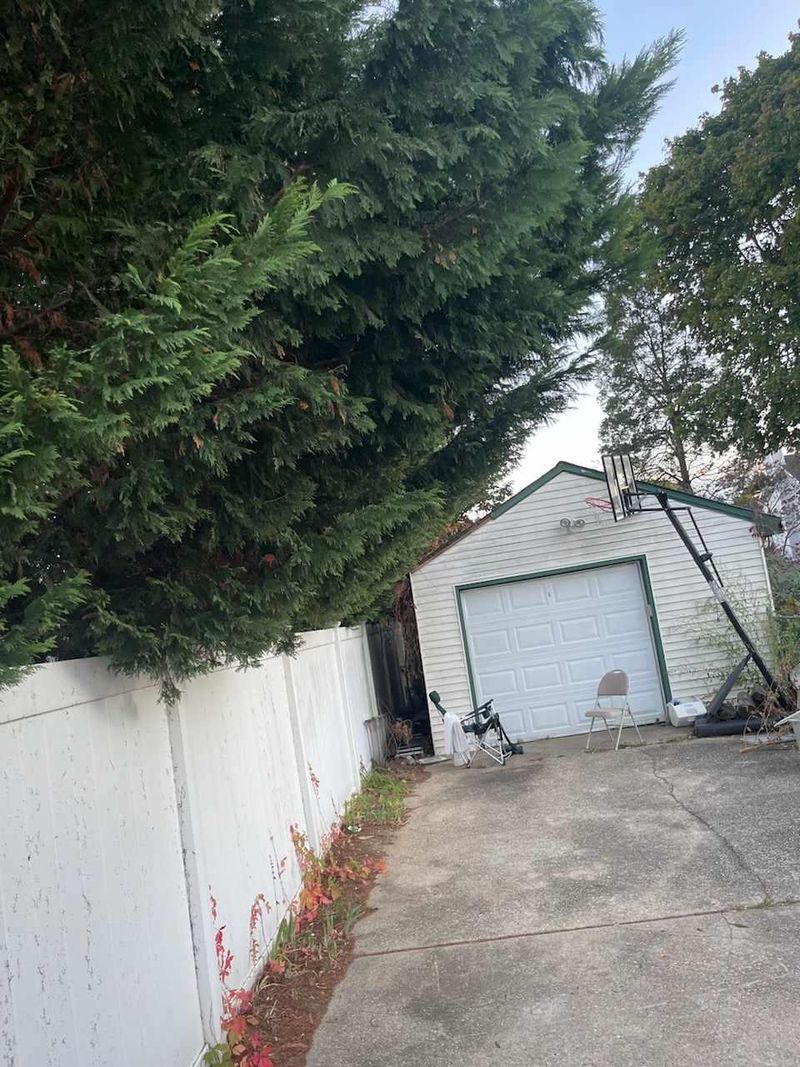
A hazardous tree and an encroaching branch are two different problems. A tree can look risky without a single limb crossing your fence.
Trimming only addresses growth that physically reaches your property.
The general Florida guidance, described in the UF/IFAS handbook, is that you may trim encroaching branches or roots back to the property line at your own expense. That does not allow you to step onto your neighbor’s land or take out the trunk.
Keep every cut on your side of the line. Trimming also must not damage or destroy the neighbor’s tree.
Cutting a large share of a pine’s crown or severing major roots can harm its health or stability, so consult a qualified professional before any cutting that could have that effect.
Boundary trees add another wrinkle. As UF/IFAS Hillsborough County explains, a trunk that straddles the property line may be jointly owned.
Removing it on your own can create liability.
Finally, do not treat trimming as a fix for the underlying hazard. Cutting back a few overhanging limbs will not make a dead or failing tree safe.
A professional assessment is still the way to learn what the tree actually needs.
If the tree falls, check your policy and call your insurer
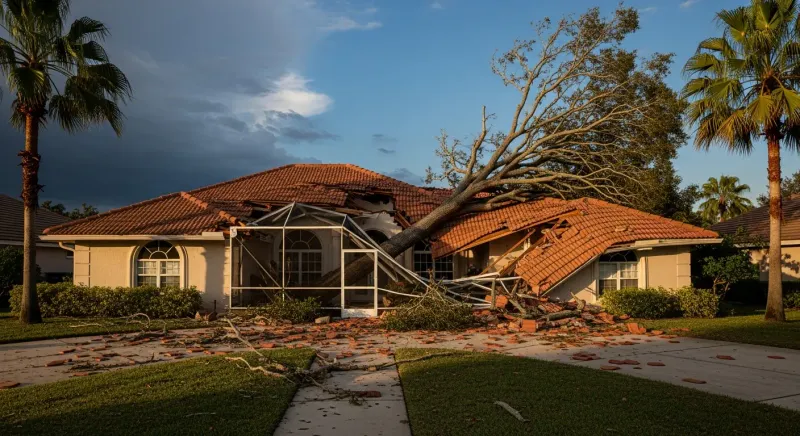
If a tree does come down and damages your house, call your homeowner’s insurer first. Prompt reporting helps get the claim started, and the insurer can explain the next steps.
The Florida Department of Financial Services says in its homeowners insurance overview that most policies cover tree or debris removal when a fallen tree damages insured property, usually with limits. Coverage can differ if the tree falls without damaging covered property, such as a tree that lands in the yard.
Because policies vary, read yours rather than relying on a general rule. Look at the limits, deductibles, and any wording on tree removal.
Do not assume a payout, and do not assume the amount.
Take photos of the tree and the damage before anything is moved, when it is safe to do so. Keep your earlier photos and any written messages you sent your neighbor, since they show the history of the tree.
Avoid telling anyone that the neighbor is automatically liable. Responsibility depends on the facts and the law, and your insurer handles your claim separately from any dispute with your neighbor.
Document the concern and respect the property line
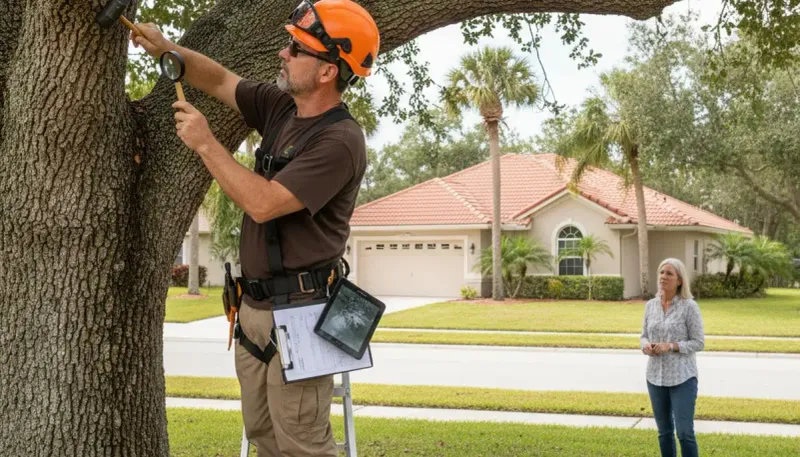
The sequence is simple: photograph what you can see, write to your neighbor, and ask for a professional assessment. A record of that notice can preserve evidence, as the Vaughan case shows, but it does not establish liability by itself.
Trim only what crosses onto your side, and only after checking with a qualified professional if the cut could affect the tree. The UF/IFAS handbook does not permit damaging, destroying, or removing the neighbor’s tree.
A calm paper trail and a clear boundary protect you far better than a chainsaw ever will.