
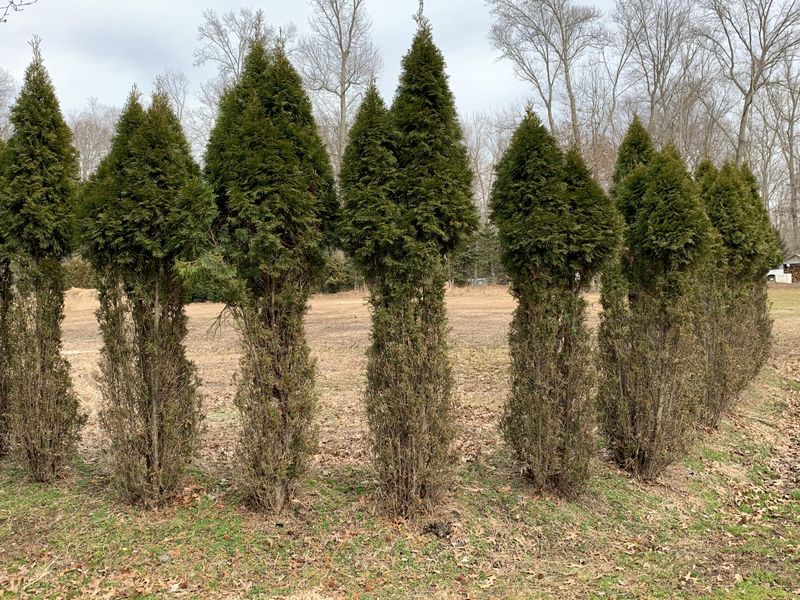
Bare, ragged arborvitae in winter are a sign that deer have found your yard, and that makes your shrubs part of their feeding map. The damage tells you a deer reached the plants and ate them, which is a useful clue about what is happening after dark and at dusk.
Reading that clue well helps you decide how to protect your shrubs before spring growth starts. Here is how to check the damage, understand the pattern, and choose your next move.
Check the damage before blaming deer
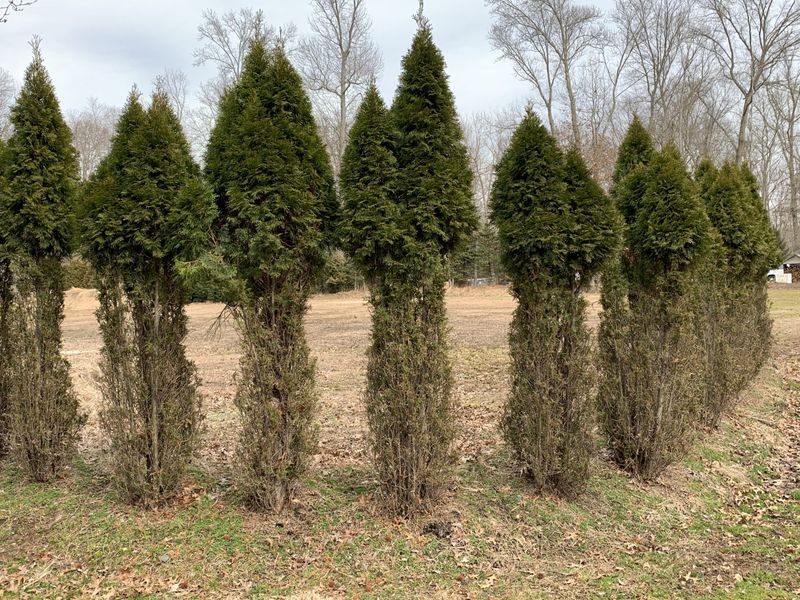
Walk up to the shrub and look closely at the broken ends. Deer have no upper front teeth, so they tend to pull and tear plants, leaving ragged or jagged edges instead of clean cuts.
Iowa State guidance on deer damage describes this torn look as a common sign of browsing.
Location matters too. Foliage stripped from the lower and middle part of the plant, with tracks or droppings nearby, adds weight to a deer diagnosis.
These are clues, not proof.
Winter injury can also turn evergreen foliage brown. Wind, dry soil, and sun on frozen branches can all scorch needles, as University of Minnesota Extension explains.
Browned but intact foliage points more toward weather, while missing, shredded growth points toward feeding. Appearance alone may not settle it, so combine what you see on the plant with what you find on the ground.
Why deer browse arborvitae in winter
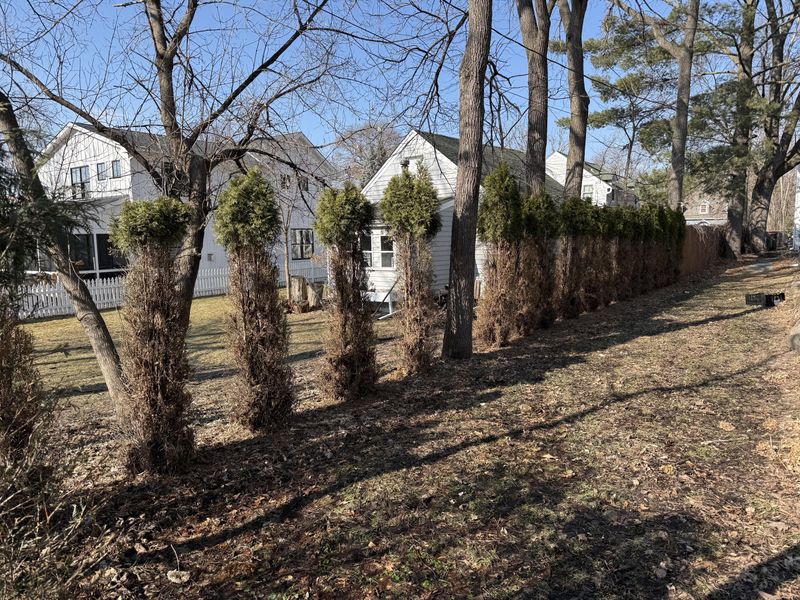
Food gets thin when snow covers the ground and the leaves are gone. Deer commonly browse arborvitae and other evergreens at that time, since the green foliage stays available above the snow.
Iowa State Extension notes that scarce food and lasting snow cover raise the odds of damage, though they do not guarantee it.
Height is another clue. Deer typically feed on foliage, buds, and twigs up to about 6 feet high, according to Iowa State wildlife specialists.
Deep snow can lift a deer’s standing level and extend that reach.
Treat that number as a rough guide. A shrub browsed lower than 6 feet fits a deer, but it does not prove one did the work, and a few damaged branches above that height do not rule deer out after a big snowfall.
Look for repeat signs before assuming regular use
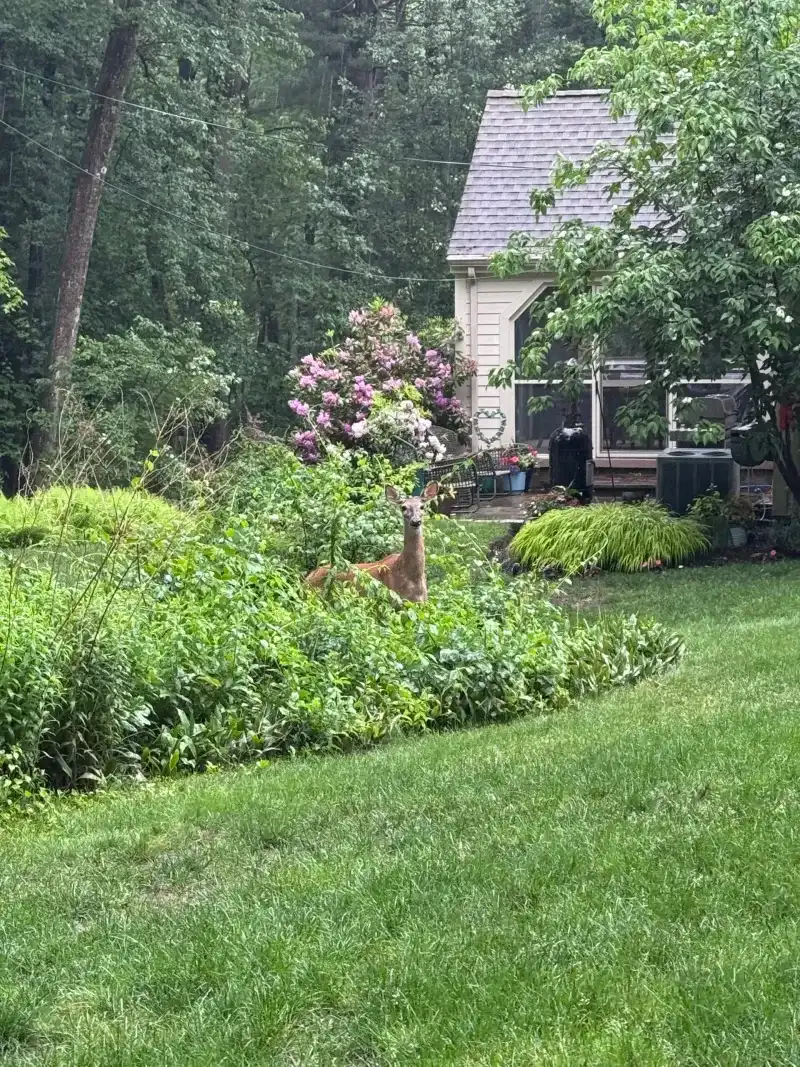
One stripped shrub tells you a deer fed there. It does not tell you when it came, how many deer came, or whether they will return tomorrow.
Stronger evidence builds over time. Fresh damage showing up again after you have checked, deer seen in the yard on several days, or a worn path through the snow all suggest recurring use.
Marking a few branch tips or taking dated photos makes new browsing easier to spot.
Timing is also less tidy than the idea of a nightly route suggests. According to U.S.
Forest Service research, white-tailed deer are active by day and night, often peaking around dawn and dusk. They also tend to use familiar ranges, so a yard on a travel path can be visited again.
A motion-activated camera can show the real schedule instead of guesses.
Choose a barrier for the space you need to protect
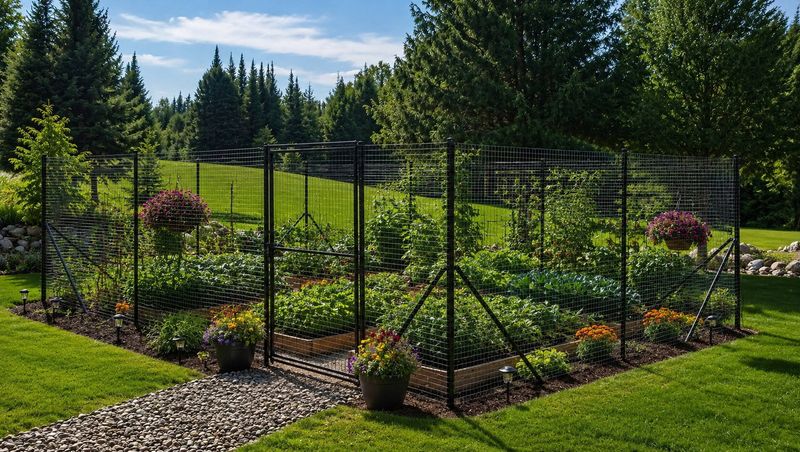
What you enclose decides what works. For a large area, physical exclusion is the strongest option, and Iowa State Extension recommends an 8-foot fence.
A smaller, fully enclosed space may get by with a shorter one.
One or a few shrubs call for a different plan. Iowa State advises that barriers around individual trees and shrubs generally be at least 6 feet tall, though a wire cylinder can be shorter if it is closed on top.
Deer may also be reluctant to jump into small enclosed spaces.
Sturdy wire cages, set a little away from the foliage so deer cannot nibble through the openings, are a practical choice for a handful of plants. The wildlife damage management guide supports exclusion as the dependable route.
Pick the fence for the space, not a single height for every yard.
Use repellents with realistic expectations
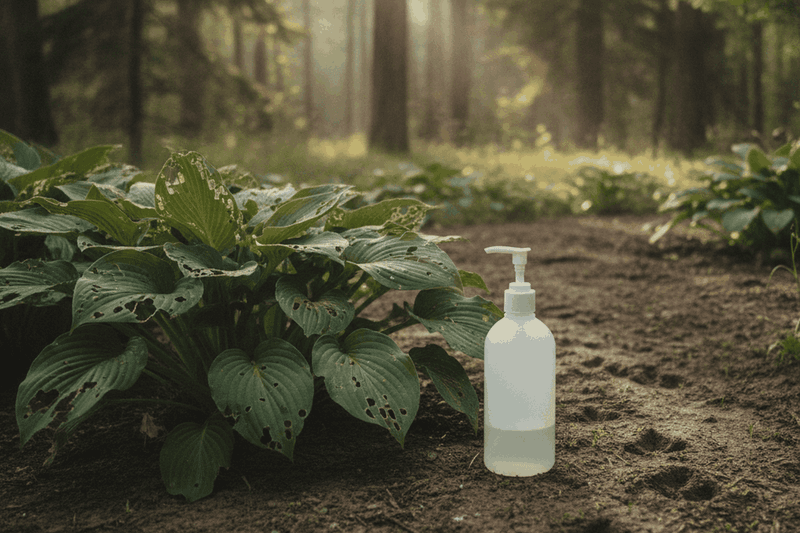
Repellents can help, but results vary. They work best as prevention, before deer settle into a feeding habit, and less well once a pattern is set.
University of Missouri Extension describes them as one tool that may reduce browsing, not a guarantee.
UC IPM cautions that repellents are often not very effective or long-lasting, and some may injure certain plants. Check that a product is allowed for your plant and the season, and follow the label exactly.
Plan on reapplying. Rain, snow, new growth, and heavy deer pressure all change how often treatment is needed, so one spray will not necessarily last all winter.
Hungry deer may also eat plants they usually skip. Skip unverified home remedies, and never use a product in a way its label does not allow.
Pairing a repellent with a barrier gives the shrub more than one layer of defense.
Assess recovery when spring growth begins
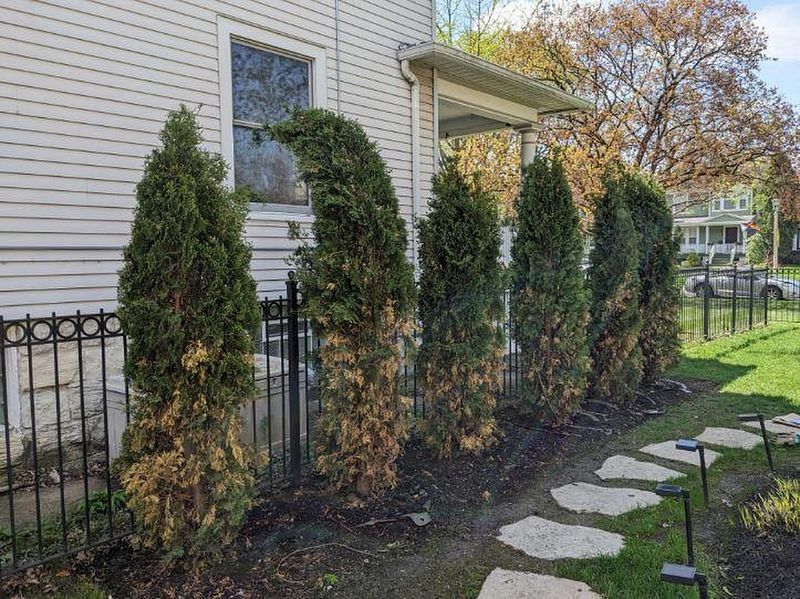
Hold off on pruning until spring growth shows you what survived. Fresh green at branch tips and swelling buds are good signs.
Iowa State Extension notes that branches with viable buds may regrow.
Bare sections with no buds are a different story. They are unlikely to fill back in, so the gap may stay.
Gently scratch a twig and look for green tissue underneath, and check again after a few weeks of warm weather.
Recovery is not guaranteed, even for a shrub that looks promising. If a large part of the plant is bare, you may need to shape around the gap, add a screening plant, or replace the shrub.
Put protection in place before next winter so the new growth is not eaten too.
A shrub that survives one hard winter still needs a plan for the next one.