
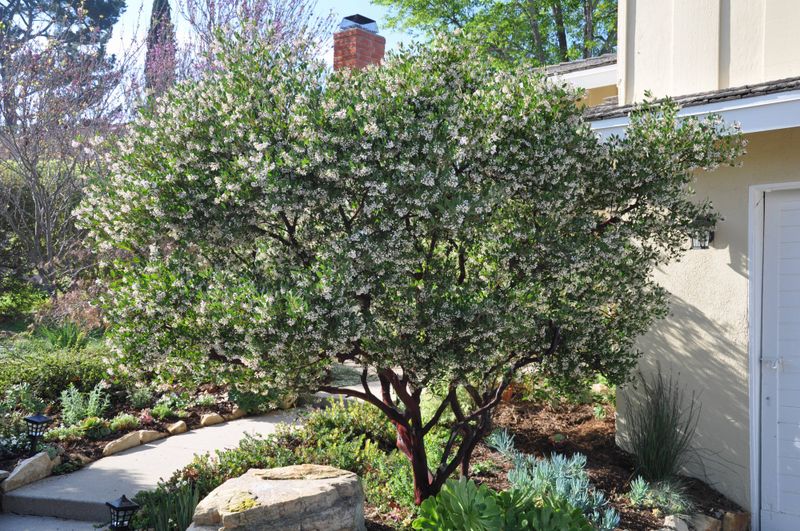
Here is a garden secret that feels almost backward: the best time to get ready for a hot, dry summer is right before a cold winter storm. When you plant California natives as the rains arrive, the soil does the watering for you.
Roots spread deep all winter long, so by July your plants are tapped into moisture you never had to pay for. Below are nine tough natives that make the most of this timing and laugh at August heat.
1. Toyon
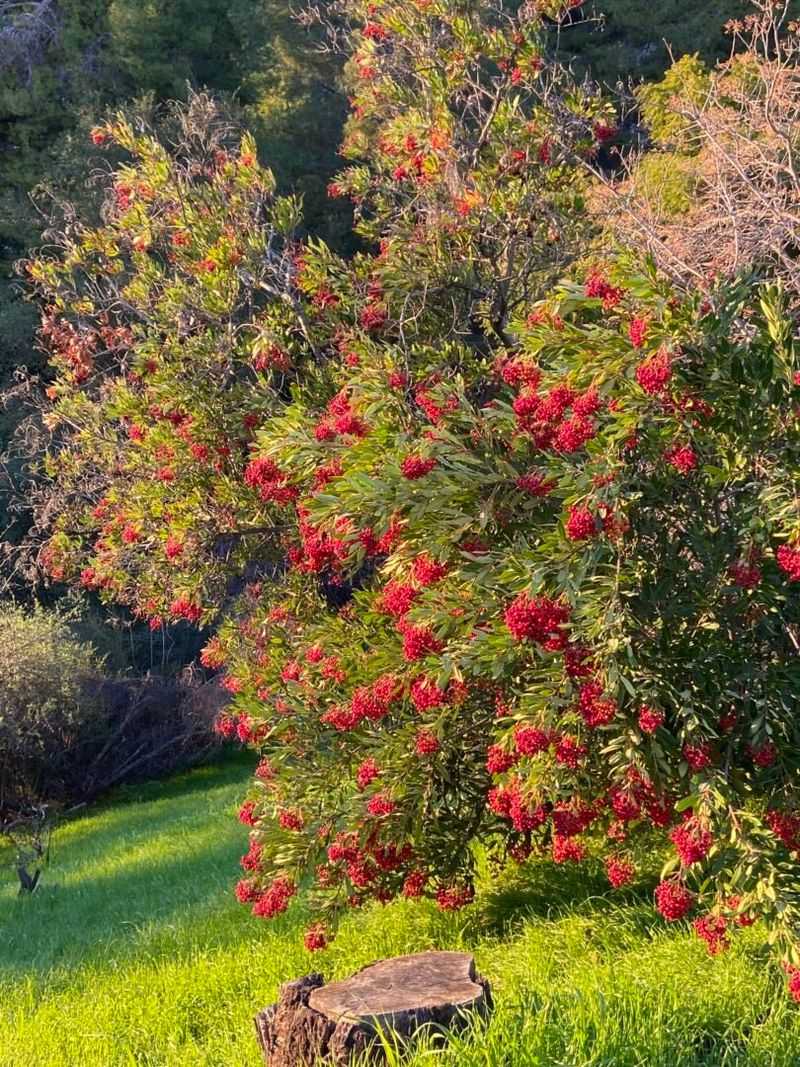
Hollywood is said to have borrowed its name from this shrub, once called California holly. Toyon covered the hills around Los Angeles long before the studios showed up, and it still thrives where lawns give up.
Plant a one-gallon toyon just ahead of a big storm and its roots chase the soaking moisture downward for months. By its second summer it often needs no extra water at all.
The leathery leaves hold onto moisture like a sealed canteen.
You also get a bonus show. White flowers feed bees in early summer, and red berries arrive in winter for robins and cedar waxwings.
Give it room, since it can reach 10 to 15 feet and makes a fine privacy screen that will not heave your patio.
2. Manzanita
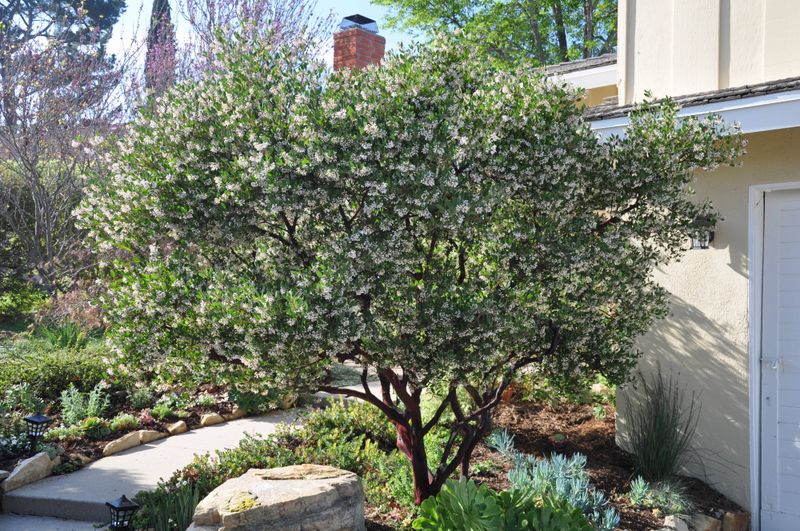
Run your hand along a manzanita branch and it feels like polished wood furniture. That smooth red bark is just the start of what makes this plant a summer champion.
Manzanitas are famously picky about summer water. Too much of it in hot weather can rot their roots, which is exactly why fall and winter planting works so well.
Rain does the hard work of settling them in while the soil is cool.
Once established, cultivars like Howard McMinn or Sunset barely flinch at 100 degree days. Small leaves turn on edge to dodge the sun, a clever trick that cuts water loss.
Plant them on a mound or slope for drainage, then mostly leave them alone.
3. California Lilac (Ceanothus)
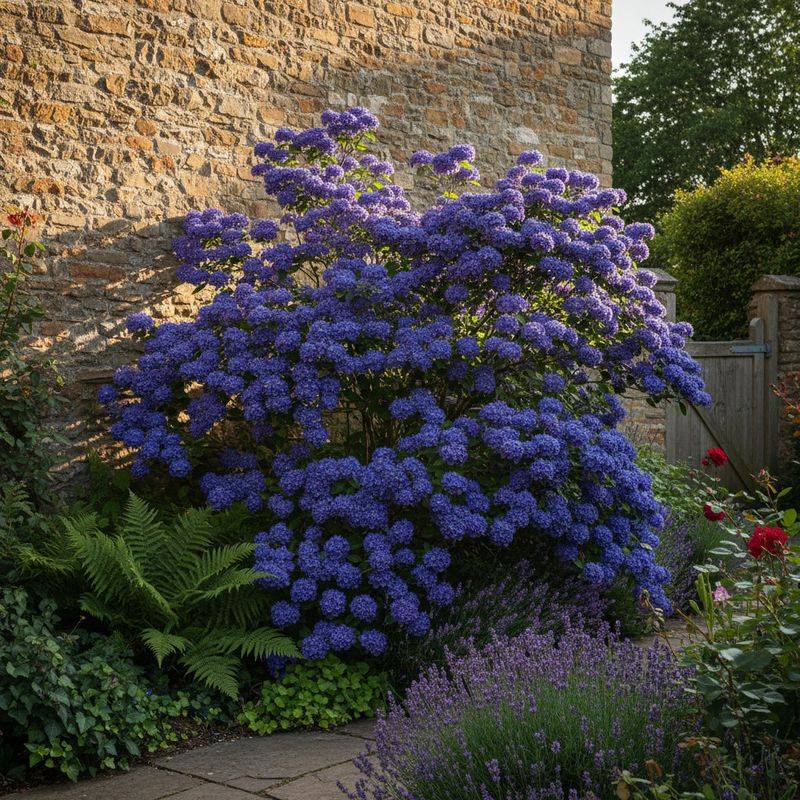
Spring in a ceanothus garden sounds like a busy freeway, except the traffic is bees. Clouds of blue flowers can cover the whole shrub, and pollinators go wild for them.
Speed is the selling point here. Ceanothus grows fast, so a fall planting can look like a real shrub by summer.
Its deep roots also team up with soil bacteria to make their own nitrogen, so you can skip the fertilizer.
One honest note: many types live 10 to 15 years rather than forever. Still, few plants give you that much color for so little water.
Try groundcover forms like Yankee Point on banks where you need fast coverage.
4. Cleveland Sage
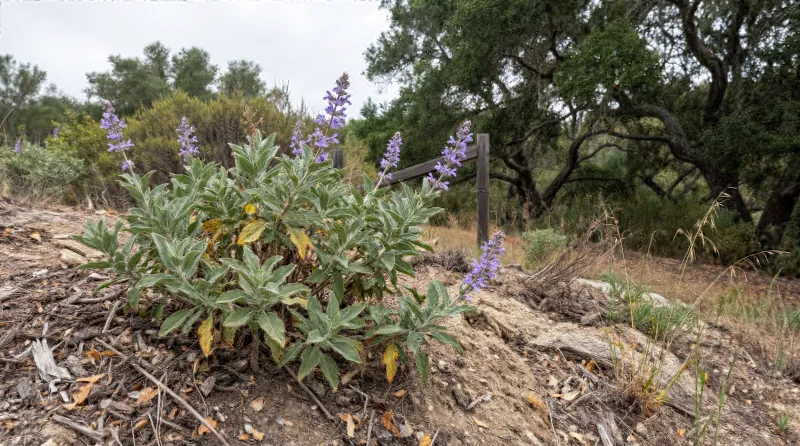
Brush past Cleveland sage on a warm evening and the whole yard smells like a hiking trail in the backcountry. Gardeners often fall for the scent before they ever see a bloom.
Gray leaves are the secret weapon. Tiny hairs reflect sunlight and slow evaporation, almost like built-in sunscreen.
Plant it before the rains and it becomes a three to four foot mound that shrugs off inland heat.
Purple flower spikes stack up like little pom poms on tall stems. Hummingbirds treat them as a drive-through.
Trim spent stems lightly in fall to keep the plant tidy.
5. Coffeeberry
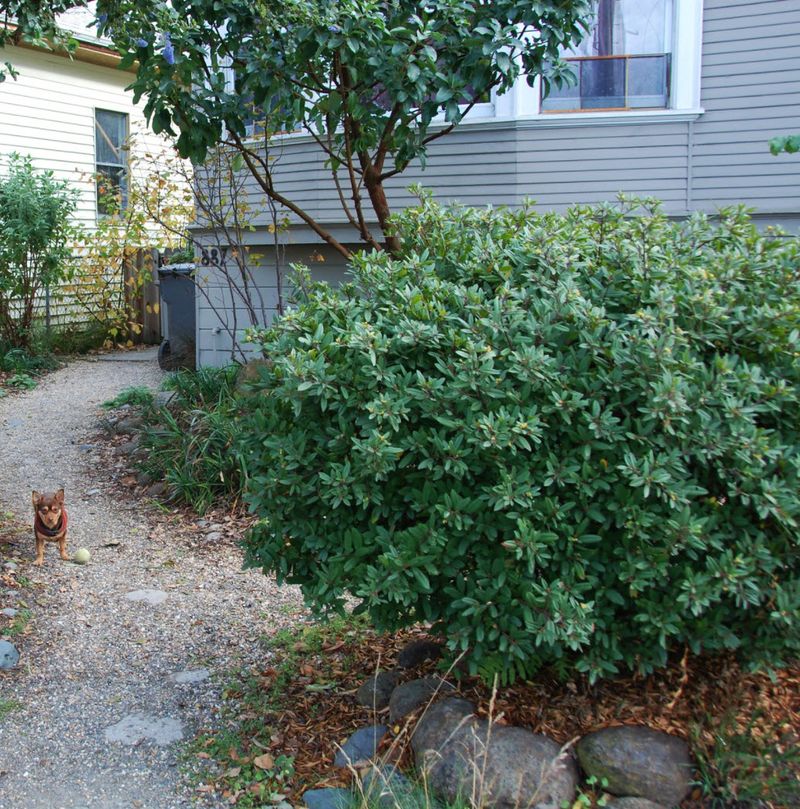
Need a hedge that stays green without a sprinkler running every week? Coffeeberry quietly does the job that thirsty shrubs like privet cannot.
Its glossy leaves look almost tropical, yet the plant handles sun, part shade, clay, and drought once its roots are settled. A winter planting lets those roots spread wide before the first heat wave.
Compact choices like Eve Case stay around six feet.
The name comes from berries that ripen from red to near black, looking a bit like coffee beans. Birds devour them, so do not plan to brew a cup.
Roots are well behaved near fences and walkways.
6. California Fuchsia
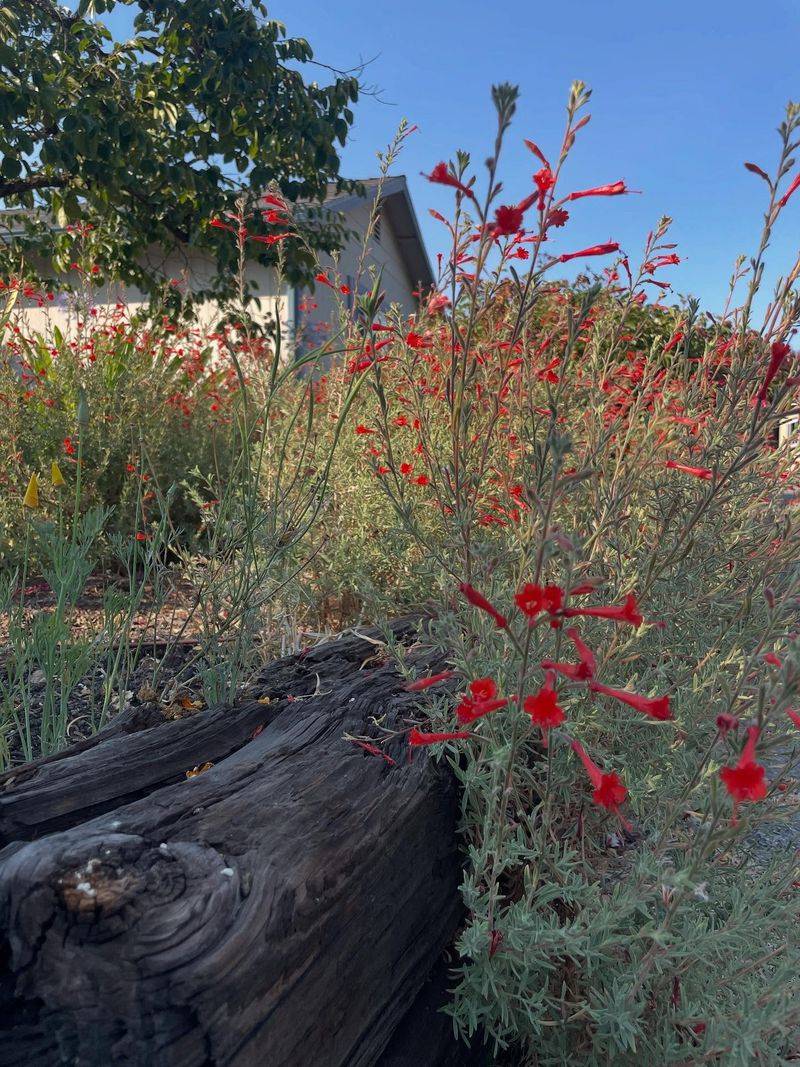
August is when most gardens look tired. California fuchsia waits for that moment to burst into scarlet bloom, as if it enjoys showing off in the heat.
Planted before winter storms, it spreads by underground runners and fills in gaps between rocks or along borders. That root network soaks up stored moisture deep in the soil.
By late summer it is the main fuel stop for hummingbirds heading south.
Cut it back hard in late fall to keep it neat. It returns each spring with fresh growth.
Expect a little wandering, which is part of its charm.
7. Deer Grass

Native basket weavers in California gathered deer grass stalks for generations. Today it earns its keep as one of the toughest ornamental grasses you can plant.
Each fountain-shaped clump grows dense, fibrous roots that grip soil on slopes. Get it in the ground before a big storm and those roots help stop runoff while they settle in.
Come summer, the clumps stay full with only occasional deep watering.
Tall flower spikes wave in the breeze and catch evening light beautifully. Use it as a stand-in for thirsty pampas grass, which is invasive.
Comb out dead blades in late winter.
8. Coyote Brush
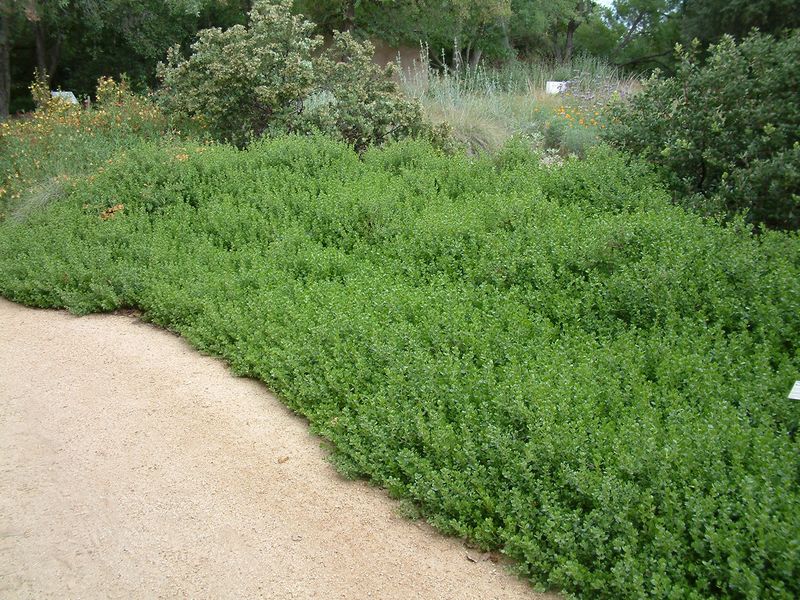
Think of coyote brush as the workhorse of the hillside. It is not flashy, but it holds slopes together when winter rain pounds down.
Low forms like Pigeon Point spread into a thick green carpet several feet wide. Planted right before storm season, roots knit into the soil fast and fight erosion that first winter.
After that, it stays green through summer on almost no water.
It also handles wind, poor soil, and coastal salt. Shear it every few years to refresh growth.
For a steep bank, few plants give better value.
9. Western Redbud
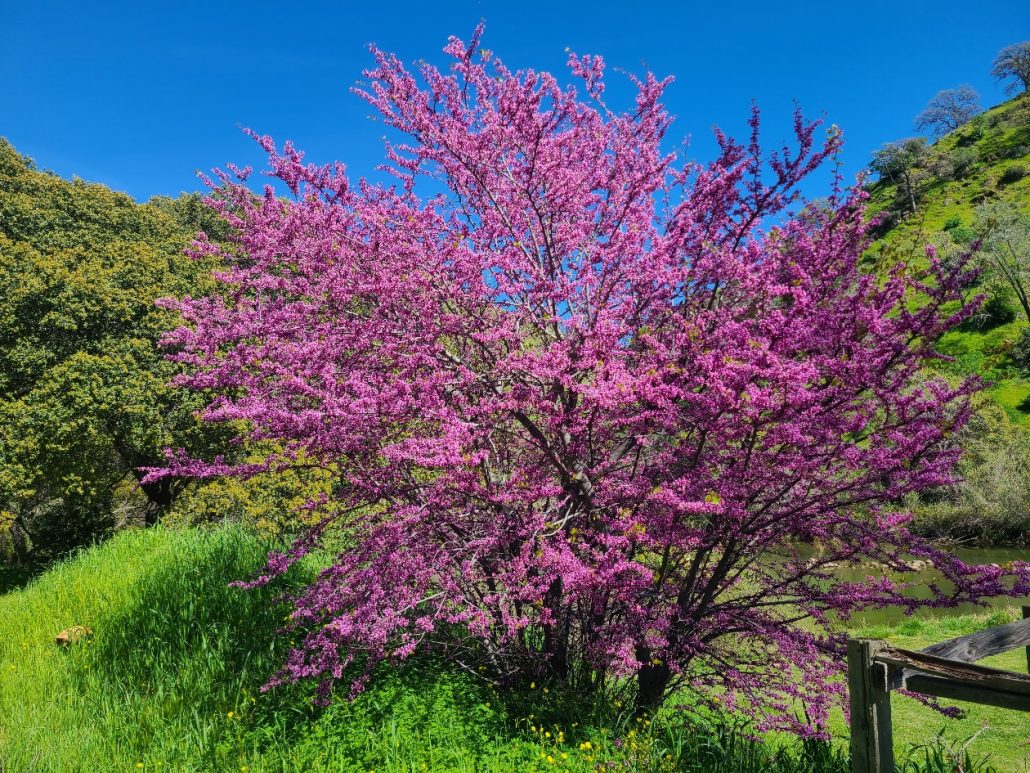
Picture bare branches suddenly coated in magenta pink, before a single leaf appears. Western redbud stops traffic every spring.
Native to hot foothills, it handles inland summers that would scorch many ornamental trees. Planting in fall or winter lets its taproot dig deep while rain is plentiful.
Once settled, a deep soak every few weeks in summer keeps it happy.
Heart-shaped leaves follow the flowers, then flat seed pods dangle into fall. It stays small, usually 10 to 20 feet.
That size suits small yards and keeps roots away from foundations.
Choose your planting spot before the next storm forecast, and let the clouds handle the watering. Your future summer self will thank you.