

That fast, many-legged critter streaking across your garage floor may well be a house centipede, a venomous hunter that can prey on cockroach nymphs and other small household bugs. It uses its venom to subdue its meals, and yes, it can bite a person, though the risk is usually low.
Still, not every speedy centipede in California is a house centipede, so a closer look matters. Here is how to tell what you are seeing and what to do about it.
How to Recognize a House Centipede
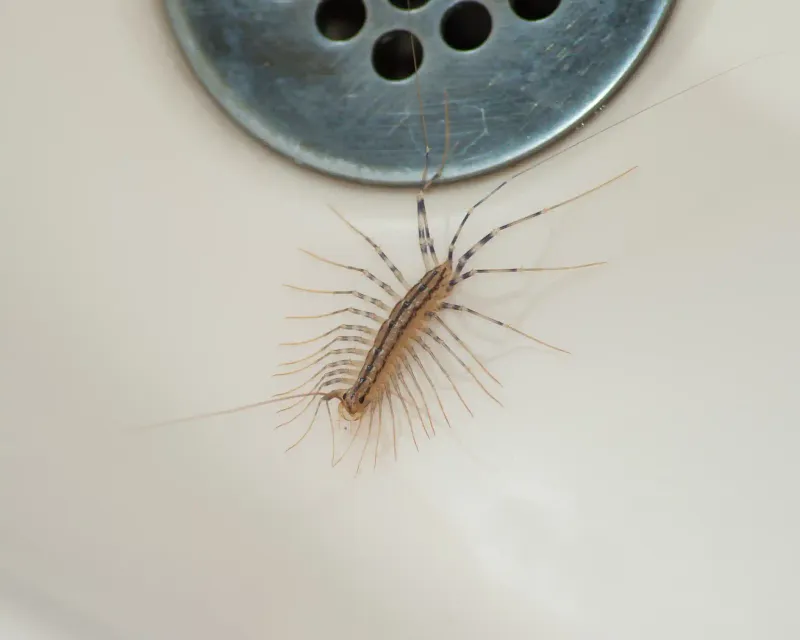
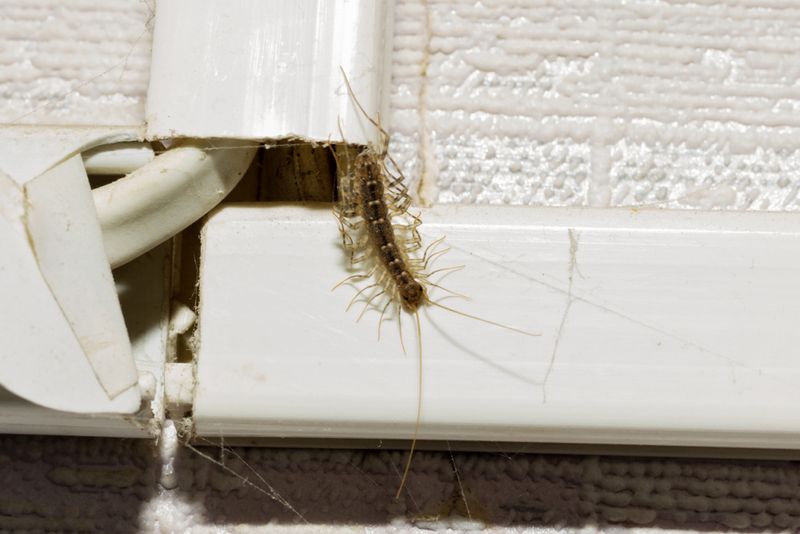
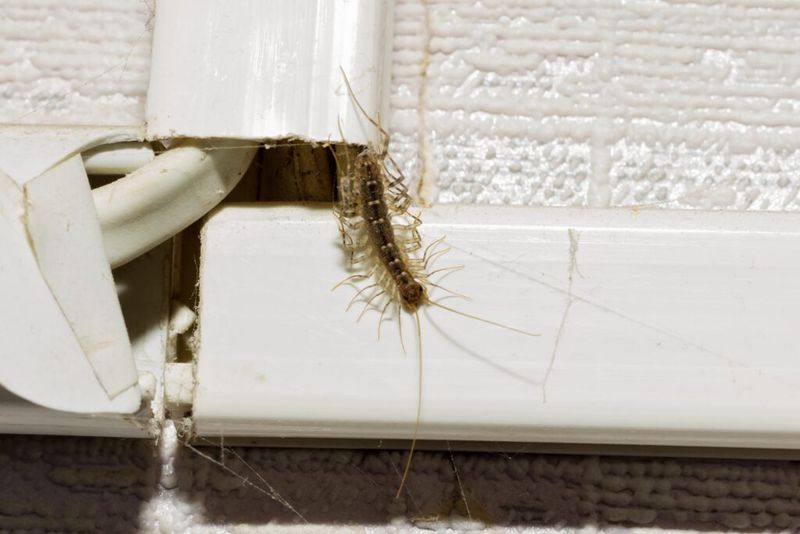
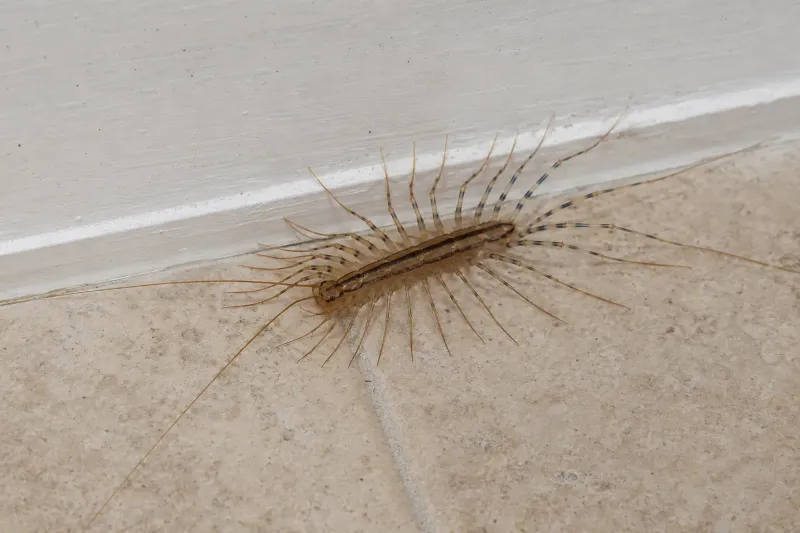
Start with the clues. A house centipede has a yellowish-brown body, three dark stripes running down its back, and up to 15 pairs of very long legs.
It is also notably fast, which is why it seems to vanish the moment you turn on the light. Missouri Department of Conservation field guide details list these same features.
Think of these traits as clues, not a guarantee. A fast, leggy centipede in a California garage is not automatically a house centipede.
Color, striping, and leg length all need to line up before you settle on a name.
California has other centipedes too. The 2002 California Department of Public Health manual describes long-legged house centipedes in secluded corners of garages and outbuildings.
It also points to Scolopendra, found around yards and gardens, as a greater concern for painful bites. That manual is a useful California comparison, not a current species survey.
If the animal does not clearly match the description, do not assume. Snap a photo from a comfortable distance and compare it, or ask a local expert to help.
A few seconds of careful looking beats a guess.
Garages Can Offer a Place to Hunt at Night
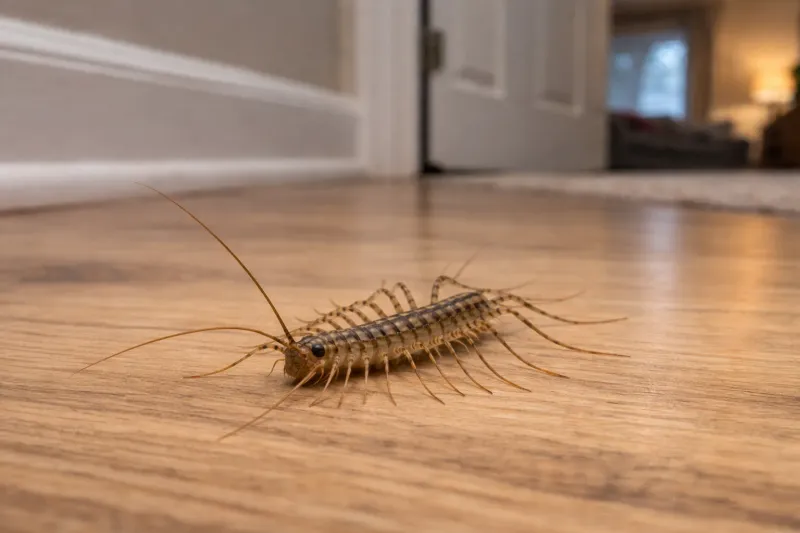
Garages are quiet, cluttered, and often a little damp, which suits a centipede just fine. According to UC Statewide IPM Program, centipedes hide during the day and come out at night to search for insects.
A stack of boxes or a dark corner makes a handy daytime hideout.
That is general behavior, and it helps explain why you might spot one on the floor when you flip on a light. It does not tell you when that particular centipede last hunted or what it ate.
A single sighting is just a snapshot.
Think of your garage the way the centipede might. If it has hiding spots, moisture, and small crawling insects, it can look like a decent place to patrol after dark.
Seeing one indoors can simply mean it found shelter and a possible food source.
So what might be on the menu? The next section looks at the prey that has been documented, and just as importantly, what that list can and cannot tell you about pest control.
What House Centipedes Can Eat
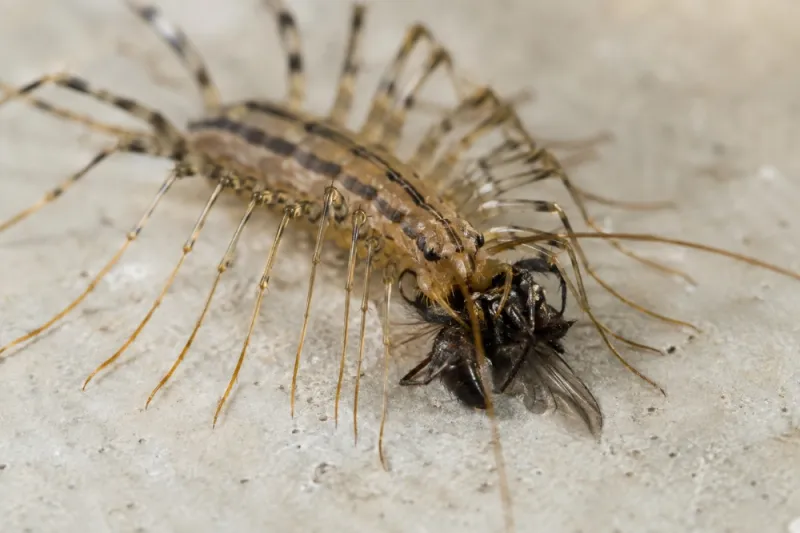
House centipedes are predators of other small arthropods. A wildlife field guide from the Missouri Department of Conservation lists cockroach nymphs, silverfish, and earwigs among their prey.
The same guide also names spiders, flies, crickets, bedbugs, and moths.
Notice the word nymphs. House centipedes can prey on young cockroaches, but that does not mean they routinely take down large adult roaches.
Size matters in this contest.
California’s UC IPM guidance likewise says house centipedes capture flies, cockroaches, and other small household pests. So the headline idea is real: a house centipede can be eating pests in your home.
Eating pests is different from controlling them. A diet list tells you what a centipede can eat, not how many it eats or whether that makes a dent in your household.
The sources do not show that one centipede, or several, can reliably wipe out an infestation.
Likewise, you cannot tell from one garage sighting whether that centipede has eaten a roach this week. Treat it as a possible bonus, not a pest control plan.
If roaches, silverfish, or earwigs keep showing up, they deserve their own attention.
What Venom Means for People
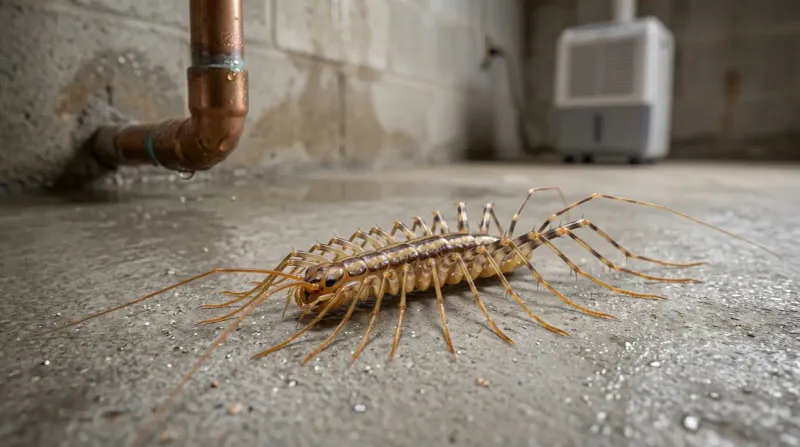
Yes, venomous is accurate. Centipedes use modified front legs to deliver venom and subdue their prey, as explained by Poison Control.
A house centipede can bite a person, so it is not wise to pick one up.
Still, keep the risk in proportion. Venomous does not mean highly dangerous to people.
The bite hazard from a house centipede is generally low, according to the Missouri field guide.
California does have a centipede of greater concern. The CDPH manual identifies Scolopendra as able to deliver a painful bite.
Speed alone will not tell the two apart, which is another reason to avoid handling any centipede.
If a bite does happen, keep the response simple. Wash the area with soap and water.
Seek medical advice if you see signs of infection, or if you have allergic symptoms such as trouble breathing or swelling of the mouth or throat.
For most households, the practical takeaway is calm respect. Give the animal space and it will almost always keep to itself.
Move It Without Touching It
You have two reasonable choices when you meet one. If you are fairly sure it is a house centipede and it is not bothering anyone, just let it be.
It will likely head for a dark corner on its own.
If you would rather it be gone, skip bare hands. Place a clear container over the centipede, slide a sheet of stiff paper underneath, and carry it outside.
Release it near a woodpile or planting bed, away from the door.
This is a cautious precaution, not a sign that bites are common or severe. Poison Control notes that centipedes deliver venom through modified front legs, so keeping your skin out of the picture makes sense.
Work slowly, since sudden moves can send it racing off. If it does not look like a house centipede, or you feel unsure, back away and leave it alone.
Make the Garage Less Inviting
If you want fewer centipedes indoors, start with moisture. UC IPM says centipedes seldom need control and suggests airing out damp areas.
Opening a vent or running a fan after wet weather is an easy first step.
Next, cut the hiding places. Move cardboard boxes off the floor, clear piles of debris, and store items in lidded bins.
Fewer nooks means fewer spots for a centipede to spend the day.
Then check the edges. Seal cracks and gaps where pests can slip in, and look over door and window seals.
Poison Control also suggests improving ventilation and checking those seals.
There is another angle. Reducing the household prey available to centipedes can also reduce their numbers, so addressing roaches, silverfish, or earwigs helps in two ways.
None of this is a guarantee, but each step is low effort and makes sense for a garage anyway. Pesticides are rarely justified for centipedes, so there is no need to reach for a spray as your first move.
Decide Whether to Leave It Alone
Here is the practical call. Identify first, since a fast, leggy centipede is not automatically a house centipede.
If it looks like one and is not a nuisance, leaving it alone is a sensible choice.
Just do not count on it to solve a cockroach problem. If household pests keep showing up, targeted pest management aimed at those pests is the better path, and UC IPM is a good place to start.
A quiet centipede in the corner is usually a sign of other small bugs nearby, not a threat in itself.