
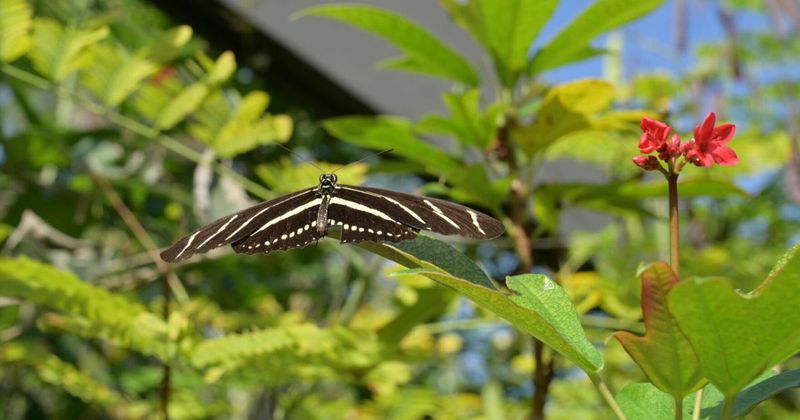
When a zebra longwing keeps showing up in your Florida yard, it usually means something nearby is working for it, like flowers to feed on, leafy cover, or vines it can use. That is a practical clue, not a secret message.
The black-and-yellow stripes are easy to spot, so you may notice these visits more than those of other butterflies. Here is what the visits can tell you, what they cannot, and how to make your yard more useful to this butterfly.
A Repeat Visit Is a Clue, Not a Verdict
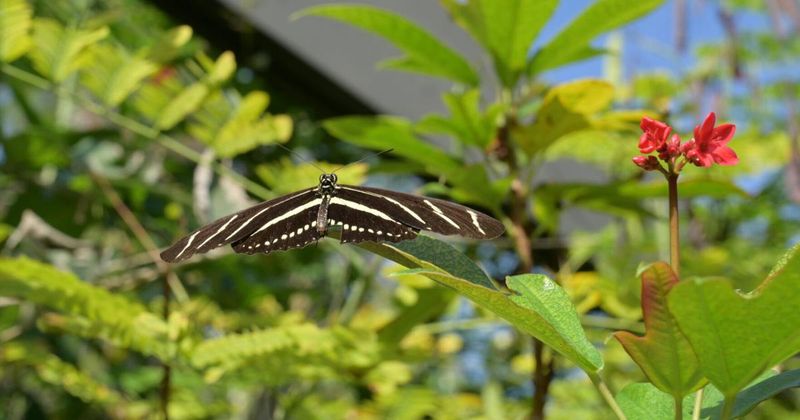
Repeated zebra longwing visits suggest that your yard, or the habitat next to it, offers something the butterfly can use. That might be flowers for nectar and pollen, vegetation for egg-laying, or leafy shelter.
It is an ecological explanation, plain and simple, and it does not need an omen or a special message to make it interesting.
According to UF/IFAS butterfly profile information, zebra longwings turn up in a range of settings, including gardens and neighborhoods. So a visit fits with many kinds of yards, and it fits with food and cover being available somewhere close by.
A sighting has limits, though. It is not a report card on your yard’s overall health, because a butterfly can pass through a yard that has just one good flowering plant.
It does not prove the butterflies are breeding on your property either.
You also cannot tell from a few sightings that the same butterfly is coming back. UF/IFAS zebra longwing guidance notes that adults can live for several months, but nothing about a sighting lets you pick out one individual.
Several different butterflies may be passing through on different days.
The better way to think about it is as a prompt. Ask what in your yard, or just beyond the fence, might be giving the butterfly a reason to stop.
The next sections walk through how to find out.
Leafy Edges Can Bring the Butterfly Within Reach
Zebra longwings are not picky about having just one kind of home. They are found in woodlands, hammocks, forest margins, gardens, parks, and ordinary neighborhoods across Florida.
That wide range is part of why so many homeowners get to see them.
UF/IFAS notes in its zebra longwing species details that they often visit gardens near wooded areas. If your lot backs up to a patch of trees, a greenbelt, or a shady lane, that leafy habitat may help put your yard within the butterfly’s reach.
A neighbor’s overgrown corner could matter as much as anything you planted.
Some shade is compatible with this kind of habitat, which is a little different from saying shade is required. Zebra longwings also use open areas next to wooded edges, so a bright, sunny yard can still get visitors.
A sighting cannot tell you how much shade your yard has, and a yard without much shade is not out of the running.
A simple walk around your property can help. Notice where trees, shrubs, or tall vegetation sit close to your flower beds, and where the butterflies seem to enter and leave.
Try this at different times of day, since the butterflies may be moving between feeding spots and resting places.
The point is to read your surroundings, not just your own beds. The habitat around your yard is part of what the butterfly sees.
Flowers Feed Adults; Passionflowers Feed Caterpillars
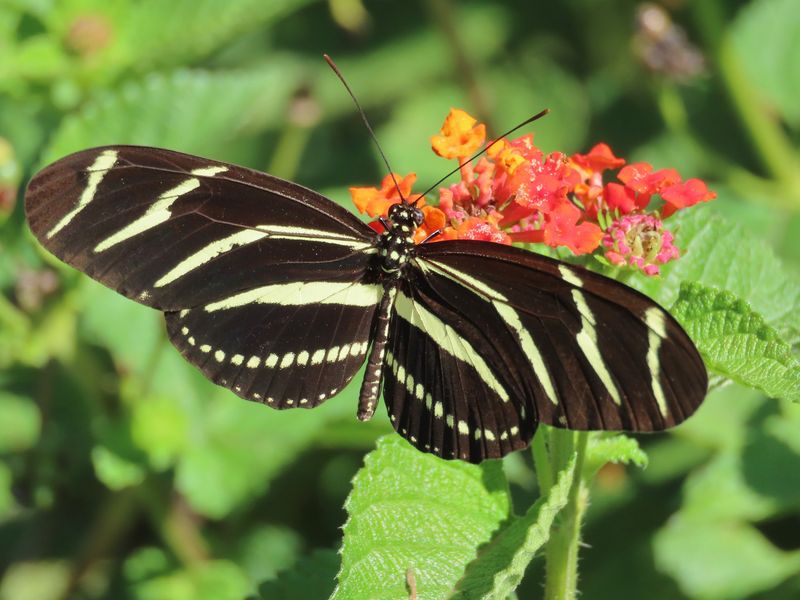
Plants do two separate jobs for this butterfly. Adults sip nectar and eat pollen from flowers, while caterpillars eat the leaves of passionflower vines.
Mixing those roles up is the most common reason people misread what a visit means.
UF/IFAS lists favored adult flowers such as lantana, verbena, firebush, and heliotrope. If you grow any of these, they could be the reason a zebra longwing stops by.
The butterfly may just be refueling on its way somewhere else.
Caterpillars have a narrower menu. UF/IFAS identifies passionflower vines as their host plants, including purple passionflower, corkystem passionflower, and yellow passionflower.
No lantana bush, however pretty, can feed a caterpillar of this species.
That is why a yard full of blooms can attract adults without supporting reproduction. The flowers meet the adult’s needs, but a host vine is still needed for eggs to be laid and for young caterpillars to grow.
Look at your own plantings with both jobs in mind. Do you have nectar sources, host vines, both, or neither?
Knowing which one you offer helps you understand what the butterfly is probably doing when it shows up.
Look for Eggs or Caterpillars to Confirm Breeding
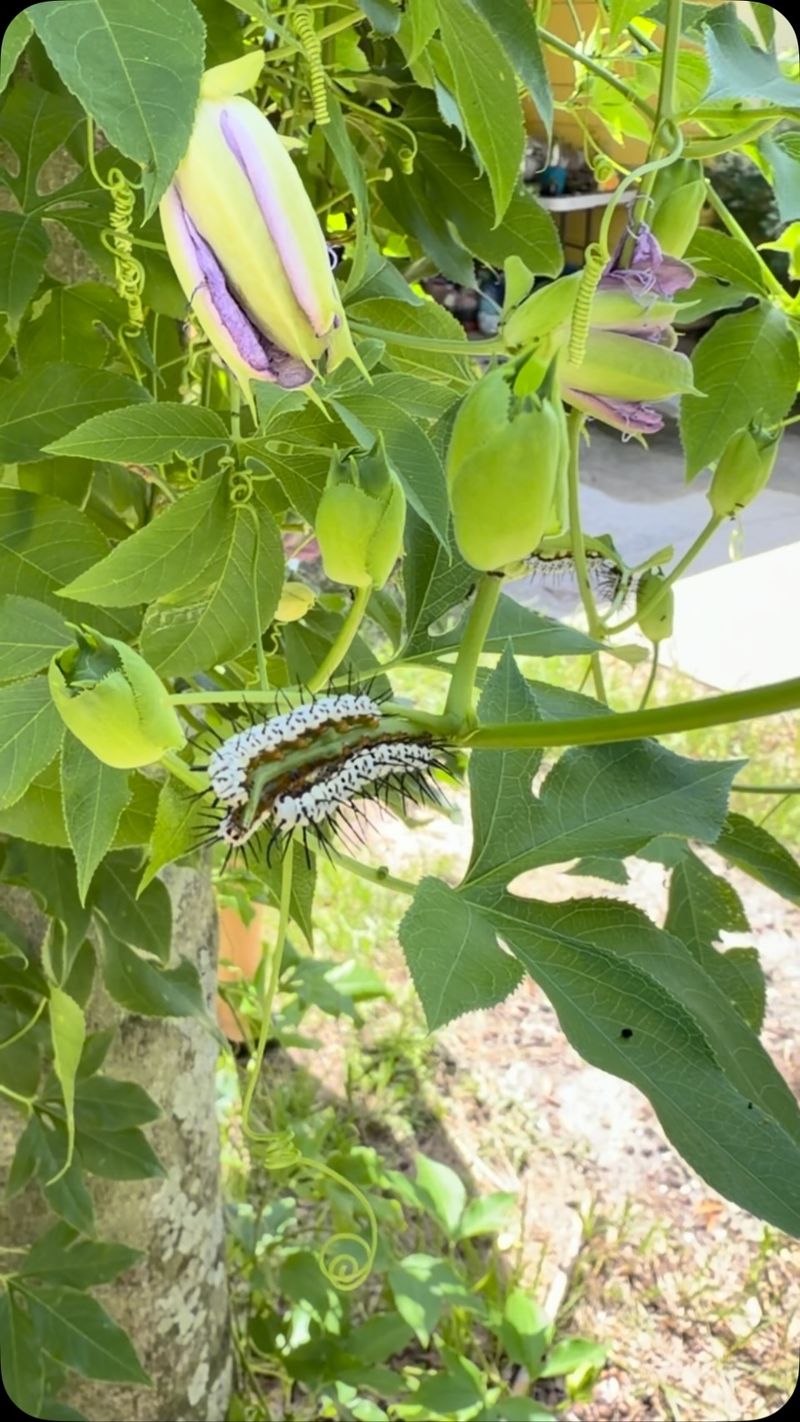
Seeing an adult is not the same as seeing a new generation. If you want to know whether zebra longwings are breeding in your yard, the evidence is on the host vines, not in the air.
Females lay eggs on host plants, and UF/IFAS notes they often choose new growth. So check the fresh, tender tips of any passionflower you have.
Look for tiny eggs and, later, small spiny caterpillars with dark spots chewing on the leaves.
Go slowly and look closely, since eggs are small. Early morning is a good time, and checking every few days gives you a better picture than a single quick glance.
If you find nothing, that does not mean the butterflies are unwelcome. It may only mean they are feeding on your flowers and laying eggs somewhere else.
Also be careful about what you conclude from repeat sightings. As UF/IFAS butterfly details show, adults range across several habitats, so frequent visits do not tell you whether one butterfly is returning or whether a permanent colony lives nearby.
Eggs or caterpillars on a host vine are the clear sign. Until you see them, call it what it is: a butterfly using the resources it finds.
Choose a Passionflower That Fits Your Florida Region
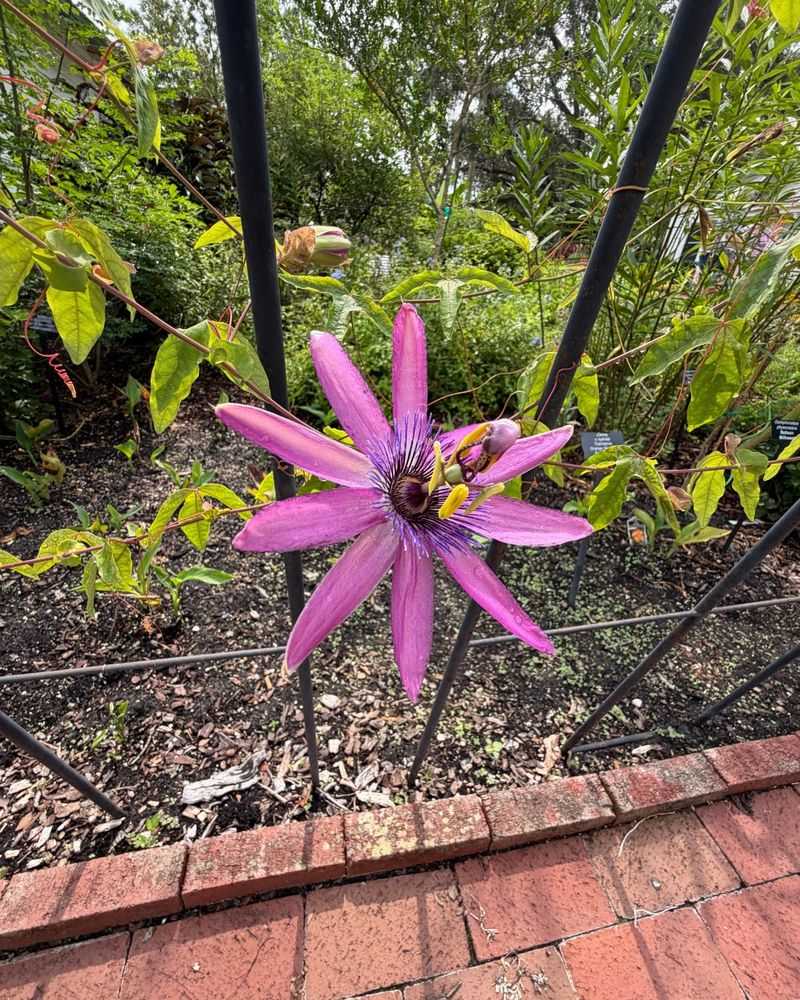
Passionvine is not one plant. It is a group of species, and they are not interchangeable.
Before you buy, find out which one you are getting and whether it suits your part of Florida.
UF/IFAS lists several host options for zebra longwing caterpillars, including maypop (P. incarnata), corkystem passionflower (P. suberosa), and yellow passionflower (P. lutea). Maypop is the one identified as a Florida native, which makes it a sensible place to start.
On growing conditions, UF/IFAS Gardening Solutions says passionflower grows best in sun but tolerates some shade. So a spot with plenty of light is ideal, but a lightly shaded corner can still work.
Shade is something the plant can put up with, not something it needs.
Be careful with plants sold under a vague name. In South Florida, UF/IFAS landscape guidance flags P. biflora as invasive.
A vine that feeds caterpillars is no bargain if it escapes into natural areas.
Ask the nursery for the scientific name, check it against UF/IFAS or your county extension office, and confirm it is appropriate for your region. A good host plant makes a yard more useful to zebra longwings, but it will not guarantee they come.
Chewed Leaves Can Be Part of the Garden
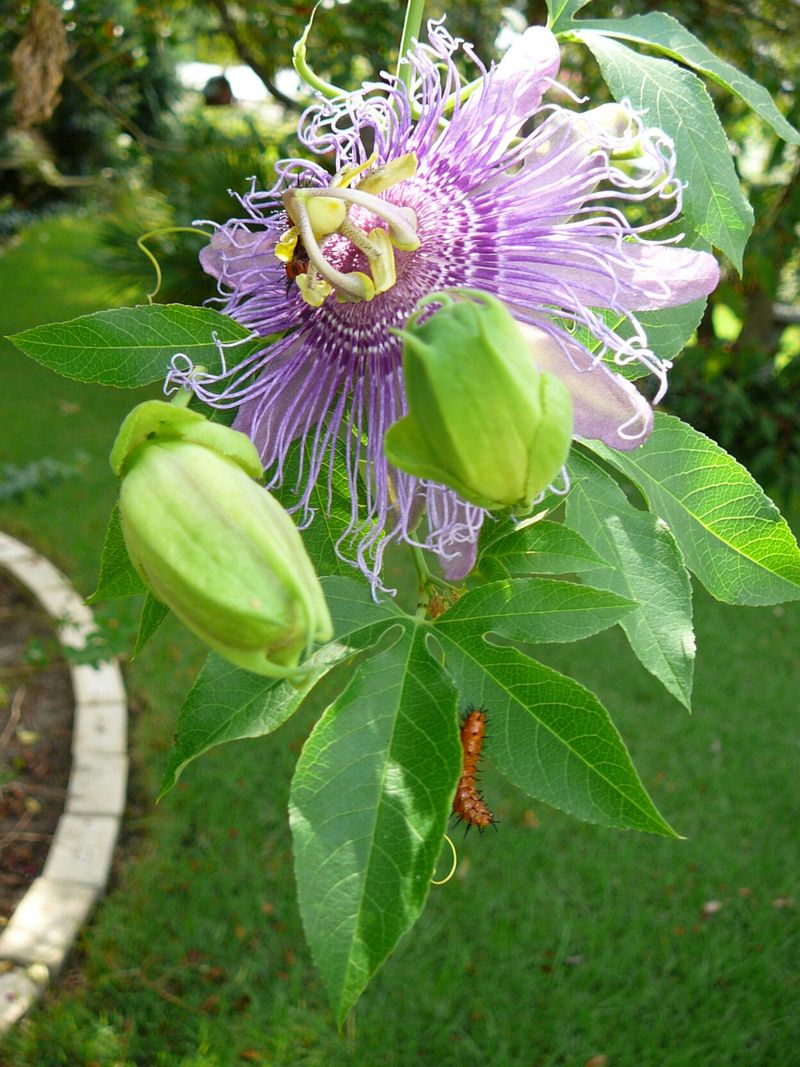
A host plant is a caterpillar’s lunch, so ragged leaves are what success can look like. Holes, notched edges, and even a mostly bare vine do not mean something has gone wrong.
UF/IFAS butterfly gardening guidance says leaf damage, even heavy defoliation of some host plants, can be part of a productive butterfly garden. Many gardeners find the plants recover once the caterpillars have gone to chrysalis.
Pesticides deserve extra care. The same UF/IFAS publication warns that they can kill butterfly larvae, so skip broad or casual spraying around host vines and nectar flowers.
If you truly must treat a problem, use as little as possible and treat only the affected plant.
Also ask nurseries whether the plants you are buying have been treated with pesticides. A new vine that looks perfect might carry residues that harm the very caterpillars you hope to help.
When a product is needed, EPA pollinator protection guidance says to follow the label. It also notes that protections can include limits on application timing, bloom periods, and drift.
Reading those directions before you spray is part of the job.
Give the Vine Room, Then Let Visits Be a Bonus
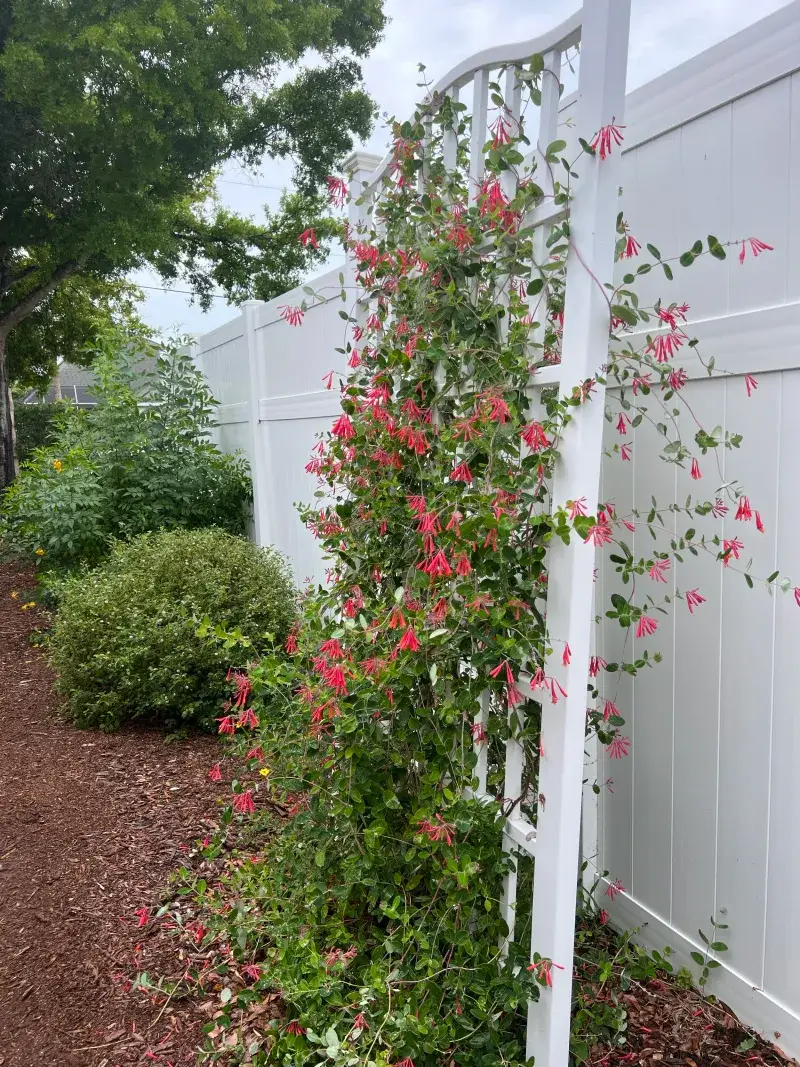
Passionflower vines like to wander. They can spread beyond where you planted them, so give them space from the start and plan how you will manage them.
A fence, trellis, or arbor gives the vine something to climb and keeps it off nearby shrubs. UF/IFAS Gardening Solutions advises planting them where they have room and pruning as needed.
Trimming a few stems now and then is easier than wrestling a tangle later.
Pair the host vine with adult food. Lantana, verbena, firebush, and heliotrope, all listed by UF/IFAS as favored zebra longwing flowers, are good partners.
Together they give the butterfly a place to feed and a place to lay eggs.
No planting plan can promise visitors. Zebra longwings may come, skip a season, or pass through while you are not looking.
Your job is to make the yard more useful, then enjoy whatever shows up.
The best butterfly gardens are the ones where the gardener is patient enough to notice.