
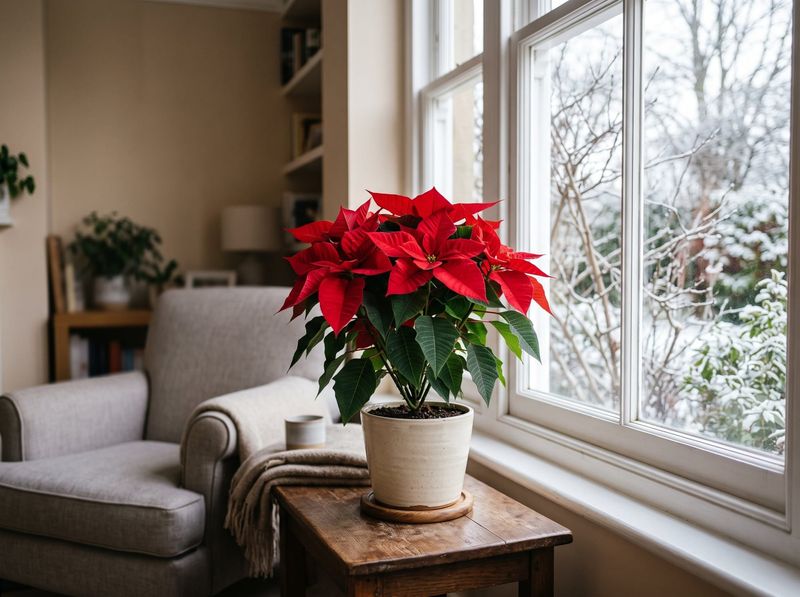
That green poinsettia sitting on your windowsill can color up again, and the trick is giving it long, dark nights in the fall. A closet, a box, or a light-proof cover is all it takes to start.
The routine asks for patience and a steady schedule for about two months. Here is how to do it, plus what kind of results you can honestly expect.
A green poinsettia can still be healthy
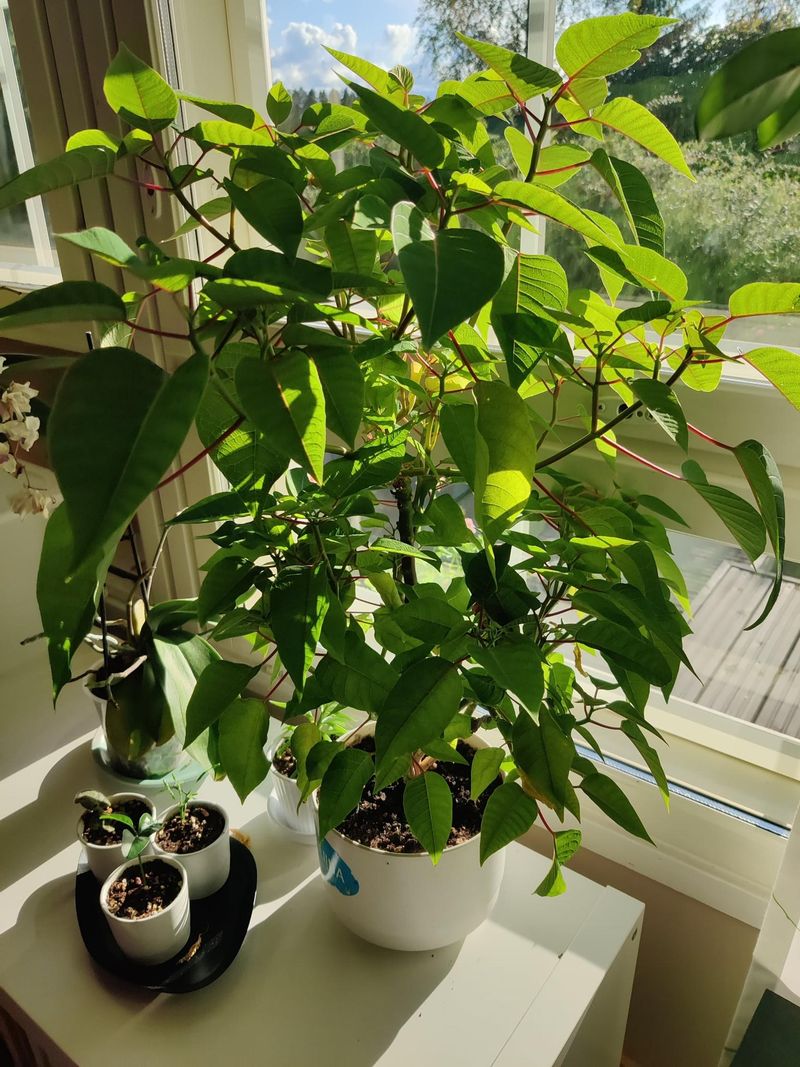
A poinsettia that stays green is not necessarily a sick one. Many saved plants live for years as ordinary green houseplants, and University of Minnesota Extension notes that a poinsettia can survive without reblooming.
Nice leaves are a good sign, even if the colorful bracts never show up.
So why did yours skip the color? Not enough darkness, or darkness that was interrupted in the fall, is one plausible reason.
Still, nobody can pin it on that without seeing the plant and its routine. The plant’s overall health, its care, its cultivar, the temperature, and the timing can all change the outcome.
Missouri Extension describes reblooming as a horticultural challenge, which tells you the odds are not simple. The dark-closet routine can encourage color, but a green plant on its own does not prove you made one specific mistake.
Think of last year as a starting point, not a failing grade.
Long nights encourage poinsettias to color

Poinsettias are short-day plants, which means they respond to long nights. When the dark period is long enough, the plant is nudged toward flowering and coloring up.
In nature that signal comes with the shortening days of fall, and University of New Hampshire Extension builds its reflowering schedule around it.
Here is a surprise: the bright red parts are not petals. They are bracts, which are modified leaves.
The real flowers are the tiny, easy-to-miss clusters sitting in the middle of them, as Missouri Extension explains.
That is why the closet routine is useful. You are copying the long autumn nights your plant would need to develop its bract color.
Keep in mind that the plant develops the color of its own cultivar. That may be red, pink, white, or something speckled, so darkness will not turn every poinsettia red.
Keep the plant growing well before fall
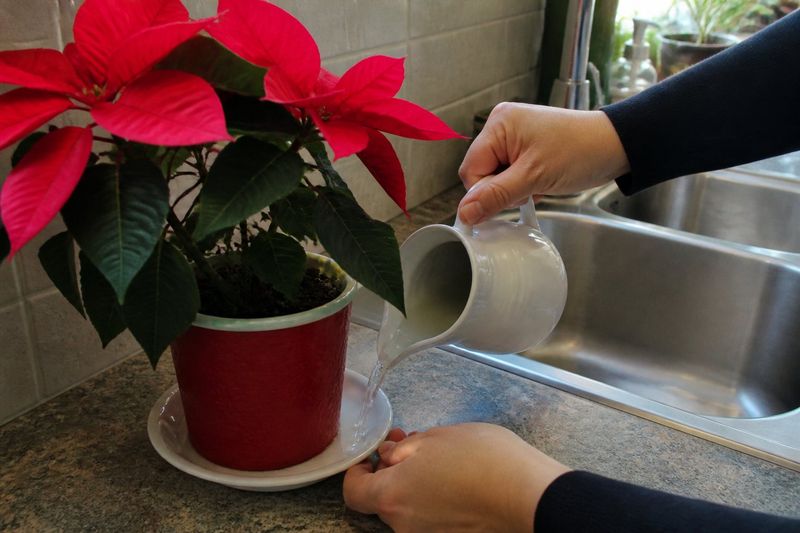
The dark routine only works on a plant that is in good shape, so spring and summer matter. Give it bright light during the day and water when the soil feels dry to the touch.
Let the extra water drain away, and never leave the pot sitting in a saucer of water, a point University of Maryland Extension stresses.
Once frost danger has passed, the plant can spend the warm months outdoors. Bring it back inside before cold nights arrive, since poinsettias do not like chilly air.
A sheltered spot with bright light, away from harsh midday sun at first, makes the move easier.
Summer is also the time to shape it. Pruning and pinching while the plant is actively growing helps control its size and keeps it from getting leggy.
Stop before it is too late in the season, because UNH Extension warns that late pinching can delay flowering.
Start the dark routine in early fall
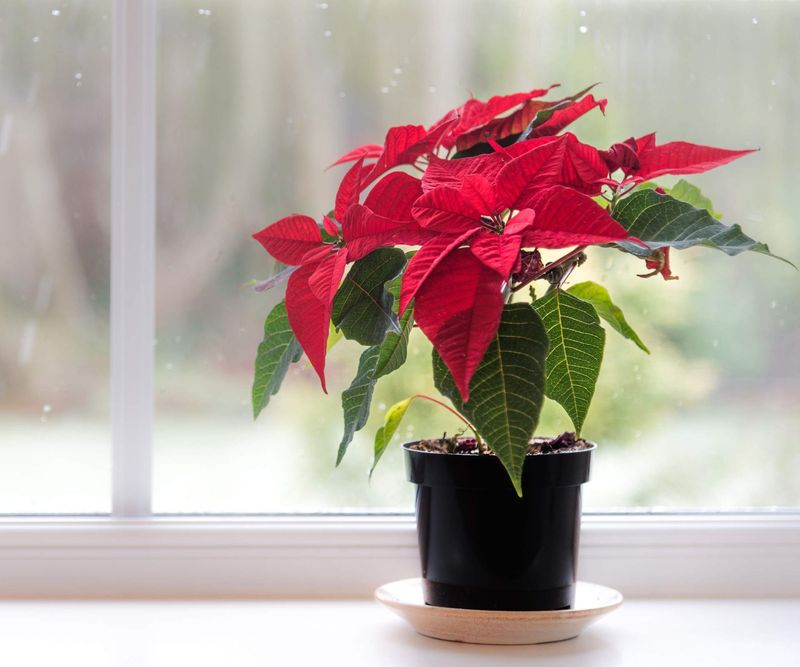
For a Christmas display, late September or early October is a typical time to begin. That is a rule of thumb, not a fixed date, because cultivars and target display dates differ.
The goal is roughly 14 hours of darkness every night, followed by bright light during the day.
A practical example comes from UNH Extension: put the plant in darkness from 5 p.m. to 8 a.m., then move it to a sunny spot for the day. Repeat that every day until color is visible.
How long will it take? UNH says most varieties need 8 to 10 weeks, while Mississippi State Extension recommends 7 to 10 weeks.
Treat that as a range. Count back from the date you want color, add a little cushion, and expect that some plants will be slower than others.
Keep nights dark, but do not panic over one light exposure
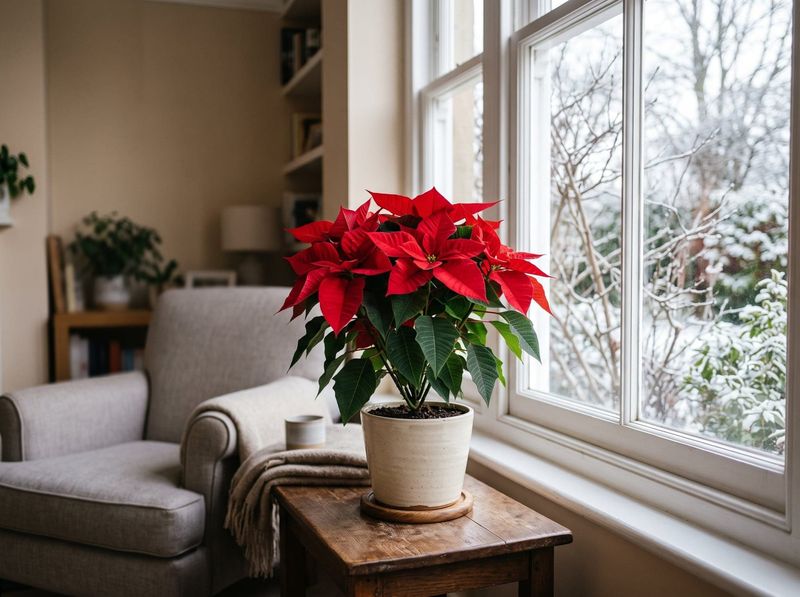
Pick a spot that is truly dark at night, such as a closet nobody opens, or cover the plant with a light-proof box or bag. In the morning, bring it back out to a bright window.
Aim to keep the dark period as uninterrupted as practical.
What if someone opens the closet door one evening? Do not toss the plant.
Research shows light effects depend on intensity and cultivar. In an Acta Horticulturae study, low light during the dark period delayed flowering, while stronger light prevented flowering in the cultivars tested.
Night length matters too. In a Clemson study of the Prestige Red cultivar, 11-hour nights were suboptimal, while 13 to 14-hour nights supported better flower development.
That was one cultivar in one experiment, so it is not a rule for every plant or home. Use it as a reason to stay close to 14 hours, not as a guarantee.
A home-grown poinsettia may look different
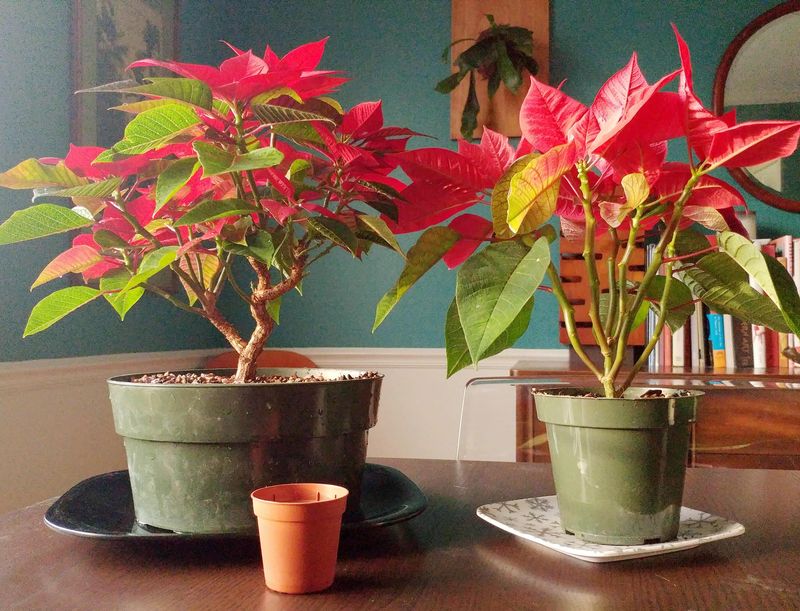
Here is the honest payoff. The routine can help a healthy saved plant develop colored bracts, but neither red bracts by Christmas nor a store-perfect plant is assured.
Timing and results vary from plant to plant.
Expect some differences. Maryland Extension says rebloomed plants are unlikely to match greenhouse-grown ones in size and quality, and Missouri Extension notes they may grow tall and stretchy.
Your plant may look looser and less full than the one you bought.
So is it worth trying? If you enjoy a project and have a closet and about two months of evenings and mornings, go for it.
If not, a green poinsettia is still a fine houseplant, and one that stays green does not mean you cared for it wrong. Either way, the plant gets a second year.