
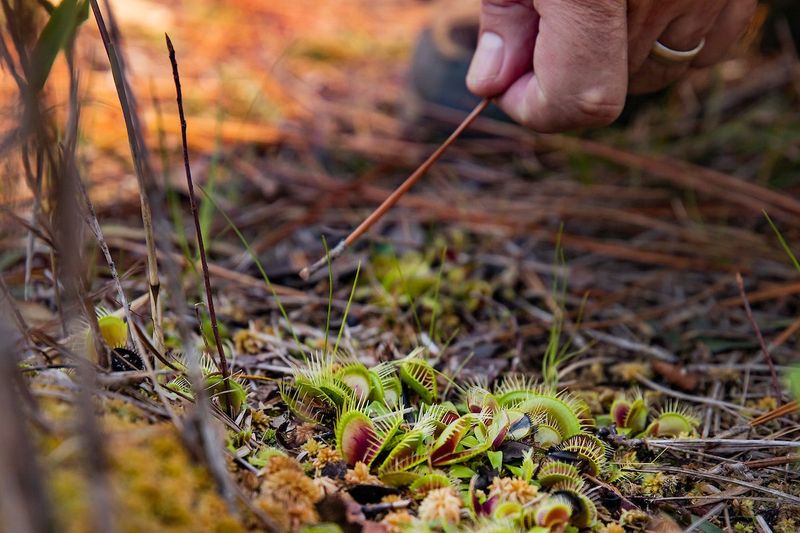
The Venus flytrap, one of the most famous plants on the planet, grows wild in just a small corner of the Carolinas near the coast. Outside that corner, you will find it in greenhouses, windowsills, and garden shops, but not growing naturally in the woods.
That tiny range makes a snapping green trap feel like a local treasure. Here is where the plant really lives, how many are out there, and what the law says about taking one.
The wild range fits into a coastal corner
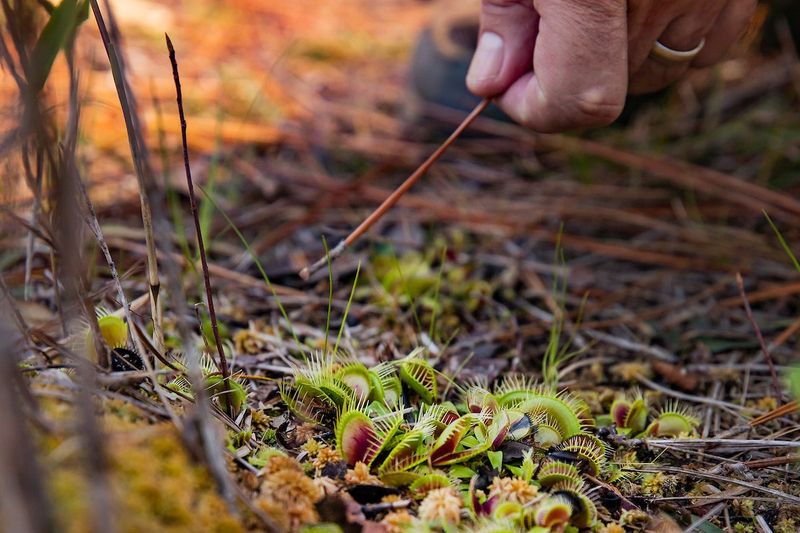
Wild Venus flytraps are native to the Coastal Plain and Sandhills of southeastern North Carolina and northeastern South Carolina. That is the full native range, so the plant does not grow wild only in North Carolina.
The U.S. Fish and Wildlife Service describes this two-state range, and it is a small patch of the map for a plant known around the world.
Wilmington is a handy landmark for getting your bearings. North Carolina State Parks commonly places the plant within roughly 60 to 70 miles of Wilmington, and a federal status document describes suitable native habitat within about 130 kilometers, or 81 miles.
Treat those numbers as a rough guide, not a fence line. The range is not a neat circle, and it follows particular patches of habitat in particular counties.
A short drive from the coast also does not mean an easy sighting. Wild plants are small and tucked into damp, open, sandy or peaty spots, and many sit on land you cannot enter without permission.
Plants you see elsewhere are a different story. Flytraps are widely grown in nurseries and homes, and now and then someone plants one in a bog outside the native range.
A lone flytrap in a faraway ditch is a transplant, not proof of a wild native population.
A survey estimate is not a head count
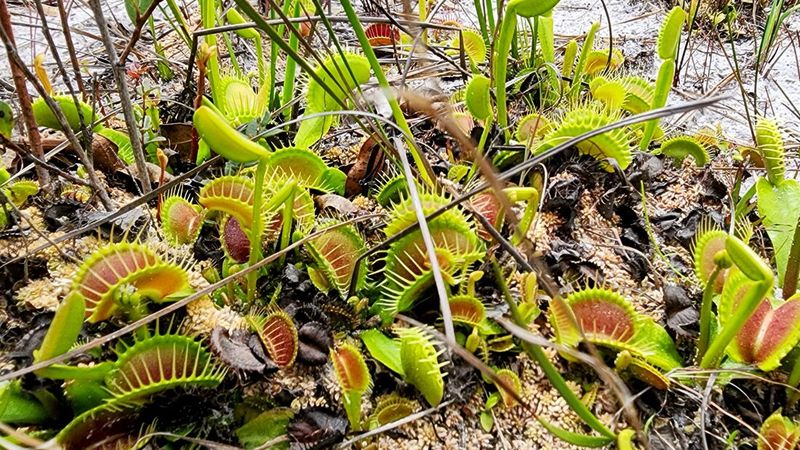
Numbers help show how small the wild story is, but they need careful handling. A 2019 to 2021 survey by the North Carolina Natural Heritage Program estimated about 879,167 wild plants in the state.
That figure comes from a real field effort, but it is an estimate, not a tally of every plant.
Surveyors visited 28 populations. For populations they did not visit, the estimate was filled in by combining the survey results with estimates.
So the total blends counted plants with educated guesses.
Think of it like estimating the crowd at a ballgame without counting every seat. You get a useful sense of scale, but not an exact number on any given day.
Two limits are worth keeping in mind. The work was spread over several years, so it is not a simultaneous, current census.
It also covers North Carolina, so it is not a count for the entire native range, which reaches into South Carolina too.
If you see a bigger or smaller number quoted online, check whether it is a survey estimate, which state it covers, and what years it came from.
A narrow range does not mean federally endangered
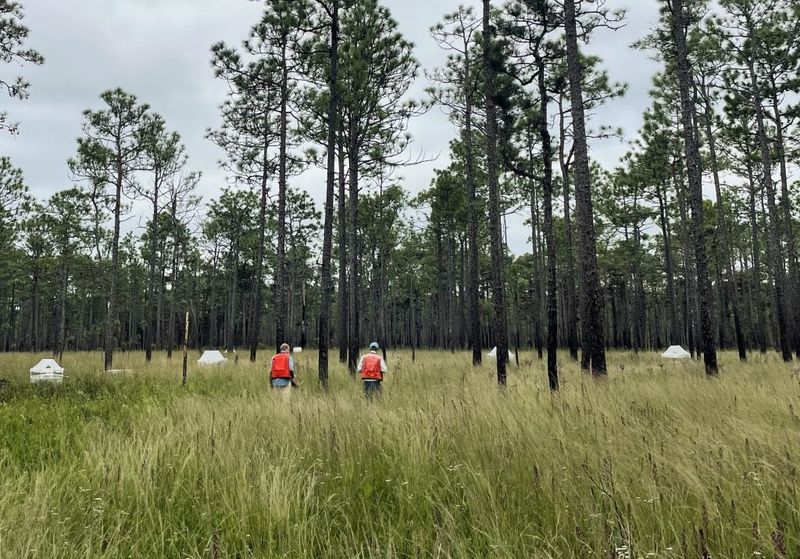
Rare and federally endangered are not the same thing. A plant can live in a small area and still not be on the federal endangered list.
Range tells you where a plant grows, while status is a legal decision about its risk of disappearing.
In 2023, the U.S. Fish and Wildlife Service found that listing the Venus flytrap under the Endangered Species Act was not warranted.
The agency did describe concerns, including habitat loss and fire suppression. Those pressures are real, but they did not lead to a federal listing.
Fire matters because flytraps need open, sunny ground. Without regular burns, shrubs and trees crowd in and shade the low plants out.
Land cleared for building takes away habitat in a more permanent way.
North Carolina treats the plant separately. The state’s vascular plants database lists the Venus flytrap as state-threatened.
That is a state status, and it sits alongside the federal finding rather than replacing it.
So the safest way to say it is simple: not federally listed, state-threatened in North Carolina, and limited to a small natural range.
When does taking a flytrap become a North Carolina felony?
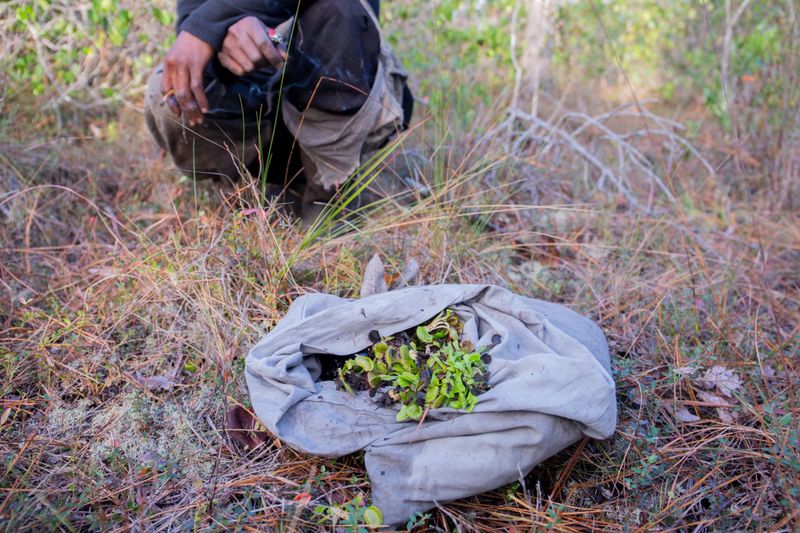
Under North Carolina law, the felony label has specific parts. Article 22 of the state’s general statutes makes it a Class H felony to take a Venus flytrap or its seed from another person’s land or from the public domain with intent to steal.
Each piece matters. The plant or seed has to be taken from land belonging to someone else, or from public domain such as public land.
The person has to take it with intent to steal. A casual headline saying that any taking is a felony skips over those details.
There is also an exception. A person who holds a permit signed by the landowner or the landowner’s authorized agent, and has it in their possession at the time of the taking, falls outside that felony clause.
A permit sitting at home does not count.
The statute does not set a minimum number of plants. The law is built around the circumstances of the taking, not a count, so a reader should not assume that one plant is safe and ten are a crime.
The felony clause also does not describe every situation. For example, its text speaks of another person’s land or public domain, so do not stretch it beyond that wording.
Other rules may apply in other cases, and anyone with a real legal question should check the statute or ask an attorney.
South Carolina’s law uses a different penalty
Cross the state line and the legal wording changes. Since the native range includes northeastern South Carolina, it helps to know that the penalty is not the same on both sides.
South Carolina’s cited statute, Section 16-11-590, makes it a misdemeanor to collect, cut, break, or otherwise destroy Venus flytraps on public property, or on private property without the owner’s consent.
Notice the wording differences. North Carolina’s felony clause is about taking a plant or seed with intent to steal.
South Carolina’s statute covers collecting or destroying, and it names public property as well as private property without consent.
That leaves a clear takeaway. The felony penalty belongs to North Carolina’s statute, and it should not be applied across the whole native range.
Saying that poaching is a felony only holds true when you name North Carolina and the specific circumstances.
For a visitor, the practical result is the same in both states. Leave wild plants where they are, and if you ever want to know about a specific situation, read the statute or ask a lawyer rather than relying on a summary.
See wild flytraps without trampling them
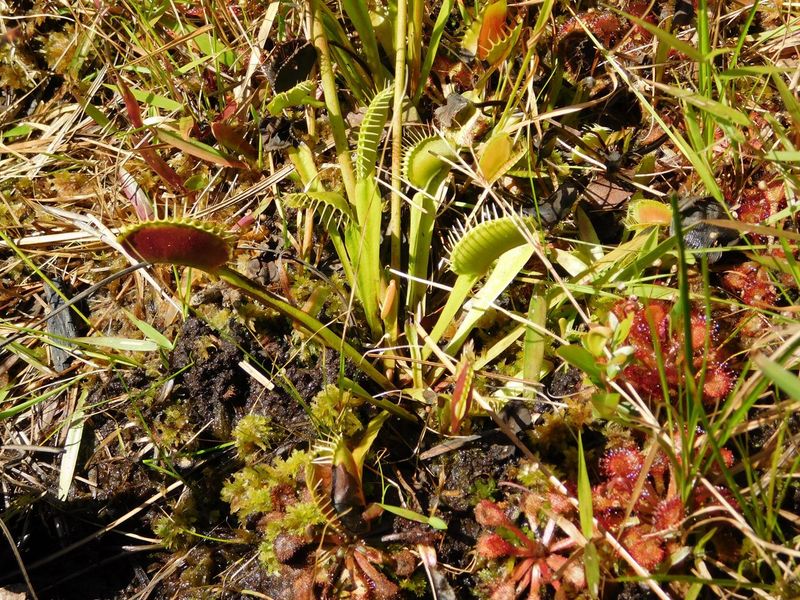
Want to meet a wild flytrap in a way that is legal and kind to the plants? Carolina Beach State Park is a good place to start.
The park reports that flytraps can be seen along its Flytrap Trail, and it asks visitors to stay on the trail.
The reason is simple: the plants are small and easy to trample. A flytrap rosette may be only a few inches across and can blend into the low plants around it.
One careless step off the path can crush a plant you never even noticed.
Go in with realistic hopes. The park says flytraps can be seen there, but nobody can promise a sighting on every visit.
Season, weather, and the way the plants hide in the ground cover all play a part.
Bring patience and a camera. Kneel near the edge of the trail, look low, and take photos instead of souvenirs.
Keep kids and dogs on the path, too.
A good visit leaves nothing behind except footprints on the trail itself.
Buy nursery-grown plants, not wild-collected ones
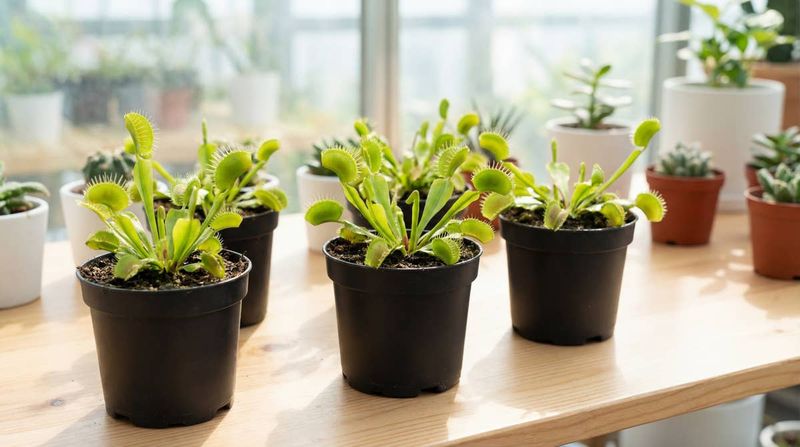
If you want a flytrap of your own, buy one that was grown for sale. Look for nursery-grown or tissue-culture plants, which come from cultivated stock rather than from a bog or savanna.
The U.S. Fish and Wildlife Service offers some visual clues.
A batch of plants that look uniform, planted in clean, uniform potting medium, may suggest nursery propagation. A tray of mismatched plants in dirty soil might raise questions.
These are clues, not proof. A tidy tray does not guarantee where a plant came from, so the best step is to ask the seller directly how the plants were produced.
A reputable grower will usually be happy to explain.
Once your plant is home, care is a separate matter. NC State Extension advises full sun and rainwater or distilled water, since treated or hard water can harm the plant.
That advice is for cultivated plants you bought, and it is never a reason to dig up a wild one.
Buying from growers keeps demand on the nursery side and helps leave the wild populations alone.
Protect the small wild range
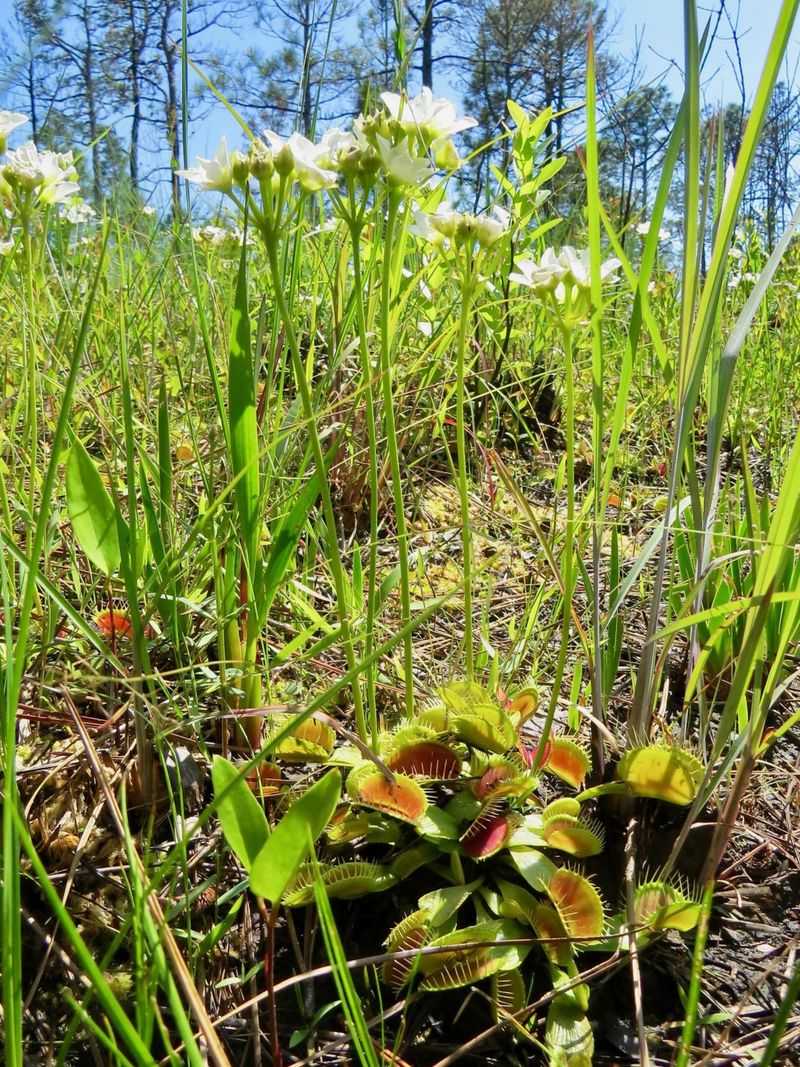
Look at wild flytraps from designated places like the Flytrap Trail, and keep your feet on the path. Remember that North Carolina’s felony statute and South Carolina’s misdemeanor law are different.
When buying, choose cultivated stock.
A plant this famous lives in a place you can nearly hold in your hand, and that is reason enough to leave it be.