

Pausing the fertilizer for your houseplants during the darkest months is one of the easiest ways to protect them. Short, dim days slow most indoor plants down, so they cannot use much extra food.
Piling on fertilizer anyway can hurt the roots and does nothing to fix stretched, weak stems. Here is how to tell when to hold off and when to start feeding again.
Winter light often slows the growth that uses fertilizer
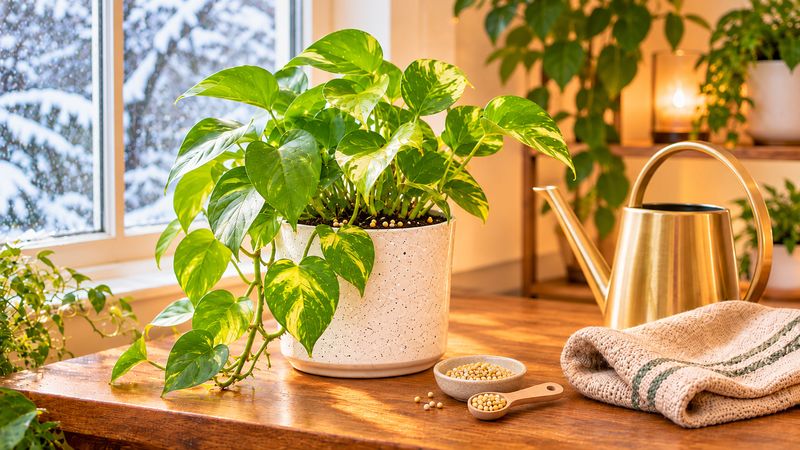
Fertilizer is food for growth, so it only helps when a plant is actually making new leaves and roots. In many homes, winter brings shorter days and weaker light, and growth slows down or stops.
Illinois Extension notes that most houseplants need little or no fertilizer during their winter rest, and that extra feeding can cause damage when dim light has slowed growth.
Winter does not make a plant grow faster, so adding fertilizer will not speed things along. A plant that sits still on a gloomy windowsill has nothing to do with the extra nutrients.
Skipping a few feedings costs it very little.
Not every plant slows down at the same time, though. Species, room temperature, window exposure, and lighting all change how active a plant stays indoors.
Penn State Extension points to active new growth, not the calendar alone, as the key sign. A fern by a cold window may idle while a plant in a warm, bright spot keeps pushing out leaves, so look at each plant on its own.
Too much fertilizer can damage roots
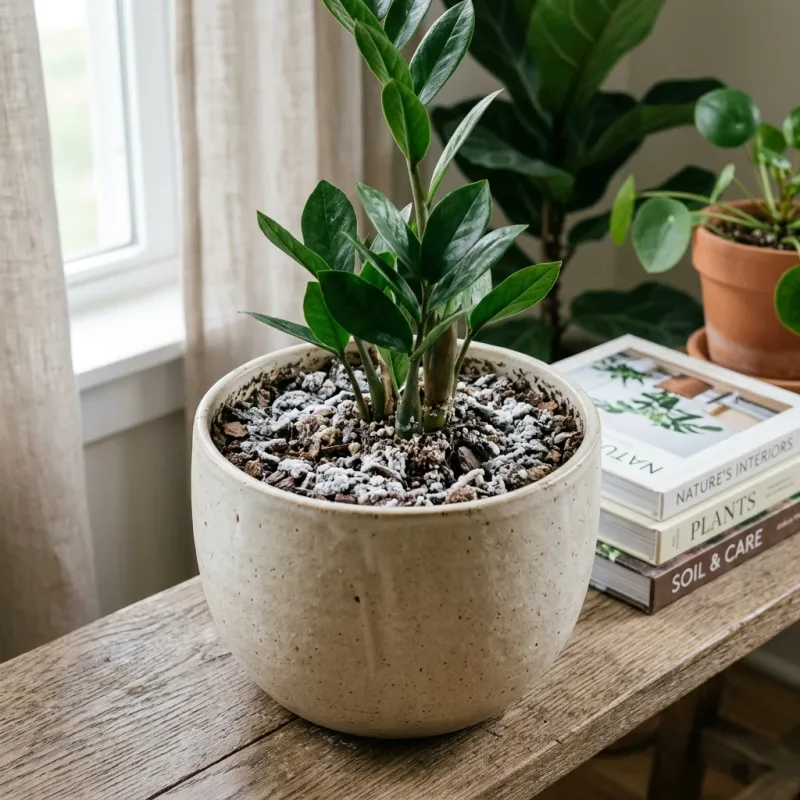
Houseplant roots live in a small pot with nowhere for extra nutrients to go. When a plant is barely growing, it uses very little of what you add, and leftovers stay in the soil.
Illinois Extension lists root burn as one possible result of overfertilizing, and the risk rises when slow growth means the plant cannot use the food.
Fertilizer is made of salts, and those salts can pile up in potting mix over time. University of Maryland Extension notes that too much fertilizer can build up salts and lead to spindly growth.
A white crust on the soil or pot rim, or brown, crispy leaf tips, can be clues.
None of this means one winter feeding will wreck a plant. The trouble comes from heavy or routine feeding when the plant is idle.
Think of it like serving a big dinner to someone who is not hungry: the food is not poison, but it does not help, and too much of it causes problems.
Leggy stems call for a light check first
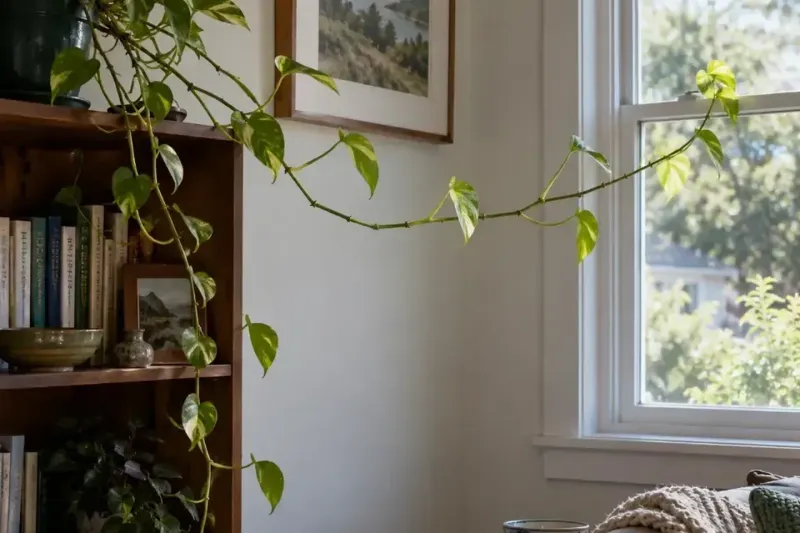
Long, thin stems with big gaps between leaves make many people reach for the fertilizer bottle. Hold off for a moment.
When a plant stretches toward a window, the most common reason is that it is not getting enough light.
University of Maryland Extension explains that too little light makes houseplants spindly as they reach for a light source. Excess fertilizer can also contribute, so feeding a stretched plant may make matters worse rather than better.
The same extension’s diagnostic guide lists both causes and suggests improving light and cutting back winter fertilizer.
Start with a simple light check. Move the plant closer to a bright window, clean the glass, or turn the pot a quarter turn each week so it grows evenly.
Fertilizer cannot stand in for light.
Stems that have already stretched will not shrink back. Better light helps new growth come in more compact, and pruning can encourage a fuller shape once the plant is growing again.
Use new growth to decide when to feed
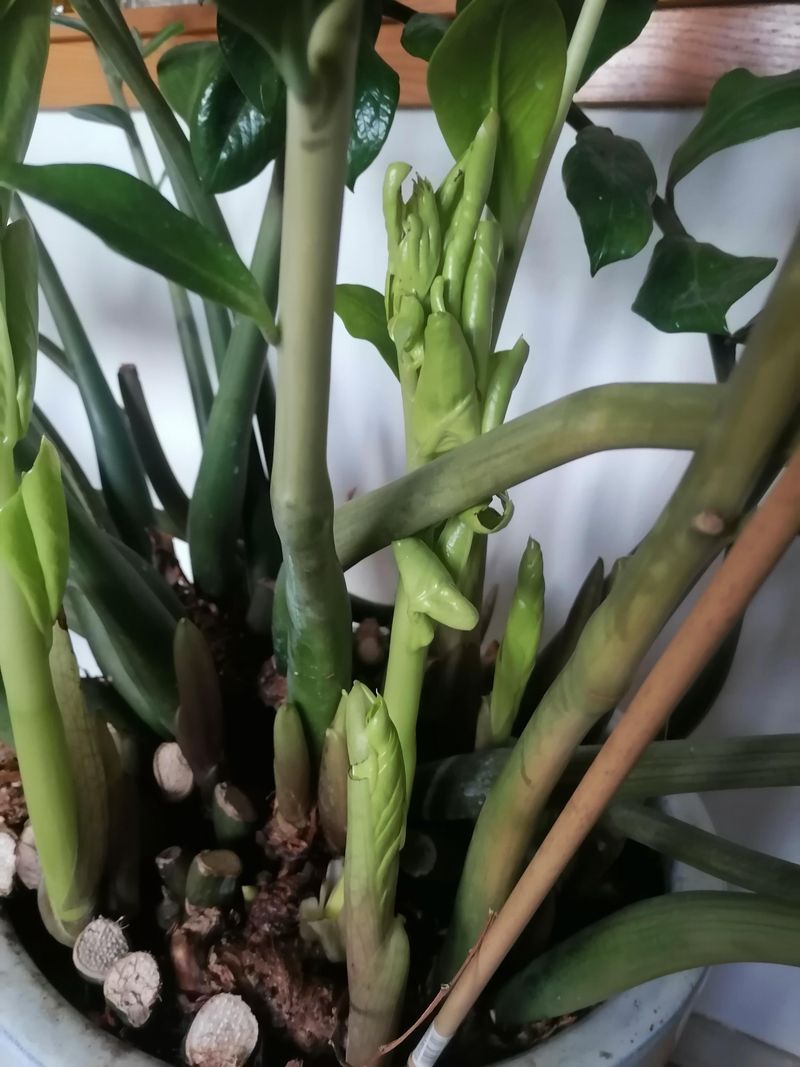
Here is a rule you can check with your own eyes: if a plant is not producing new leaves or shoots, pause or cut back on feeding. When fresh growth appears, such as a new leaf unrolling or a bud swelling, you can start thinking about fertilizer again.
Penn State Extension treats active new growth as the sign that a plant can use feeding.
Longer days are a handy seasonal cue, since more daylight usually wakes plants up. They are not a magic threshold, though.
A sunny south window may trigger growth earlier than a shaded north one, and different species wake up on their own schedules.
Be careful about reading symptoms as hunger. Yellow leaves, dropped leaves, and weak growth have many causes.
University of Missouri Extension guidance says poor light or watering may explain a lack of growth, and that fertilizer under poor conditions may add injury.
Before feeding a struggling plant, check the light, the moisture of the soil, and drainage first.
Bright supplemental light can change the routine
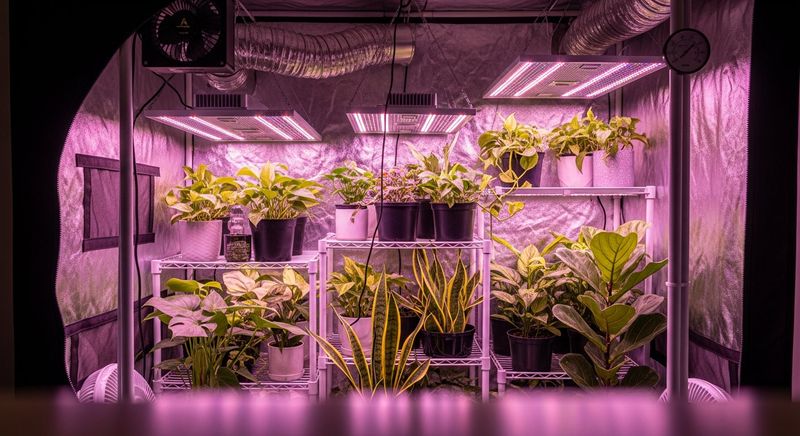
A winter pause is a good general habit, but it is not a rule for every plant in every home. Plants growing under bright supplemental lights may keep producing leaves all winter.
University of Maryland Extension advises reducing or stopping fertilizer in winter unless plants are grown under bright supplemental lighting.
That does not mean a grow light automatically calls for fertilizer. A lamp that is dim, far from the leaves, or on only a few hours a day may not wake a plant up at all.
The better question is whether the plant is actively growing.
Look for the same signs Penn State Extension describes: new leaves, new shoots, or visible stretching of healthy, compact growth. If those signs are there, light feeding may make sense.
If the plant looks the same as it did a month ago, it can likely keep waiting.
Treat each plant as its own case. Two plants in one room may follow different routines, with the lit one eating lightly and the one in the shadowy corner resting.
Restart feeding gently as growth returns
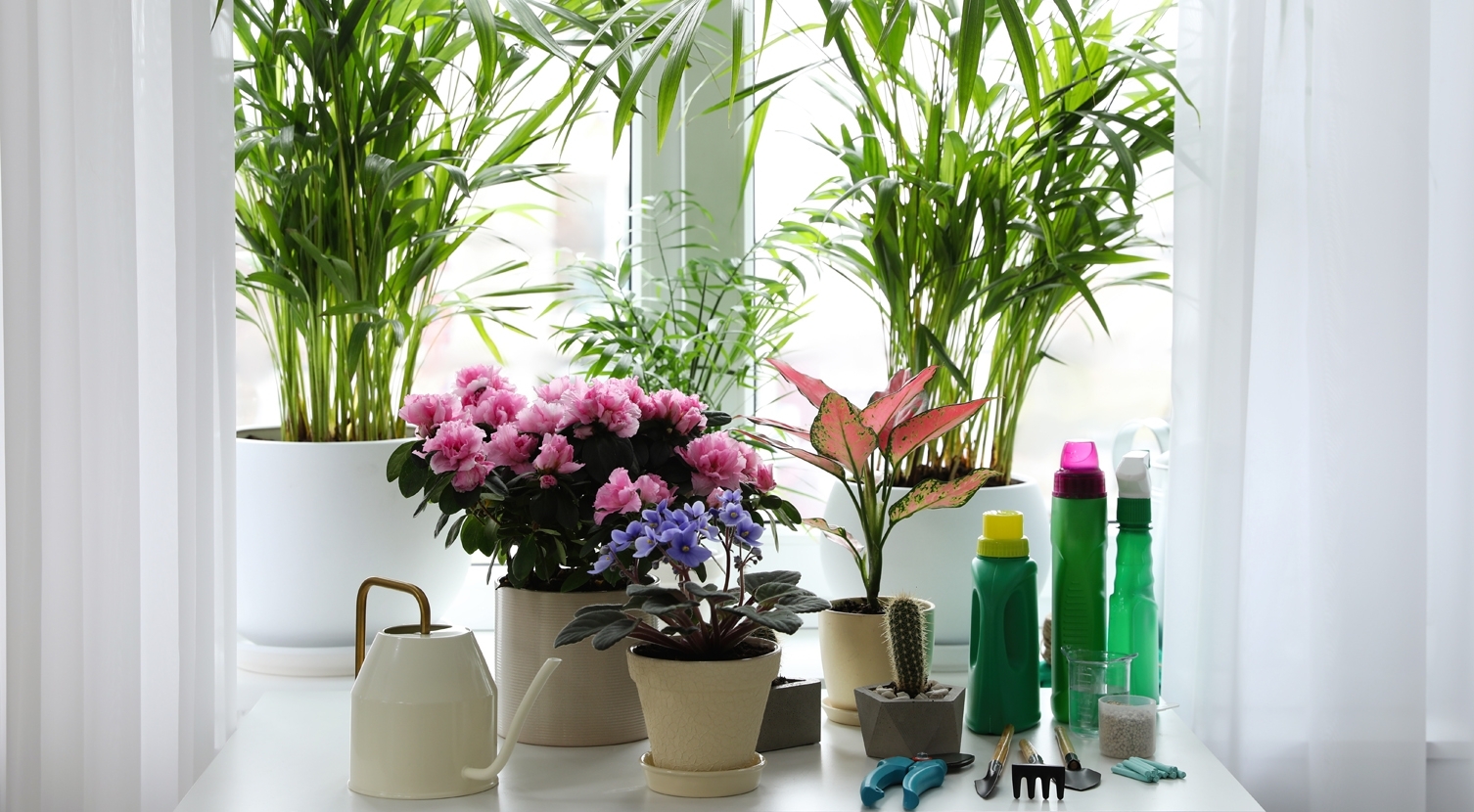
Once new growth shows up, ease back in rather than going full strength. University of Minnesota Extension suggests, as one example, a balanced houseplant fertilizer at half strength every two to four weeks as spring growth begins.
Treat that as a starting point, not a fixed schedule for every plant.
Brighter light can raise a plant’s appetite, so a plant in a sunny window may want feeding more often than one in low light. Always follow the directions on your fertilizer label, and watch how the plant responds.
Healthy new leaves in good color are a good sign. Scorched tips or a crusty soil surface mean it is time to back off.
Water the plant before or while you feed so the roots are not hit with concentrated fertilizer on dry soil. If a plant stalls, check light and watering before adding more food.
Fertilizer works as a helper for growth that light has already started. A plant that is well lit will tell you when it is hungry.