
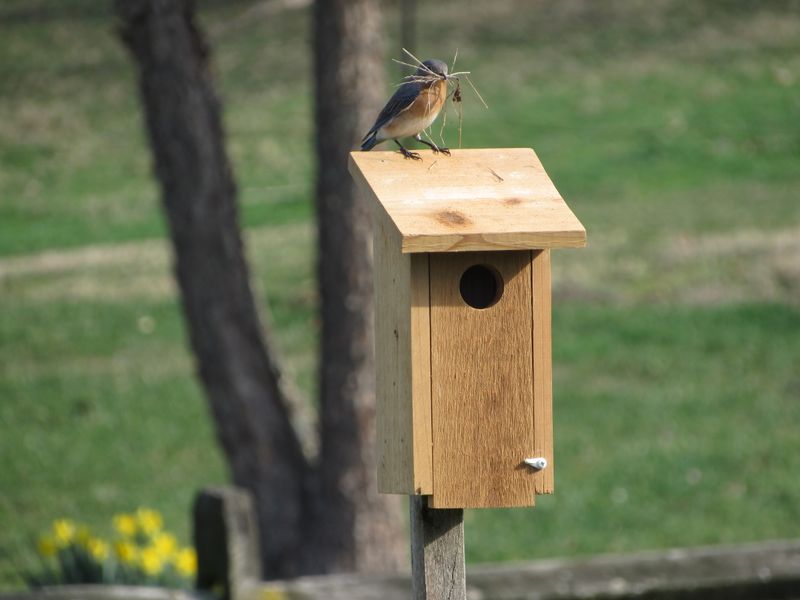
Western Bluebirds hunt grasshoppers, beetles, and other insects across open California yards, and a well-placed nest box gives them a spot to raise their young. Putting one up before spring is a simple project that can bring a lively native bird closer to your lawn and orchard.
A box is an invitation, not a promise, so it helps to know what the research shows and what the work involves. Here is how to decide if a box fits your property and how to look after it.
What bluebirds eat—and what that means for pests
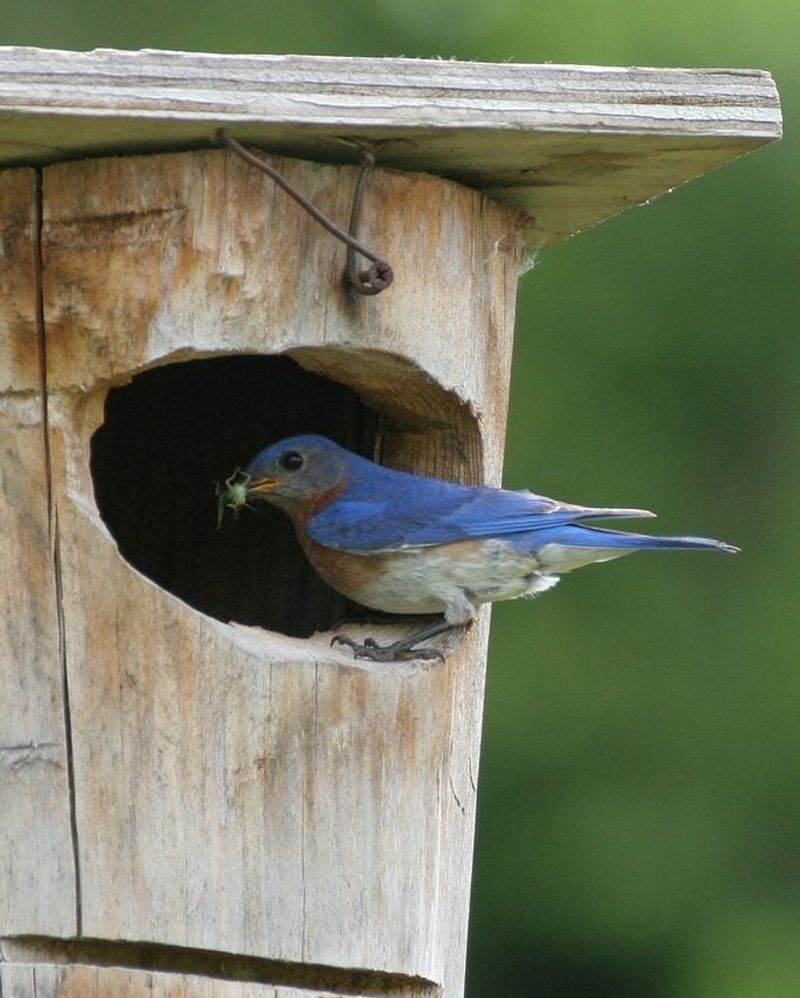
Western Bluebirds are sit-and-drop hunters. According to Cornell’s life history notes, they perch on a fence, wire, or low branch, spot something moving, and drop to the ground to grab it.
Their documented menu is wide. A U.S.
Forest Service species review lists grasshoppers, caterpillars, beetles, ants, wasps, pillbugs, spiders, and snails. Grasshoppers and beetles are the foods to picture when you imagine a bluebird working your yard.
Grubs are a different story. No source reviewed shows that bluebirds reliably find or reduce the grubs living under a lawn, so a box should not be sold to yourself as a grub fix.
The best pest-related evidence comes from California vineyards. In a PLOS ONE study of two vineyards, areas with nest boxes had more removal of exposed sentinel caterpillars than areas without them.
Removal was highest near occupied boxes.
That result is narrow. The researchers said not every removed caterpillar could be pinned on bluebirds, and the study did not show less crop damage, better yields, or control of lawn grubs or household pests.
The fair takeaway is modest. Under the right conditions, a nest box may add one helpful piece to a broader approach to managing insects, but it is not a stand-alone answer.
Look for open habitat and suitable food
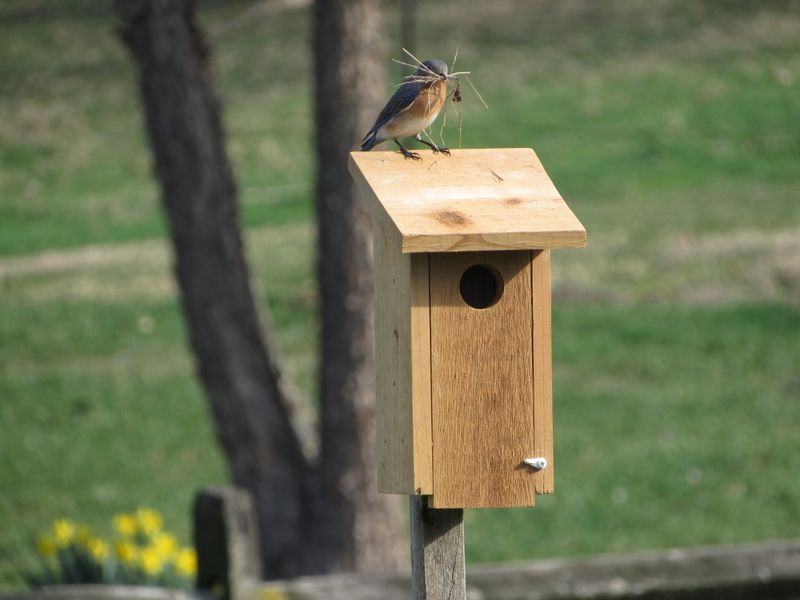
Before you buy or build anything, walk your property and look at it the way a bluebird would. These birds like open ground with short or sparse vegetation where they can spot insects from a perch, such as a fence line, orchard edge, vineyard row, or a lawn bordered by a few trees.
Food matters as much as open space. If your yard offers a steady supply of insects like those described by Cornell’s life history account, a box has a better chance of being useful.
A box cannot create habitat. A dense, shady yard or a small lot walled in by buildings will not become bluebird country because of a wooden house on a pole.
Occupancy is never certain. The California Bluebird Recovery Program notes there is no guarantee a box will be used by bluebirds, and food, competition, and safety all play a part.
Other native cavity nesters may move in instead, including swallows, titmice, and flycatchers. The vineyard work described in the PLOS ONE paper also saw other birds using boxes.
Think of the box as an opportunity for suitable birds. If a tree swallow raises a brood in it, that is still native wildlife getting a place to nest.
Choose an installation time for your elevation
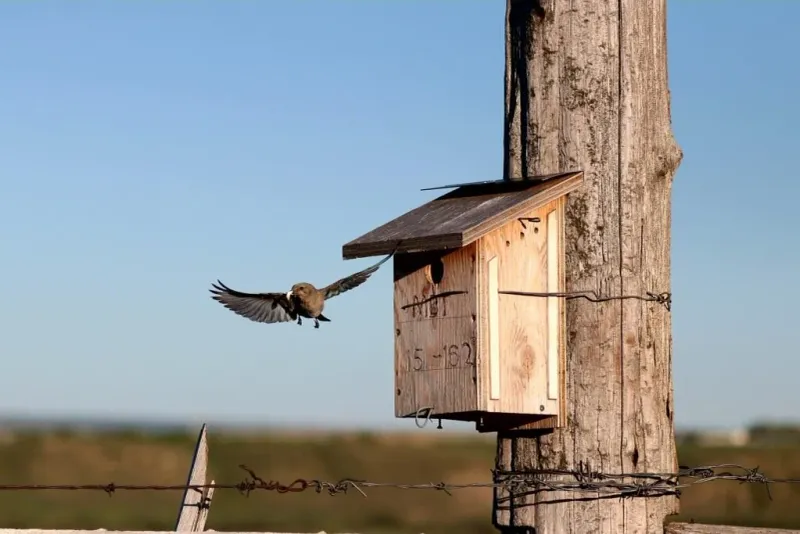
Timing starts with where you live. California NRCS guidance says to install boxes by February 1 below 2,000 feet.
At higher elevations, the advice is to install when access is safe. Snow, mud, and closed roads can make a February date unrealistic in the Sierra, the mountains of the north, or other high country.
That is why February 1 is not a statewide deadline. It is a useful target for lower areas such as the Central Valley, coastal valleys, and many foothill communities.
Local breeding schedules vary too. If you live near the 2,000-foot line, or in a spot with unusual weather, ask a nearby bird group or local bluebird monitor when birds begin scouting in your area.
Getting the box up early gives birds time to find it before nesting begins. If you miss the date, a box is not wasted, but earlier is easier on both you and the birds.
Pick a day when you can work calmly and safely. A solid mount matters more than hitting a date on the calendar.
Build and space the box for its intended users
Small details decide whether a box works. UC Cooperative Extension recommends an interior about 5½ inches square and an entrance hole 1½ inches across.
The box should have ventilation and drainage, and no perch on the outside. A perch gives predators and competing birds a handy foothold, while bluebirds do not need one.
For mounting, UC suggests a pole at least five feet high. NRCS specifies a mounting height of 5 to 7 feet.
Spacing depends on your plan. NRCS recommends at least 100 yards between boxes meant for separate nesting pairs.
UC discusses wider spacing, 200 to 300 yards, for separate bluebird boxes. It also describes paired boxes set 15 to 20 feet apart, which can hold a bluebird pair and a second cavity-nesting species.
So there is no single spacing rule. If you want one box, a large yard can handle it easily.
If you want several, decide whether they are for separate bluebird pairs or for paired species, then check local guidance before you drill.
Choose a safe spot and limit pesticide exposure
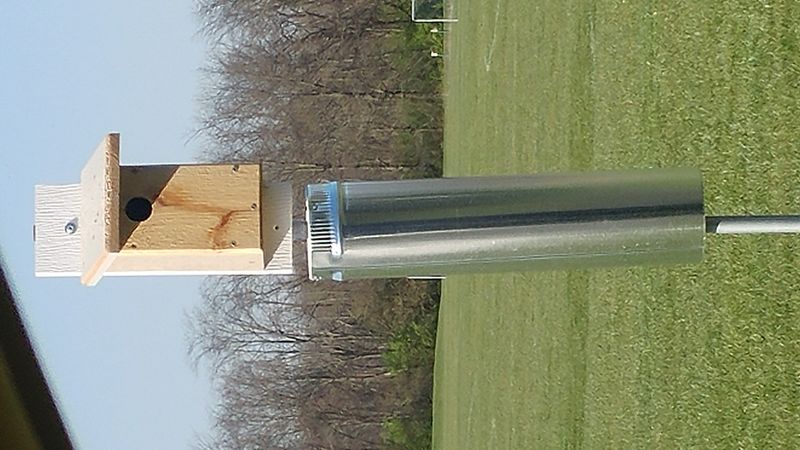
Where you put the box shapes how safe it is. Favor open foraging habitat and steer clear of direct sun, strong wind, roads, and spots that are mowed or disturbed often.
Heat deserves attention in California summers. Audubon notes that bluebirds prefer open locations and advises managing heat risk through thoughtful orientation and ventilation.
Do not choose a place that bakes in afternoon sun. No single direction or feature removes the danger, but good ventilation and a sensible location lower it.
Predators are the other risk. NRCS guidance recommends predator protection, such as a pole mount with a guard, which makes it harder for cats, raccoons, and snakes to reach the box.
It reduces the risk but cannot erase it.
Pesticides work against the whole idea. NRCS advises siting boxes away from heavy pesticide use, and UC Cooperative Extension advises avoiding pesticides to protect birds and beneficial insects.
If you want insect-eating birds nearby, think twice about spraying around the box. Birds feed on the same insects you might be treating, and the food supply is part of what makes a site worthwhile.
Check the box responsibly during nesting season
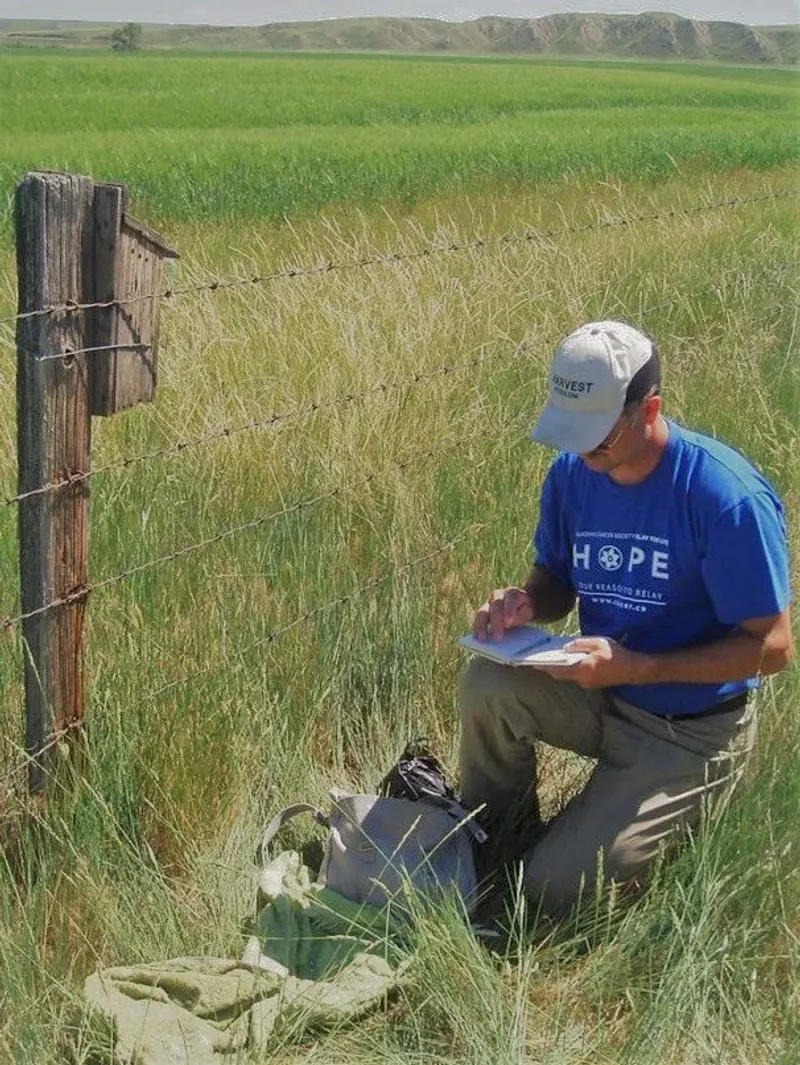
A nest box is not a put-it-up-and-forget-it project. The California Bluebird Recovery Program recommends weekly checks during nesting season.
Those checks catch trouble early, such as damage to the box, wasps, predators, or House Sparrows taking over. A neglected box can end up helping invasive competitors more than native birds.
Follow responsible local monitoring protocols for how and when to look. Experienced monitors know how to check quickly and with minimal disturbance, and local bluebird groups can point you to guidance.
Nests are legally protected. U.S.
Fish and Wildlife Service information explains that in-use migratory bird nests and their contents are protected, and a 2025 agency memorandum covers nest policy in more detail.
Never harm, handle, relocate, or otherwise disturb an active nest, its eggs, nestlings, or dependent fledglings. Do not clean out a box that is in use.
Ask an expert about lawful, safe ways to monitor. If you cannot commit to regular checks, find an experienced local monitor to help, or reconsider installing a box.
Decide whether a box fits your yard

Put up a box if your property has open ground, a food supply, and room to keep the area free of heavy pesticide use, and if you can arrange regular, responsible checks. If those pieces are missing, skip it or help a neighbor with a better site.
Value what a bluebird gives you either way. A nest box supports native wildlife, and as the California Bluebird Recovery Program says, occupancy is never guaranteed.
Any help with insects is a bonus, and vineyard research only hints at what is possible. A blue flash on the fence post is its own reward.