
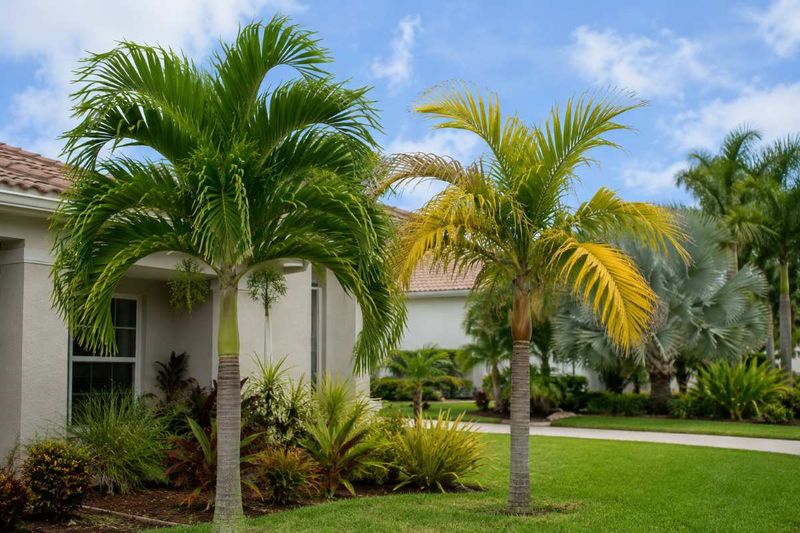
The one task is steady, balanced fertilizing for palms that need extra nutrition, and it works best as a habit rather than a December scramble. Well-fed palms may handle cold nights better than hungry ones.
Your timing depends on the palm you own and where you live in Florida. Here is how to build that routine and what else to do when a cold night is on the way.
A December dose is not a cold-night rescue
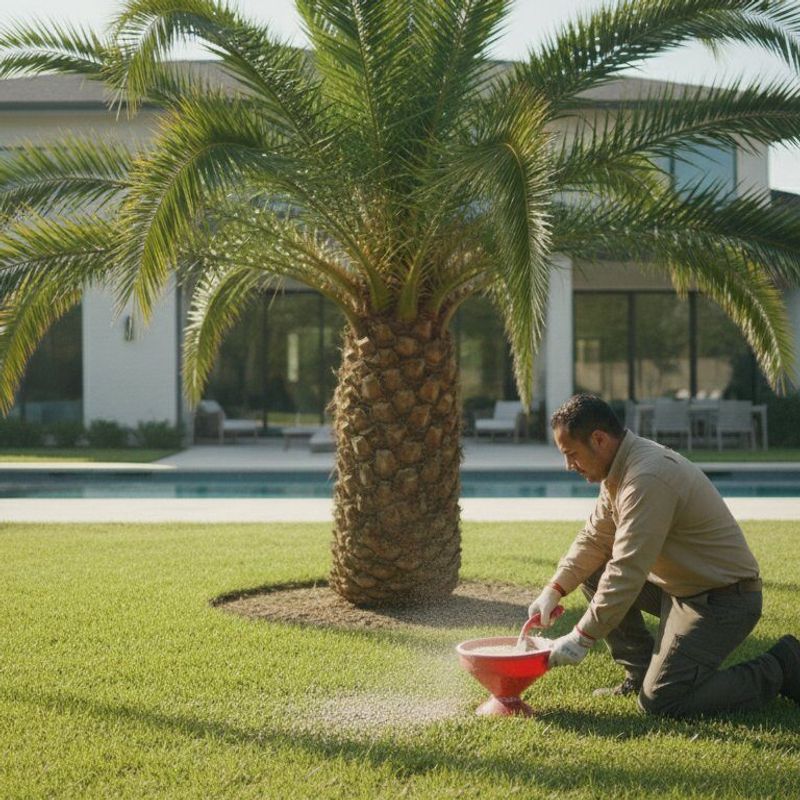
Keeping a balanced fertilizing program going is the task that matters for palms that need supplemental nutrition. The key word is program.
UF/IFAS homeowner guidance points to feeding through spring, summer, and fall, and says a winter application is not necessary.
That means a bag of fertilizer tossed down the night before a cold snap is not the same thing as steady care. Fertilizer is a preventive tool.
It builds a healthier palm over months, and it does not work like a blanket you can pull over the plant at the last minute.
Early December is also not a universal deadline. Some South Florida landscapes already have a fall feeding on the calendar, while many Central and North Florida yards are past their last round by then.
A new December application is not a statewide recommendation.
Palm species matter too. UF/IFAS cold damage guidance explains that injury depends on the kind of palm and on the conditions of the cold event, so no single temperature or fertilizer plan protects every palm.
Your best next step is simple. Identify your palm, check whether it needs added nutrition at all, and look at where your last feeding fell on the calendar.
Then decide, rather than reacting to the forecast.
Routine nutrition can improve cold hardiness over time
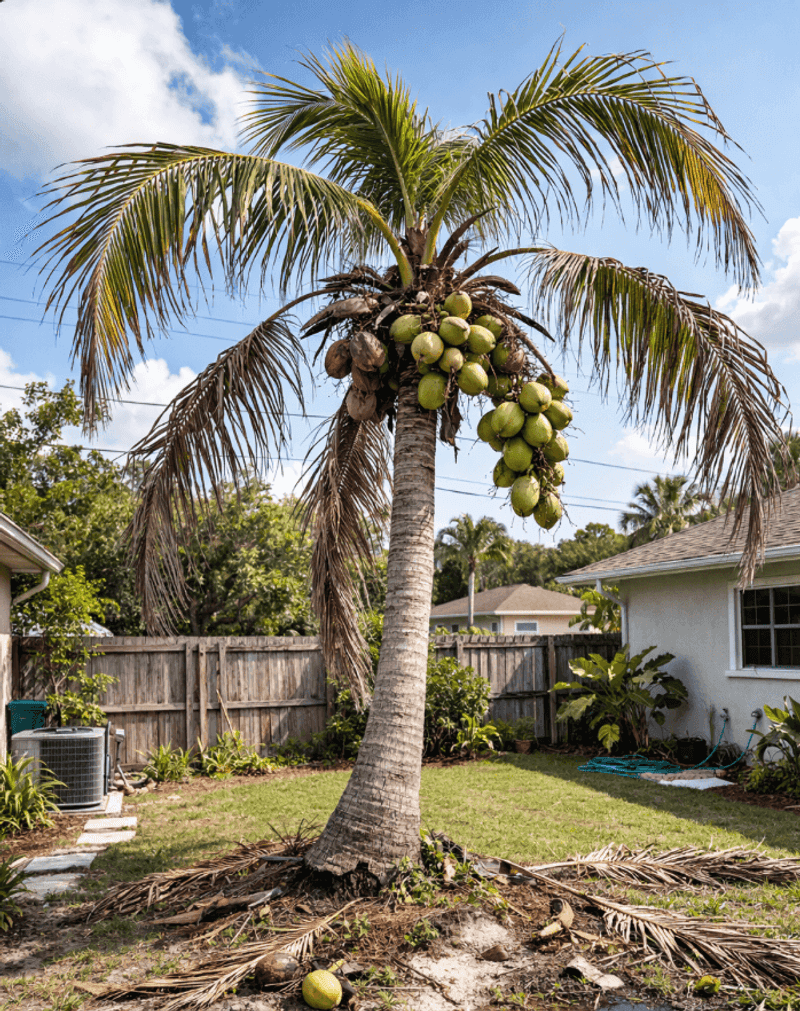
Some of the best proof for feeding comes from a Florida field study on coconut palms. In a 2010 HortTechnology study, researchers compared routinely fertilized coconut palms with unfertilized ones over several years.
The fertilized palms showed less severe cold injury. That is a real benefit, but it came from regular feeding across multiple years, not from one late application.
So the study does not show that a single dose in December protects palms.
The results also have limits. They apply to coconut palms in that setting, and they do not promise green fronds all winter or the same response from every palm species.
A freeze that is cold enough or long enough can still burn leaves on a well-fed palm.
The researchers also could not say which nutrient, or which mix of nutrients, produced the benefit. So there is no single magic ingredient to chase.
A balanced palm fertilizer used on schedule is the sensible approach.
Think of it as building a stronger palm. As UF/IFAS notes, routine fertilization is preventive care, and how much damage you see still depends on the species and the cold itself.
The right feeding calendar depends on where you garden

Florida stretches across a lot of climate, so one feeding date will not fit every yard. The UF/IFAS homeowner page keeps it simple: fertilize three times a year, from spring through fall.
The more detailed technical guidance, found in a UF/IFAS palm fertilization publication, describes quarterly applications for South Florida landscapes. It says winter applications can be skipped in Central and North Florida.
For a South Florida gardener, that means a November feeding may simply be the fourth round of an existing schedule. For a gardener in Ocala or Tallahassee, the same November or December application would not be part of the plan.
Same month, different answer.
Another point saves time and money. Florida native palms, such as cabbage palms and saw palmettos, usually do not need added fertilizer at all.
If your yard is full of natives, you may be able to skip feeding entirely.
Before you buy anything, write down when you last fertilized and which region you garden in. Then check the product label and your county or city rules.
Many Florida communities have fertilizer blackout periods, so confirm them locally rather than treating December as a statewide cue to feed.
Feed only when due, and spread fertilizer across the root zone
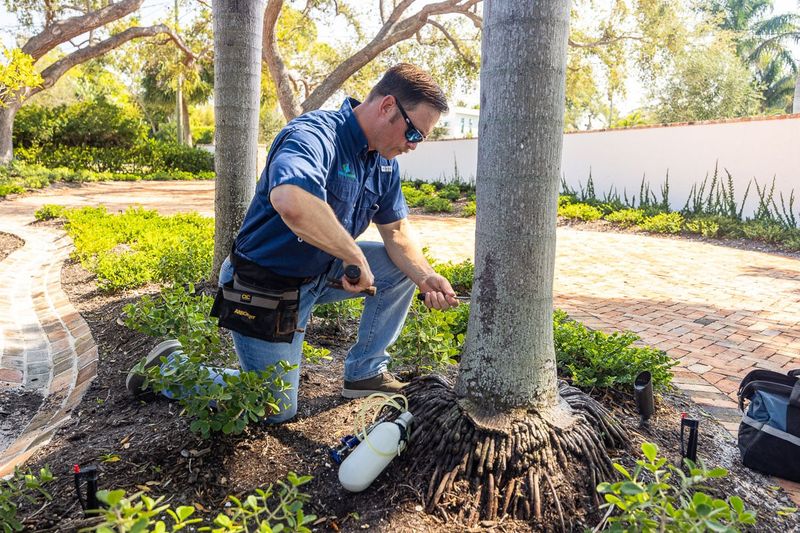
When a palm does need a boost and the calendar says it is due, choose the right product. UF/IFAS suggests a palm fertilizer such as 8-2-12+4Mg or 8-0-12+4Mg, as listed on its palm nutrition page.
Look for slow-release forms of both the major nutrients and the micronutrients.
Slow release matters because it feeds the palm gradually and lowers the chance of nutrients washing away. Read the label for the correct amount based on your palm size or the area covered, and follow any local guidance.
Spread granules evenly across the root zone, which reaches well beyond the trunk, and not in a pile at the base. Piling fertilizer against the trunk can burn tissue and wastes product, while an even spread lets roots across the area take it up.
More is not better. Extra nutrients can run off into storm drains, lawns, and waterways, which is why Florida takes fertilizer use seriously.
Sweep any granules off driveways and sidewalks back onto the landscape.
Finally, check your local fertilizer restrictions before you spread anything. Many counties and cities have summer blackout periods and other rules.
More detail is available in UF/IFAS fertilization guidance for landscape palms.
When a cold event is forecast, protect vulnerable palms
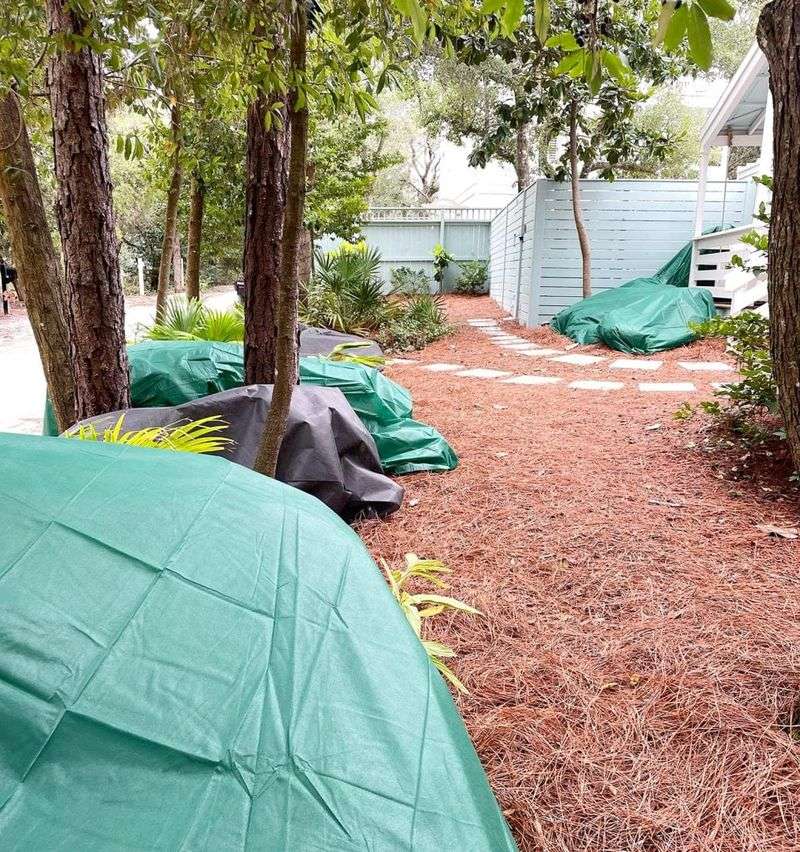
Cold nights call for a different set of actions than routine feeding. These are short-term precautions, and they work on their own schedule, not the fertilizer calendar.
For a small or valuable palm, a cover can help. UF/IFAS Extension Orange County recommends frost cloth or a similar breathable cover, and wrapping the fronds to protect the central spear leaf.
Avoid plastic coverings, which can trap moisture and worsen cold injury where they touch foliage.
Watering before the front arrives may also help. Moist soil absorbs and releases more heat than dry soil, so a good soak earlier in the day can soften the chill around the roots.
It is not a guarantee, and you should not water so much that the ground stays soggy.
Not every palm needs this effort. A tall, established cold-hardy palm cannot be wrapped easily and often does not need to be.
UF/IFAS cold damage guidance reminds us that injury depends on the species and the cold event.
Treat covers and watering as helpful tools, not promises. A longer or deeper freeze can still damage a covered palm, so keep expectations realistic.
After cold, wait before removing damaged fronds
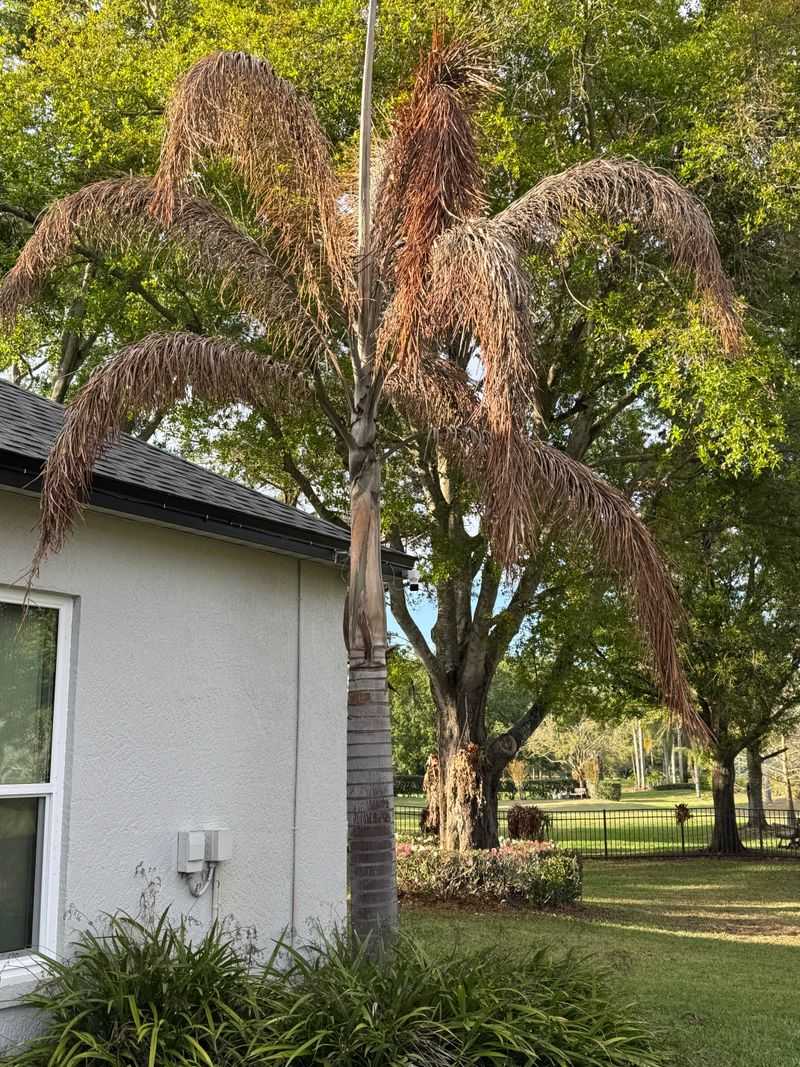
Brown, droopy fronds after a cold night are discouraging, and the urge to trim them right away is strong. Hold off.
Even dead leaves give some insulation to the palm’s growing point, and UF/IFAS guidance on cold damage says not to rush the cleanup while more cold is possible.
Wait until the risk of another cold night has passed, often into spring. Then you can see where new growth emerges and what is truly dead.
Many palms look worse than they are in the first weeks.
Fertilizer is not an emergency fix here either. A foliar nutrient spray will not bring back leaf tissue that is already dead.
Resume your normal feeding schedule when the palm is growing again and the calendar says it is due.
Put the whole picture together. Routine feeding for palms that need it, cover and watering when a cold night is forecast, and patience afterward each have their own job.
None of them can overcome a palm that is simply not suited to the cold it faces.
A tidy palm in January is nice, but a surviving one in May is the real prize.