
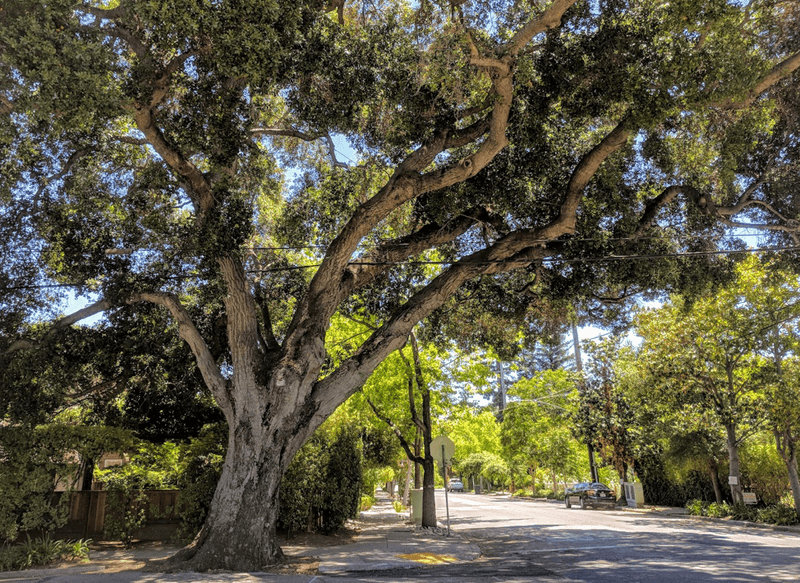
Your coast live oak needs less from you before winter than you might think, and a few well-meant habits can work against it. Running the sprinklers out of habit, raking away every leaf, and pruning on a seasonal schedule are the usual culprits.
Each one feels like good care, but each can add risk when the tree, soil, and weather do not call for it. Here is how to swap those habits for choices that fit your tree.
Start by Identifying Your Oak
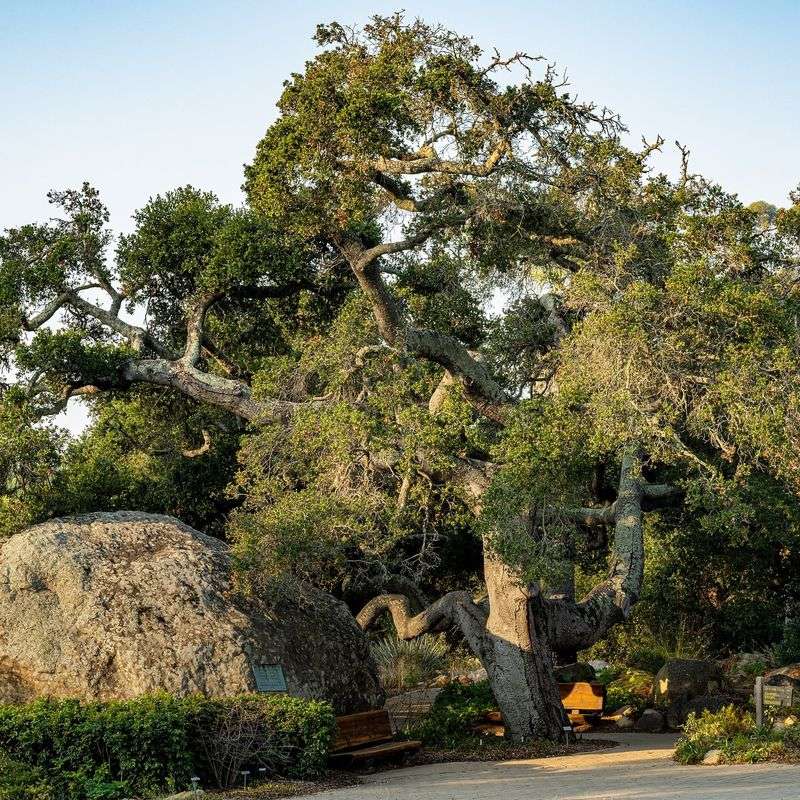
Before changing any routine, confirm what you are caring for. This guide covers coast live oak (Quercus agrifolia), an evergreen oak with small, spiny, cupped leaves that stay green all year.
Other California oaks, such as the deciduous valley oak, follow different pruning seasons and care needs, so advice for one should not be applied to all.
Coast live oaks evolved with wet winters and long dry summers. Because of that, UC Master Gardener guidance notes that established native oaks usually need little or no supplemental irrigation, while newly planted trees need regular water as they settle in.
A tree that has been in the ground for many years and a sapling from last spring are in very different situations.
UC training materials on what to prune and when also separate evergreen coast live oaks from deciduous species, which is another reason to name your tree before acting. If you are unsure, a local arborist or your county extension office can help identify it.
The big idea for the season is simple. Let the tree, the soil, and the weather guide what you do, rather than adding a new chore just because the calendar says winter is coming.
The next sections show what that looks like for water, leaves, and pruning.
Let Rain and Soil Guide Watering
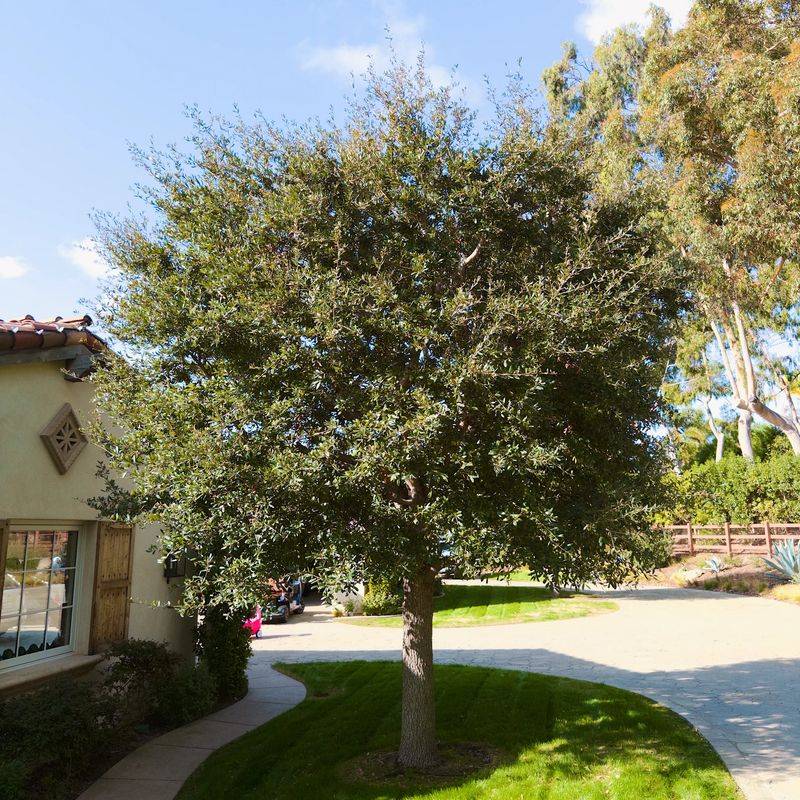
Autumn rain changes the math. Once storms are soaking the ground, an established coast live oak is usually getting what it needs without help from your irrigation timer.
Summer-style watering that keeps going through those weeks can leave soil wet for longer than these trees like.
That does not mean every system must be switched off on a set date. Check the soil instead.
Push a trowel or screwdriver several inches into the ground under the canopy; if it is damp, skip the water. If you see a dry winter, a long gap between storms, or drought conditions, a deep supplemental watering may help, and UC guidance allows for it while asking for time to let the soil dry between irrigations.
One watering will not hurt a healthy oak. The concern is the habit of repeated, automatic watering that ignores what the weather is already doing.
Newly planted oaks are the exception. A young tree has a small root system and needs regular establishment watering, commonly for about two to three years.
If your yard has a baby oak, do not treat it like its mature neighbor.
Also look at what else shares the irrigation zone. Lawn, vegetable beds, or thirsty shrubs near an oak may need water on a different schedule, so adjust the zone rather than shutting everything off.
Where the oak sits in that zone matters, which leads to the next point.
Keep Supplemental Water Away From the Trunk
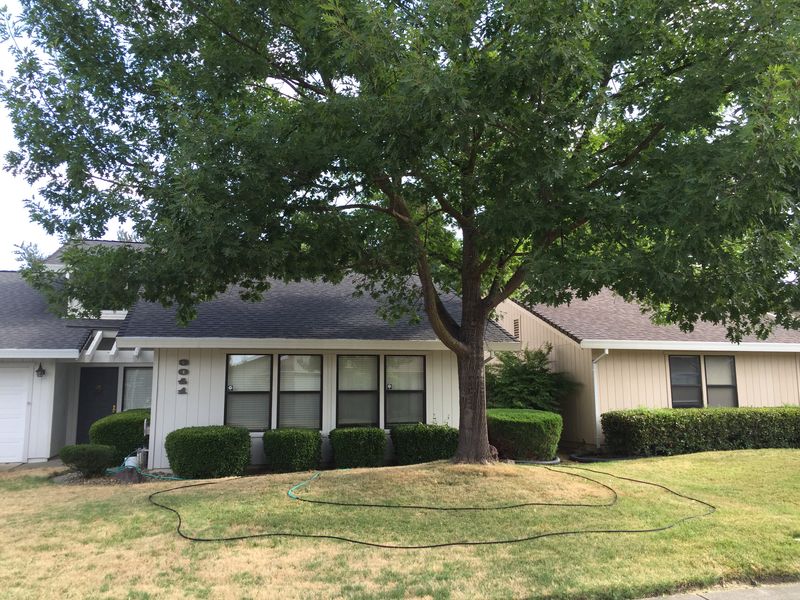
Where the water lands can matter as much as how much you give. When an established oak does need a drink, aim it at the outer root zone, toward and beyond the edge of the canopy, which is called the drip line.
The area right around the trunk and root crown should stay out of the spray.
The reason is disease. UC guidance warns that warm, persistently wet soil can favor root and crown pathogens, and the base of the trunk is where that kind of moisture does the most harm.
A sprinkler that brushes the bark now and then is not a death sentence. Constant dampness at the crown is the thing to avoid.
Method helps here. Slow, deep watering with a soaker hose or low-flow emitters lets water sink into the soil instead of pooling.
Then give the soil time to dry out before the next round. Sprinkler heads from a nearby lawn or flower bed are common offenders, so check whether they reach the trunk and redirect or cap them.
If you plant under or near an oak, Sonoma County Master Gardeners advise choosing plants that tolerate dry summers and keeping their water needs away from the trunk. A quick walk around the tree during a test run of your irrigation will show you exactly where the water goes.
Leave Oak Leaves Where Fire Safety Allows
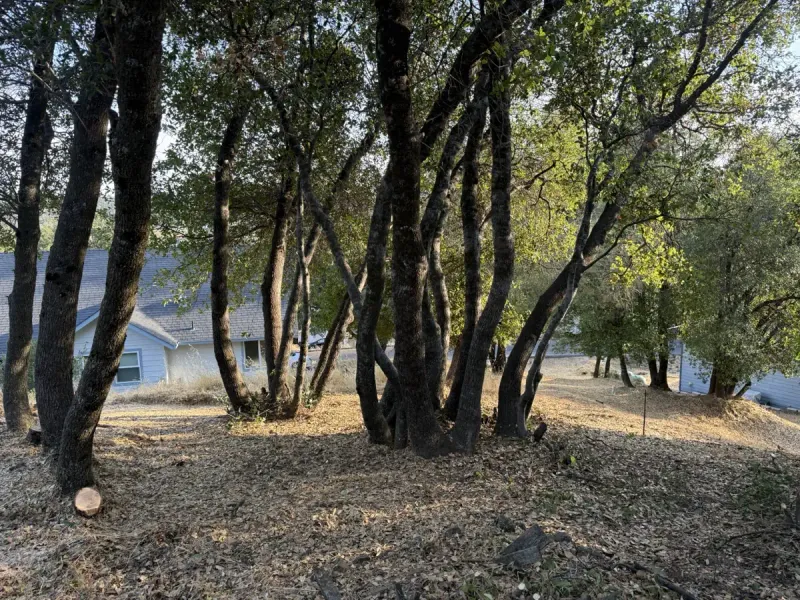
Raking every leaf feels tidy, but under the tree that litter does real work. Fallen oak leaves add organic matter to the soil and feed the organisms that live in it, which is why Sonoma County Master Gardeners suggest leaving them in place under oaks.
Natural leaf litter is not the same as added mulch. If you spread extra mulch, keep it clear of the trunk.
Sonoma County guidance suggests about a foot of space, and the Marin Master Gardeners offer similar advice for the ground beneath oaks.
Fire safety sets the limit. Dry leaves burn, and UC ANR wildfire guidance says litter can stay during the rainy season, but should be removed from the first five feet around a home during fire season, with buildup limited within 30 feet.
So the practical answer sits between two extremes. Do not rake the whole yard bare, and do not leave every leaf where it falls.
Clear gutters, decks, and the strip beside your foundation, and thin heavy piles near structures.
Rules differ by place, and some fire districts have their own requirements. Check with your local fire authority for the distances that apply to your property.
Prune for a Reason, Not a Season
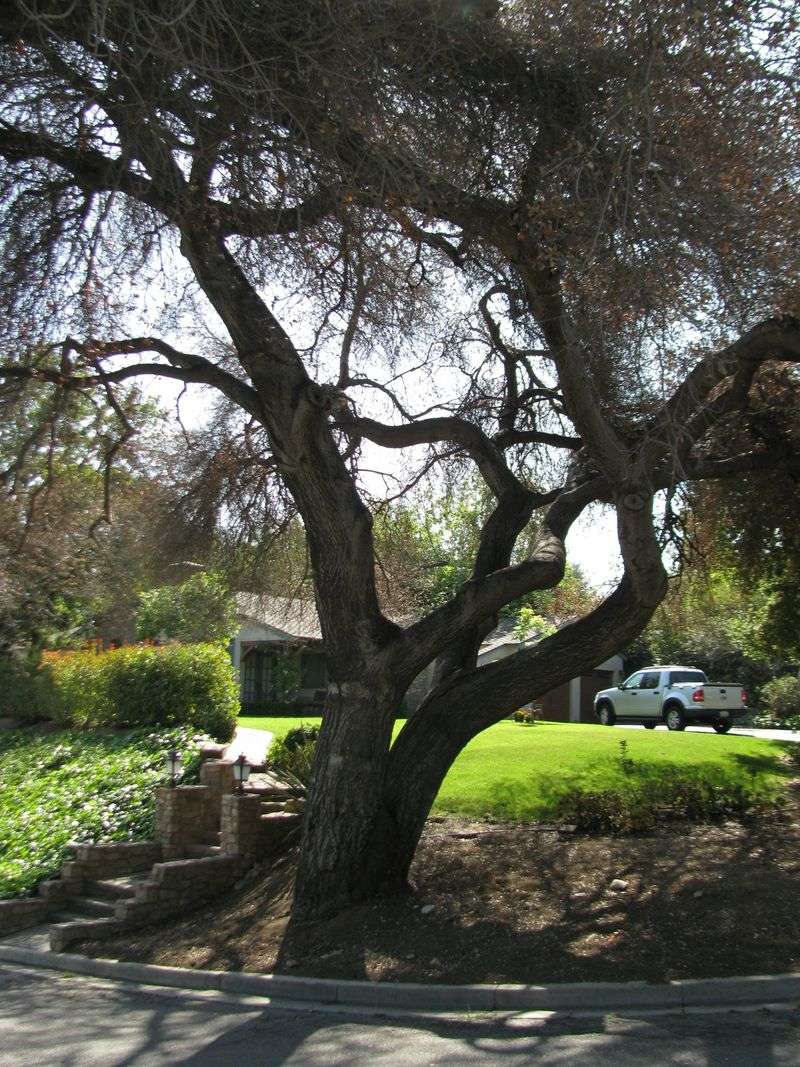
Most healthy coast live oaks do not need routine pruning. The better question is whether you have a specific reason: a dead limb, a branch over the roof, a clearance problem, or a structural defect.
If there is no reason, the tree does fine without a trim.
Timing advice varies. San Luis Obispo County’s oak guidance says light pruning can happen at various times and recommends July and August for heavier coast live oak work.
That is advice from some regional sources, not a universal rule, and it does not mean winter pruning will kill a tree.
The UC Oaks FAQ explains that the best timing can shift with location and purpose, including local disease concerns. Its practical takeaway is to keep pruning light and selective, and to cut only when there is a need.
For large limbs, safety work, or anything near power lines, hire a qualified arborist and ask about local conditions in your area.
Also check the rules before anyone climbs the tree. Some cities regulate oak pruning or require permits.
Berkeley, for example, restricts excessive pruning and requires a permit for work on city trees under its coast live oak ordinance. That is one local example, not a statewide law, so call your own city or county.
Use a Simple Winter Care Check

Run through these steps once in fall. First, confirm the tree is a coast live oak.
Second, check rainfall and soil moisture before you turn any water on, and remember that a young tree or a dry winter may call for a different watering decision.
Third, keep any needed irrigation away from the trunk. Fourth, leave leaves under the tree where fire guidance allows.
Fifth, prune only for a clear reason, and see the UC Oaks FAQ or your city or county before significant work.
An old oak rewards patience more than effort.