
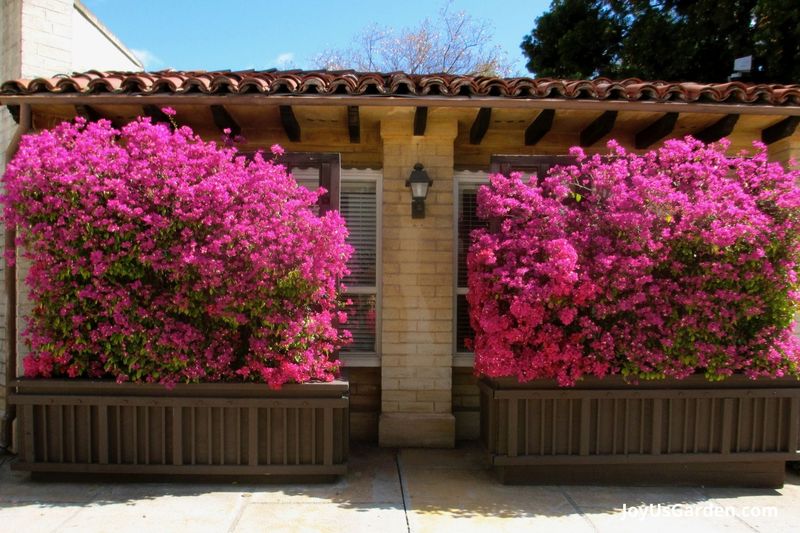
Bougainvillea really does put on its biggest show in South Florida’s dry winter months, and easing off on water is a big part of why. Shorter days, full sun, and soil that dries between drinks all play a role.
The trick is knowing how far to ease off, because starving a plant of water is not the same as managing it well. Here is how to read the pattern in your own yard and support the color you are waiting for.
What shapes bougainvillea’s winter color
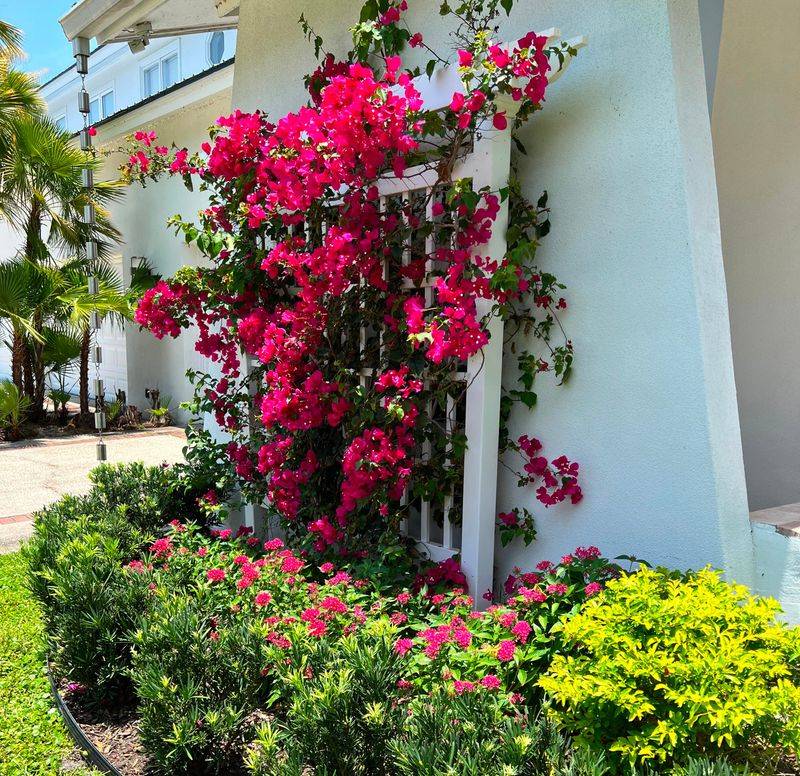
Drive through Miami neighborhoods in December and you will see bougainvillea glowing on fences, walls, and trellises. In South Florida, established plants often flower through the dry season, and UF/IFAS Miami-Dade guidance links late-fall and early-winter flowering to shortening days.
That same guidance notes that soil that is dry enough can prompt flowering at other times of year too.
First, a quick vocabulary fix. The bright pink, red, orange, or purple parts that catch your eye are bracts, which are modified leaves.
The true flowers are the tiny, pale, tube-shaped blooms tucked in the middle of each cluster of bracts. When people say a plant is blooming, they usually mean the bracts are showing.
Dry soil is one piece of the puzzle, not the whole story. Day length, full sun, well-drained soil, and the plant’s nutrient status all feed into the display.
UF/IFAS Gardening Solutions also points to full sun and warns against too much nitrogen.
So the winter show is better described as a season when several helpful conditions line up. Drier soil can contribute, but that is no reason to push a plant into severe drought.
Think of it as removing obstacles, like soggy roots and heavy feeding, rather than applying stress.
What a water-stress study found
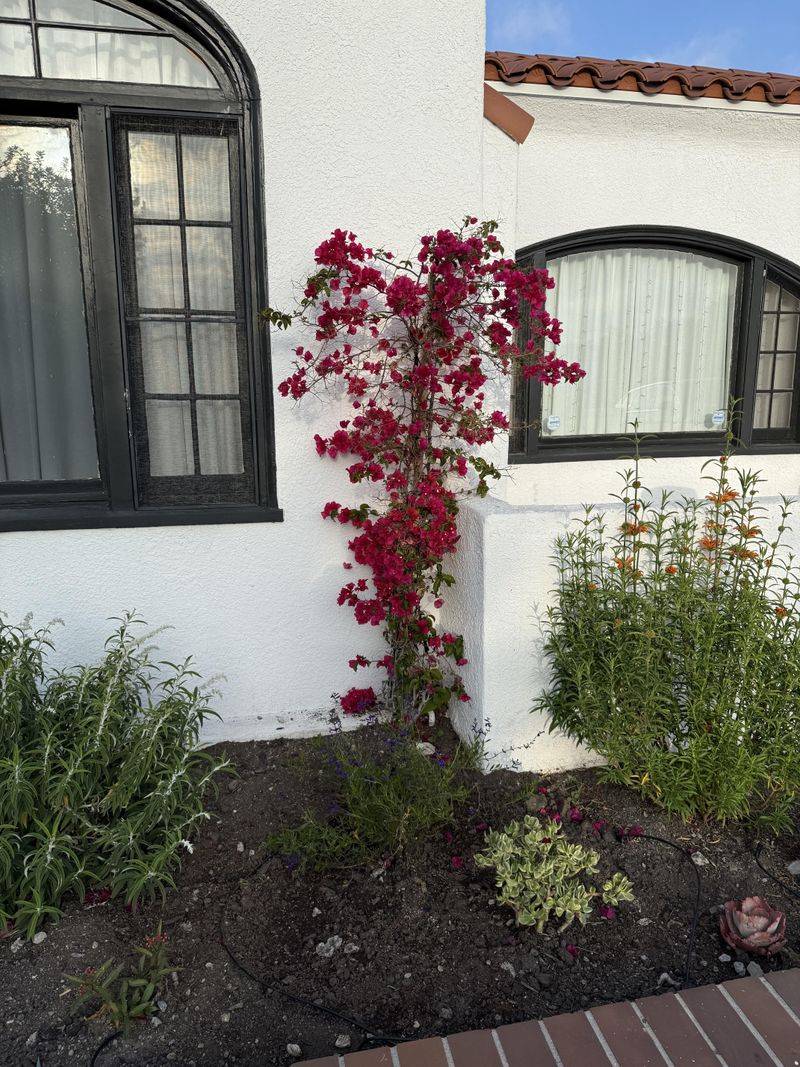
Researchers have tested the water idea directly, though on a small scale. A 2021 study by Lin and colleagues, summarized in this repository abstract, grew potted ‘Taipei Red’ bougainvillea under five water treatments.
Soil moisture was lowered step by step in the drier treatments.
The result was that progressively lower soil moisture hastened visible flower buds. The strongest water-stress treatment produced more buds and more shoots than the others.
That sounds like a win, but the same treatment also caused more leaf loss, and the plants showed visible leaf drooping.
Here is the catch for anyone hoping for a bigger show. Bract size and how long the bracts lasted did not differ significantly between treatments.
Water stress got buds started sooner, but it did not make the colored display larger or longer-lasting.
It also helps to remember what the study was. It used potted plants of a single cultivar under controlled conditions.
It does not give a safe watering threshold for a mature bougainvillea growing in a Florida landscape, where rain, soil, and roots behave very differently.
The practical lesson is modest. Dryness can nudge timing, but leaf loss is the price of going to the extreme, and the study gives no reason to copy its harshest treatment at home.
Keep established plants on the drier side
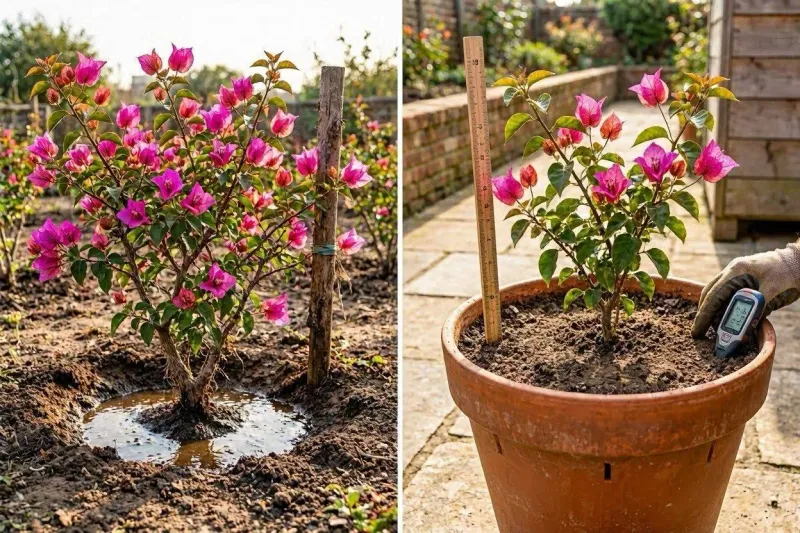
A newly planted bougainvillea is a different animal from one that has been in the ground for a few years. A UF/IFAS Charlotte County article advises against overwatering but notes that water matters during establishment.
Young plants need regular drinks while roots spread into the surrounding soil.
Once a plant is settled, it can generally handle less frequent irrigation when conditions allow. Rain may cover its needs for weeks, so hauling out the hose on a calendar often does more harm than good.
Check the soil a few inches down and water when it has dried out, not on autopilot.
Soggy roots are the real enemy. A UC Cooperative Extension guide recommends deep watering followed by drying, and warns that waterlogged roots can cause bract loss or stop flowering.
Yellowing leaves and dropping bracts in a wet spot are a clue to cut back.
Containers need their own judgment. Pots dry out faster than ground soil, especially in full sun, so they may need water more often than a landscape plant.
A pot with poor drainage can stay wet far too long, so make sure water can escape freely.
Sandy soil drains quickly, while clay holds water, so the same plant may need different care on different sides of town. Aim for deep drinks with a real dry-down in between, and skip the idea of waiting for severe wilting.
Drier does not mean bone-dry.
Avoid pushing leafy growth with too much nitrogen
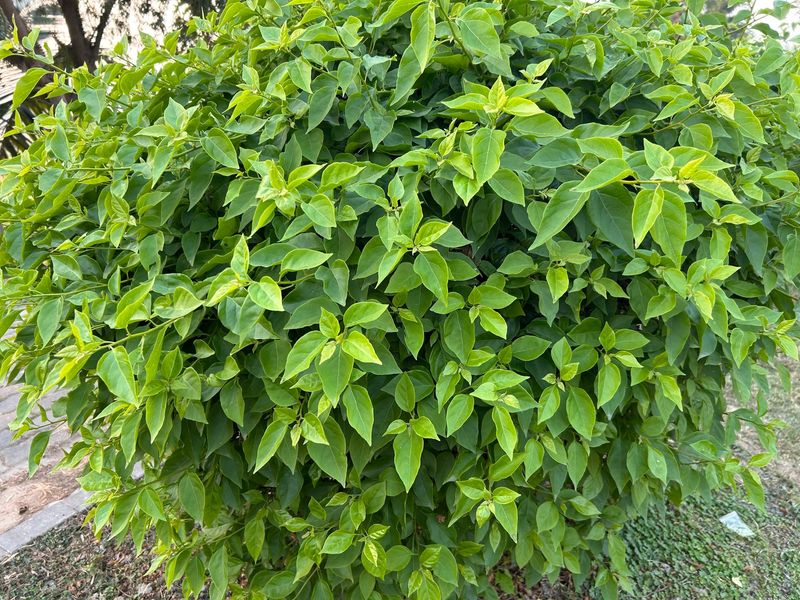
If your bougainvillea is lush, green, and stubbornly bract-free, check your fertilizer habits. According to UF/IFAS Gardening Solutions, too much nitrogen can favor leafy growth over flowering.
The plant puts its energy into stems and leaves instead of color.
Lawn fertilizer is a common culprit. Bougainvillea planted near a fertilized lawn can pick up plenty of nitrogen without anyone feeding it on purpose.
A heavy hand with high-nitrogen products will usually give you a big green shrub and a thin show.
Timing matters too. The Miami-Dade guidance says excessive nitrogen can suppress flowers and recommends limiting fertilizer after late summer.
It also describes fertilizing after spring pruning, so feeding is part of the yearly rhythm.
That means the goal is restraint, not a total ban. A light, well-timed feeding in the growing season supports healthy plants, while late-season growth pushes work against a winter display.
Because needs vary with soil and cultivar, there is no single formula that fits every yard.
A simple test: if growth is rampant and bracts are scarce, skip the next round and see what happens.
Give plants sun and avoid late-season pruning
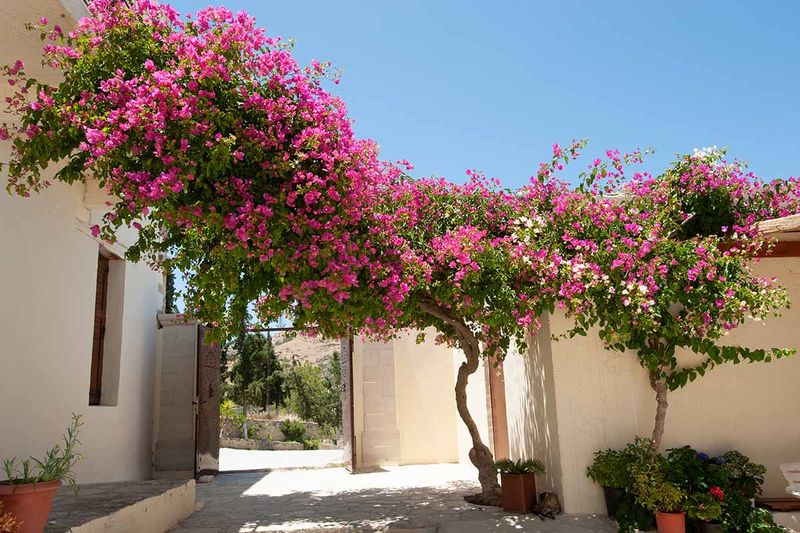
Walk around your yard in the afternoon and notice where the sun lands. Bougainvillea wants full sun, and UF/IFAS recommends it for the best flowering.
A plant shaded by a growing oak or a new fence often grows leaves but shows little color.
Pruning is the second thing you control. UF/IFAS advises that late-summer or early-fall pruning may reduce the following winter’s flowers.
The Miami-Dade guidance adds that pruning after early September can delay or reduce flowering.
This does not mean all pruning is harmful. Shaping after the spring flush, trimming away a branch that blocks a walkway, or cutting out damaged stems is routine and fine.
The risky cut is a big haircut just before the plant sets up its winter color.
Bougainvillea blooms on new growth, so a hard cut in fall removes the wood that was about to carry bracts. Cut late and you may wait months for the plant to recover.
Mark your calendar for a main trim in spring, and treat September as a stop sign for anything beyond light touch-ups.
Dry-season timing and cold risk vary across Florida
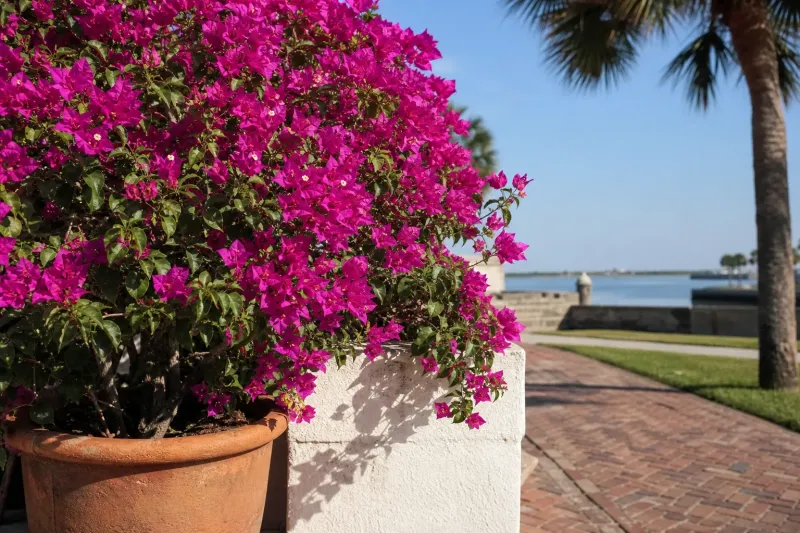
The best-documented winter flowering pattern comes from South Florida. A UF/IFAS guide to low-maintenance plants for South Florida lists bougainvillea as a full-sun plant that blooms best in the dry season and needs well-drained soil.
Timing in North and Central Florida can differ, so do not assume your plant will follow a Miami schedule.
Florida’s dry season generally runs from fall to spring, according to UF/IFAS drought guidance. Actual rainfall varies from year to year and place to place.
A wet January or a dry stretch in November tells you more than the calendar does, so water based on soil, not on the month.
Cold is the other big variable. UF/IFAS cold-weather advice says freezes occur in parts of Florida, with greater protection needed in North Florida.
When frost or a freeze is forecast, protect tender potted plants by covering them or moving them to shelter.
Fertilizer plays into this as well. Feeding in late fall or winter can stimulate soft new growth that the cold will damage easily.
Holding off keeps plants tougher heading into a cold snap.
Choose restraint over neglect
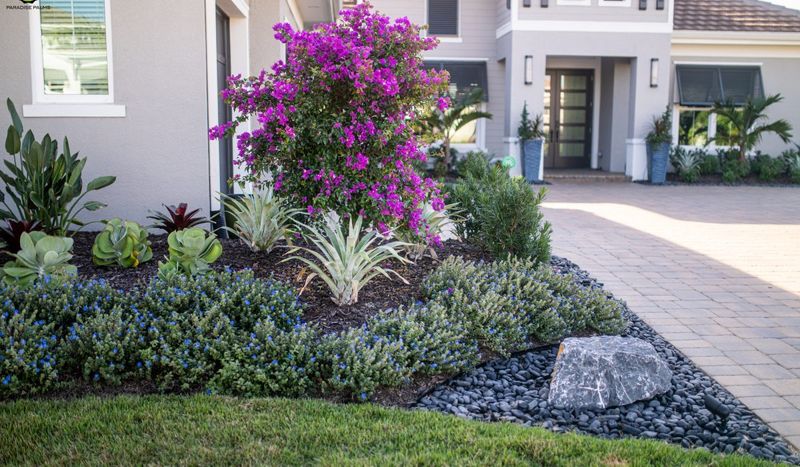
Good bougainvillea care comes down to doing a few things well and then stepping back. Give established plants full sun and good drainage, skip excess irrigation and nitrogen, and leave the fall pruning shears in the shed.
Adjust for new plantings, containers, rainfall, and cold, as UF/IFAS and Charlotte County Extension both suggest.
A dry season helps explain the display, but it is no license to stress plants on purpose. The best winter color usually comes from a plant that was simply left comfortable and a little bit lean.