
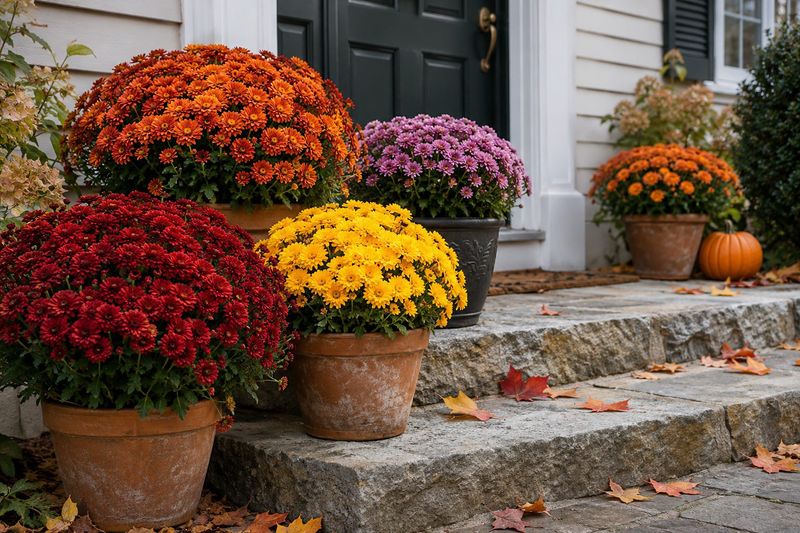
Potted mums parked in the garage for winter need a little water now and then, or the mix can dry out and the roots can suffer long before spring. A quick check every few weeks is a simple habit that protects them from one of winter’s biggest risks.
Water is only part of the story, though, because cold, soggy mix, and the type of mum matter too. Here is how to check your pots and decide when a drink makes sense.
Dormant roots still need occasional moisture
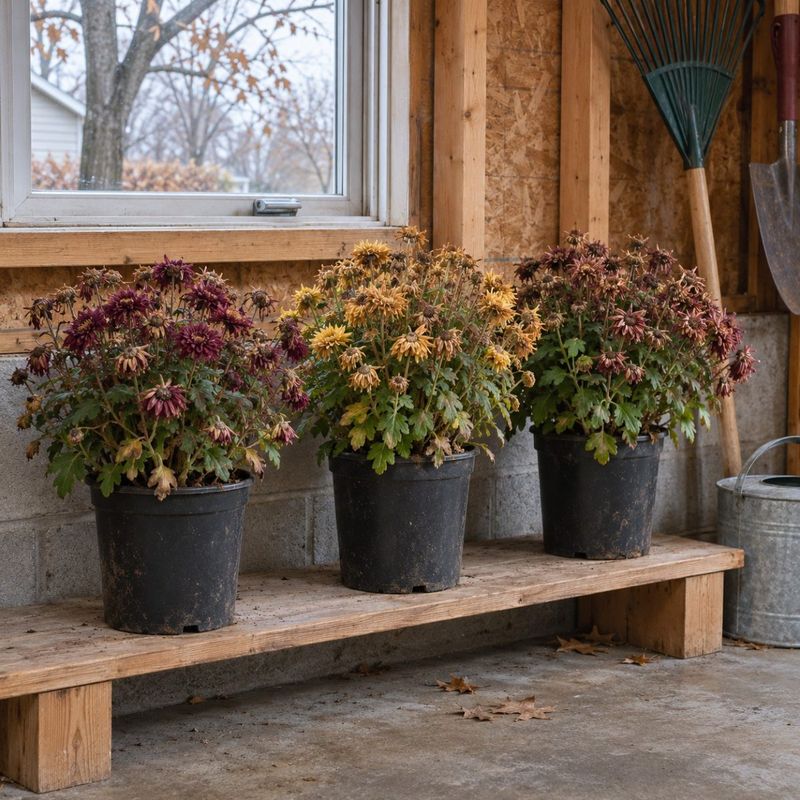
Sleeping does not mean the roots stopped caring about water. Illinois Extension advises checking potted plants through winter and notes that dormant roots still take up water.
A pot that bone-dries in January is a pot in trouble.
The other limit matters just as much. Maryland Extension says stored potted mums should not stay wet, but should not be allowed to dry out completely either.
Think of the goal as lightly damp, never parched and never soggy.
Moisture checks are how you manage the drying risk. They are not a cure-all, though.
Drying is one winter danger, and cold injury to roots in exposed containers is another. Some pots will struggle even when you do everything right, and that is normal.
A monthly check is a starting point
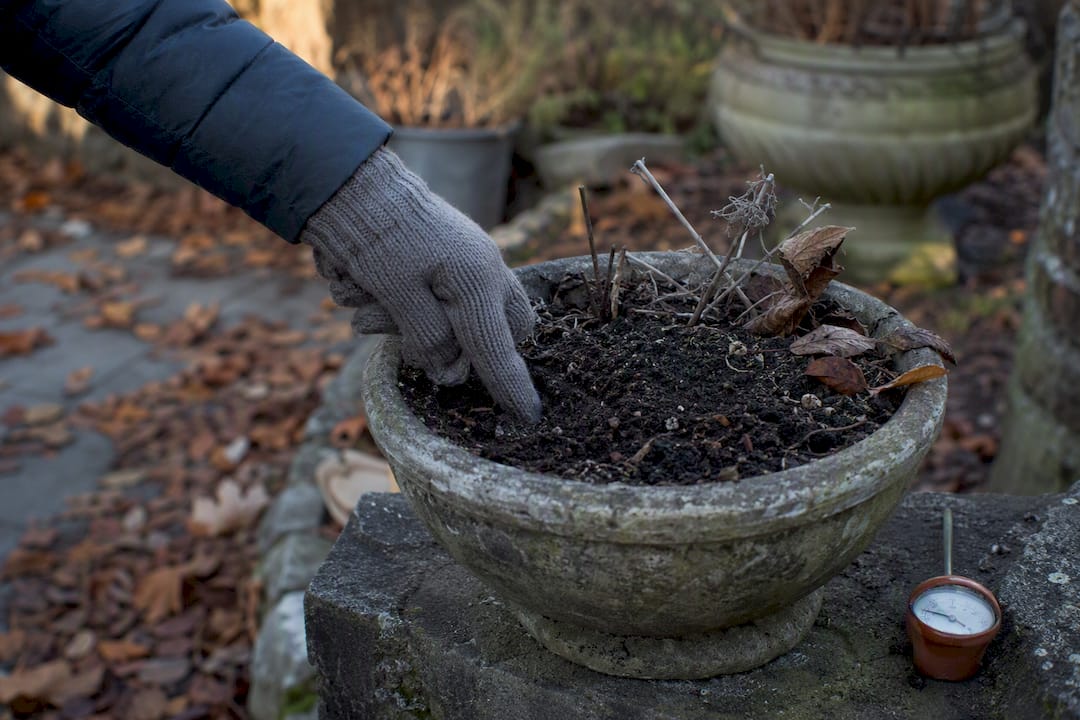
Pick a day, maybe the first weekend of each month, and walk out to the garage with a flashlight and a cup of water. That reminder gets you looking at the pots, which is half the battle.
It is a nudge, not an automatic watering plan.
Guidance varies by region. Colorado State Extension recommends monthly water for perennials overwintered in an unheated garage or shed.
Iowa State Extension says water may be needed every two to three weeks when garage temperatures are above freezing.
New Hampshire offers temperature-conditioned advice too, suggesting periodic watering when temperatures are above 40 degrees F, as described by UNH Extension. Treat all of these as regional reference points.
Your own pot, your own garage, and how dry the mix feels should make the final call.
Check the mix before you water
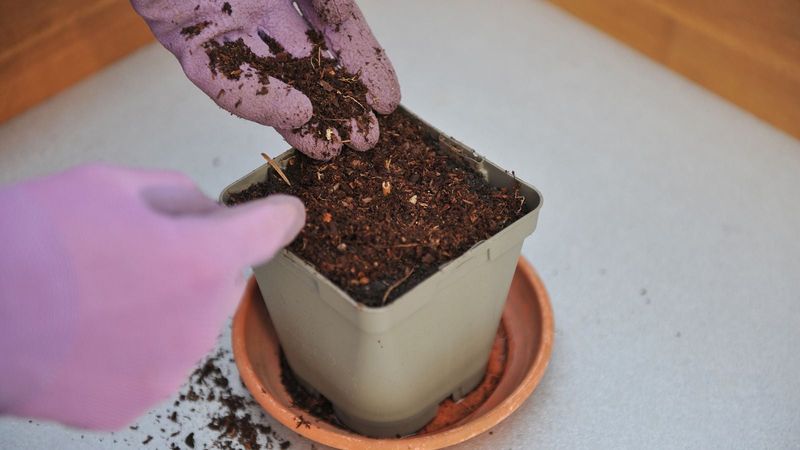
Poke a finger a couple of inches into the mix. If it feels cool and damp, leave it alone.
If it feels dry and crumbly, it is time for a drink.
Lifting the pot works too. Illinois Extension suggests judging mum moisture by soil feel or the pot’s weight, and warns that container mums can be overwatered.
A light pot usually means dry mix, while a heavy one still holds plenty.
A drink here means wetting the mix when it needs moisture, not keeping it wet all winter. Give a modest amount, let extra drain out, and never leave the pot sitting in a saucer of water.
Poor drainage and standing water can harm roots, a point also raised in the University of Minnesota Extension October checklist.
Check how cold the garage gets
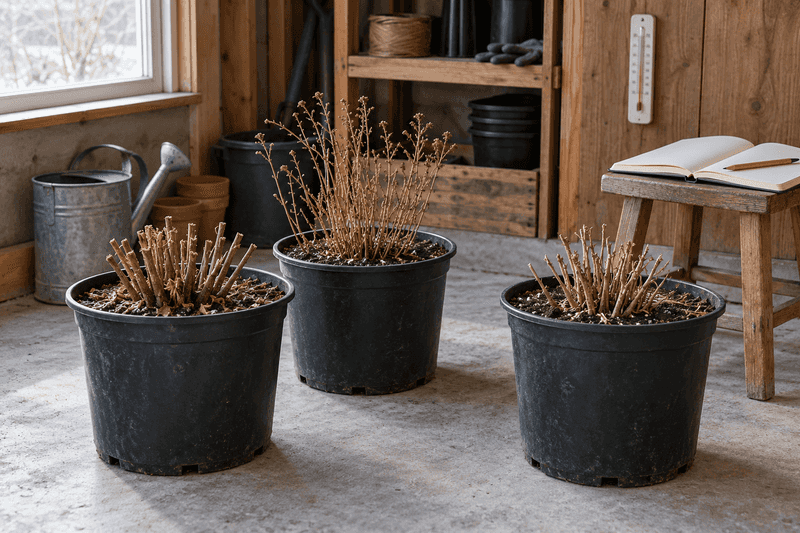
A garage can be a fine winter home, but not every garage is the same. A thermometer will tell you far more than guessing.
A cheap min-max model shows the coldest night your plants really saw.
For hardy dormant perennials, Iowa State Extension recommends moderately cold storage of 20 to 45 degrees F. Treat that as guidance, not a guarantee.
An attached garage may stay milder, while a drafty detached one can swing below that range.
Cold matters because pots offer little insulation. Illinois Extension notes that roots in exposed containers can be injured by cold.
Also remember that Iowa State’s two-to-three-week watering estimate applies when temperatures are above freezing, while New Hampshire guidance uses a 40 degree mark. If the mix is frozen solid, wait for a thaw.
Not every mum will return

The word mum on a plant tag does not promise winter toughness. Iowa State Extension says most florist mums do not survive Iowa winters outdoors, unlike hardier garden mums.
University of Minnesota Extension adds that the common grocery and big-box mums are annual florist types, while bred hardy varieties are chosen for winter survival.
Even a hardy mum in a pot is not a sure thing. Illinois Extension says container-grown mums are poorly suited to perennial growth and need extensive winter protection, with shallow roots freezing and freeze-thaw heaving as risks.
Fall cutback is a separate question from watering. Maryland Extension reports gardeners use both approaches and that leaving stems until spring may add hardiness.
Illinois Extension also saw better survival with old growth left standing outdoors under mulch, though garage storage may differ. Cutting back is not a required step.
Use the check to manage risk

Here is the routine in a nutshell. Look at each pot about monthly, as Colorado State Extension suggests, and step it up toward every two to three weeks if your garage stays above freezing, per Iowa State Extension.
Water only when the mix feels dry and the weather allows, and let any extra drain away.
That habit lowers the odds of drought stress. It cannot promise a spring comeback, because cold-injured roots, mix that stays wet, or a mum that was never hardy can still sink the pot, as Illinois Extension cautions.
Do the checks, accept the odds, and be glad for every green shoot in April.