
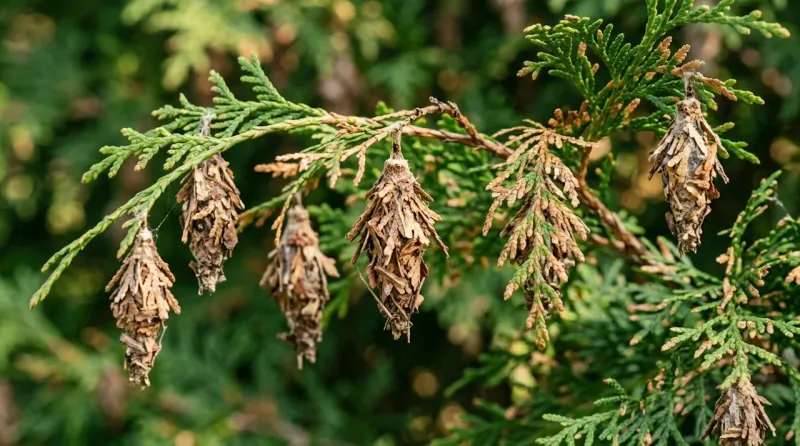
Yes, you can pick those hanging brown cases off your arborvitae now, and doing it before spring hatch is a smart way to cut down on bagworms next summer. Each case from a female bagworm can hold hundreds of eggs, so a quick winter cleanup removes a lot of future caterpillars.
It will not guarantee a damage-free hedge, but it gives your evergreens a real head start. Grab a pair of gloves and a sharp blade, because this is a job that fits a cool afternoon.
Could those brown cases be bagworms?
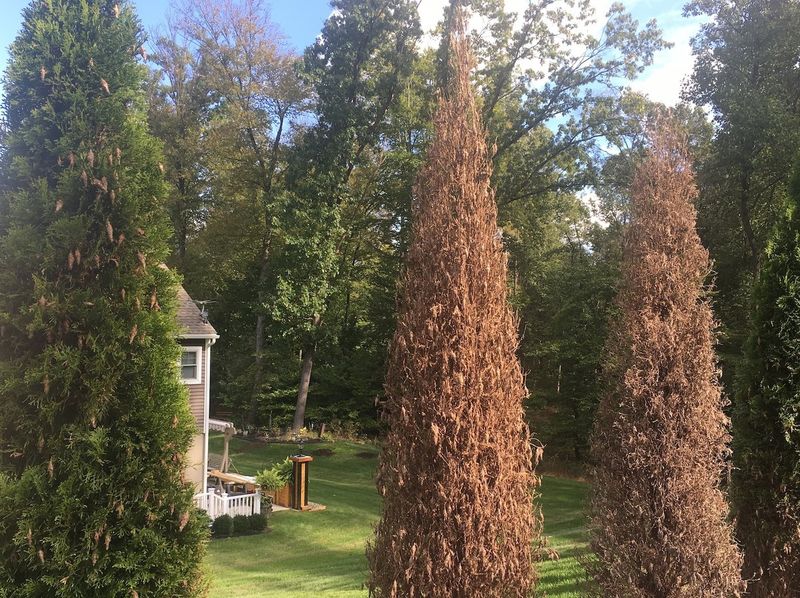
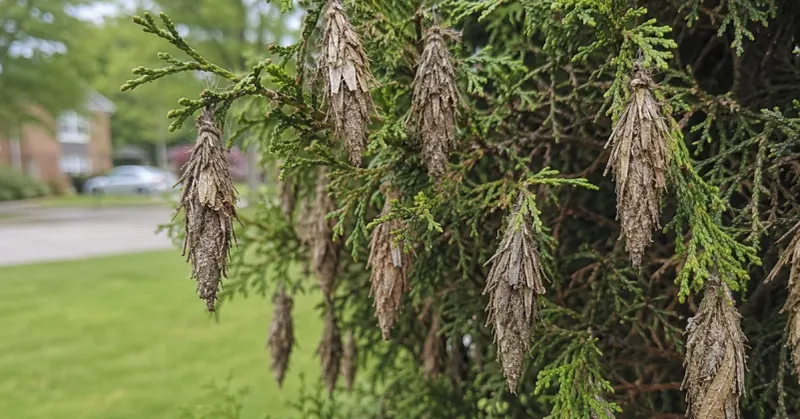
Winter has a way of revealing things your hedge hid all summer. Those little brown cones dangling from the branches may look like tiny pinecones, but on an evergreen they are often bagworm cases.
According to NC State Extension, bagworms commonly feed on arborvitae and other conifers. Their cases are built from silk and bits of plant material, and mature ones hang down from the branches.
Still, not every brown object on an evergreen is a bagworm case. Real pinecones, dried cones from nearby trees, and clumps of dead foliage can all look similar from a distance.
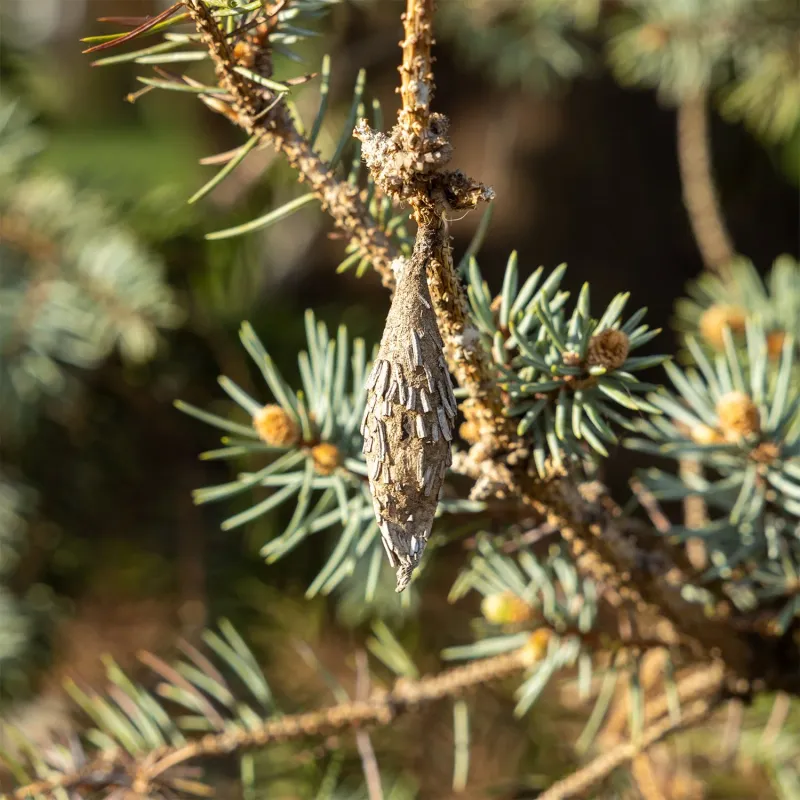
Step closer and take a look. A bagworm case is usually a spindle-shaped bag, a bit ragged, with bits of the host plant woven into the outside.
It hangs from a strong silk band wrapped around a twig. A pinecone, by contrast, has stiff scales and sits on its own stalk.
Gently touch one with a gloved finger. A bag feels papery and slightly tough, and it will not crumble like dead foliage.
If it matches that description, you have likely found what you were looking for.
Take that moment to inspect before you remove anything. Confirming what you are holding keeps you from snipping healthy growth for no reason, and it sets you up for the cleanup steps in the sections ahead.
Why winter removal can make a difference
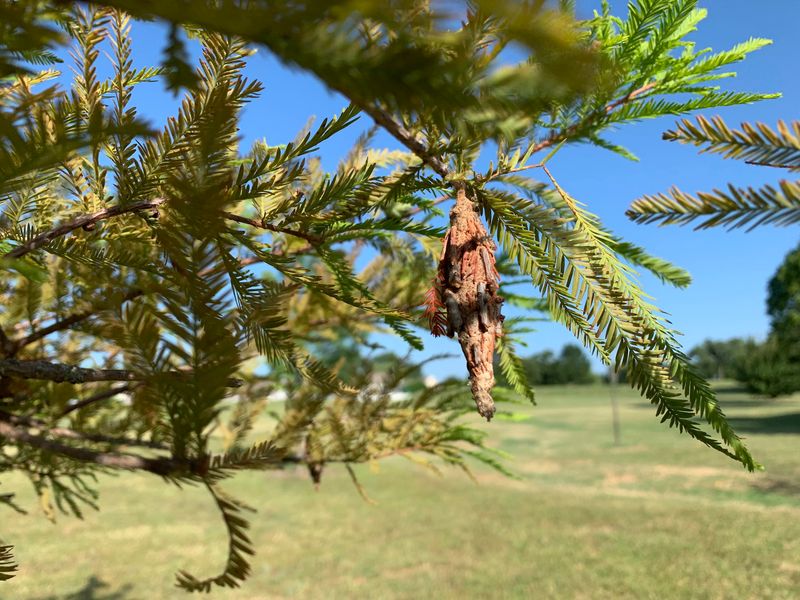
Here is the part that makes winter cleanup worthwhile. Bagworm eggs spend the cold months tucked inside the bags, safe from weather and most hungry predators.
NC State reports that a female bagworm can lay 500 to 1,000 eggs in her bag before she dies in the fall. That is a possible egg load for a female’s bag, not a promise about every case you see.
Some bags may be empty or hold something else entirely.
Those eggs overwinter and typically hatch in North Carolina in May and June. Once they hatch, tiny caterpillars crawl out, spin their own small bags, and start feeding on needles.
Removing bags before that happens takes the eggs out of the picture. That can cut the number of bagworms starting life on your hedge, and a smaller starting population usually means less feeding damage to deal with later.
NC State notes that fall or winter removal can make a big difference.
Keep your expectations realistic, though. Removing bags reduces your local population but does not guarantee a damage-free hedge.
You may miss a few bags, and young larvae can also arrive from other plants nearby.
Think of winter cleanup as lowering the odds. It is one of the simplest tools you have, and it costs nothing but a little time outdoors.
Check the whole hedge for bags
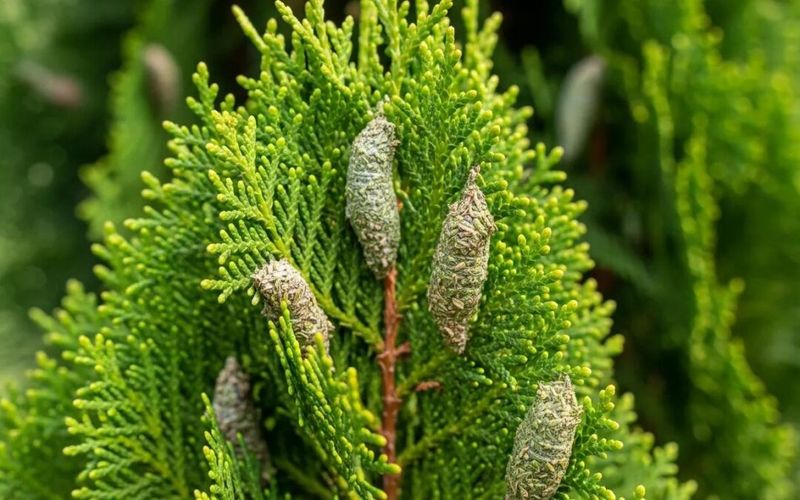
Before you cut anything, take a slow walk along the whole hedge. Look at each plant separately, working from the base up toward the top, and check both the outer branches and the shaded interior.
Infestations are often patchy. NC State notes that a few plants in a hedge may be affected while others are not.
Finding one case on one shrub does not prove that every plant is infested.
That is good news, because it means your cleanup may be smaller than you feared. You might find a cluster of bags on the corner plant and nothing at all three shrubs down.
Bags blend in well against dark evergreen foliage, so lighting matters. A bright, overcast day or a flashlight held at an angle helps the brown cases stand out.
Look under branch tips and near the tops of the plants, where bags like to hang.
A simple trick is to tie a bit of bright yarn or flagging tape on each branch as you finish checking it. That keeps you from searching the same spot twice and shows what you have covered.
Once you know which plants hold bags and how many, you can set the scope for the job. Some hedges need only a few minutes with pruners, while others need a careful afternoon.
Cut the silk band and dispose of the bag
Good news for anyone with reachable bags: hand-picking works. You can also prune off infested branch tips if a bag is tangled deep in the foliage.
Skip the tug-of-war, though. NC State advises cutting the strong silk band with a sharp knife or utility razor instead of yanking the bag, because pulling can shear off needles and leave bare spots on your arborvitae.
Slip the blade under the band where it wraps the twig and slice it through. The bag should then drop free into your hand or into a bucket held below it.
Work carefully and keep the blade pointed away from your fingers.
Disposal matters just as much as removal. Destroy the bags or put them in the trash.
Do not simply toss them on the ground beside the shrub, because eggs may still hatch and the larvae may find their way back to host plants.
A sealed trash bag works well. Some gardeners also drop bags into a bucket of soapy water for a few days before bagging them, which is an easy way to be sure nothing survives.
Winter spraying is not a substitute for any of this. The bag shelters what is inside it, so removal is the step that counts in the cold months.
Look for newly hatched larvae in spring
Spring is your second chance to catch what winter cleanup missed. Missed bags still hold eggs, and nearby plants can send in young caterpillars too.
Late May or early June is a useful window in North Carolina for checking on small, newly hatched caterpillars, according to NC State guidance. Timing varies from year to year and place to place, so look for the larvae themselves rather than relying only on a date on the calendar.
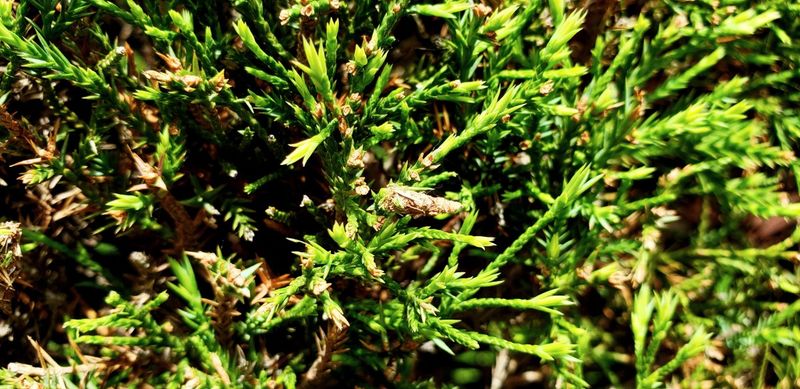
What are you hunting for? Tiny bags, often smaller than a grain of rice, hanging from needle tips.
Small chewed patches or browning near the tips can be another clue that feeding has started.
Check your hedge every week or so through May and June, paying special attention to plants that had bags last winter. Catching an outbreak while the caterpillars are tiny is far easier than dealing with large bags in midsummer.
If you decide a treatment is needed, start with current product labels and local guidance, such as your county Cooperative Extension office. Labels tell you what is allowed on which plants and how to use a product safely.
NC State also warns that pyrethroids are highly toxic to insects and should be kept away from pools, ponds, and streams because of the risk to fish.
Hand removal of the few bags you find early is often all a small problem requires.
Keep watching after cleanup
A clean hedge in January does not guarantee a clean hedge in July. Removing bags reduces the local population, but young larvae can travel.
According to University of Delaware Extension, newly hatched larvae can disperse on silk threads carried by the wind. That means caterpillars from a neighbor’s juniper or a street tree may land on your arborvitae no matter how thorough you were.
Nature sometimes lends a hand. NC State says natural enemies, including parasitic wasps, may keep bagworm numbers below noticeable damage in some situations.
They are a helpful bonus, not something to count on to protect your plants.
So what should a sensible routine look like? Remove confirmed bags before hatch, dispose of them in the trash or destroy them, and then keep an eye on the hedge through late spring and early summer.
If you spot small caterpillars, deal with them early and look at your NC State bagworm guide for current advice.
It helps to chat with neighbors, too. If their evergreens carry bags, a quick conversation could lower the pressure on your whole street.
Winter cleanup will not make your hedge bulletproof, but it tilts the odds your way, and a few minutes of watching each week keeps a small problem small.