
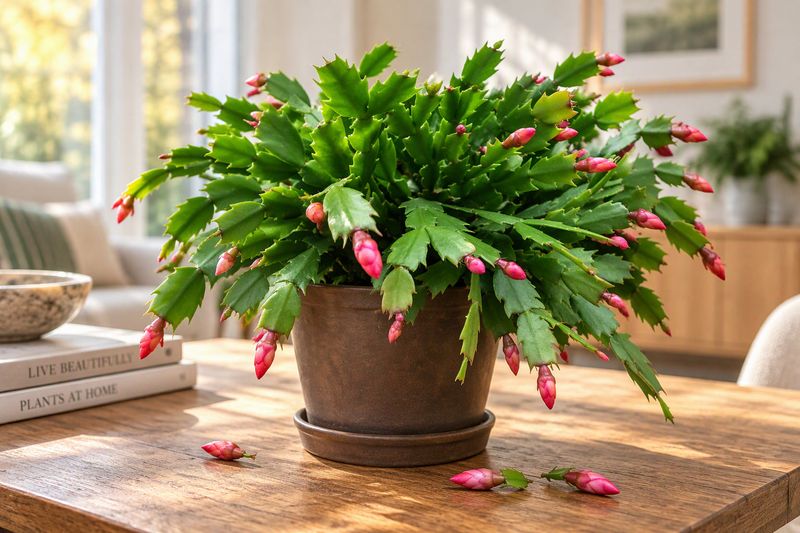
If your Christmas cactus sits near a drafty door, move it to a bright spot with indirect light, away from cold air, heat vents, and other sudden changes. Those little buds are fussy, and a rough patch of air can send them tumbling right before the show.
A smart move now can give the remaining buds a steadier place to open. Here is how to pick the spot, make the move, and check other causes if buds keep falling.
Check the surroundings before settling on a cause
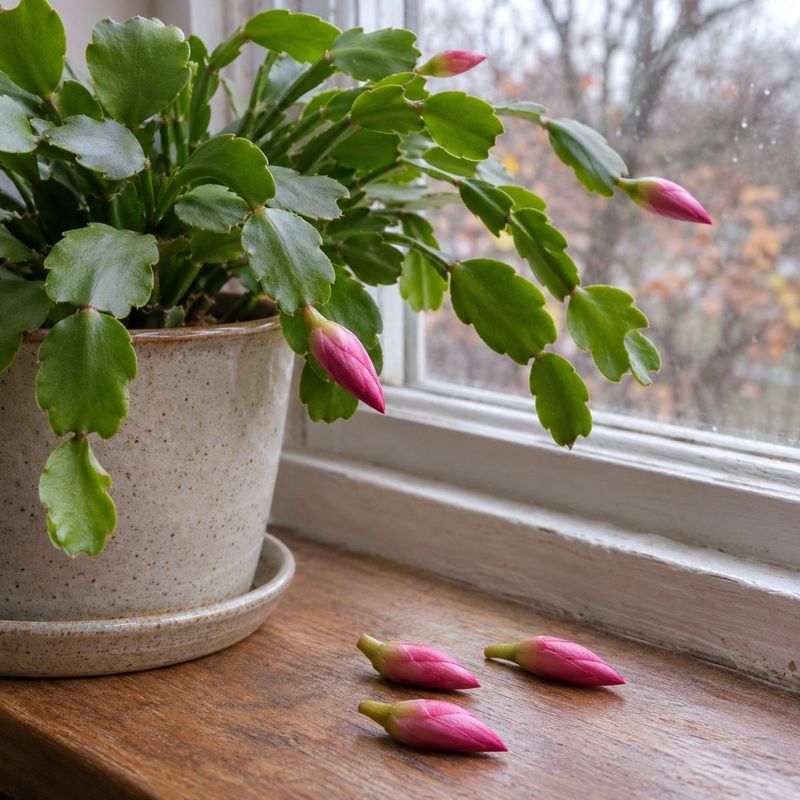
Walk past your plant and notice what it lives with every day. Cold air slipping under an exterior door, warm air blowing from a heating vent, or heat from a fireplace can all contribute to bud drop while buds develop.
Sudden shifts in temperature, humidity, or light can do the same.
Still, the surroundings alone cannot tell you why one particular plant is shedding buds. Minnesota Extension points to drafts and abrupt changes as possible causes, and other factors can play a part too.
Watering problems, low light, high temperatures, and low humidity all belong on your checklist.
One more wrinkle: many plants sold as Christmas cactus are really other holiday Schlumberella types, and Illinois Extension notes that many are Thanksgiving cactus. Bloom timing and responses can vary by type, so your plant may be on its own schedule.
Start by noting where the plant sits, how much light it gets, and whether it feels air moving across it. That simple picture helps you decide what to change first.
Look for bright, indirect light and steadier conditions
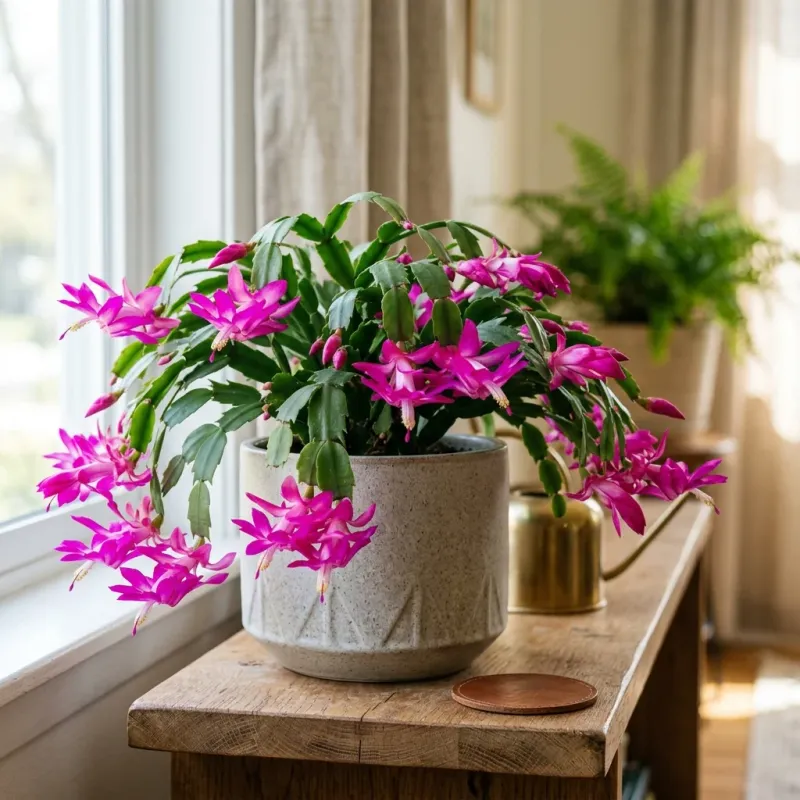
A good spot has two traits: bright light that is not harsh, and calm air. Think of a place near a window where sunlight is filtered, not blasting the leaves for hours.
Keep the plant away from exterior-door drafts, heating vents, fireplaces, and anything else that swings the temperature up or down fast.
Temperature advice depends on the goal and the stage of flowering. Wisconsin Extension lists 55 to 60 degrees F as minimums and says cool nights can help bring on flowers.
Other sources give different numbers for different purposes, so no single figure works as a safe-room rule for every plant.
Cool air by itself does not prevent bud drop either. What matters most is stability, meaning the spot does not heat up and cool off in sudden bursts.
Guidance from UF/IFAS also says to keep the plant away from drafts and heat sources such as vents and fireplaces. Hold your hand near the spot at different times of day to feel for moving air.
Choose by conditions, not by room name
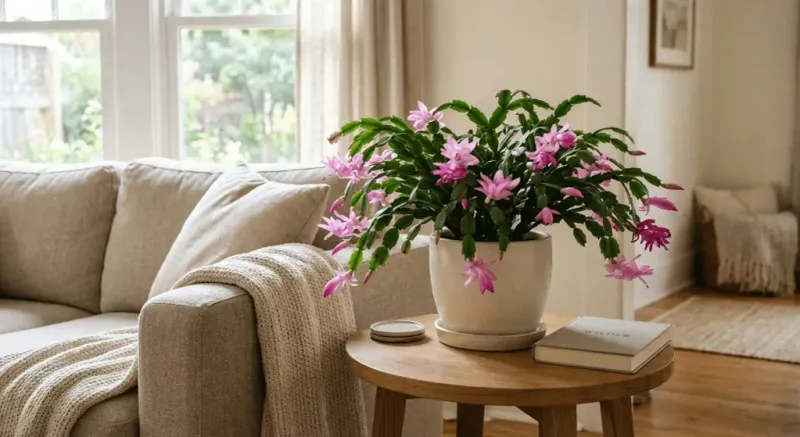
No room is automatically right. A living room can be perfect on a bright shelf and awful on the mantel.
A bedroom might offer a quiet window, or it might have a vent blowing right at the pot.
In the living room, look for a bright corner away from the fireplace, the front door, and any heating register. In the bedroom, a window ledge that stays steady can work if the glass is not icy and no vent points at it.
In the kitchen, bright counters can be handy, but keep the plant clear of ovens and doors that open to the outside.
Gas-burning stoves deserve special mention. UConn Extension lists them as a possible contributor to bud drop, so a spot near one is best avoided.
Before you commit, judge each candidate by four things: light, drafts, nearby heat, and how steady the spot stays through the day and night. The spot that scores best wins, whatever room it is in.
Make one deliberate move and let the plant settle
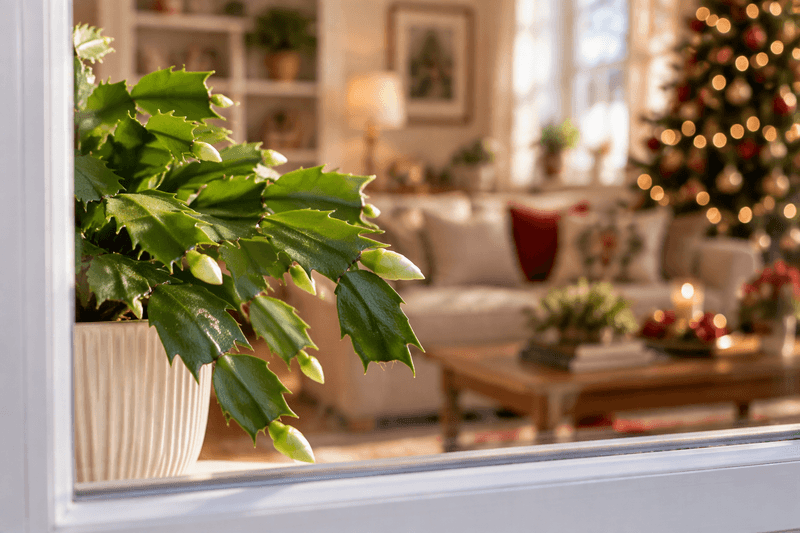
If your cactus is in the path of a cold draft or hot vent, relocating it is the right call. Pick the new spot using the checklist, carry the pot gently, and set it down where it can stay.
Then resist the urge to nudge it around.
Advice to avoid disturbance is about unnecessary changes, not about leaving a plant in harmful conditions. Minnesota Extension even suggests moving a plant to its intended warmer room as soon as buds appear, if that is where it will remain.
Frequent shuffling and turning the pot while buds form are best skipped. The Chicago Botanic Garden recommends minimizing disturbance, though that does not mean every move will cause drop.
No move can promise to save every bud, either.
If you want the plant on a table for guests, Colorado State Extension suggests waiting until flowers begin to unfold. After that, a short stay on display is a reasonable treat.
If buds keep falling, check the potting mix
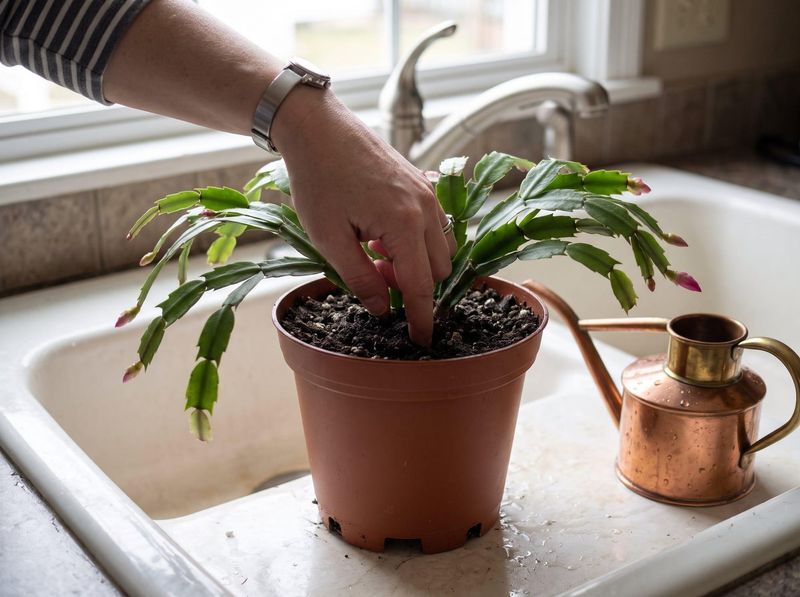
Sometimes the draft is not the whole story. If buds keep dropping after a good move, turn to watering.
Push a finger into the mix and feel the top inch.
When that layer feels dry, water thoroughly, then let the extra drain out. UF/IFAS advises exactly that, along with emptying excess water from the saucer.
A pot with drainage holes makes this much easier.
Standing water is a problem. Minnesota Extension warns that it can lead to bud drop and root rot.
Aim for the middle ground. Do not let the mix turn bone dry, and do not make up for dryness with a big flood.
Skip a fixed calendar, since a bright warm room dries the pot faster than a cooler one. Let the mix tell you when it is time.
Treat existing buds differently from future flowering
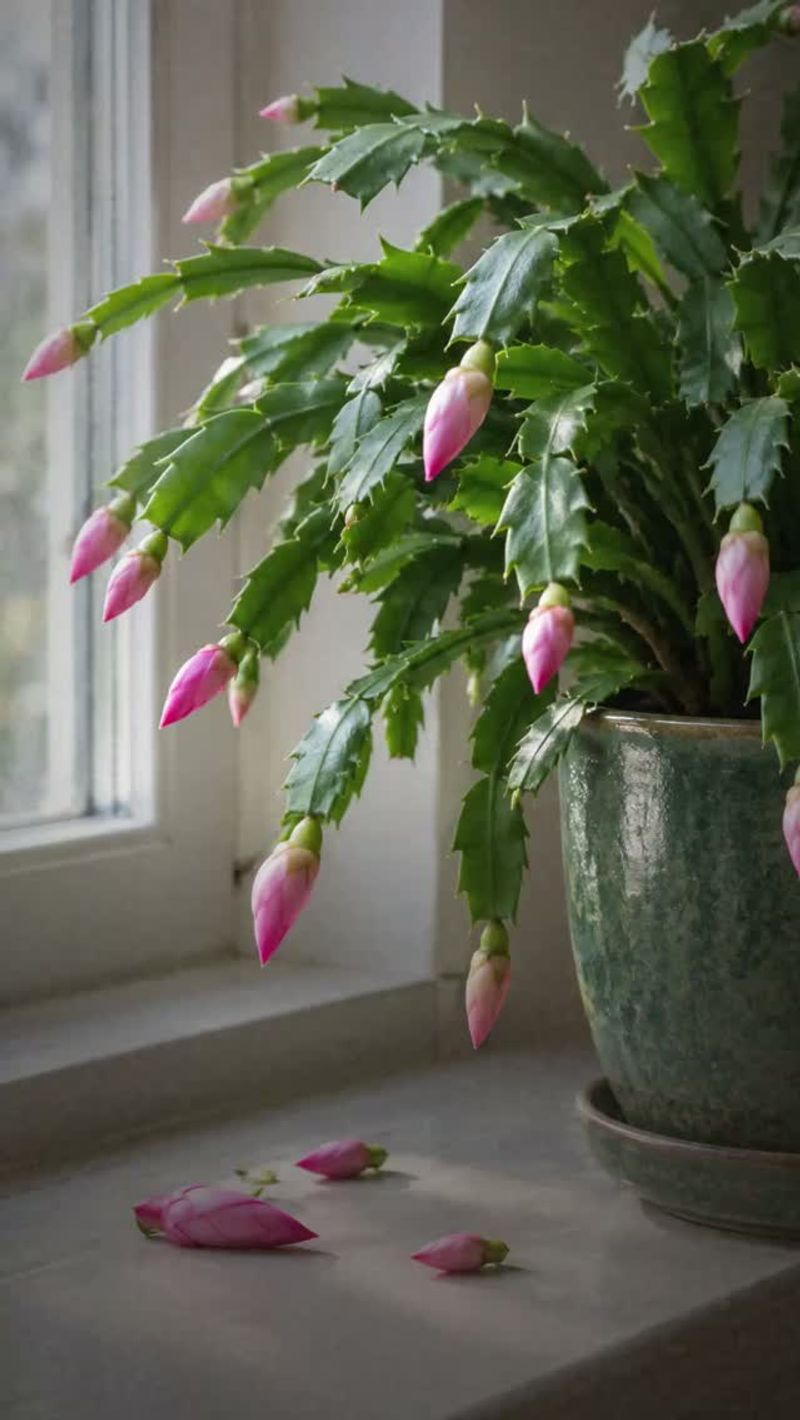
The order is simple. Choose a steady, suitable spot, make any needed move once, and check light, watering, heat, and humidity if buds still fall.
That covers the buds you already have.
Flower initiation is a separate job. Illinois Extension explains that short days and long nights prompt holiday cacti to set buds, and Wisconsin Extension notes that cooler nights help too.
Timing varies by type, so a Thanksgiving cactus may bloom earlier than a true Christmas cactus.
Those cues are for plants that have not formed buds yet. Do not cover a plant or push it into darkness as a fix for buds already falling, since that treatment does not address the cause of drop.
Give the buds you have a calm place, and save the long nights for next season.