
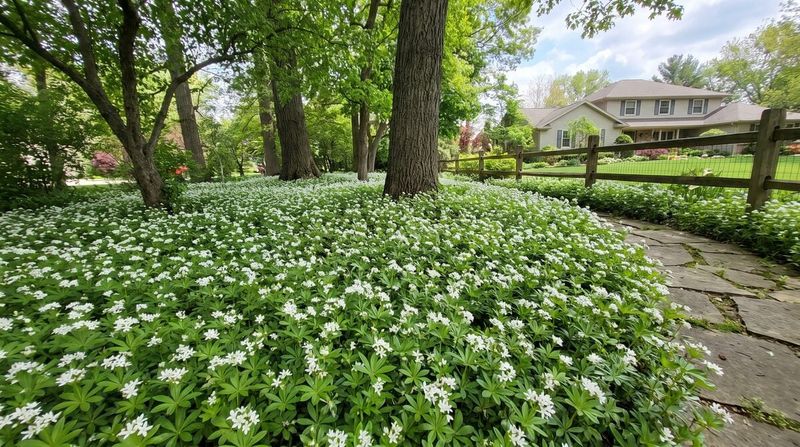
Bare soil is an open invitation, and weeds always RSVP first. Every empty patch in your garden bed is a spot where crabgrass, dandelions, and bindweed can move in and take over.
The good news is that the right ground cover can knit itself into a living carpet in a single season, shading out weed seeds before they ever sprout. Here are nine tough, fast-growing plants that can turn your weekend weeding chore into a distant memory.
1. Creeping Thyme
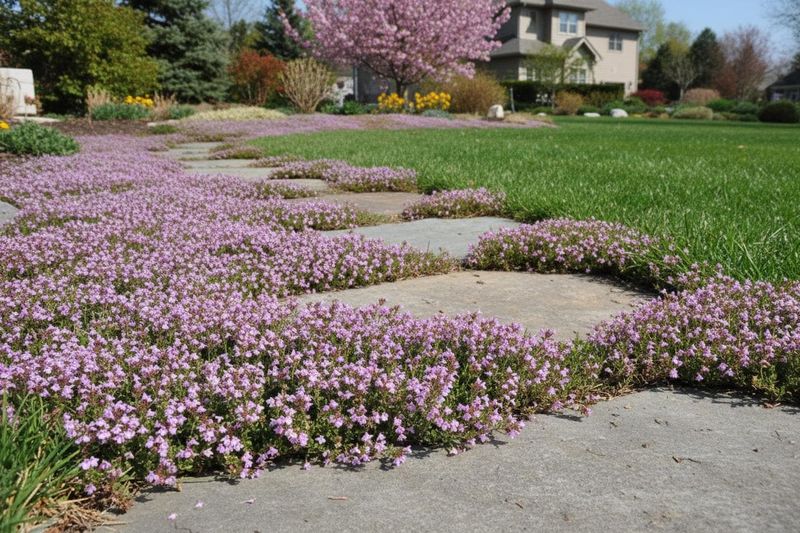
Step on it, and it smells like a kitchen herb garden. Creeping thyme is one of those rare plants that actually enjoys a little foot traffic, releasing a warm, savory scent every time you brush past.
It hugs the ground at just two or three inches tall, spreading into a tight mat that leaves weeds no room to land. In early summer, the whole carpet erupts in tiny pink, purple, or white blooms that pull in bees by the dozen.
Varieties like Elfin, Red Creeping, and Magic Carpet are all popular picks.
Sun is the big requirement here. Give it at least six hours a day and soil that drains well, because soggy roots are the one thing it truly hates.
Sandy or rocky ground suits it beautifully, which makes it a smart choice for that dry, sunny strip where nothing else seems happy.
Plant plugs about 8 to 12 inches apart in spring, water them regularly the first couple of months, and then mostly leave them alone. By the following summer, the gaps close up.
Did you know? Ancient Romans tucked thyme into their baths, believing it gave them courage.
Your garden beds will just get braver against weeds.
2. Creeping Jenny
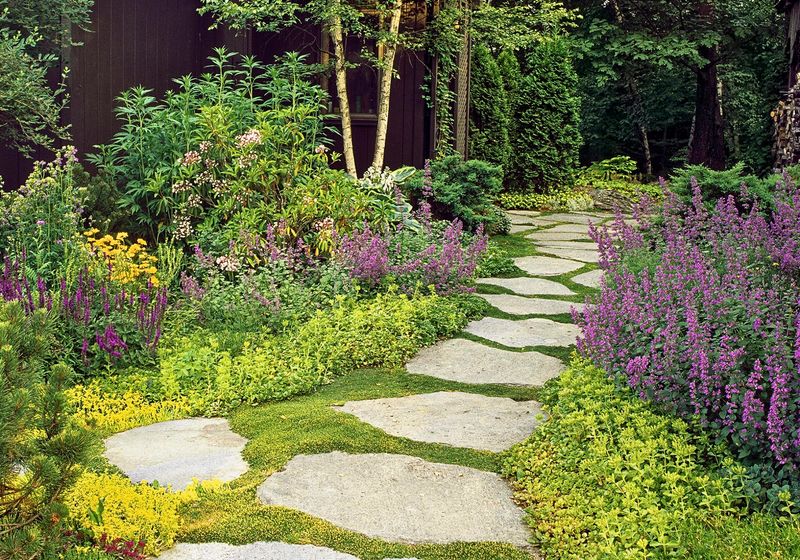
Picture a puddle of liquid sunshine spilling across your flower bed. That is golden creeping Jenny, and few ground covers move quite as fast.
Its round, coin-shaped leaves glow a bright chartreuse that lights up shady corners and pairs wonderfully with dark hostas or purple heuchera. Stems root wherever they touch the soil, so a few small pots can cover several square feet in one growing season.
Gardeners love it for spilling over walls, edging pathways, and softening the edge of a pond.
A word of friendly caution, though. In damp, rich soil, it can get a little too ambitious and wander into the lawn.
Plant it where you can define its boundaries with an edging strip, a sidewalk, or a wall, and you will have nothing but praise for it.
Creeping Jenny prefers moist ground and handles everything from full sun to fairly deep shade, though the brightest color shows up with a few hours of morning light. Zones 3 through 9 suit it well.
If a patch gets too thick, just yank out a handful of stems and share them with a neighbor who has their own weed problem.
3. Ajuga (Bugleweed)

Shady spots under trees are where many ground covers give up. Ajuga, often called bugleweed, practically throws a party there instead.
Its glossy rosettes come in deep burgundy, bronze, and even pink-splashed varieties like Burgundy Glow and Chocolate Chip. Each spring, short spikes of cobalt blue flowers pop up and turn a dull corner into something you actually want to look at.
Hummingbirds and early bees appreciate the blooms too.
What makes ajuga such a weed fighter is the way it spreads. Runners shoot out from each plant and set down new rosettes, which link together into a solid, overlapping mat.
Weed seeds simply cannot find daylight underneath it.
Space plants roughly a foot apart, keep them watered while they settle in, and expect a full carpet within a year. Good drainage helps prevent crown rot, which is the one problem that occasionally pops up in heavy, wet clay.
Bugleweed is hardy in zones 3 through 9 and stays evergreen or semi-evergreen in milder winters. That means your beds keep their color even in January.
After the flowers fade, a quick pass with the mower on its highest setting tidies everything up.
4. Sedum (Stonecrop)
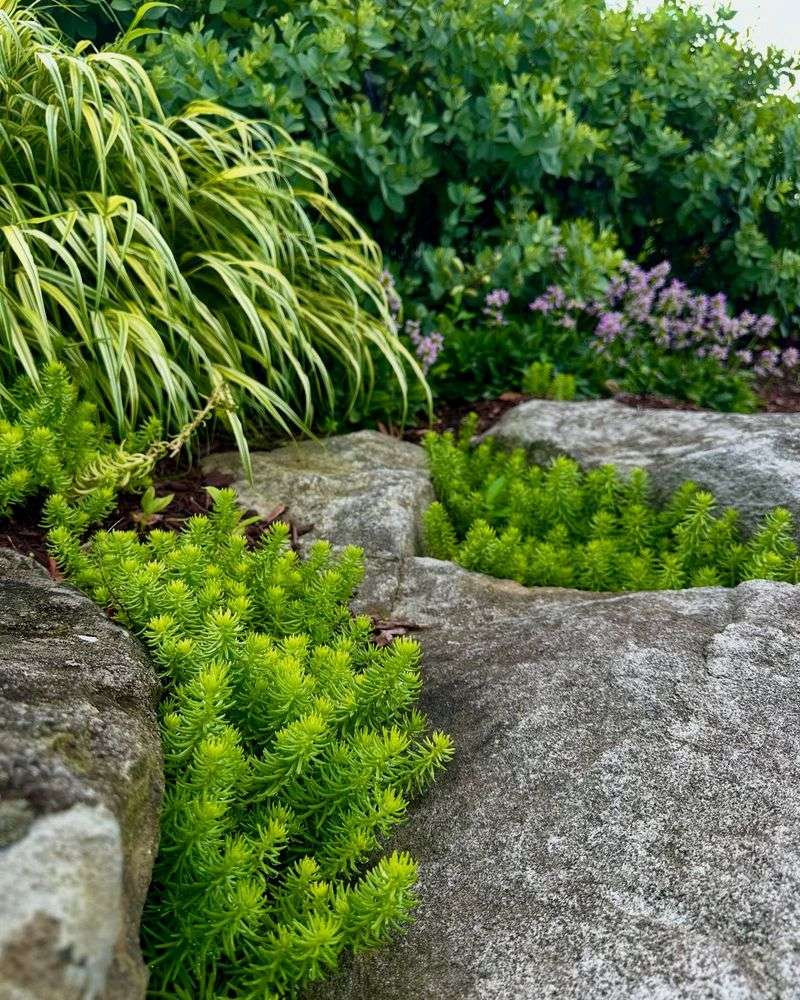
Forget to water for three weeks in July? Sedum will not even notice.
Low-growing stonecrops are succulents, storing water in their plump little leaves, so they shrug off heat and drought that would fry most plants.
Varieties such as Dragon’s Blood, Angelina, and John Creech form thick mats in shades of red, gold, and green. Many change color with the seasons, turning bronze or burgundy as fall temperatures drop.
Starry flowers in yellow, pink, or white appear in summer and keep pollinators busy.
Spreading sedum is almost comically easy. Snap off a piece, press it into bare soil, and it roots on its own within a few weeks.
Gardeners on a budget can fill an entire bed from a single flat by breaking plants into small chunks.
Full sun and lean, well-drained soil keep stonecrop happiest. Rich garden soil and too much water actually make it floppy, so skip the fertilizer entirely.
Sedum shines on slopes, hot curbside strips, and rock gardens where weeds tend to sneak in. Fun fact: some sedums are used on green roofs atop city buildings, which tells you just how tough they are.
5. Sweet Woodruff
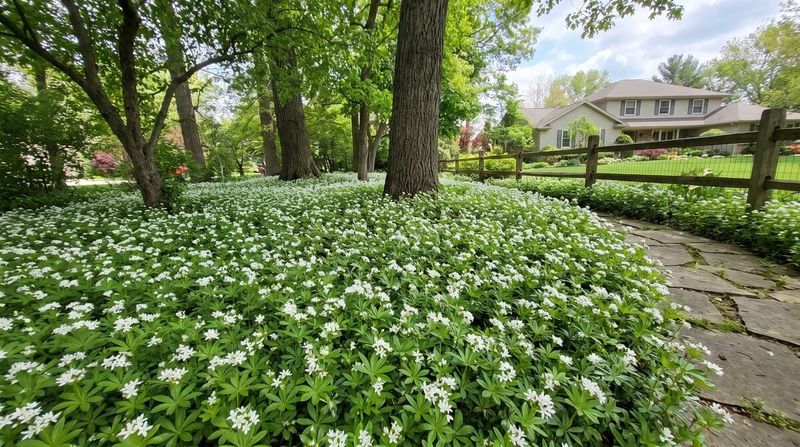
Old European gardeners tucked dried sweet woodruff into linen closets because it smells like fresh hay and vanilla. In your yard, though, its real gift is turning bare, shady soil into a soft green blanket.
Bright green leaves grow in neat little whorls, like tiny wagon wheels stacked on each stem. In late spring, clouds of starry white flowers float above the foliage for several weeks.
The overall look is airy and woodland-like, perfect under trees, beside hostas, or along a north-facing foundation.
Sweet woodruff spreads by underground runners and fills in quickly in moist, rich soil. Plant it about a foot apart in spring, and you can expect solid coverage by the next growing season.
Here is a helpful tip. It does not love hot, dry afternoon sun, and it may go dormant in a drought.
Keep it in shade or part shade with steady moisture, and it stays lush all summer.
Deer and rabbits generally leave it alone, which is a nice bonus if hungry visitors chew through the rest of your garden. Sweet woodruff grows in zones 4 through 8.
6. Creeping Phlox

Every April, certain neighborhoods look like someone spilled cans of pink and purple paint down the hillsides. That is creeping phlox putting on its famous spring show.
For a few weeks, the flowers are so thick you can barely see a leaf. Colors range from hot magenta and lavender to soft blue and pure white.
Once the blooms fade, needle-like evergreen foliage stays behind as a tidy, dense mat that keeps weeds smothered for the rest of the year.
Native to the eastern United States, creeping phlox handles cold winters well in zones 3 through 9. It thrives in full sun to light shade and prefers well-drained soil.
Slopes, rock walls, and the front edges of beds are its favorite places to show off.
Plants spread steadily by trailing stems that root as they go. Set them about 18 inches apart, and they usually join hands by the following year.
A light trim right after flowering encourages thicker growth and keeps the mat looking neat.
Bonus points go to its pollinator appeal. Early butterflies and bees rely on its nectar when not much else is blooming yet.
7. Lamium (Spotted Dead Nettle)
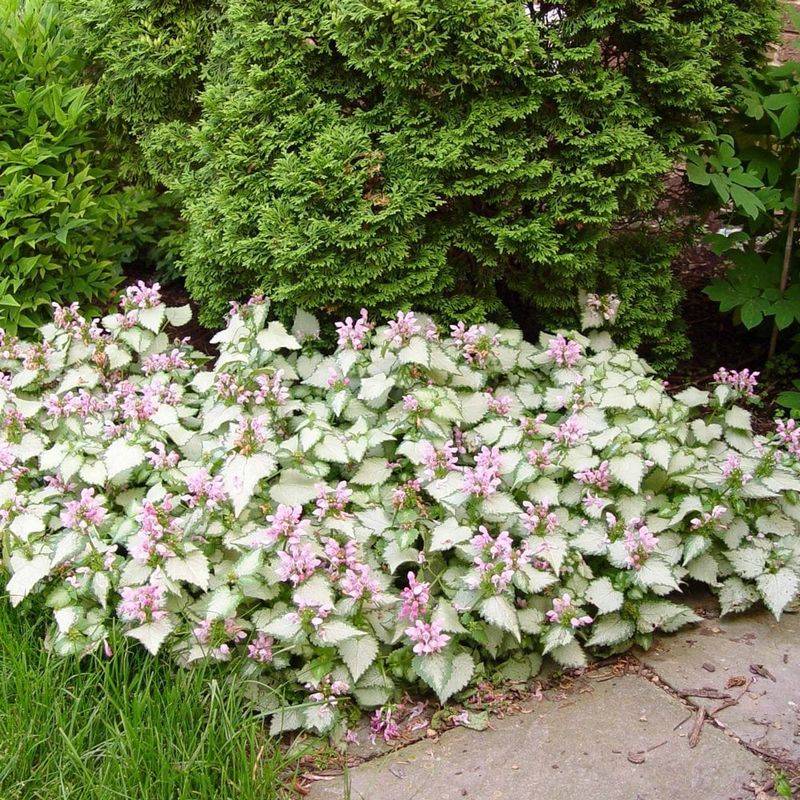
Don’t let the grim name scare you off. Spotted dead nettle has nothing to do with stinging; the dead part simply means it lacks the prickly hairs of its nettle cousins.
What it does have is foliage that practically glows. Leaves splashed with silver, like those of Beacon Silver and White Nancy, brighten dark corners the way a nightlight brightens a hallway.
Pink, purple, or white flowers appear in spring and often keep coming through summer.
Lamium is a fast, low spreader, usually staying under eight inches tall while trailing outward a couple of feet each year. Its dense habit crowds out weeds in dry shade, one of the toughest spots in any yard.
Once established, it can handle the root competition under maples and oaks better than most.
Plant it in partial to full shade, water during its first summer, and then relax. If it ever looks leggy by midsummer, shear it back by half, and fresh leaves pop right up within a couple of weeks.
Hardy in zones 3 through 8, lamium is also deer-resistant. It mixes nicely with ferns, hostas, and bleeding hearts for a layered shade garden.
8. Hardy Geranium

Ask experienced perennial gardeners for one bulletproof filler, and plenty of them will say hardy geranium without blinking. Also called cranesbill, it is a completely different plant from the potted geraniums on your porch.
Varieties like Rozanne, Biokovo, and Bevan’s Variety form loose, leafy mounds that knit together into a thick, weed-blocking layer. Rozanne is a superstar, blooming violet-blue from late spring right up until frost.
A single plant can stretch two feet wide or more in its first year.
Hardy geraniums are wonderfully flexible about where they live. Sun, part shade, clay, loam, it handles all of them.
Some types, especially Geranium macrorrhizum, even tolerate dry shade and smell pleasantly spicy when you crush the leaves.
Because the foliage is broad and layered, it shades the soil surface so well that weed seeds struggle to sprout. In fall, many varieties turn handsome shades of red and orange, adding a second season of interest.
Care is minimal. Cut tired plants back in midsummer if they flop, and they regrow quickly.
Most types are hardy in zones 4 through 8, and few pests ever bother them.
9. Wild Strawberry
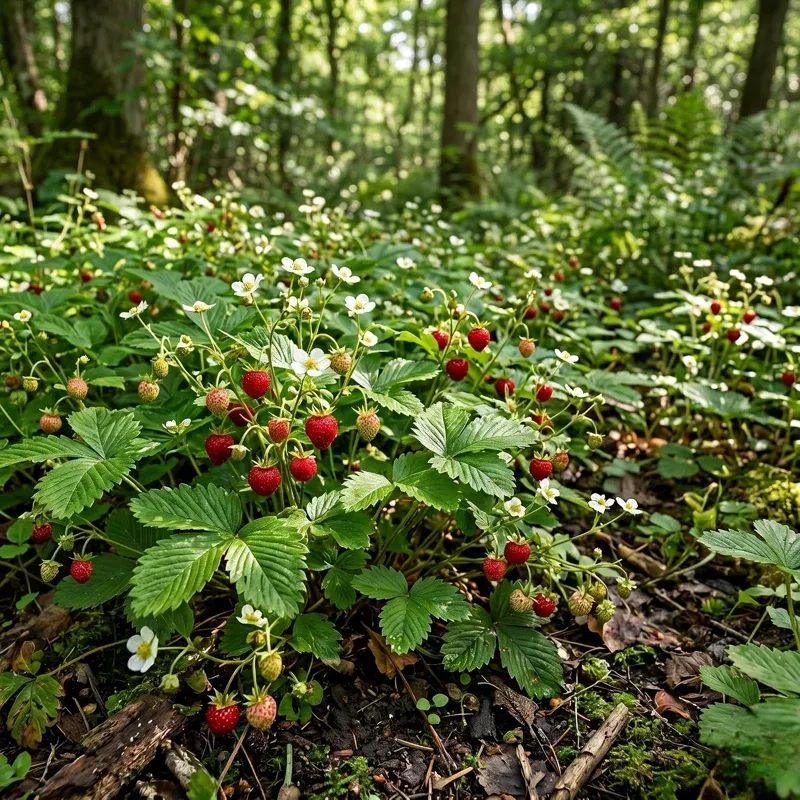
Here is a ground cover that pays you back in snacks. Wild strawberries, especially native Fragaria virginiana and beach strawberry, spread by runners so eagerly that they can cover a bare bed in a single season.
Each mother plant sends out long stems that drop new baby plants every few inches. Before long, those babies send out runners of their own, and the whole patch becomes a thick tangle of three-part leaves.
Weeds have a tough time breaking through.
In spring, small white flowers attract early bees. By early summer, tiny red berries appear, and while they are smaller than store-bought fruit, the flavor is intensely sweet.
You will probably be racing the birds and chipmunks for them, which is half the fun.
Wild strawberries grow in full sun to part shade and do fine in average soil. They are native across much of North America and hardy in zones 3 through 9, so they fit nearly any region.
For a tidier look, trim runners that stray into paths. Kids especially love this one, because hunting for berries turns garden time into a treasure hunt instead of a chore.