
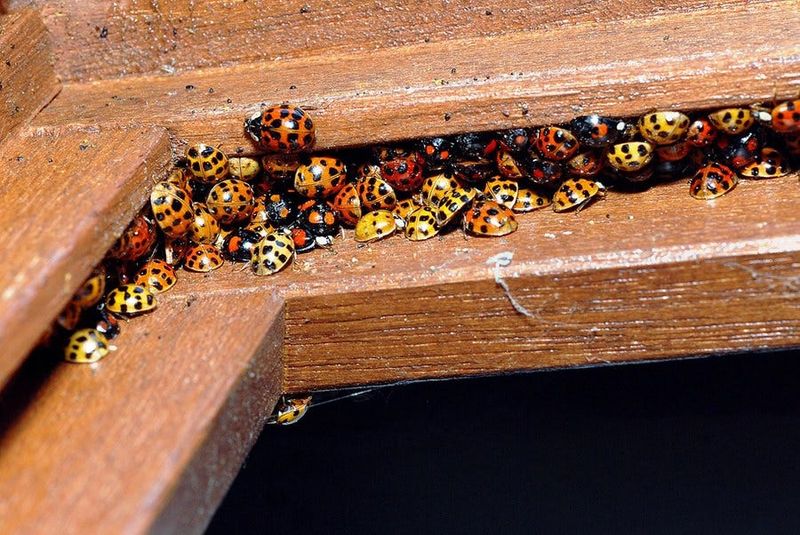
Ladybugs pile onto a sunny wall in fall because some of them are looking for a sheltered place to spend the winter. A bright, sturdy building can look like a good spot to a multicolored Asian lady beetle.
Sunlight, visual cues, and chemical signals may all play a part, though not in every cluster. Here is what that crowd means, what it does not promise, and how to treat your visitors well.
Start by checking which lady beetle you’re seeing
California is home to a lot of lady beetles. UC IPM’s general guide lists about 200 species, and most of them are predators of pest insects.
They differ in looks and in habits, so the word ladybug is too broad to explain why one particular group is clustering.
That means a crowd on your wall cannot tell you the species by itself. You can’t identify every cluster at a glance, and that’s okay.
A few clues can still point you in the right direction.
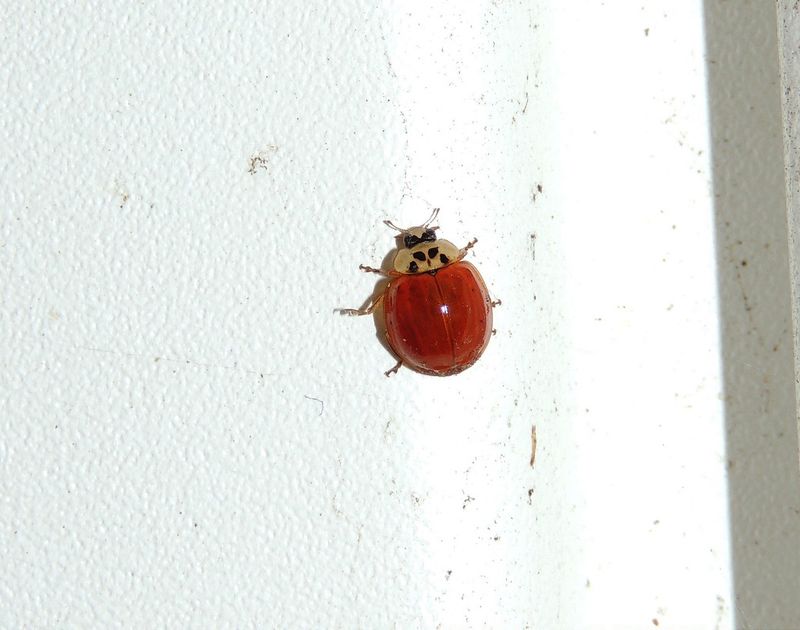
One helpful clue is on the head end. The multicolored Asian lady beetle has a pale area behind its head with a dark M- or W-shaped marking, as described on the UC IPM page for this species.
Color and spot count vary a lot, so a red body or a certain number of spots is not a dependable way to name it.
The native convergent lady beetle is a different story. According to UC IPM’s convergent lady beetle profile, many of them leave valleys and coastal areas for the foothills in fall rather than settling on house walls.
So if you spot the M-shaped marking on wall beetles, you may be looking at the Asian species. If you can’t find it, hold off on drawing conclusions.
A quick photo with a phone zoom can help you check the head marking without disturbing the group.
Some lady beetles seek winter shelter in buildings
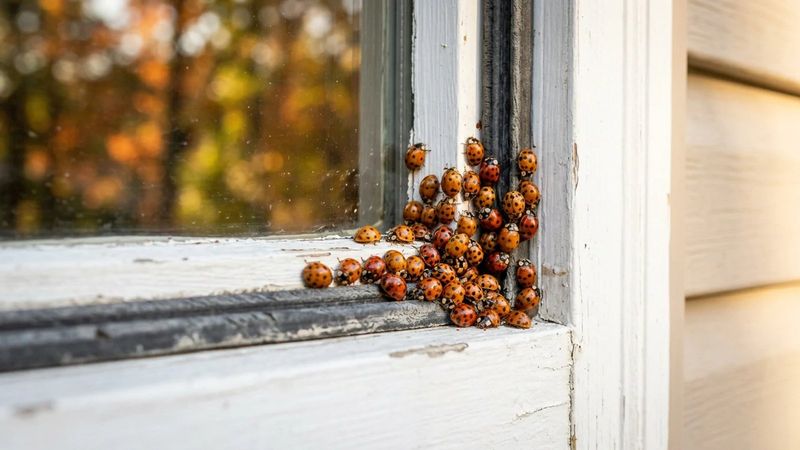
Fall brings a change in what these beetles need. Instead of hunting, they look for protected places to ride out the cold months.
UC IPM notes that the multicolored Asian lady beetle, an introduced species in California, sometimes enters buildings for exactly this reason.
The beetles are not eating your house. A wall is simply a place to gather and find a crack or gap to slip into.
There is also no sign that a group wintering at your home plans to return to your yard in spring, since adults are mobile and can scatter.
Not every California lady beetle behaves this way. The native convergent lady beetle follows a different pattern, and UC IPM describes many of them migrating from valleys and coastal areas to the foothills of the Coastal Range or Sierra Nevada.
There they overwinter in groups on low vegetation, far from anyone’s siding.
So a gathering on your sunny wall is best read as a species-specific habit, not a rule for all ladybugs. Some beetles in your garden may spend the winter miles away.
Several cues may draw beetles to a particular wall
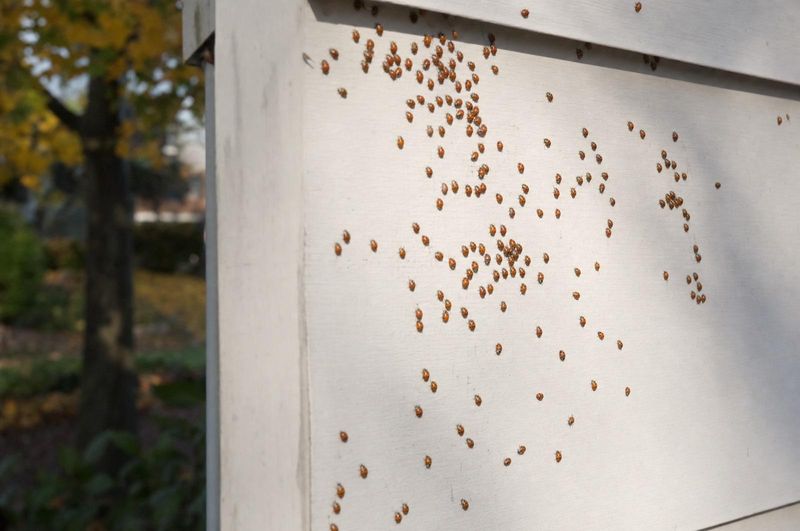
Scientists have tried to work out how these beetles pick a spot, and the picture is still incomplete. For the multicolored Asian lady beetle, a 2000 study on orientation to aggregation sites reported attraction to buildings and to visual contrast.
Sunlight, visual features, and chemical cues may each contribute, but none is proven to explain every cluster.
Sun matters in a particular way. UF/IFAS Extension reports that sunlit, reflective building surfaces can be attractive overwintering sites.
That is not the same as saying warmth alone causes a pile-up, which has not been shown.
Then there is the scent question. The popular idea of a simple scent trail floating through the air is too definite.
One study found little evidence for volatile aggregation pheromones, which are airborne signals.
Later work, described in a PubMed record on long-chain hydrocarbons, suggests that nonvolatile hydrocarbons left behind by beetles may help with site choice or grouping. Think of it as a possible residue cue, not an invisible highway.
These are findings about the species studied, and the research is still active. So if a wall draws a crowd year after year, treat it as a mix of possible reasons rather than one neat answer.
A fall gathering does not guarantee spring aphid control
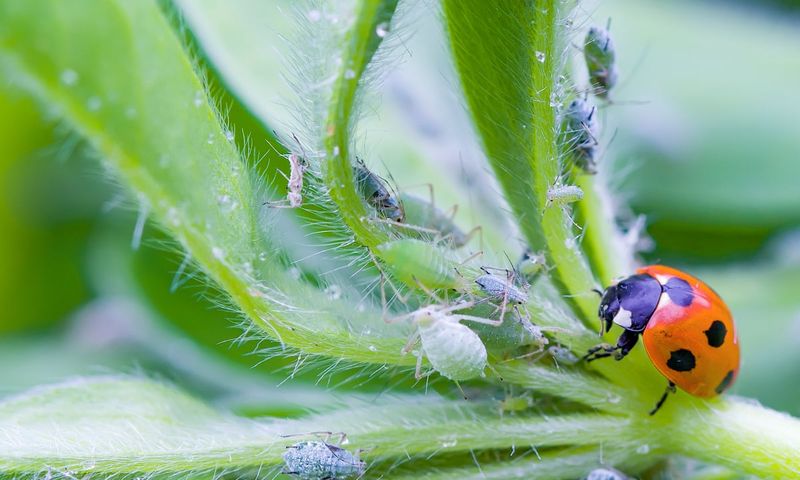
Here is the hopeful part, with a reality check. Lady beetles do eat aphids, but a fall cluster on your wall cannot guarantee spring control in your garden.
Many things decide whether that happens, including the species, how far the beetles travel, whether prey is available, and how many beetles show up.
Movement is a big factor. UC IPM explains that convergent lady beetles migrate seasonally and disperse.
Adults are strong fliers, and they don’t stay put just because a group once rested nearby.
Numbers matter too. In its aphid guidance, UC IPM says released adult lady beetles commonly fly away within a day or two, and that aphid control can require high numbers of beetles.
A modest group on a wall may not add up to much in a whole yard.
A better plan is to watch your plants. Look at new growth in spring for aphids, and also for lady beetles, their spiky larvae, and other natural enemies already at work.
What you find on the leaves tells you more than what you saw on the siding.
Handle indoor visitors without defaulting to pesticides
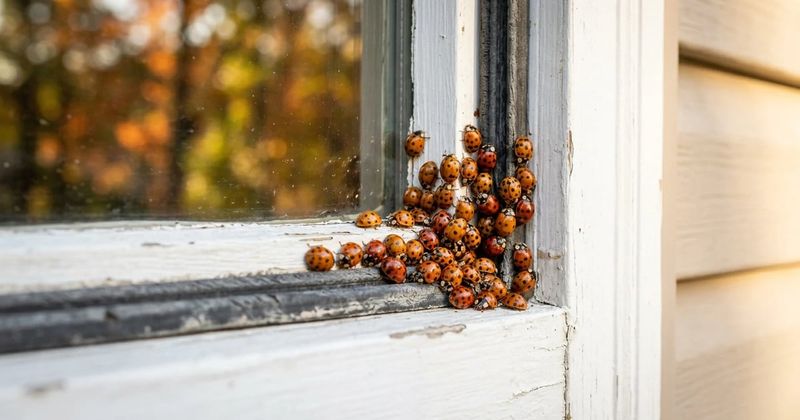
Outdoors, multicolored Asian lady beetles are beneficial predators that eat aphids and other soft-bodied pests. Indoors, they become a nuisance when they wander in looking for winter shelter.
They are neither wholly harmless nor a danger, just guests you’d rather not have.
Start with the doors and windows. UC ANR and UC IPM guidance recommends sealing openings around windows, doors, and other exterior gaps.
Check weatherstripping, screens, and spots where wires or pipes enter the wall.
For beetles already inside, vacuum or sweep them up and release them outdoors or discard them. A vacuum with a bag or a pantyhose filter in the hose keeps them contained.
It’s quick and avoids spraying where your family lives.
One thing to know is that disturbed adults can release an odorous orange fluid, which may stain fabric or walls. So gentle handling is better than swatting.
That quirk is a mess, not a sign of real household danger.
The same sources say pesticide control is generally unnecessary for these beetles in the garden. Sealing and sweeping handle the problem at its source, and they keep helpful predators alive.
Protect the predators already working in your garden

Your best aphid help is probably already in the garden. Before you treat an infestation, look closely for lady beetles and other natural enemies.
UC IPM advises checking for them first, and it warns that broad-spectrum insecticides can kill beneficial insects along with the pests.
If you do see predators on the leaves, give them time to work. A strong blast of water can knock aphids off, and you can often leave the rest to the beetles, lacewings, and other helpers.
You can also make the garden more welcoming. For convergent lady beetles, UC IPM recommends avoiding persistent broad-spectrum insecticides and growing flowering plants that supply nectar and pollen to adult beneficial insects.
Small-flowered plants such as alyssum or yarrow can fit into a bed or border.
None of this guarantees that any one beetle group will clear aphids from your particular yard. But a garden with food, flowers, and no harsh sprays gives its predators the best chance.
The beetles on your wall are just one chapter in a much longer story.