
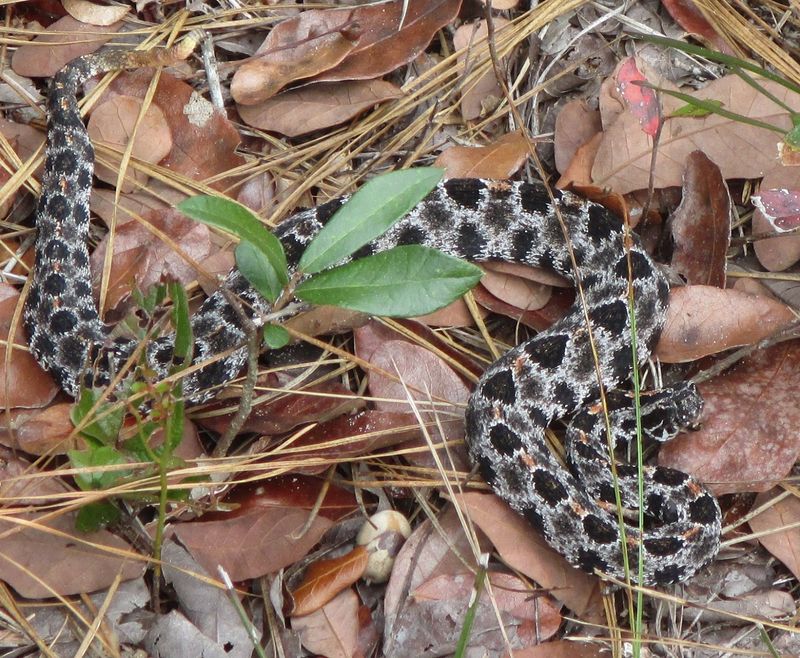
Florida’s smallest venomous snake, the dusky pygmy rattlesnake, blends into the ground so well that you could be reaching toward one without knowing it. Pine straw, mulch, and leafy groundcover are exactly the kind of textured settings where its colors can fade from view.
Seeing one is not a given, but a little awareness before you kneel in a bed goes a long way. Here is how to spot trouble early and what to do if you do.
A camouflaged snake can occur near Florida gardens

Florida’s dusky pygmy rattlesnake is small, venomous, and good at hiding. According to the Florida Museum of Natural History, it can be locally abundant and turns up in suburban neighborhoods where development meets suitable habitat.
That means a yard backing onto woods, a wet area, or an undeveloped lot is a place where one could show up.
Venomous snakes in general may also appear in gardens and flower beds. UF/IFAS guidance on snakes in residential areas notes this and recommends leather gloves while gardening.
It is a practical reminder that a bed is a place to look before you touch.
Now picture the scene in the headline: a snake tucked into pine straw right where you kneel to weed. That is a gardening scenario, not a documented pattern.
The sources do not show that pine straw or mulch attracts this snake, or that it prefers to hide there. They also do not show that gardeners are especially likely to meet one while kneeling or weeding.
So the message is not to fear every mulch bed. It is simply that a small, well-camouflaged snake can exist near homes, and a quick look before your hands go down is a sensible habit.
The rest of this article shows how to build that habit and what to do if a snake appears.
Why this small snake can be hard to notice
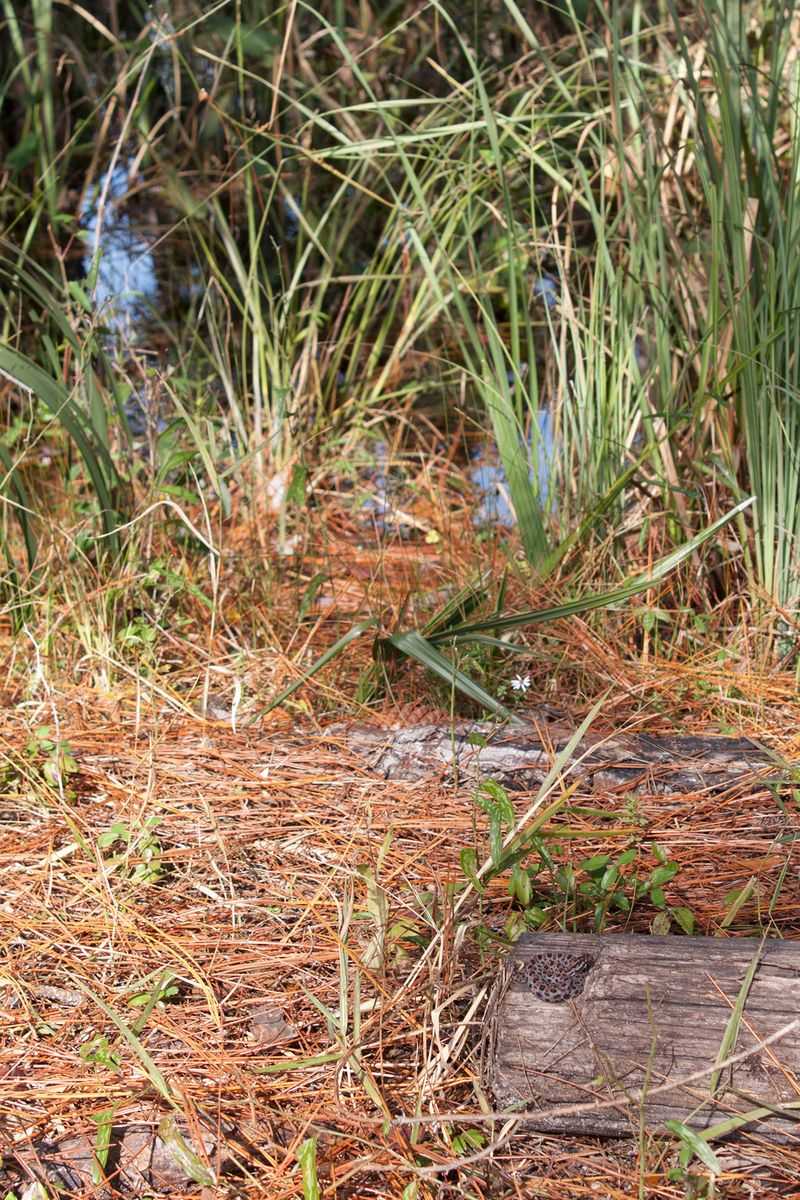
Most adult dusky pygmy rattlesnakes are about 12 to 24 inches long, which makes this Florida’s smallest venomous snake. The body is stout for its size.
The color is usually gray, with dark blotches over a reddish-brown stripe down the back, and the tail ends in a small rattle.
Those colors are the heart of its disguise. The Florida Museum says the species relies heavily on camouflage and may stay motionless when frightened.
A snake that holds still against bark, leaves, or dry needles is easy to miss at a glance.
Do not expect a loud warning, either. The rattle can produce only a faint, insect-like buzz, and Florida Poison Control also describes the snake’s rattle as small.
Over the sound of a mower, a hose, or a breeze, you may hear nothing at all.
This does not mean the snake is invisible everywhere. In bare soil or short grass, a careful look may find it.
The practical lesson is to use your eyes rather than your ears: scan the whole work area slowly, including the edges, before you decide it is clear.
Small size should not lull you, either. A snake about the length of a ruler can still bite, and it can be easy to overlook in a cluttered bed.
Where the snake lives in Florida
Florida is home turf for this species. The Florida Museum reports that it is found throughout the state, though it is not known from the Florida Keys.
That covers North, Central, and most of South Florida.
Its documented habitats include lowland pine flatwoods, hydric hammocks, and prairies, along with areas around freshwater. Those are natural settings with plenty of ground cover, which suits an animal that depends on blending in.
The same source notes that the snake can occur in suburban neighborhoods where development meets favorable habitat. Think of a subdivision carved out of flatwoods, a yard beside a retention pond, or a lot that backs onto a wet, wooded strip.
In those edge spots, a snake moving between wild and developed land is more believable.
None of this means every Florida yard, or every mulch bed, hides one. A yard far from suitable habitat is less likely to see this species than one beside it, and the sources do not say how often homeowners actually meet one.
Knowing your surroundings simply helps you decide how carefully to look before you work.
Scan the bed before you kneel or reach
A good routine takes less than a minute. Stand at the edge of the bed and look across the whole area, then work your eyes toward your feet.
Check around the base of plants, along borders, and near any pile of brush, boards, or debris.
Use a tool before using your hand. Gently moving leaves or debris with a long-handled rake or hoe lets you see what is underneath without putting fingers where you cannot see.
Keep your hands out of spots you have not looked at.
Dress for the job. UF/IFAS advises leather gloves while gardening because snakes may be encountered in gardens and flower beds.
Sturdy footwear is a smart companion when you are working around brush or debris, and CDC and NIOSH guidance for outdoor workers covers protective steps like these.
Work in good light when you can, and pause to look again if you move to a new section of the bed. Tidy edges and cleared debris also leave fewer places for any animal to settle.
Be honest about the limits. These steps lower your exposure, but they cannot promise you will spot a snake or that a bite can never happen.
They are habits that stack the odds in your favor.
Back away and leave a snake alone
If you see a snake, or think you might have, stop moving your hands and feet toward it. Step back slowly and give it plenty of room.
The species is nonaggressive, and a strike is a defensive move, so distance is usually enough to let the snake settle or leave.
Resist the urge to get a closer look. Do not lean in to check its color, pattern, pupils, or rattle.
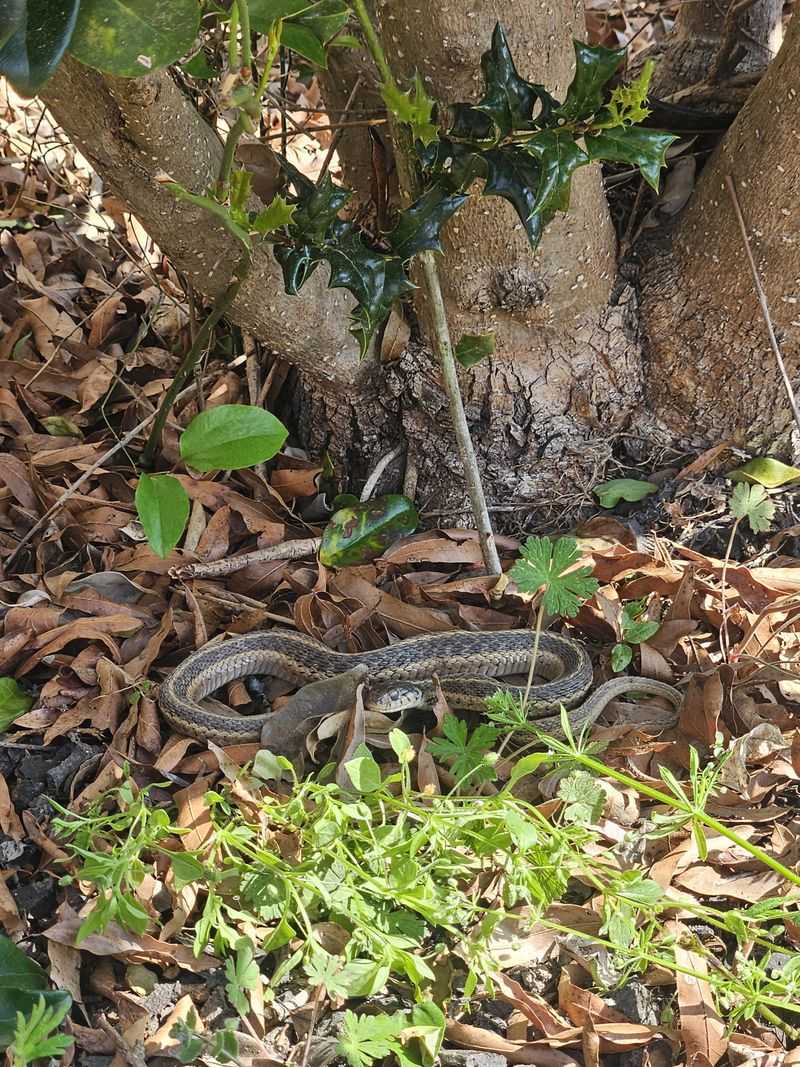
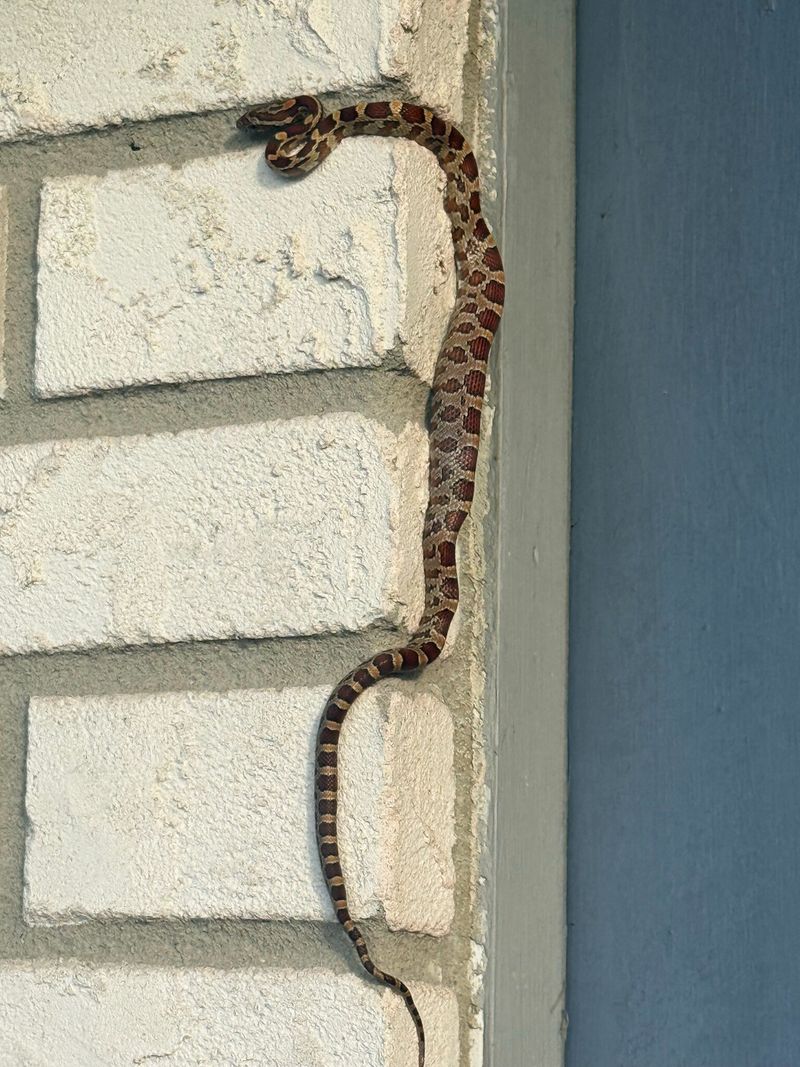
Those details are hard to judge, and the Florida Museum notes that hognose snakes and juvenile black racers can be confused with pygmy rattlesnakes. A young racer may even vibrate its tail and buzz in leaf litter.
Do not handle, trap, or kill the snake, and do not try to remove it yourself. The Florida Fish and Wildlife Conservation Commission offers guidance on living with snakes, and CDC and NIOSH also advise against handling them.
Many bites happen when people try to move or kill a snake.
Keep children and pets away from the area, and take photos only from a safe distance if you want help identifying it. If the snake stays near your home and worries you, call a licensed wildlife or snake removal professional rather than trying it yourself.
Get immediate care after a suspected bite
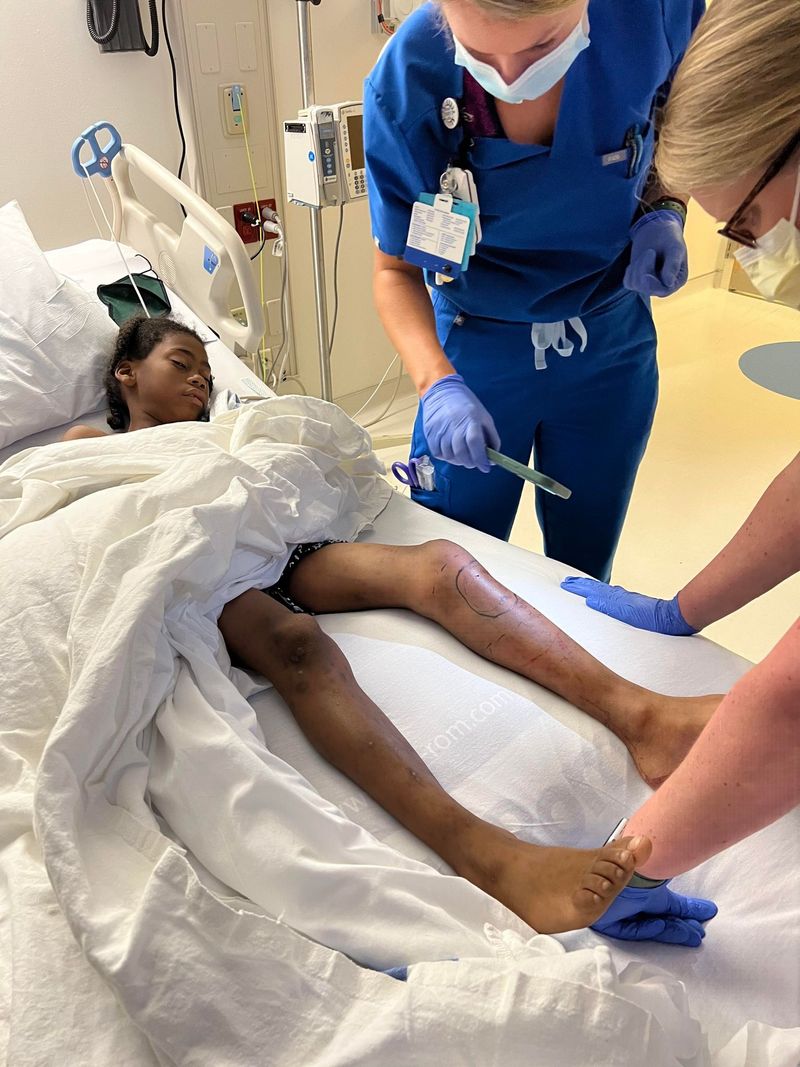
A suspected snakebite needs immediate medical care. Call 911 or get to an emergency room right away, and do not wait to see whether symptoms develop.
Even if you are not sure the animal was venomous, treat it as an emergency.
The Florida Museum says bites from this species are painful and generally not considered life-threatening to people or pets, but they can be more serious for children and small pets. It also recommends immediate medical care.
That background is not a reason to wait.
Florida Poison Control lists 1-800-222-1222 for poisoning questions. Use it as you head for care or while someone else drives, but do not let a phone call delay getting help.
The same guidance advises against several common first-aid ideas. Do not use a tourniquet, do not apply ice, do not cut the wound, and do not try to suck out venom.
CDC and NIOSH also provide guidance for people who work outdoors.
Move away from the snake, stay as calm as you can, and keep the bitten area still while you get help. For pets, head to a veterinarian right away.
Choose distance over close inspection
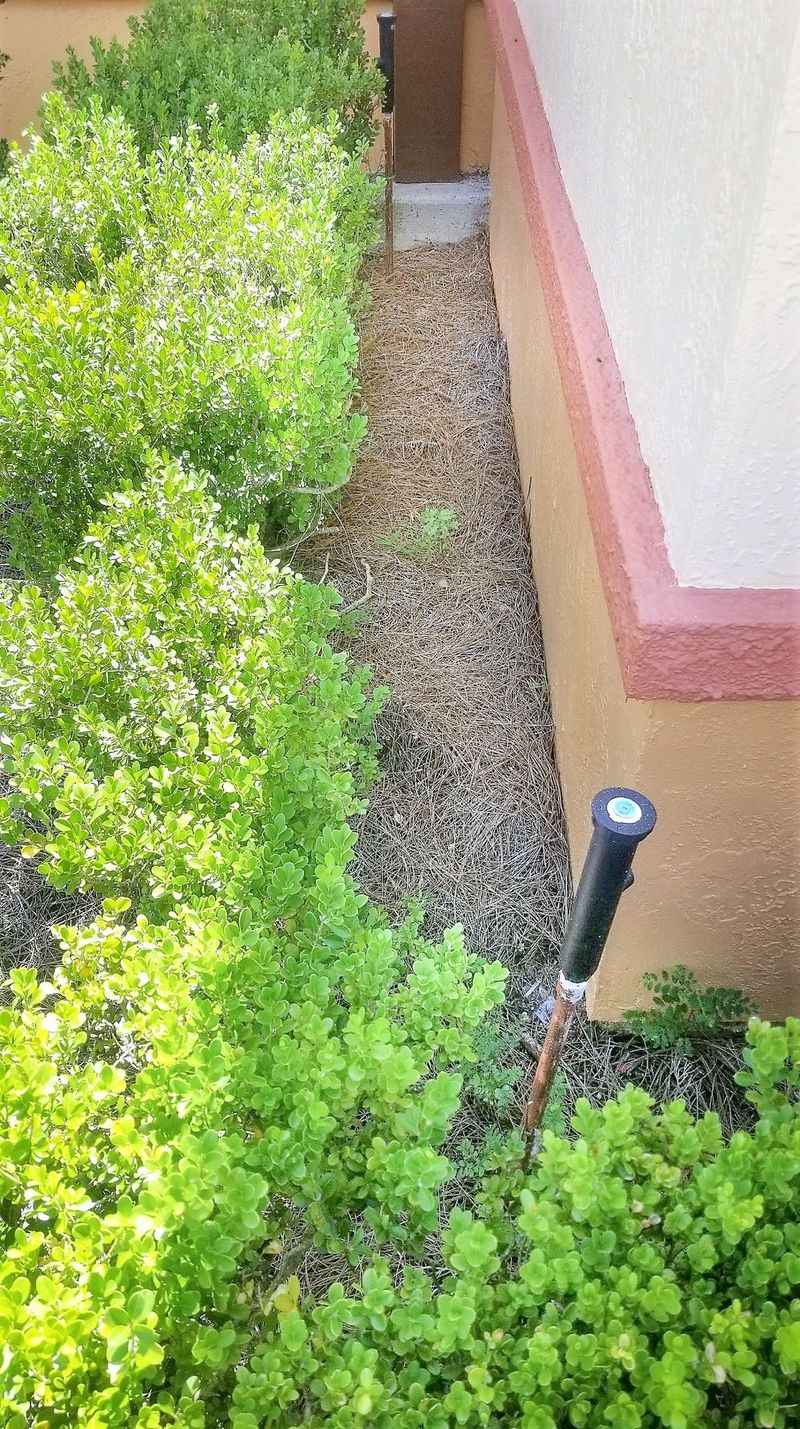
Good gardening habits and snake awareness fit together: look first, reach second. A slow scan, a tool, and a pair of gloves, as UF/IFAS suggests, cover most of what you can control.
If something coils or freezes in the bed, FWC guidance favors giving it space. The weeds can wait; a snake that is left alone usually moves on.