
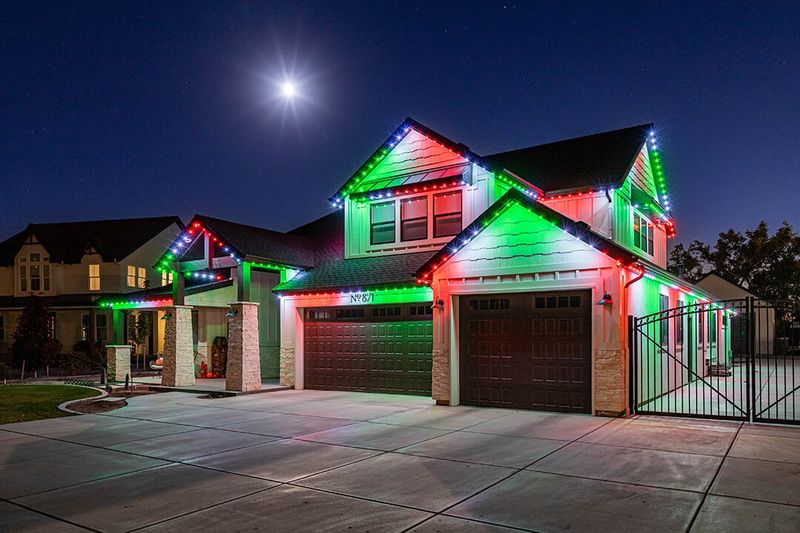
Florida law lets you pursue a private nuisance claim when a neighbor’s lights repeatedly and seriously interfere with using your home, including sleeping in your bedroom. It also gives you smart, lawful steps to try first, like keeping records and asking for a simple fix.
The rules are not as simple as a single nighttime light limit, and some tempting shortcuts can get you into trouble. Here is what you can do, what you cannot, and why the details matter.
When can a light become a nuisance?
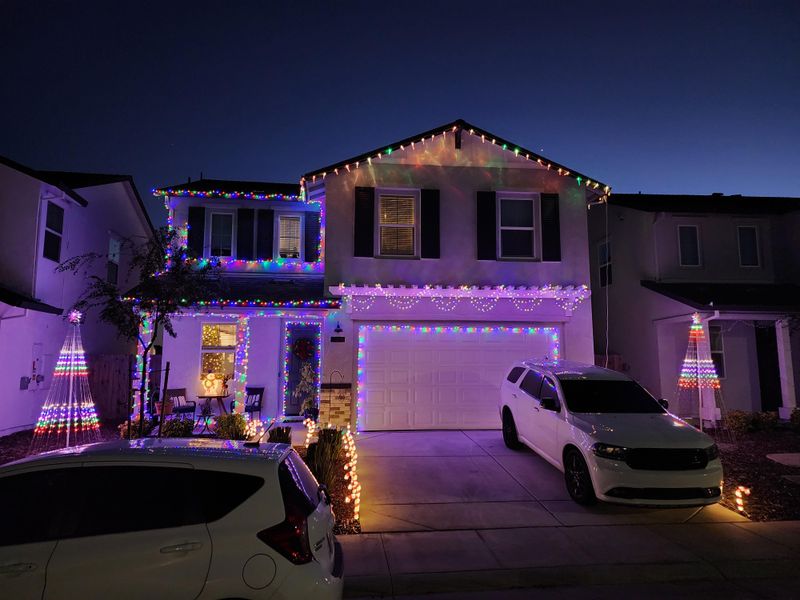
Florida courts treat nuisance as a question of facts. A neighbor’s light may support a private nuisance claim when it repeatedly and materially interferes with the ordinary use of your home, and sleeping in your bedroom is a very ordinary use.
Annoyance alone is not enough. Ordinary disturbances that come with living near other people usually do not qualify, and a judge will ask whether the neighbor’s use of the property was reasonable under all the circumstances.
In Beckman v. Marshall, the Florida Supreme Court framed the test around how an ordinary person with normal sensibilities would be affected, not someone unusually sensitive.
There is also no single statewide rule that sets a light brightness or a nighttime cutoff. The authorities reviewed for this article do not establish one, so you cannot assume that a particular lumen level or hour makes a display illegal.
Light crossing a property line is not automatically unlawful either.
Florida also does not give owners a general right to light and air from the land next door. In Fontainebleau Hotel Corp. v. 4525, Inc., the court rejected that kind of general entitlement, though nuisance claims based on particular harmful uses remain possible.
A court looking at lights in a bedroom, as in Roebuck v. Sills, focuses on the actual pattern and its effects.
What the Roebuck case shows about nighttime lights
A Florida appeals case gives a real picture of how this can play out. In Roebuck v.
Sills, outdoor lights repeatedly came on outside a neighbor’s bedroom window through the night. The trial court found a nuisance and set nighttime restrictions, and the First District Court of Appeal affirmed the nuisance ruling.
The case is useful, but it is not a promise. The dispute also involved pool-equipment noise, so the finding did not rest on lights alone.
It followed a four-day trial, which means the judge heard a full set of evidence from both sides.
The appellate court also noted that it did not have the trial transcript. That limited what the higher court could review, and it is one more reason to treat the case as proof that a claim can work, not as a prediction for your holiday display.
One detail trips people up. The trial court limited the lights to a window of 9:30 p.m. to 9:30 a.m.
That was a remedy shaped for those parties and that evidence. It is not a statewide quiet-hours rule, and no neighbor must follow that schedule just because a court once did.
Record the pattern and ask for a change
Start with a notebook or a phone note kept from your own property. Write down the date, when the lights switch on and off, how often they shine into the room, and where the glare enters.
Add how it affects you, such as lost sleep or a bedroom you cannot use comfortably.
Keep copies of any texts, emails, or letters you send or receive about the problem. Photos or video taken from your own yard or window can show what the room looks like at night.
None of this is a legal requirement, but nuisance decisions turn on evidence, as the court noted in Roebuck v. Sills, so a clear record helps if the issue goes further.
Next, talk to your neighbor in a friendly way. Ask whether they could aim the lights away from your window, add a shield, dim them, or put the display on a timer.
Most people do not realize a string of lights is reaching a bedroom.
If you do end up in a dispute, the question will be whether the interference is more than ordinary annoyance, which the Florida Supreme Court discussed in Beckman v. Marshall.
A calm request and a steady record help show the problem is real and repeated.
Check the local lighting code
Cities and counties write their own rules, so the exact text of your local code matters more than any rumor about a statewide limit. Look up the lighting, nuisance, or noise sections for your city or county, and call code enforcement if the wording is unclear.
Key West offers a good example of how local text works. Its Chapter 26 on the environment defines a light nuisance, but it excludes lighting generally considered temporary holiday lighting from that chapter.
That example has limits. It does not apply to other Florida jurisdictions, and other places may treat holiday displays differently or say nothing about them.
It also does not decide whether a display could support a common-law nuisance claim in court.
Use the code as a first stop, not the final answer. If your local rules cover your situation, enforcement may be an option.
If they exclude or ignore holiday lights, you still have your other steps, such as talking with the neighbor and checking any community rules.
What the HOA holiday-decoration law does—and does not—cover
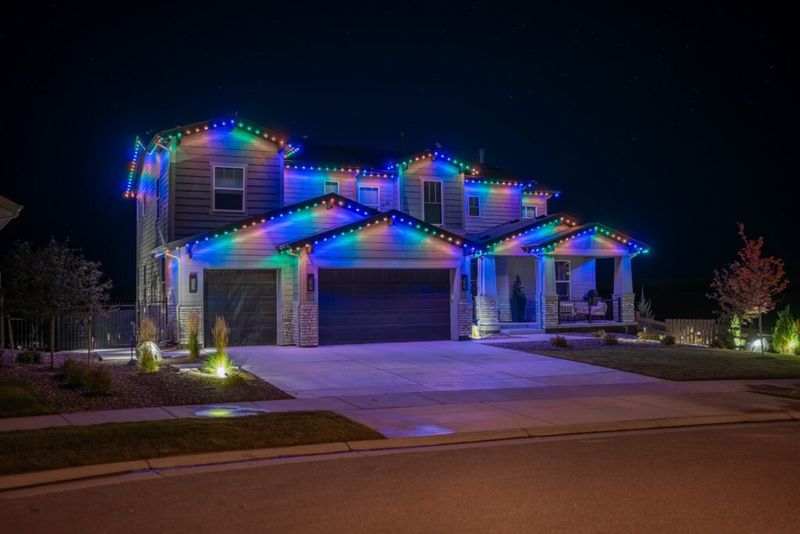
Florida’s homeowners’ association law has a rule about holiday decorations, but it is narrower than many people think. Under section 720.305(7), an HOA may not fine or suspend an owner for leaving holiday decorations or lights up past the period set in the governing documents.
The exception is when they stay up more than one week after written notice of the violation.
In plain terms, the law limits certain fines and suspensions tied to how long decorations stay up. It does not say lights can run all night.
It also does not set operating hours for a display.
The provision does not require immediate removal either. And it does not create an automatic remedy for light shining into your bedroom.
A neighbor who leaves lights up too long may get a notice, but the statute does not turn that into a nuisance finding.
If your problem is brightness at night rather than decorations left up in February, this statute is not the tool that solves it. Your community documents and the nuisance standard are the places to look next.
Read the rules for your HOA or condominium
Pull out your declaration, bylaws, and any published architectural standards. An HOA’s power over exterior changes and displays comes from those documents.
Under section 720.3035, architectural-control authority is limited to what the declaration or authorized published standards state or reasonably imply, and those standards must be applied reasonably and equitably.
That means an HOA cannot invent a rule from nowhere, and it cannot enforce one unfairly. It also does not mean the board must order your neighbor to turn lights off.
Whether it can act depends on what your documents actually say.
Keep the legal categories separate. Section 720.305 is part of Chapter 720, which covers homeowners’ associations.
Condominiums fall under Chapter 718, so the holiday-decoration rule in 720.305(7) should not be assumed to apply to a condo association.
If you live in a condo, read your declaration and rules for provisions on exterior lighting, balconies, and nuisances. Then put your concern in writing to the board or manager, and keep a copy with your records.
Use lawful options, not self-help
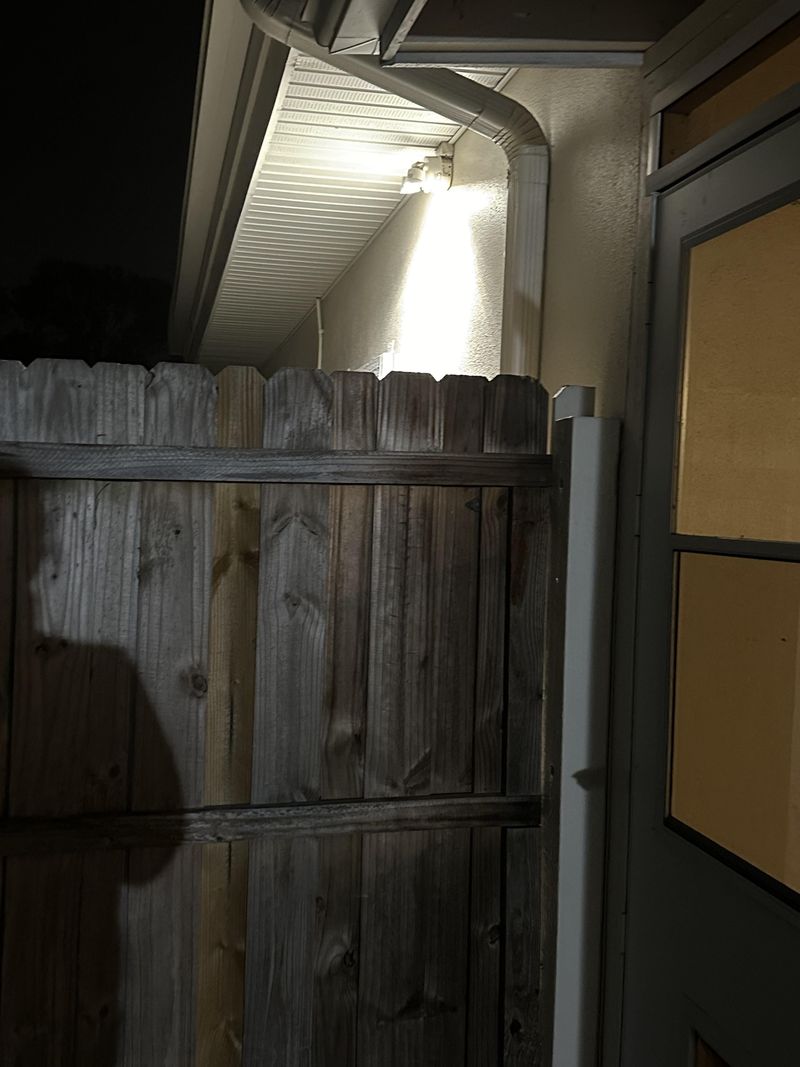
When the glare is keeping you up, it is tempting to walk over and pull the plug. Don’t.
Stepping onto a neighbor’s land without permission can raise civil trespass issues, which Florida’s standard civil jury instructions on trespass describe as unauthorized entry onto or use of another’s land.
Removing bulbs, cutting wires, or otherwise damaging equipment can create bigger problems. Willfully and maliciously damaging another person’s property can be criminal mischief under section 806.13.
Not every set of facts will necessarily violate these laws, but the risk is not worth it.
The lawful route is a civil claim. A court can shape nuisance relief, including an injunction, to the evidence, as happened in Roebuck v.
Sills. Whether you get relief depends on what you can prove.
Another case, Butler v. Brown, involved dock lights found to be a nuisance.
Its appeal addressed whether the judgment could run with the land, not whether bright lights are unlawful in general.
The sequence is simple: document the problem, ask for an adjustment, check your local code and community rules, and talk to a Florida attorney if you still need a remedy. The strongest case is one built from your own side of the fence.