
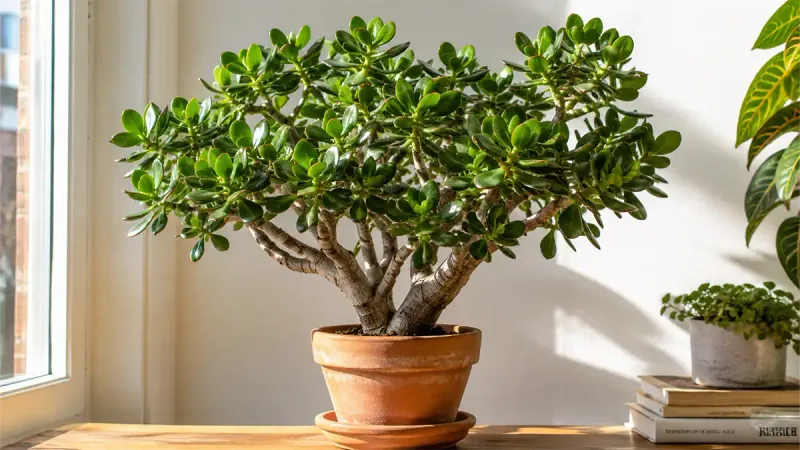
My first jade plant died because I loved it too much, mostly with a watering can. Jade plants can live for 50 years or more, and many families pass them down like heirlooms.
The good news is that they ask for very little, as long as you give them the right little things. Here are nine lessons I picked up through soggy roots, sunburned leaves, and a few sad, droopy stems, so you can skip the heartbreak.
1. Water Deeply, Then Walk Away
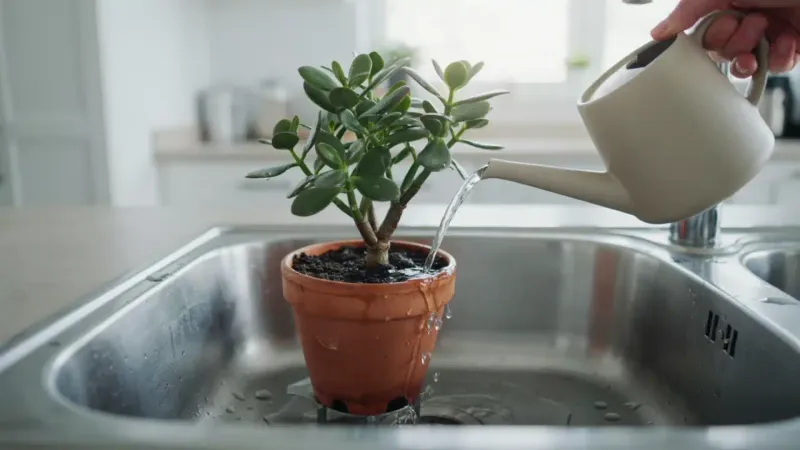
Three jade plants went into my compost bin before I finally figured out the watering problem. Every single one died from kindness, because I kept giving them small sips every few days.
Their roots stayed damp, turned brown, and quietly rotted while the leaves still looked fine.
Jade plants are succulents, which means they store water inside those plump leaves. They are built for long dry spells and short, heavy rains.
The best way to copy that rhythm is to soak the soil completely until water runs out the drainage hole, then let it dry all the way down before watering again.
How do you know it is dry? Push your finger two inches into the soil, or slide a wooden chopstick in and see if it comes out clean.
During spring and summer, that might mean watering every two to three weeks. In winter, it could stretch to once a month or even longer.
Always dump any water sitting in the saucer after about 15 minutes. Standing water is a slow trap for roots.
Once I switched to this soak-and-dry habit, my current jade put out more new growth in one summer than the others managed in their whole short lives.
2. Give It the Brightest Spot You Have
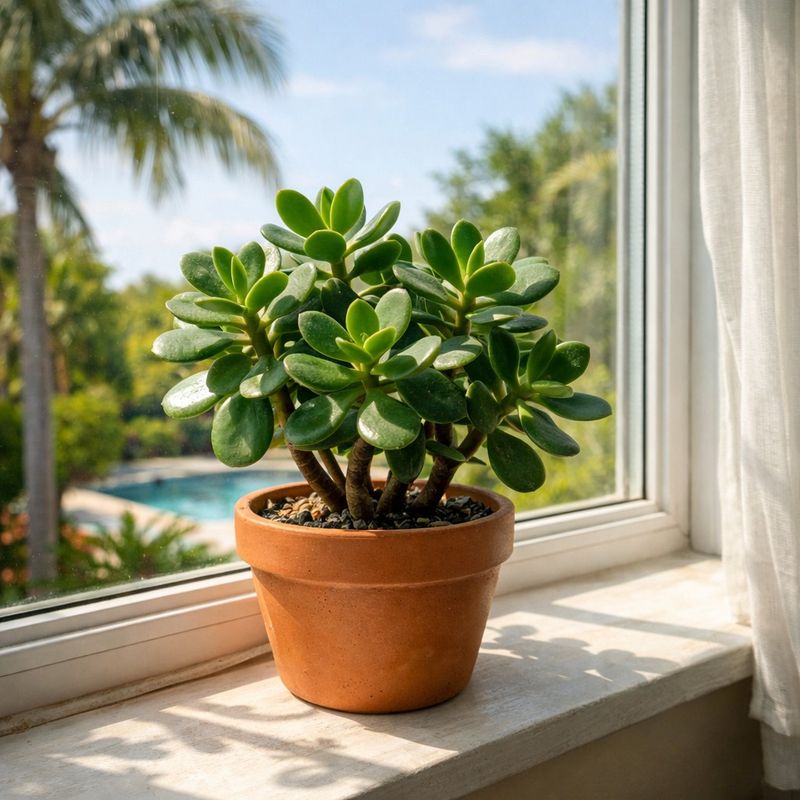
Leggy, stretched-out stems were the first clue that my jade was starving, just not for food. It was hungry for light.
Sitting on a bookshelf across the room, it reached and leaned toward the window like a kid pressing against glass at a candy store.
Jades crave at least four to six hours of bright light a day. A south-facing window is ideal in most US homes, with west-facing as a solid backup.
With enough sun, the stems stay short and stout, and the leaves pack tightly together for that chunky, tree-like look everyone wants.
Here is a fun bonus. Healthy jades in strong light often blush with red edges on their leaves.
That color is a sign of mild sun stress, and it is completely harmless and quite pretty.
If your home is on the dark side, a simple LED grow light works wonders. Set it on a timer for about 12 hours a day and keep it a foot or so above the plant.
Rotate the pot a quarter turn every week, too, so all sides get their share and the plant grows evenly instead of tilting in one direction.
3. Ease Into Outdoor Sun Slowly
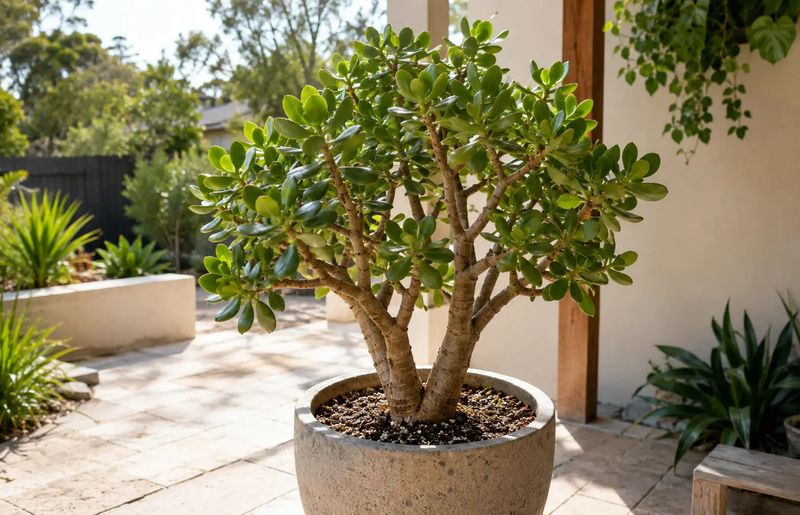
Ever seen a sunburned plant? I had not either, until the May afternoon I proudly carried my jade outside and set it in full sun.
By dinner, half the leaves had crispy white and tan patches that never went away.
Even sun-loving plants need time to adjust. Indoor light, even from a bright window, is far weaker than direct outdoor sunshine.
Moving a jade straight from the living room to the patio is like going to the beach in March without sunscreen.
The fix is called hardening off, and it takes about two weeks. Start with a shady spot or a place that gets only gentle morning sun.
Every few days, move the pot into a bit more light. By the end, your jade can handle full sun in most regions, though afternoon shade is wise where summers get scorching hot.
Keep an eye on the forecast, too. Jades can’t take frost, so bring them back in once nighttime temperatures dip near 40 degrees.
A summer outdoors, done right, often gives you the thickest, sturdiest plant you’ve ever grown, with stems that feel almost like wood.
4. Use Gritty Soil That Drains Fast
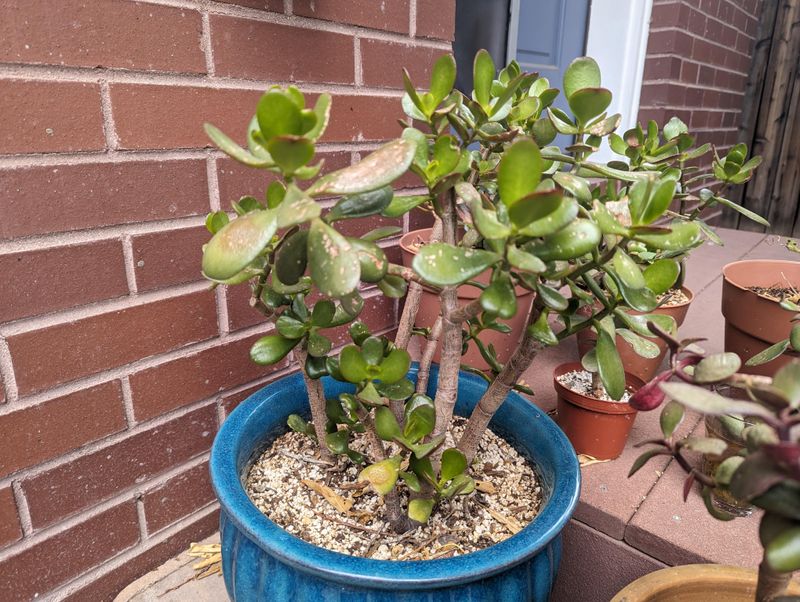
Regular potting mix seemed fine to me. After all, it says right on the bag that it works for houseplants.
Unfortunately, it holds moisture like a sponge, and for a jade, that sponge becomes a swamp.
Succulents in the wild grow in rocky, sandy ground where water rushes through. Your pot should feel the same way.
A store-bought cactus and succulent mix is a great starting point, and I like to make it even grittier by adding perlite or pumice.
My favorite recipe is simple:
Two parts cactus mix, one part perlite or pumice, and one part coarse sand. Avoid fine play sand, since it packs down and blocks air.
When you water, the liquid should drain out the bottom within seconds, not minutes.
Good soil does more than prevent rot. It lets air reach the roots, which helps them grow thick and strong.
Strong roots mean a strong plant above the soil line. If your jade has been sulking in heavy, dense dirt for years, switching to a fast-draining blend might be the single biggest upgrade you give it this year.
5. Pick a Heavy Pot With a Drainage Hole
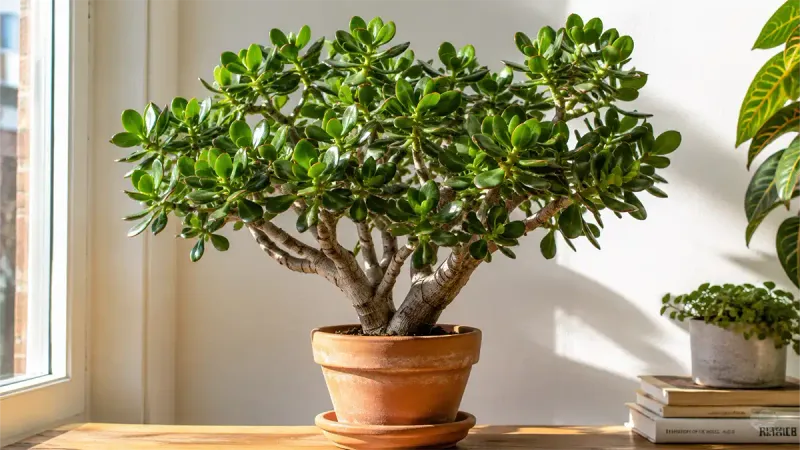
Crash. That was the sound of my five-year-old jade tipping over its pretty little plastic pot and scattering soil across the rug.
Older jades get top-heavy fast, and a lightweight container just can’t keep up.
Terracotta is my go-to now, and for two good reasons. Clay is heavy, so it anchors the plant like ballast in a boat.
It is also porous, which means it pulls extra moisture out of the soil and helps it dry faster between waterings.
A drainage hole is not optional. Decorative pots without holes might look lovely, but they collect water at the bottom where you can’t see it.
If you love a fancy container, use it as a cover pot and slip a plain nursery pot inside.
Choose a wide, fairly shallow pot over a deep, narrow one. Jade roots tend to spread outward rather than dive down.
Go only an inch or two bigger than the root ball when repotting, since too much extra soil stays wet longer. Jades actually like being a little snug, and many bloom better when their roots feel slightly crowded.
6. Prune Boldly for a Thicker Trunk
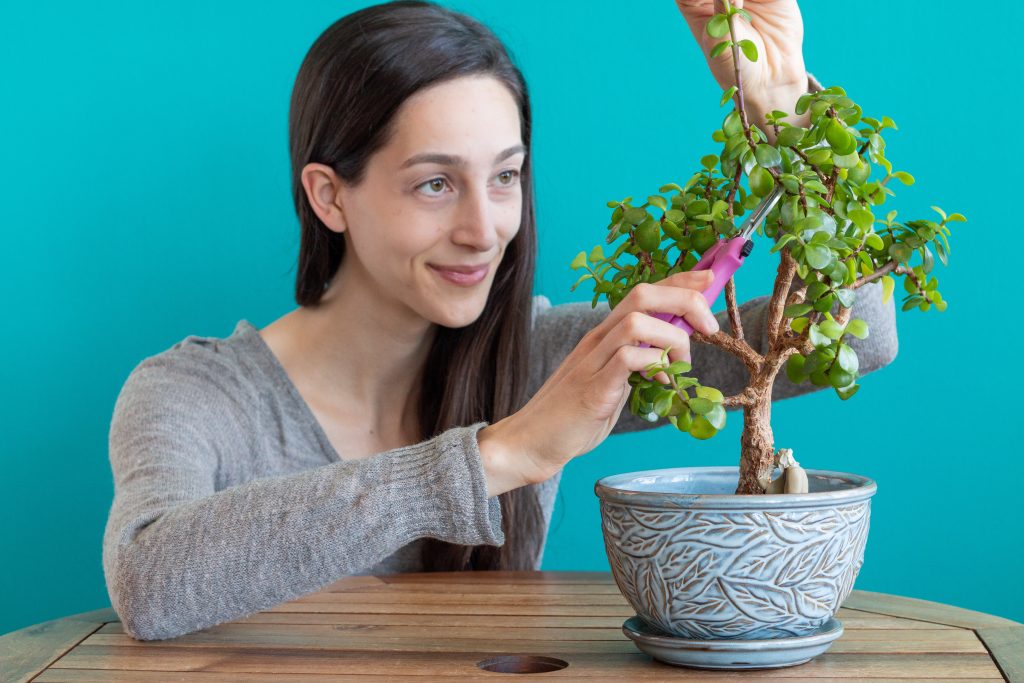
Cutting my jade felt like a crime the first time I did it. I hovered over the plant with scissors for ten minutes.
Then I snipped, and a few weeks later, two new branches popped out right where one used to be.
Pruning is the secret behind those chunky, bonsai-style jades you see in old photos. When you cut a stem just above a leaf node, the plant sends out fresh shoots from that spot.
More branches mean a fuller canopy, and the trunk thickens to support all that new weight.
Spring and early summer are the best times, while the plant is actively growing. Use clean, sharp pruners and remove any branches that are leggy, crossing, or leaning awkwardly.
Never take off more than about a third of the plant at once.
Fun fact: jade plants are close cousins to bonsai favorites, and many bonsai growers use them because they respond so well to shaping. You don’t need fancy skills, though.
Just think about the shape you want, cut a little at a time, and let the plant surprise you. Bonus points, every piece you trim off can become a brand-new plant.
7. Root Cuttings the Easy Way
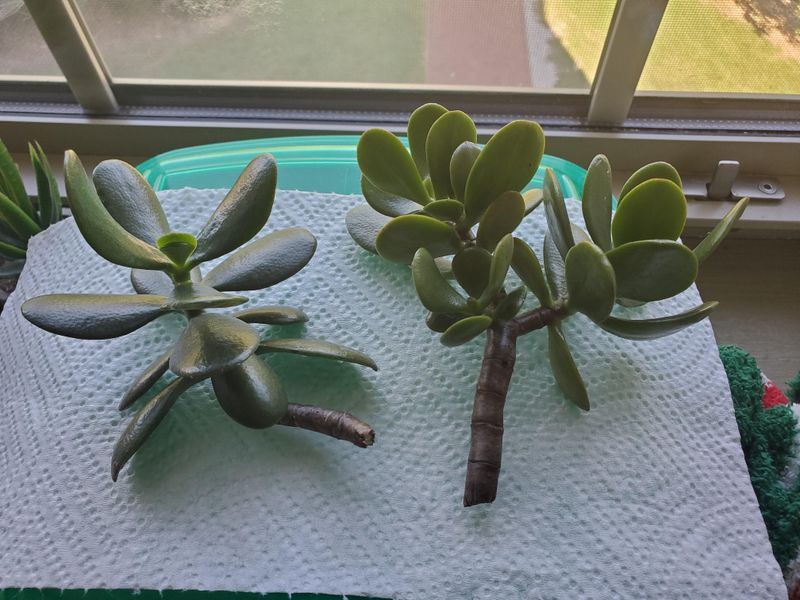
Grandma never bought a jade plant in her life. She just snapped a piece off a neighbor’s, let it sit on the windowsill for a few days, and stuck it in a pot.
Decades later, that same plant lives on in three of our homes.
Jades are among the easiest plants to propagate, which makes them perfect for sharing. Take a stem cutting about three to four inches long, or even just a single healthy leaf.
Then comes the step most beginners skip, and it matters a lot.
Let the cut end dry and form a callus for three to seven days. Fresh, wet cuts placed in soil tend to rot.
Once the end looks sealed and slightly shriveled, press it into a gritty succulent mix.
Hold off on watering for about a week, then water lightly. Roots usually form within two to four weeks.
A gentle tug that meets resistance tells you it worked. Leaf cuttings take longer but will eventually sprout tiny baby plants at the base.
Before long, you will have extras for friends, teachers, and anyone who admires yours.
8. Feed Lightly During the Growing Season
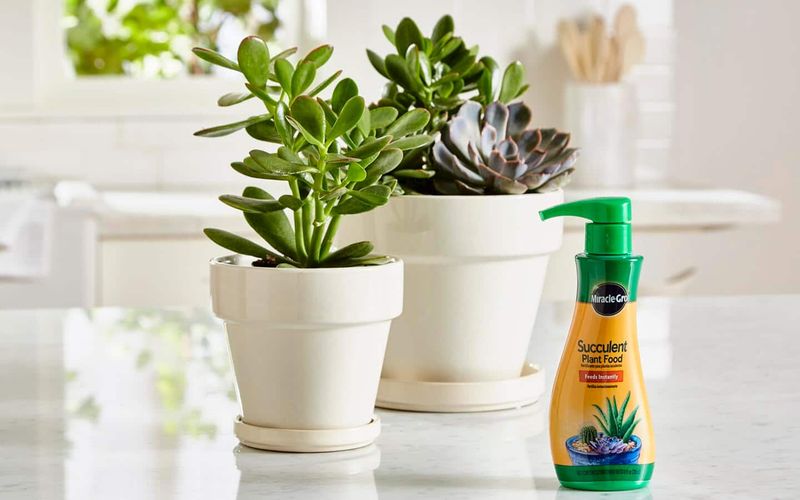
More fertilizer equals more growth, right? That was my thinking, and it gave me a jade with burnt leaf tips and weak, floppy stems.
It turns out these slow, steady growers need only a light snack, not a buffet.
Jades evolved in poor, rocky soil in South Africa, so they are used to getting by on very little. Too much food pushes soft, weak growth that can’t hold its own weight.
It can also build up salts in the soil that damage roots over time.
Here is what works for me. From spring through late summer, feed once a month with a balanced liquid fertilizer mixed at half strength.
A formula made for cacti and succulents is even better. Always water first, then fertilize, so you don’t shock dry roots.
Once fall arrives, stop feeding entirely. The plant slows down for winter rest and won’t use the extra nutrients anyway.
If you just repotted into fresh soil, skip feeding for a couple of months, since new mix usually has enough nutrients built in. Patience here pays off with glossy leaves and solid, woody growth.
9. Give It a Cool Winter Rest to Bloom
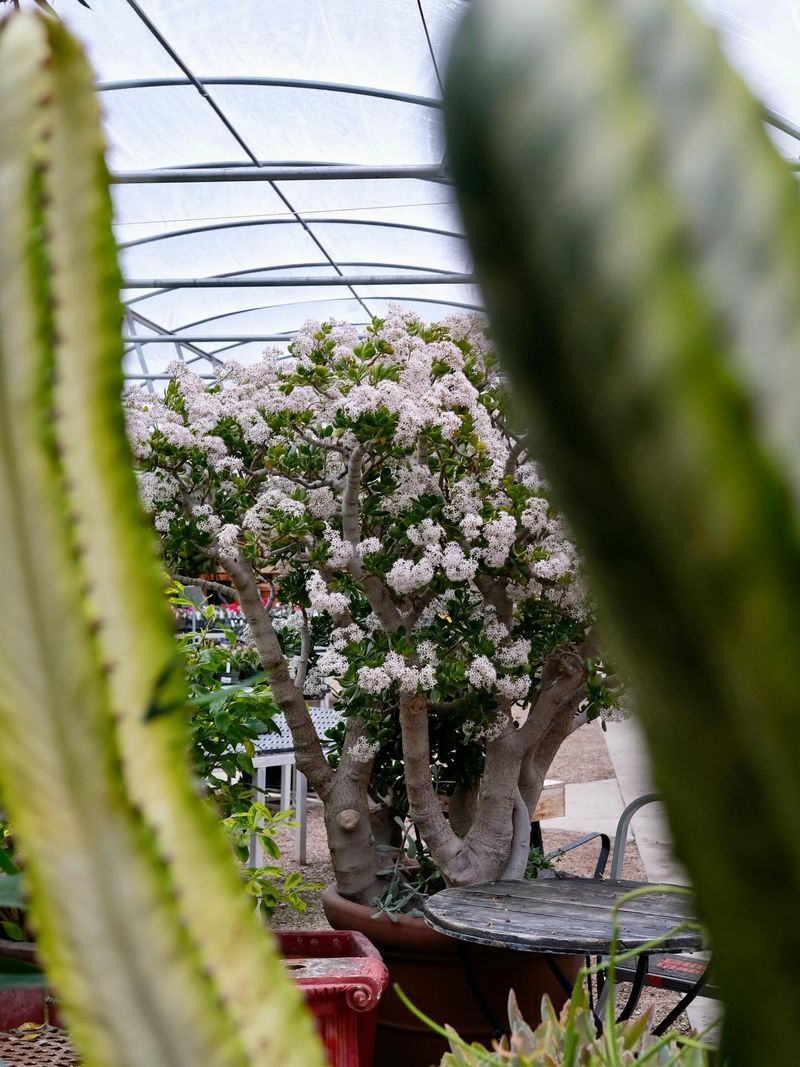
Twelve years passed before my jade bloomed, and I nearly cried when it did. Clusters of tiny, star-shaped pink and white flowers covered the branches one December.
The trick that finally made it happen was surprisingly simple: I let it get a little chilly.
In their native habitat, jades flower after a cool, dry season. Indoors, our cozy heated homes confuse them.
To mimic nature, move your plant in fall to a bright spot where nights drop to about 50 to 55 degrees, like an unheated sunroom or a cool windowsill.
Cut back on water dramatically during this time. A drink every four to six weeks is often plenty.
Long, dark nights matter too, so avoid spots near lamps that stay on late into the evening.
Not every jade will bloom right away. Plants usually need to be several years old and fairly mature first.
Still, giving them this winter rest makes them stronger overall, even without flowers. When spring returns, bring back regular watering and watch fresh growth take off.
That yearly rhythm of rest and growth is a big part of how jades stay healthy for decades.