

California’s fire safety rules are changing, and the space right around your house is getting the most attention. A new set of guidelines, often called Zone Zero, targets the first five feet next to your walls, where embers love to land and start trouble.
Many everyday yard features that look harmless could soon be limited or banned in that strip, especially in high fire risk areas. Knowing what is on the list now can save you money, stress, and maybe even your home.
1. Wood Mulch Beds

Bark mulch is the quiet workhorse of California landscaping. It holds moisture, smothers weeds, and gives flower beds that tidy, finished look.
Unfortunately, it also smolders beautifully when a stray ember drops in.
Fire researchers have watched shredded bark catch and creep toward walls during wind-driven fires. Under proposed Zone Zero rules, combustible mulch within five feet of a home would be off the table in designated fire hazard areas.
The good news is that swapping is simple. Decomposed granite, river rock, crushed stone, or pavers all do the job without feeding a flame.
Many homeowners keep wood mulch farther out in the yard and use rock only in that first band, which keeps soil cooler in the planting beds beyond.
2. Wooden Fences Attached to the House

Picture a wildfire as a lit fuse. A wooden fence that runs straight into your siding acts like that fuse, carrying flames right to the house.
Investigators studying recent fires found that fences often burned first and then passed fire along to homes. That is why proposed rules call for noncombustible fencing, such as metal or masonry, in the last five feet before the fence meets the wall.
You do not have to tear out the whole thing. A short section of metal panel or a masonry pillar near the house can break the chain, and gates in that zone can be replaced with steel versions that still look sharp.
3. Shrubs Planted Against the Walls

Foundation plantings were practically a law of their own in 1990s suburbs. Junipers, rosemary, and boxwood tucked tight against the house were the standard look.
Here is the problem. Dense, woody shrubs trap dead leaves and burn hot, and when they sit under a window, the heat can crack the glass and let embers inside.
Draft Zone Zero guidance would remove most woody shrubs from the five-foot strip.
Juniper in particular has a rough reputation because of its oily foliage. If you love greenery near the house, low, well-watered, non-woody plants spaced out may still be allowed, depending on final rules.
Move the hedges a few steps out, and your house gets a safety buffer without losing its curb appeal.
4. Trees With Branches Over the Roof

There is something comforting about a big tree shading your roof on an August afternoon. Your energy bill likes it too.
Fire officials, however, are watching those overhanging limbs closely. Branches that drape over the roof drop leaves into gutters and can let flames jump from canopy to shingles.
Current defensible space rules already ask for trimming, and new guidance tightens clearance from the roof and chimney.
You can usually keep the tree itself. Trimming limbs back from the roof, clearing at least ten feet around a chimney, and raising lower branches off the ground solves most of the risk.
A certified arborist can shape the canopy so it still gives shade, just not a ladder for fire.
5. Firewood Stacks Beside the House
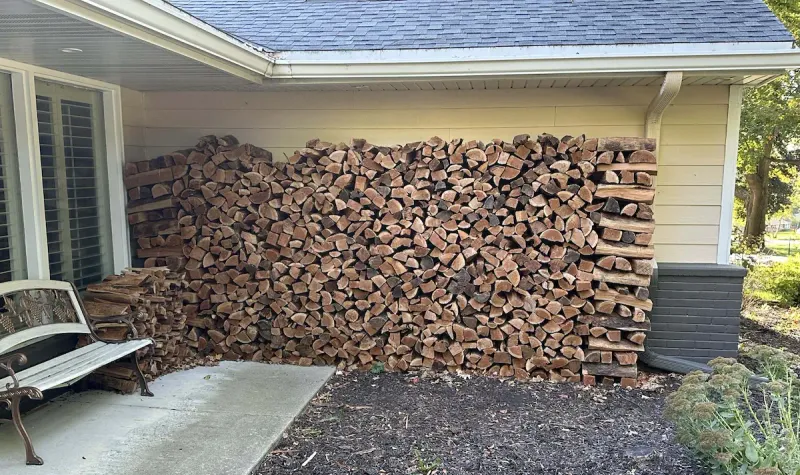
Stacking firewood against the house feels smart. It is close to the door, stays dry under the eaves, and saves trips in the cold.
Sadly, it is also one of the most dangerous habits in fire country. A woodpile is basically a campfire waiting for a spark, and placing it against a wall hands that fire a direct path inside.
Fire agencies have long recommended keeping firewood at least 30 feet from structures during fire season, and Zone Zero rules make the near-house ban clearer. A covered rack out in the yard, on bare ground or gravel, keeps logs dry and your siding safe.
6. Wooden Patio Furniture and Planters

Ever noticed how a cushion can glow for hours after a single spark? Outdoor furniture is a surprise fuel source that most people never think about.
Wooden chairs, wicker sets, fabric cushions, and wooden planter boxes parked right by a sliding door can turn a small ember into a big problem. Proposed rules focus on keeping combustible items out of the five-foot zone, at least during red flag days.
Metal frames, stone or concrete planters, and storing cushions inside when winds pick up are easy fixes. Think of it as packing up the patio before a storm, only the storm is made of embers.
7. Artificial Turf Near the Foundation

Fake grass became a drought hero in California. No mowing, no watering, and it stays green all year.
The catch is that synthetic turf is made of plastic, and plastic melts and burns. Some fire experts and draft guidelines have flagged artificial turf as a material to keep out of the strip right next to walls.
If you have turf, check your local rules before panicking, because final details may differ by city. A border of gravel or pavers between the house and the turf is an easy middle ground that keeps the water savings while adding a fire break.
8. Plastic Sheds and Storage Bins
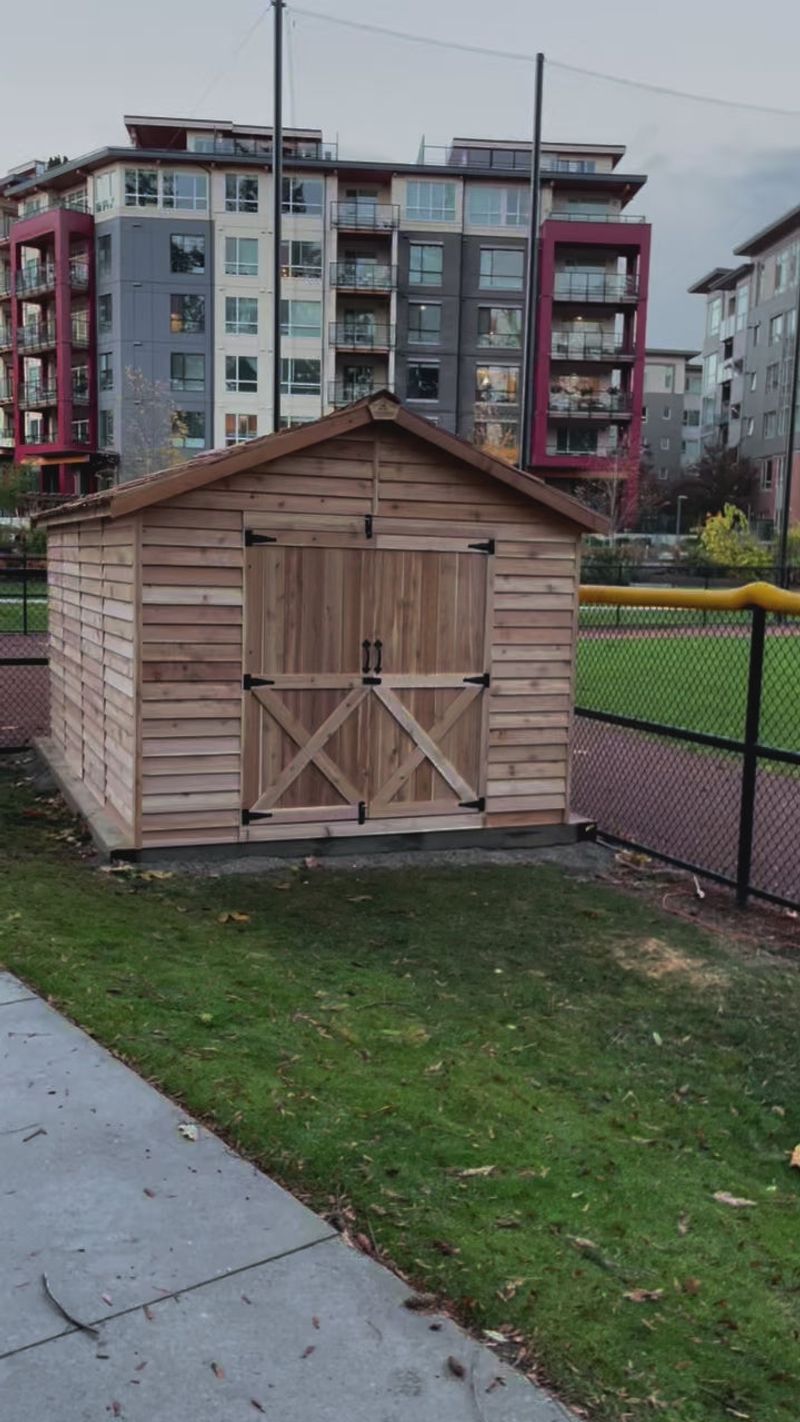
Side yards are where clutter goes to hide. Resin sheds, plastic trash cans, recycling bins, and storage tubs often line up shoulder to shoulder against the house.
Every one of them can melt, burn, and spread fire to your walls. Under stricter near-home rules, those items may need to move away from the structure or be swapped for metal versions.
A quick weekend cleanup goes a long way. Relocate sheds at least a few yards out, choose metal bins with lids, and clear dry leaves from that side path.
As a bonus, your side yard will finally look organized.