
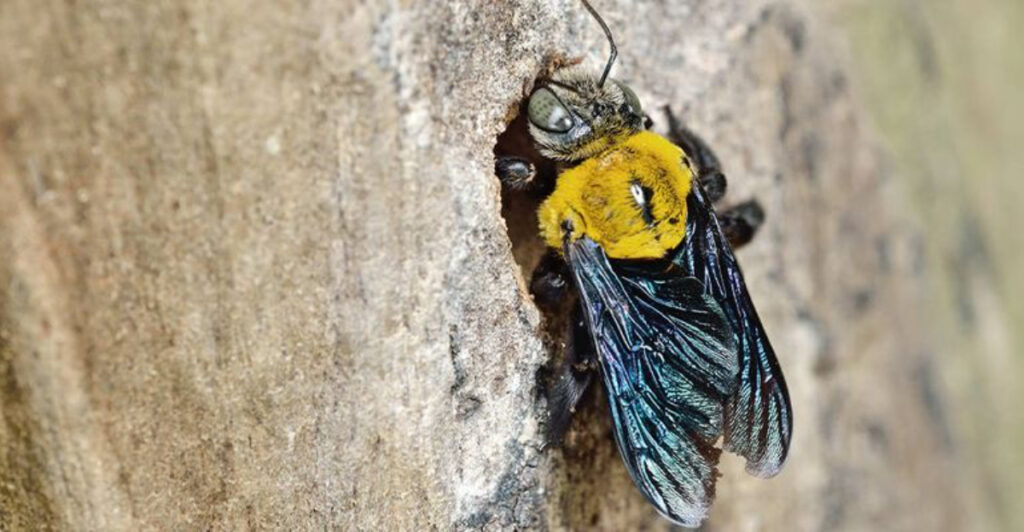
Carpenter bees, often mistaken for bumblebees, can cause significant damage to wooden structures.
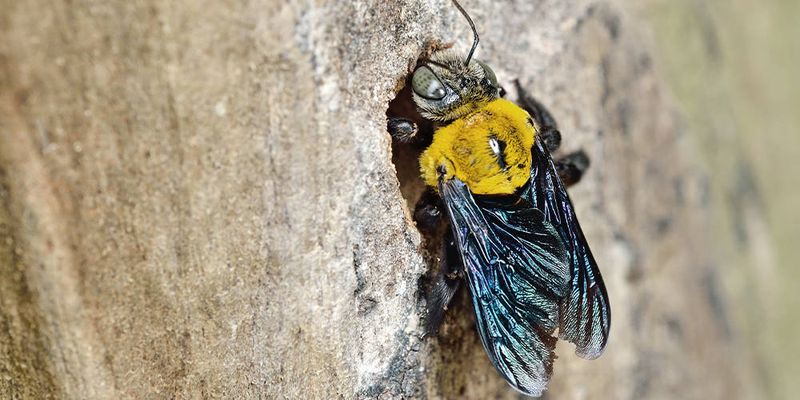
They bore into wood to create nests, leaving unsightly holes and weakening the integrity of the wood.
This guide provides practical and effective methods to deter these pesky insects and protect your property.
1. Wood Stain and Paint

Protecting your wooden structures can be as simple as adding a splash of color. Applying a thick coat of exterior-grade paint or wood stain creates a barrier that carpenter bees find unappealing.
Bees are less likely to drill into treated wood, which means fewer holes and less damage. Regular maintenance ensures the wood stays protected, providing a vibrant, fresh look year-round.
Choose colors that complement your home while protecting your investment. This straightforward approach not only keeps bees at bay but also enhances your home’s curb appeal.
2. Citrus Oil Spray

Citrus oils are a natural and aromatic way to deter carpenter bees. Their strong scent is unpleasant to bees, making it an effective deterrent.
Mix citrus oil with water in a spray bottle and apply it to areas where bees are active. This creates an invisible barrier that keeps them away without harming the environment.
Reapply every few weeks, especially after rain, to maintain its effectiveness. The fresh fragrance is a delightful bonus, providing a naturally pleasant aroma around your home.
3. Almond Oil Application
Embrace the power of almonds to safeguard your home. Almond oil, with its distinct aroma, is a natural bee repellent that doesn’t compromise on safety.
Simply dab a few drops on wood surfaces, focusing on entry points or areas you’ve noticed bee activity. Its effectiveness lies in its ability to mask scents that attract bees.
Regular application is key to keeping your property bee-free. This eco-friendly option not only protects wood but also respects the surrounding wildlife.
4. Install Bee Hotels
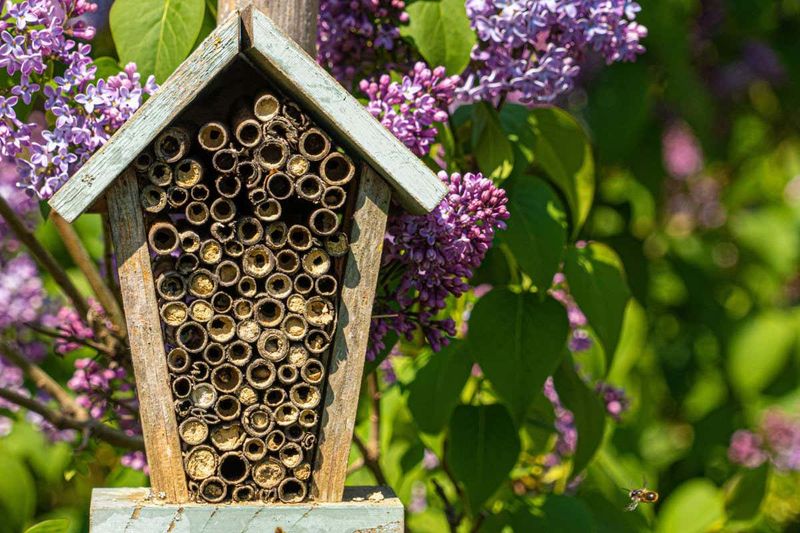
Redirect carpenter bees by offering them an alternative nesting spot. Bee hotels are enticing structures that encourage bees to nest in designated areas rather than your wooden fixtures.
They are easy to install and can be placed in gardens to promote healthy pollination. By providing a safe haven, you protect your property while supporting bee populations.
Choose vibrant designs to add a decorative touch to your outdoor space. This creative solution turns a pest problem into a positive ecological contribution.
5. Use Hardwood
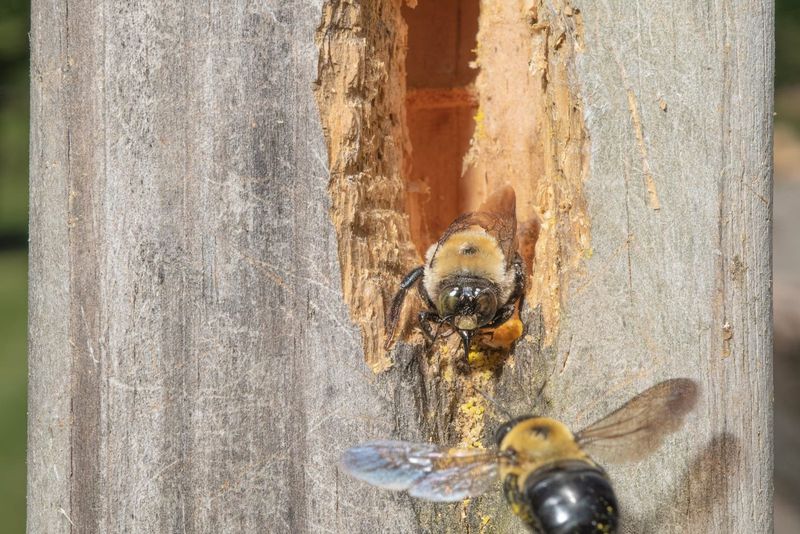
Opt for hardwoods like oak or maple for outdoor projects to naturally deter carpenter bees. These dense woods are much harder for bees to penetrate.
Investing in hardwood not only ensures durability but also reduces the likelihood of bee-related damage. Over time, your structures will require less maintenance, saving both time and money.
This practical choice balances aesthetics with functionality, creating a robust framework that withstands both weather and wildlife challenges.
6. Vibrating Devices
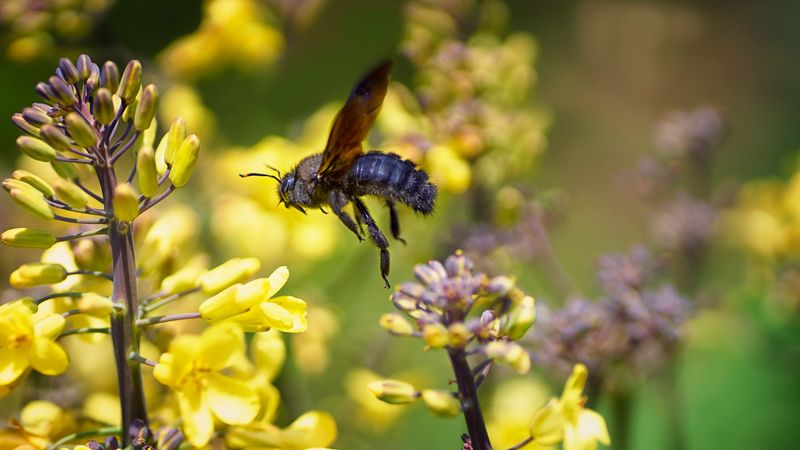
Modern technology provides a buzzing solution to keep carpenter bees away. Vibrating devices create sound waves that disturb bee habitats.
Place these under wooden structures to deter bees from settling. The gentle vibration mimics natural predators, encouraging bees to move along without harm.
Adjust settings for specific needs to target areas most affected. This innovative approach is both humane and effective, offering peace of mind and protection for your property.
7. Seal Existing Holes
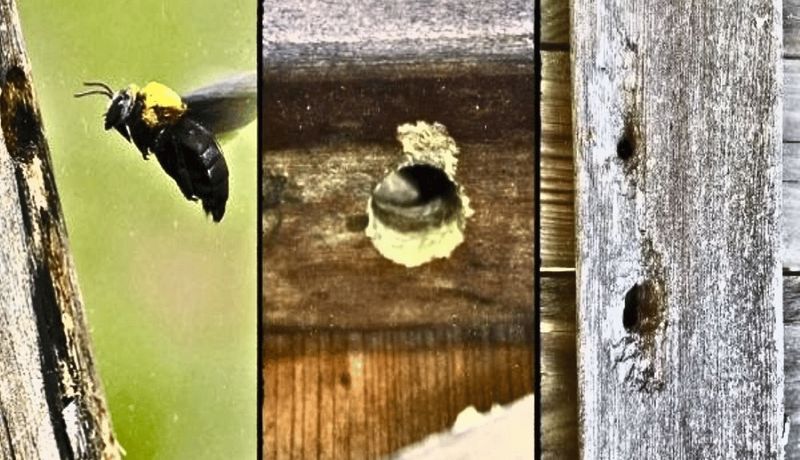
Taking action against existing damage can prevent future problems. Use wood putty or caulk to fill holes left by carpenter bees, ensuring they can’t return.
Smoothing over these spots protects the wood from further penetration and weathering. It’s essential to choose materials that blend with your existing wood to maintain aesthetics.
Regular inspections help identify new activity early, allowing quick intervention. This proactive step reinforces your defenses, keeping your wooden structures intact and bee-free.