
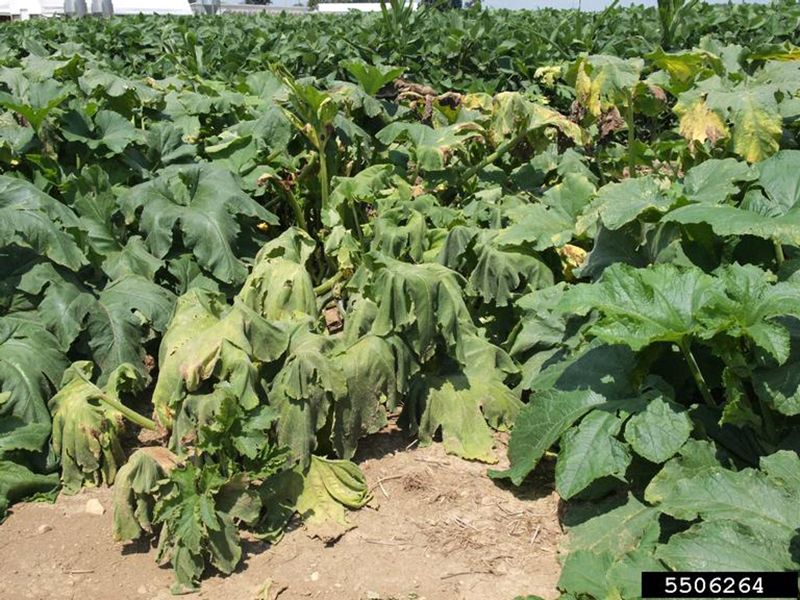
Few things are more discouraging than walking out to a thriving cucumber patch and finding a vine flat on the ground. Before you reach for the hose or yank the plant out, it helps to know that late-summer wilting has several possible causes, and bacterial wilt is only one of them.
A careful look at the soil, the stem, and the plant’s overnight behavior can tell you far more than the calendar ever will.
Heat can make a healthy cucumber droop, but continued decline demands a closer look
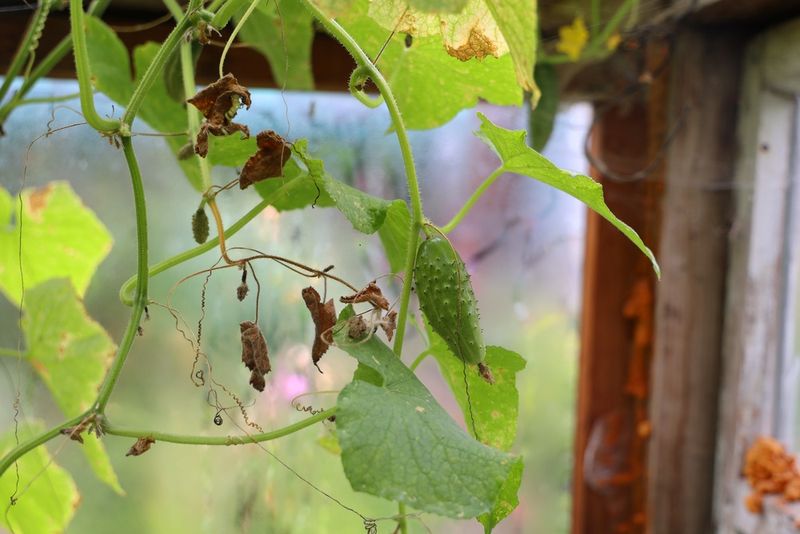
Cucumber vines are not shy about showing heat stress. On a sweltering afternoon in Florida or Texas, even a well-watered plant can droop noticeably, only to perk back up once the sun drops and temperatures ease.
That kind of temporary sag is not automatically a sign of disease, and treating it as one can lead you down the wrong path.
The key question is whether the plant recovers. According to University of Minnesota Extension guidance on heat stress, midday wilting can occur even when soil moisture is perfectly adequate, because leaf water loss outpaces root uptake during peak heat.
Check the soil several inches down before assuming the plant is thirsty. If the top inch feels dry but deeper soil is moist, a shallow reading is misleading.
A vine that droops at noon and stands upright the next morning is behaving differently from one that looks worse each day. Extension diagnostic guidance for cucumbers notes that persistent or progressive wilting, especially in the morning when temperatures are cooler, calls for closer inspection rather than automatic watering or immediate removal.
Late-summer timing alone does not identify the cause. The season sets the stage, but the plant and its growing conditions hold the actual clues.
Why cucumber beetles can turn one feeding wound into a wilted vine
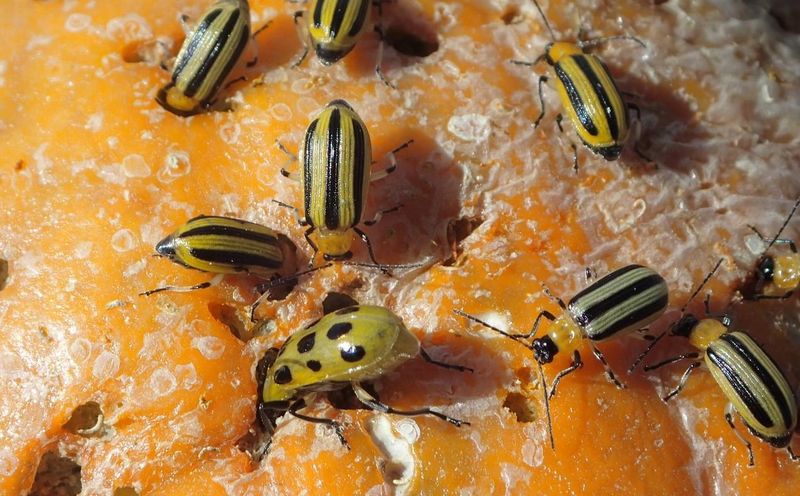
The bacterium behind bacterial wilt is called Erwinia tracheiphila, and it does not appear in soil on its own or travel through the air. It rides inside striped and spotted cucumber beetles, which pick it up by feeding on an already infected plant and then carry it to the next one.
Iowa State University Extension explains that when an infected beetle feeds, it introduces the bacteria directly into the plant through feeding wounds. From there, the bacteria multiply inside the vascular tissue, the network of channels the plant uses to move water from roots to leaves.
Once that system is compromised, water cannot reach the leaves efficiently, and the vine begins to collapse from the inside out. The process is not instantaneous.
University of Minnesota IPM guidance on cucumber beetles notes that symptoms can take one to three weeks to appear after the original feeding event. That delay matters because a gardener who spots a struggling vine in August may not see any beetles nearby, even if beetles fed on that same vine weeks earlier.
This timing gap also means that beetle sightings and vine collapse do not always line up. University of Minnesota Extension’s bacterial wilt page confirms that cucumbers are among the most susceptible cucurbits, making them a priority target for monitoring wherever cucumber beetles are active.
The symptom pattern raises suspicion before any test does
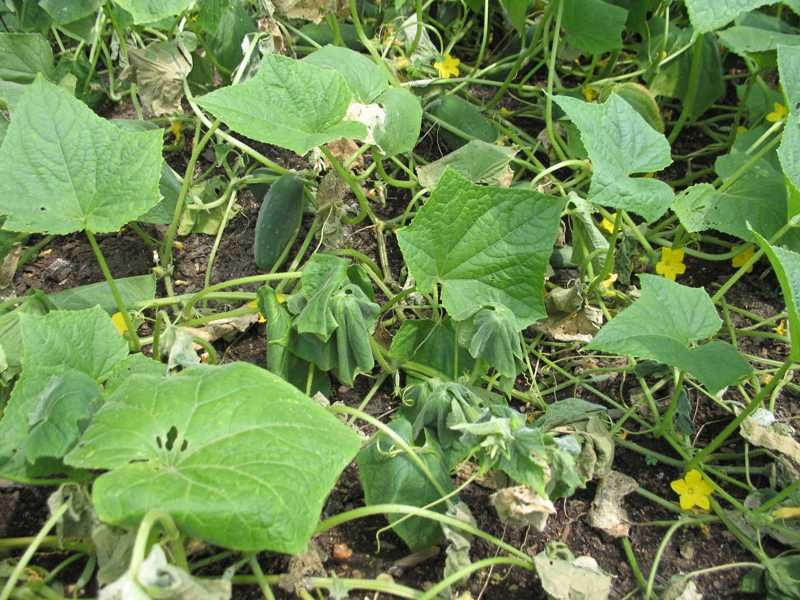
Bacterial wilt tends to announce itself in stages rather than all at once. The earliest sign is often a dull-green or slightly off-color appearance on individual leaves, sometimes accompanied by wilting on a single runner while the rest of the vine still looks normal.
The University of Minnesota’s cucumber diagnostic tool describes how wilting may first appear during the warmest part of the day and seem to improve overnight or during cooler morning hours. That partial, temporary recovery can make the problem easy to dismiss at first.
Over the following days, the pattern shifts. The affected runner declines further, new runners begin showing similar symptoms, and eventually the whole vine collapses without recovering, even on a cool morning.
University of Wisconsin-Madison Extension notes that cucumbers and muskmelons are particularly vulnerable to this progression, while squash and pumpkins tend to be less severely affected. Watermelon is generally considered resistant to bacterial wilt, though susceptibility varies among cultivars.
Recognizing this progression is useful because it points you toward a more focused inspection, not because appearance alone confirms the diagnosis. A vine that follows this pattern, especially on a cucumber or melon, with a history of beetle activity in the garden, deserves a stem check rather than a guess.
What the soil and stem can reveal at home
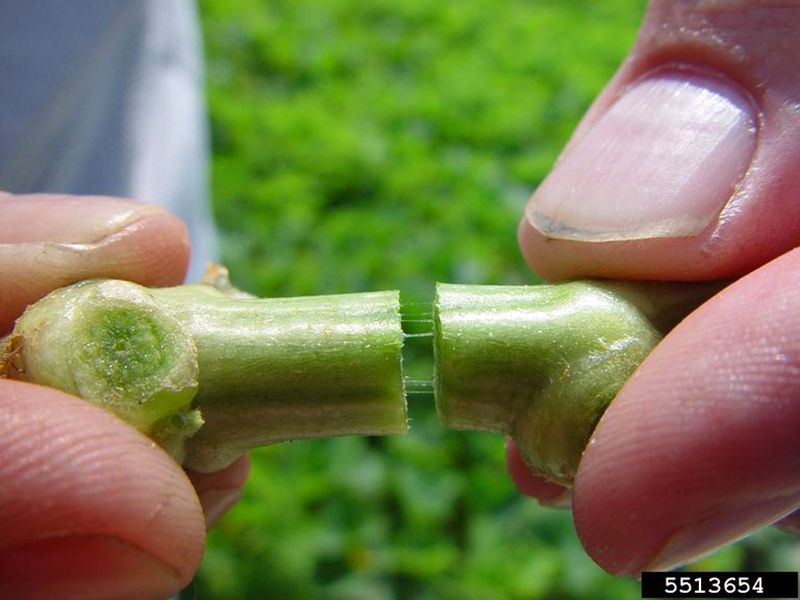
Before writing off a declining vine, run through a short physical checklist. Start with the soil.
Push a finger or a trowel several inches into the ground near the roots. Dry soil at that depth points toward a watering problem rather than disease.
If the soil is adequately moist and the plant is still wilting persistently, the trouble is more likely coming from inside the plant.
Next, look for beetle feeding marks, which appear as small, irregular holes or ragged patches on the leaves. Check the stem base for any holes or sawdust-like material, which would suggest a different problem entirely.
If those clues are absent and you want to test for bacterial wilt, cut through a wilted but not completely dead stem close to the crown. Press the two cut surfaces together briefly, then pull them apart slowly.
Cornell Vegetables’ cucurbit disease key describes fine, sticky threads stretching between the cut surfaces as a positive sign for bacterial wilt. A cloudy stream from a cut stem submerged in water is an additional field clue.
A negative result from the string test does not clear the plant. University of Minnesota Extension cautions that the threads can be difficult to see when tissue is dry, dead, or the infection is still early.
For a diagnosis that truly matters, contacting your local Cooperative Extension office or submitting a sample to a plant diagnostic lab is the more reliable path.
Which other problems mimic bacterial wilt?
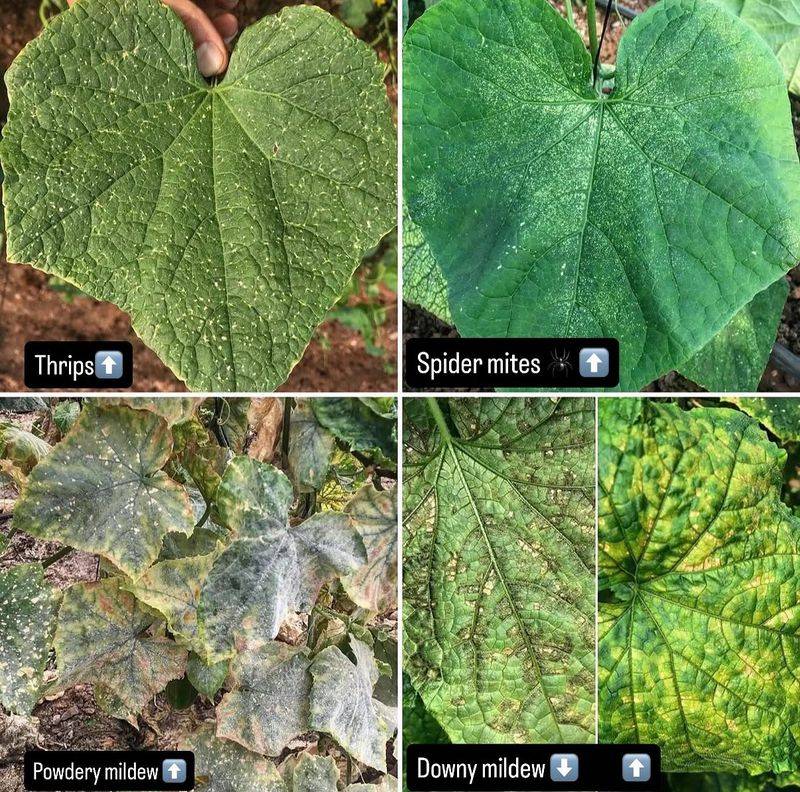
A collapsing cucumber vine has more possible explanations than bacterial wilt alone, and sorting them out matters before you act. Drought and heat stress are the most common lookalikes.
A plant that wilts during the hottest part of the day and recovers fully by morning is more likely responding to water or temperature than to infection. Check the soil first, every time.
Spider mites are another frequent cause of summer decline that gets misread. University of Minnesota’s cucumber growing guide notes that hot, dry conditions favor mite populations, and they produce pale, bronzed, or stippled foliage rather than the dull-green wilt pattern associated with bacterial wilt.
Flip the leaves over and look for fine webbing and tiny moving specks before assuming the worst.
Squash vine borers are worth checking even on cucumbers, though they more commonly attack squash and pumpkins. Look for a small entry hole near the base of the stem and sawdust-like frass packed inside.
Ohio State University’s diagnostic resource for bacterial wilt also points to Fusarium wilt as a source of confusion, since it can cause progressive wilting with brown streaking inside the vascular tissue, often starting with older leaves.
Root damage from compaction, overwatering, or soil pests rounds out the list. The UMN cucumber diagnostic tool and IPM guidance on cucumber beetles both reinforce that beetle presence alone does not confirm bacterial wilt.
The insect is a potential carrier, not a diagnosis.
When bacterial wilt is strongly indicated, removal is the practical response
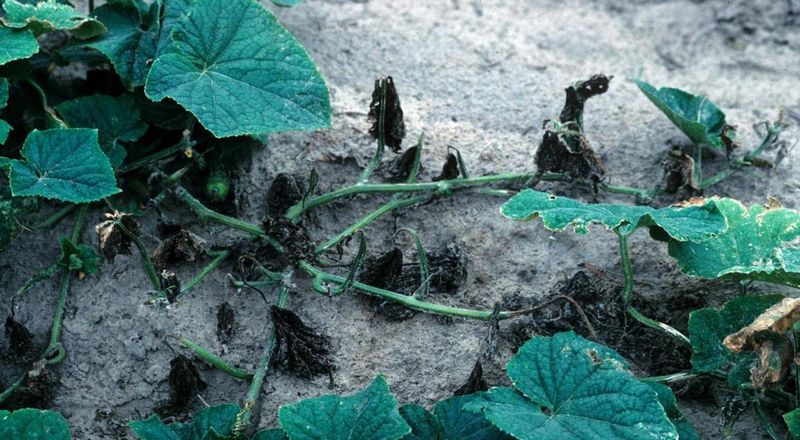
Once the evidence points clearly toward bacterial wilt, a hard truth applies: no spray, no fertilizer, and no watering adjustment will reverse a systemic infection. University of Wisconsin-Madison Extension states plainly that there is no reliable cure after the bacterium has spread through the plant’s vascular system.
Fungicides are not a remedy here because bacterial wilt is a bacterial disease, not a fungal one. Applying a fungicide to an infected vine will not help and may give a false sense of action while the plant continues to decline.
The practical step is prompt removal. Pull the affected vine, roots and all, and dispose of it in the trash rather than the compost pile.
Composting infected tissue risks keeping the bacterium accessible to beetles that may feed on decomposing material. University of Minnesota Extension notes that removing infected plants also reduces the chance that beetles will feed on them and carry the bacterium to nearby healthy plants.
Texas A&M AgriLife Extension recommends sanitation as a core part of managing this disease, including removing wild cucurbit weeds near the garden that may serve as additional sources of infection. Do not wait for the vine to collapse completely before acting.
Removing it while beetles are still active gives the rest of your garden a better chance.
How to reduce the odds of another wilted cucumber
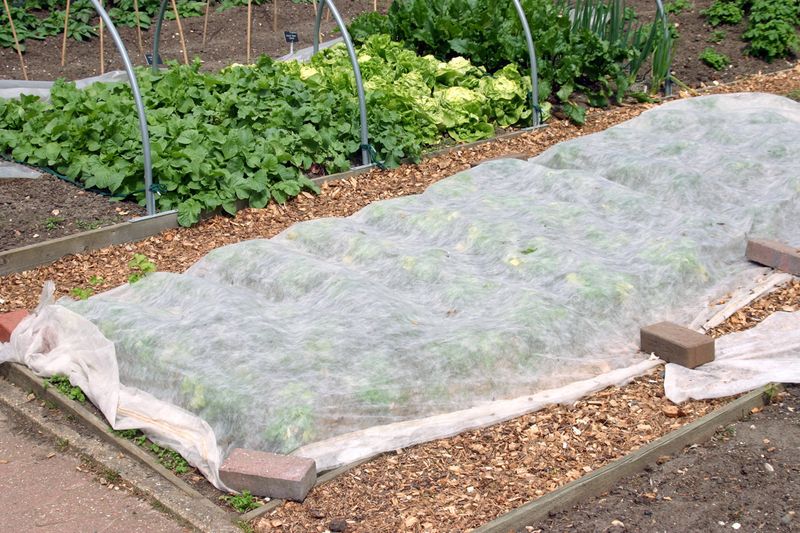
Prevention starts before beetles arrive. Floating row covers placed over transplants or seedlings at planting time create a physical barrier that keeps beetles off the foliage entirely.
University of Minnesota Extension’s cucumber beetle resource explains that row covers are a preventative tool, not a rescue treatment, and they must be removed once flowers open so pollinators can reach the blooms. Leaving covers on through flowering will protect the plant from beetles but cost you the harvest.
Scouting regularly and hand-picking beetles works well on small plantings. Mulch helps reduce beetle habitat near the soil surface, and crop rotation from year to year limits the buildup of beetles and disease pressure in one spot.
Removing weedy wild cucurbits from around the garden eliminates a reservoir where beetles can feed and pick up the bacterium before moving to your plants. Texas A&M AgriLife Extension specifically recommends weed sanitation as part of a wilt-management strategy.
Trap crops such as Blue Hubbard squash can draw beetles away from cucumbers, giving you a concentrated target for monitoring and removal. For gardeners in Florida and Texas, local beetle activity, species composition, and seasonal timing differ from Northern states.
UF/IFAS notes that cucumber beetles in Florida are most active in the morning and late afternoon, and that other pests including thrips, pickleworm, and spider mites also contribute to summer cucumber decline in the region. If pesticide use becomes necessary, always follow the current product label for your state, check crop registration, observe preharvest intervals, and never spray open flowers or plants when bees are foraging.
Use a short decision path before you reach for the watering can
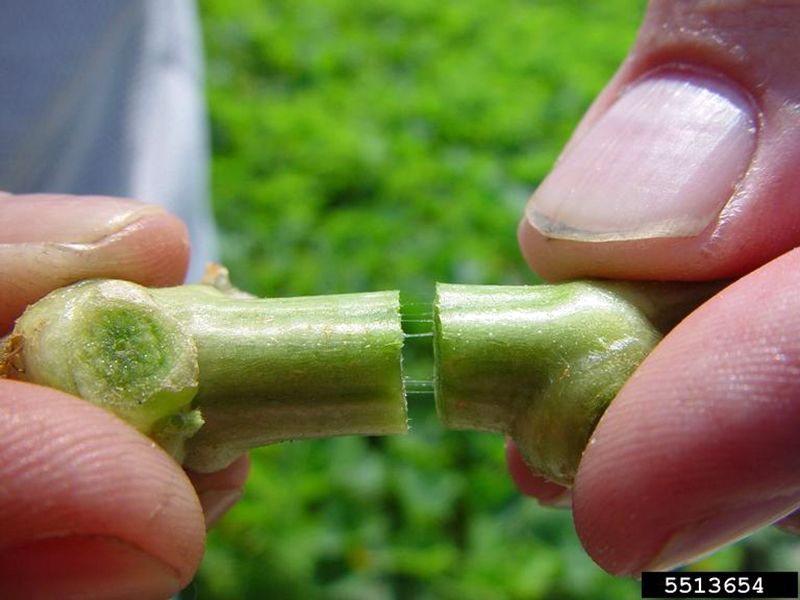
When a cucumber vine looks wrong, work through a short sequence before doing anything else. Check the soil several inches down and note whether the plant looks better in the morning than it did the afternoon before.
A vine that recovers overnight with moist soil is probably responding to heat or temporary stress, not disease.
If the wilting persists through the morning, inspect the stem base for borer holes and the leaf undersides for mites. Look for beetle feeding damage and cut a living wilted stem to run the string test, keeping in mind that a negative result does not rule bacterial wilt out.
UMN’s cucumber diagnostic tool, University of Minnesota Extension, and University of Wisconsin-Madison Extension all support removing a vine when bacterial wilt is confirmed or strongly indicated, rather than at the first sign of a droop.
Heat can expose a weakness that was already developing inside the plant, but the temperature itself is not the cause. A clear-eyed look at the soil, the stem, and the overnight recovery tells a more accurate story than the thermometer ever will.