
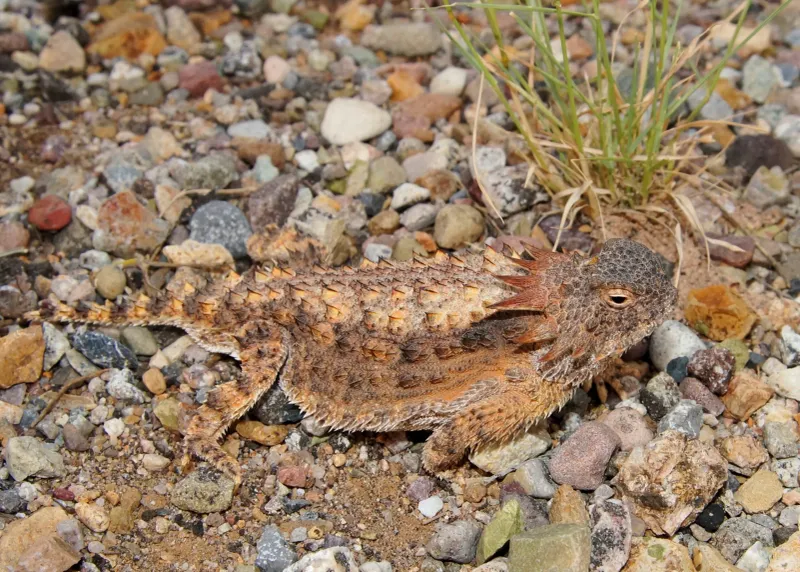
Seeing a Texas horned lizard scuttle across a Central Texas yard feels like a trip back to childhood. These spiky little reptiles eat ants, and that makes a sighting a fun puzzle for anyone who cares about native wildlife.
A single lizard does not prove that harvester ants have moved back in, but it can be a clue worth following. Here is how to read the sign, spot native ant beds, and treat fire ants without wiping out helpful neighbors.
A sighting may point to nearby habitat—not a confirmed ant return
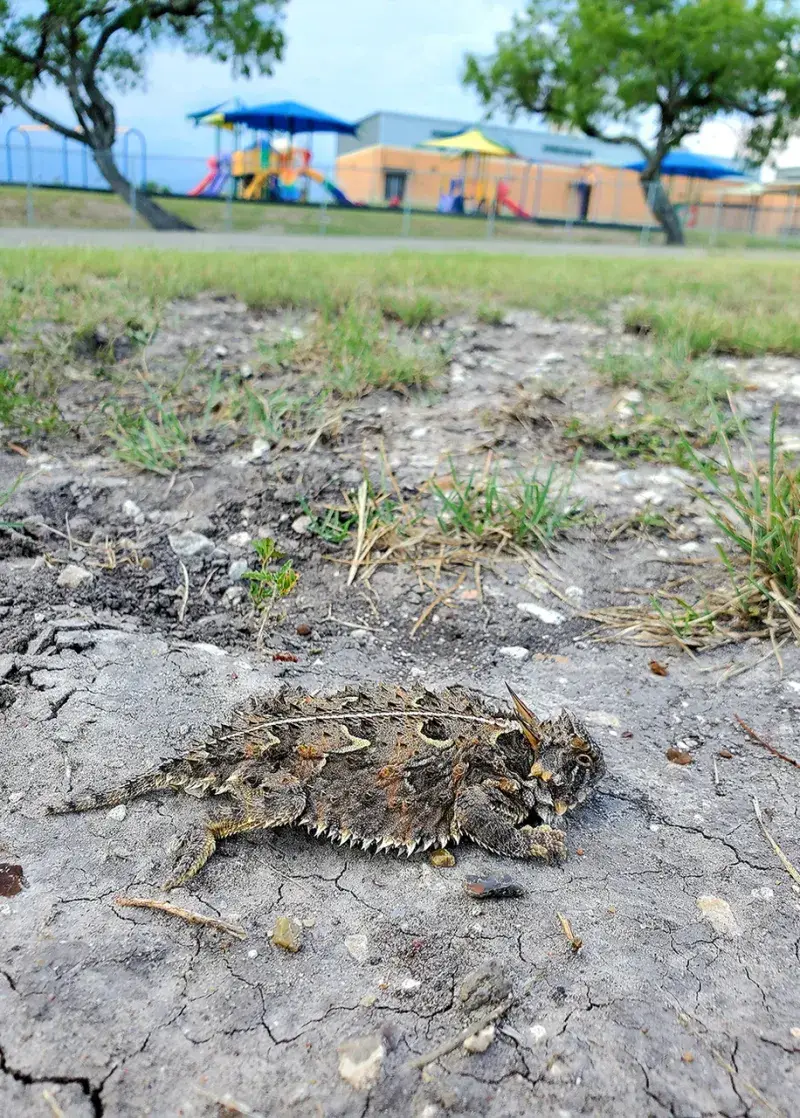
A horned lizard crossing your driveway is exciting, but it is a clue rather than a verdict. The lizard may live in a patch of suitable habitat nearby and simply wander through your yard.
One sighting cannot tell you whether a colony of red harvester ants has set up shop on your property.
Texas horned lizards eat mostly ants, and harvester ants are a favorite. Texas Parks and Wildlife Department notes that the lizards are often found near harvester-ant beds.
They also eat other insects and invertebrates, so a lizard does not need a harvester colony in your yard to find a meal.
Researchers have looked at this link on a larger scale. The TPWD Horned Lizard Watch report drew on volunteer surveys from 1997 to 2006 and found a positive relationship between horned lizard presence and harvester ants.
That is an association across many survey routes. It is not a current Central Texas population count, and it does not confirm where the prey colony sits for any single lizard you happen to see.
So enjoy the visit, and use it as a reason to look around. Walk your property and the edges of nearby open ground, noting bare, sunny spots with sparse vegetation.
What you find will tell you far more than the lizard alone.
How to spot a likely harvester-ant bed without disturbing it
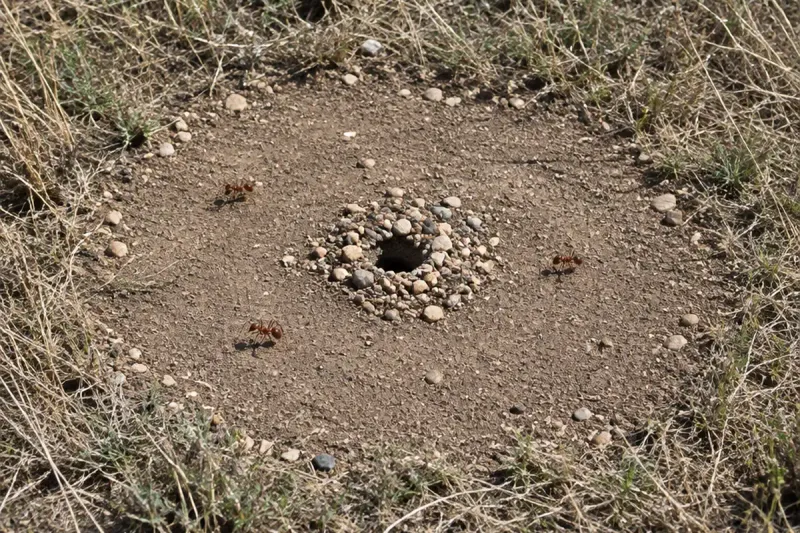
Walking your yard slowly is the best way to find ant colonies, and you can do it from a safe standing height. Look for a relatively large, flat, cleared patch of ground.
Texas A&M AgriLife Extension describes red harvester ant beds as bare discs, often with coarse soil or small gravel and an entrance hole near the middle.
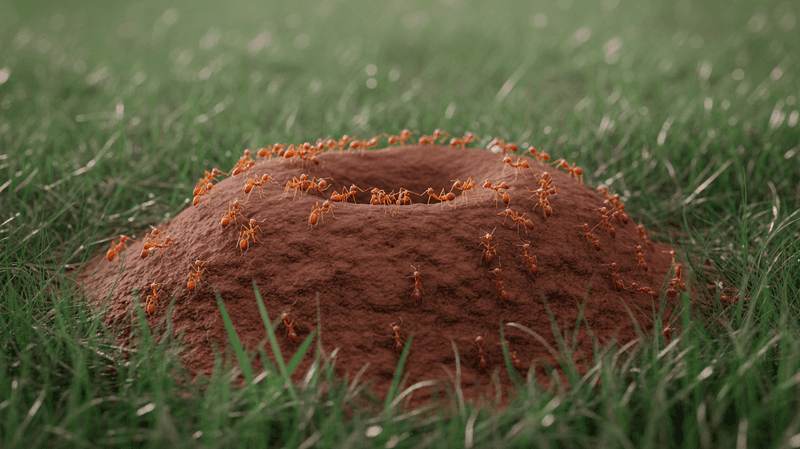
Fire ants build differently. Texas A&M’s fire ant project explains that red imported fire ants typically make a soft, fluffy mound of loose soil with no central opening.
The mound can look like freshly dumped crumbs of dirt, especially after rain.
Think of these as handy clues, not a final answer. Soil, weather, and mowing can change how a nest looks, and some mounds fall in between.
If you cannot tell, take a photo from a few feet away and compare it with extension pictures.
Please do not poke, kick, or dig into a mound to see which ants come out. Harvester ants can sting, and fire ants swarm fast.
Looking from a distance keeps you safe and keeps the colony intact.
Why native ants matter when deciding whether to use fire-ant bait
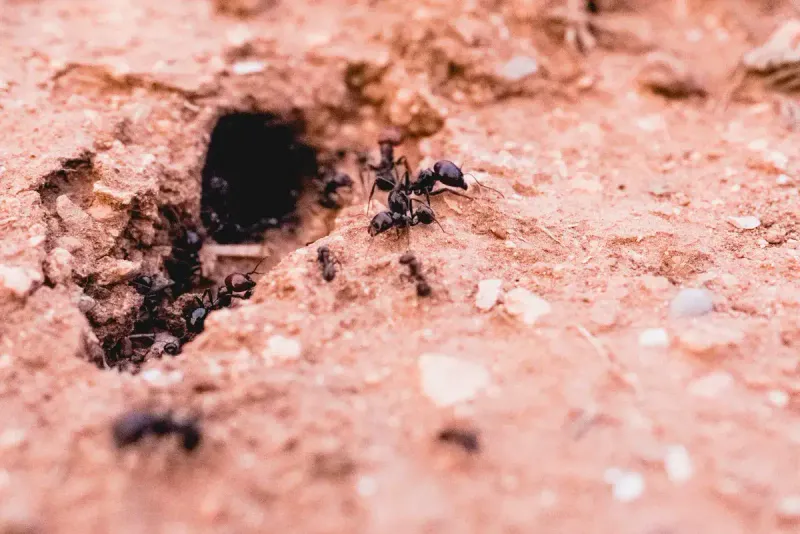
Harvester ants are native to Texas and generally are not serious pests. They quietly clear seeds and soil around their nests and serve as food for wildlife, including horned lizards.
That role is the reason they deserve a second thought before any yard-wide treatment.
Texas A&M AgriLife Extension warns that some fire-ant-control insecticides can harm harvester ants. Fire-ant bait is not a product that only touches fire ants, and different products do not all act the same way.
That does not mean every application causes a decline, but it is a real risk where native ants live.
Texas A&M’s native ants page also stresses that native ants can help hold fire ants in check by competing with them. Keeping them around is a quiet advantage for your yard.
If a harvester colony sits well away from kids, pets, and walkways, leaving it undisturbed is a reasonable wildlife-friendly choice. Still, be honest about the downside.
Harvester ants can bite and sting, and the venom may be dangerous to sensitive people. If a colony sits where someone could easily step on it, that is a safety problem worth solving thoughtfully.
Treat confirmed fire-ant problems selectively
Skipping broadcast bait does not mean ignoring fire ants. It means matching the treatment to the problem.
Fire ants can sting hard, and mounds near play areas or walkways are worth dealing with.
Texas A&M’s control guidance recommends individual mound treatments for small infestations or when preserving native ants is a priority. That approach lets you target only the mounds you have positively identified as fire ants.
Hold off on any mound you are unsure about.
Broadcast treatment has its place too. The Two-Step method works best in heavily infested yards, about five or more mounds per quarter-acre, or where saving native ants is not a concern.
If you count only a few mounds and you have harvester beds, the selective route fits better.
A few practical steps:
Mark confirmed fire-ant mounds with a flag or stake so you treat only those. Read the full product label before you buy and again before you apply.
It controls how, where, and how much to use.
If you do use bait, extension advice is to apply fresh bait when ants are actively foraging, on dry ground, with no rain expected for 24 to 48 hours. Treat that as general guidance, and follow the label wherever it differs.
Store leftover product as the label directs.
Observe the lizard from a distance
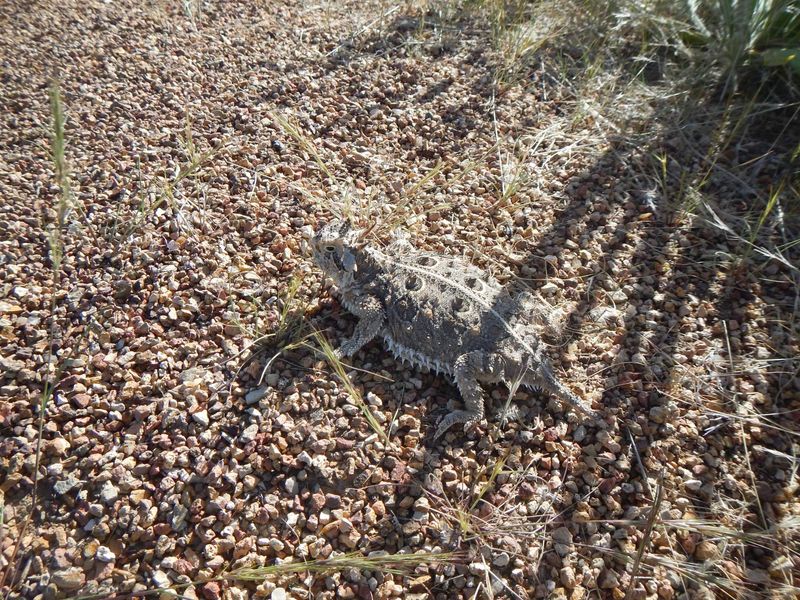
If a horned lizard shows up, the best move is to stay back and enjoy the show. Crouch low, stay quiet, and keep kids and pets at a distance.
A few minutes of watching beats any attempt to get closer.
The Texas horned lizard is state-threatened. Texas Parks and Wildlife Department states that state-listed species may only be handled, including relocated, by people with a scientific collecting permit.
That means picking one up to carry it across the yard, or moving it somewhere you think is safer, is not allowed for most of us.
Simple habits keep it easy. Leash dogs, slow your car on rural roads, and pause mowing or trimming near the animal until it wanders off.
Snap photos with a phone zoom and leave the lizard to go about its day.
You can also jot down the date and spot of your sighting. Even a casual note about where you saw it can help you remember where to look for ant beds and open ground later.
Support nearby wildlife without claiming a cause
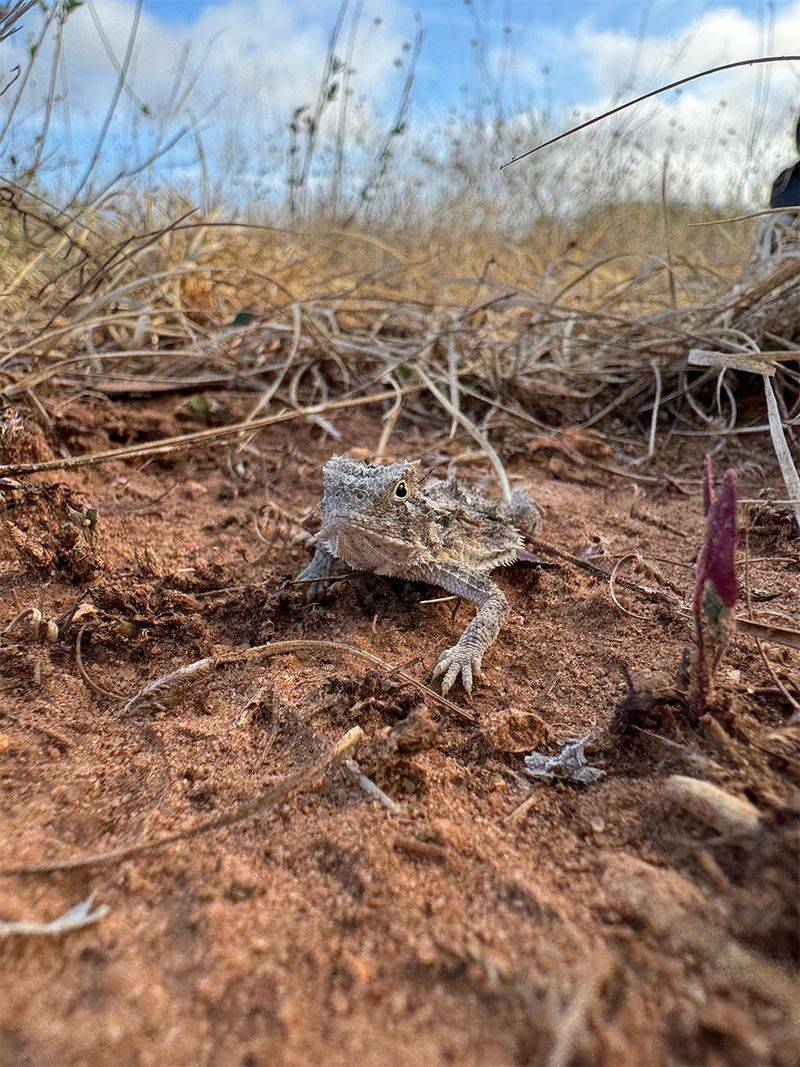
Treat a horned lizard sighting as a nudge to look closely at your surroundings, not as proof that a colony returned or that skipping bait brought the visit. Where native ants live, avoid blanket bait, treat confirmed fire-ant safety problems on a mound-by-mound basis, and give harvester colonies space when they cause no trouble.
Extension guidance and Texas A&M control methods both point that way.
Many pressures affect these animals, and TPWD’s report conclusions list several, including habitat loss and fire ants. One yard’s choices cannot explain a single sighting or a regional trend.
Still, a small yard can be a good neighbor. A little patience and a careful eye are often the best tools you have.